How to Become an Electrician: Apprenticeship & License Guide
Learning how to become an electrician is the first step toward a skilled trade career that is practical, well paid over time, and always in demand. Every home, school, hospital, office, and factory needs safe, reliable electricity. When the lights go out, a new building needs wiring, a kitchen needs new circuits, or a factory needs a machine connected, someone has to do that work correctly and safely. Electricians do that work. It is hands-on, problem-solving work, and it cannot be done from a desk or replaced by a computer.
Electricity is powerful and dangerous if it is handled badly, which is why this is a licensed trade in most U.S. states. You cannot simply start charging for electrical work after watching a few videos. The standard route in the United States is an apprenticeship — paid, on-the-job training under a licensed electrician — combined with classroom study, followed by a state licensing exam when you have enough experience. The exact hours, exam, and license levels vary by state, so this guide gives general information and tells you to check your state licensing board for the current rules wherever you live. That “check your state” step is not a footnote. It is the most important part of planning this career.
This guide walks through the whole path in plain language, with a U.S. focus. You will learn what electricians actually do, how an apprenticeship works, how long training takes, what the licensing exam covers, how much it can cost, which skills employers value, and how to build a career after you are licensed — as an employee, a self-employed electrician, or a business owner. If you want to see the kinds of jobs available once you are qualified, our guide to the best electrician jobs lists real roles and what they involve. By the end of this guide, you will know exactly how to become an electrician in your state.
Table of Contents
Quick Answer
To become an electrician in the United States, complete high school or an equivalent, find an electrical apprenticeship with a licensed electrician or through a union or trade program, complete the required on-the-job hours and classroom training, and then pass your state’s licensing exam to become a licensed journeyman electrician.
Apprenticeships commonly last four to five years and combine paid work with classroom study, though the exact hours and length vary by state and program. After more experience, you can take a further exam to become a master electrician in states that offer that level. Always check your state licensing board for the exact apprenticeship hours, exam, fees, and license levels where you live, because those details are set by the state, not nationally.
What Does an Electrician Do?
An electrician installs, maintains, and repairs electrical systems in buildings and on other sites. The work falls into a few main areas, and most electricians do a mix of them, especially early in their careers.
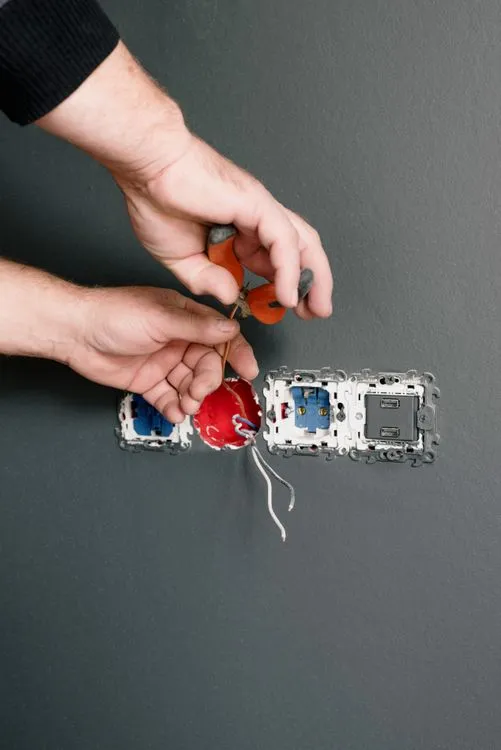
Residential electricians work in homes. They install wiring in new houses, add circuits for kitchens and extensions, fit lights, sockets, and switches, install electric showers and cookers, repair faults, and upgrade old fuse boxes to modern consumer units. This work is often in occupied homes, so residential electricians need to be tidy, polite, and good at explaining a problem and a price to a homeowner.
Commercial electricians work in larger buildings such as offices, schools, hospitals, hotels, and shops. The systems are bigger and more complex, the work is often planned in advance, and it may involve reading blueprints, working with other trades, and following strict building codes. Commercial work can mean longer projects and more regular hours than emergency residential work, but it also needs more planning and paperwork.
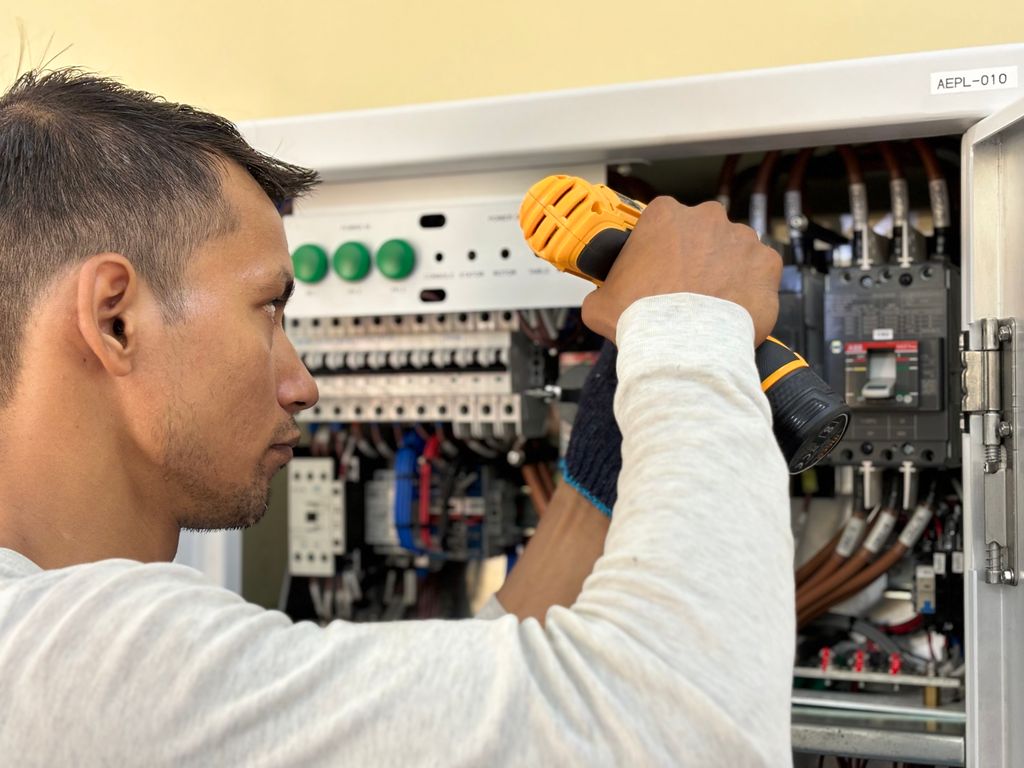
Industrial electricians work in factories, plants, and other industrial sites. They install and maintain motors, control systems, machinery, and high-voltage equipment. This work is more specialised, often better paid, and usually needs further training beyond the basic journeyman license.
Some electricians specialise further. A maintenance electrician focuses on keeping existing systems working. A construction electrician focuses on new builds. A low-voltage electrician works on data, security, and communication systems. An electrician who works on renewable energy may install solar panels, battery storage, and electric vehicle chargers — a growing area as more homes and businesses adopt these technologies. As you gain experience, you can choose the area that suits you best.
A typical day starts with a list of jobs. You load your van with tools and materials, drive to the first job, diagnose the problem or read the plans, explain what needs doing and what it will cost, and then do the work. Between jobs, you order materials, keep records, take calls from the office or from customers, and plan the next day. Some days are straightforward. Others involve a fault that is hard to find, an old wiring system that needs careful handling, or a job that takes twice as long as expected. Finding a fault by testing, thinking, and eliminating possibilities is a daily part of this work.
Electricians must follow the National Electrical Code (NEC) and local building codes exactly. Badly installed wiring can cause a fire, an electric shock, or damage to equipment. That is why the trade is licensed, why apprenticeships are long, and why experienced electricians test their work carefully before they leave a job. Good electrical work is invisible when it works — lights come on, sockets work, and nothing trips — and that invisibility is the mark of a job done well.
Is Being an Electrician the Right Career for You?
Becoming an electrician suits people who like practical work, solving problems with their hands and their head, and seeing a clear result at the end of a job. You need to be good at maths for measurements,
calculations, and estimates, able to read plans and instructions, and comfortable learning how electrical systems work. If you enjoy fixing things, working in different places each day, and talking with customers, you will probably enjoy this work. If you want a quiet job at a desk, or you dislike working at height, in tight spaces, or outdoors in all weather, this trade is probably not the right fit.
Ask yourself a few honest questions before you start. Are you comfortable working with electricity after proper training, and following safety rules exactly, every time? Can you work on ladders, in lofts, in basements, and in crawl spaces, sometimes in awkward positions? Can you lift heavy equipment and cable safely? Are you happy to work evenings or weekends sometimes, especially for emergency call-outs? Can you stay calm and polite with a customer whose power is out? Are you willing to study for four or five years through an apprenticeship, and then keep learning as codes, products, and technology change? If the answer to most of these is yes, this career is worth a serious look.
It is also worth thinking about money honestly. Apprentices usually start on a modest wage, which rises each year as they gain skill and hours. Licensed journeyman electricians earn considerably more, and experienced electricians who specialise, work in industrial or commercial settings, or run their own business can earn more still. The trade rewards experience, reliability, and a good reputation. Electricians who turn up on time, explain costs clearly, test their work properly, and leave a site clean get repeat work and recommendations. That reputation is worth more than any advert.
How to Become an Electrician: Step by Step
Step 1: Check Your State Licensing Board First
Before you apply for an apprenticeship or a course, look up your state licensing board for electricians — sometimes part of a department of licensing, a contractors board, or a board of electrical examiners. Find the current rules for an electrician license: how many apprenticeship hours are required, how many classroom hours are required, what the journeyman exam covers, what the fees are, whether you need a high school diploma or equivalent, and whether there are different levels such as apprentice, journeyman, and master electrician. Write these down. Getting these rules in writing is the surest first step when you are working out how to become an electrician.
This step matters because the differences between states are large. One state may require around 8,000 hours of on-the-job training, another may require fewer, and the classroom requirement also varies. Some states license electricians at the state level; others license at the city or county level, or leave licensing to local authorities. Some states accept an out-of-state license through reciprocity; others require you to take their exam. Do not rely on a friend’s experience in another state, or on a training provider’s advertising, as your source for these rules. Check your state or local licensing authority’s official page, and check again before you apply for the exam, in case the rules have changed.
If you plan to move to another state, ask both licensing authorities about license transfer. Some states accept an out-of-state journeyman license if you have held it for a certain time; others ask for extra hours or a new exam. Knowing this in advance can save you from repeating training.
Step 2: Finish High School or an Equivalent
Most apprenticeship programs require a high school diploma or a GED or equivalent. The subjects that help most are maths, physics, and any shop, technical, or vocational classes your school offers. Maths matters for calculations, measurements, and estimates. Physics helps you understand how electricity works — voltage, current, resistance, and power. If you are still in school, take those subjects seriously and ask your school counsellor about vocational programs, pre-apprenticeship courses, or work experience with a local electrician.
You also need a driver’s license in most cases, because electricians drive to jobs. If you do not have one yet, getting it is a practical step toward an apprenticeship. A clean driving record helps too, because employers often insure apprentices to drive company vans.
Step 3: Find an Electrical Apprenticeship
An apprenticeship is the standard route into this trade in the United States, and it is the route most employers and licensing boards expect. An apprentice works full time for a licensed electrician or an electrical company, learns on the job, and attends classroom training — usually one day a week, in the evening, or in blocks — at a trade school or community college. You are paid while you learn, and your pay usually rises each year as you complete more hours and pass more classroom modules. This is the first real step in how to become an electrician for most people.
There are several ways to find an apprenticeship:
- Apply directly to electrical companies: Many small and large electrical firms take on apprentices. Write a short, clear application, explain why you want to be an electrician, and be ready to start as a labourer or helper if a full apprenticeship is not available straight away. A helper who turns up on time, works hard, and learns fast is often offered an apprenticeship.
- Apply through a union program: In many areas, the International Brotherhood of Electrical Workers (IBEW) runs apprenticeship programs with local employers through the National Electrical Contractors Association (NECA) and local Joint Apprenticeship and Training Committees (JATCs). These programs are competitive, but they offer structured training, good pay progression, and benefits. Check your local JATC for application dates and requirements.
- Apply through a trade school or community college: Some schools run pre-apprenticeship courses or help place students with employers. A short pre-apprenticeship course can teach you basic skills, safety, and tool use, and it can make your application stronger. It does not replace a full apprenticeship, but it can help you get one.
- Check state and local apprenticeship listings: Many states list registered apprenticeship programs online. Look for programs registered with your state apprenticeship agency or the U.S. Department of Labor. A registered program is more likely to count toward your license hours.
When you apply, employers look for reliability, a willingness to learn, and a good attitude more than existing electrical knowledge. Be on time for every interview, dress neatly, bring your diploma and any certificates, and be honest about what you can and cannot do. If you have done any relevant work — helping with DIY, working in construction, or completing a vocational course — mention it. If you have no experience at all, read our guide to how to get a job with no experience for practical advice on presenting yourself well. If you have no experience, say so, and explain why you want to learn this trade.
Be careful with any program that asks you to pay a large fee upfront for a guaranteed apprenticeship, or that promises a license in a few weeks. A real apprenticeship is paid work plus study over several years. If an offer sounds too quick or too easy, check it with your state apprenticeship agency before you pay anything.
Step 4: Complete Your Apprenticeship Hours and Classroom Training
An apprenticeship commonly lasts four to five years, though the exact length depends on your state and program. During that time you will complete thousands of hours of on-the-job training and a set number of classroom hours. The classroom work usually covers:
- Electrical theory, including voltage, current, resistance, and power
- The National Electrical Code (NEC) and local codes, and how to apply them
- Blueprint reading and technical drawing
- Maths for electricians, including calculations for load, cable size, and voltage drop
- Wiring methods, conduit, cable, and fittings, and when to use each one
- Motors, controls, and lighting systems
- Safety, including lockout and tagout, working at height, and preventing electric shock
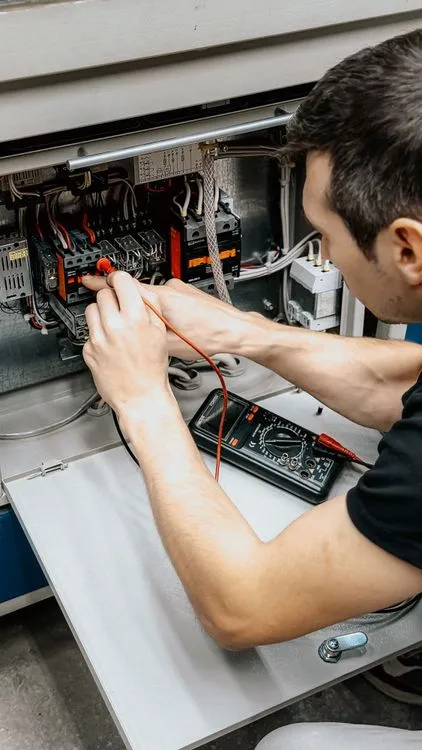
- Testing and fault-finding, using meters and test equipment
On the job, you start with basic tasks — carrying materials, cleaning up, pulling cable, and watching an experienced electrician work — and you move on to more complex tasks as you prove yourself. You will learn to install wiring, fit sockets and lights, install consumer units, test circuits, find faults, and read plans. You will also learn the customer side of the work: how to explain a problem, how to give a clear price, and how to leave a home clean and tidy.
Attendance and record-keeping matter. Your hours only count if they are recorded correctly and signed off by your employer or training provider. Keep your own record of hours, classroom modules, and skills you have completed, and check it against your employer’s record regularly. Missing classes or failing to record hours can delay your license by months. Treat the apprenticeship like a job, because it is one: arrive on time, follow safety rules, ask questions, and practise every task until you can do it safely and neatly.
Safety deserves special emphasis in this trade. Electricity can kill, and the safety rules exist for a reason. Always follow your employer’s safety procedures, use the right protective equipment, test before you touch, and never take a shortcut on safety — not to save time, not to impress anyone, and not because a customer is in a hurry. A good electrician is a safe electrician, every day, on every job.
Step 5: Pass the State Licensing Exam
When you have completed the required apprenticeship and classroom hours, you can apply for the journeyman electrician exam in your state. The exam usually has a written part and, in some states, a practical part. The written exam tests your knowledge of the NEC, electrical theory, systems, materials, safety, and maths. The practical part, where used, asks you to demonstrate skills such as wiring a circuit, installing a fitting, or working out a plan from a drawing. Most candidates spend several weeks revising for it, so treat exam preparation as part of how to become an electrician, not an afterthought.
How to prepare well:
- Use your apprenticeship classroom materials and any practice exams your school or union provides, and take them under timed conditions.
- Revise the NEC carefully. Many candidates focus only on practical skills and lose marks on code questions that are easy to learn with steady revision. Learn how to find information in the code book quickly, because many exams are open-book for the code.
- Practise calculations — load, cable size, voltage drop, and estimates — until you can do them quickly and accurately.
- Practise the practical tasks in the exact order and with the exact timing the exam requires, if your state has a practical exam.
- Read your state’s candidate information bulletin or exam guide. It tells you exactly what is tested, what to bring, and how each part is scored. Use the current official guide, not old stories from other candidates.
If you do not pass the first time, you can usually retake the exam after a waiting period and a further fee. Ask your training provider what support it offers for retakes, and focus your revision on the areas where you lost marks. Failing once does not mean you cannot become an electrician — many licensed electricians passed on a second attempt.
Step 6: Get Licensed and Start Work as a Journeyman
After you pass, you apply to your state or local licensing authority for your journeyman electrician license, pay the license fee, and receive your license. You must hold a valid license before you work as a journeyman electrician in most states. Keep a copy of your license, note its expiry date, and learn your state’s renewal rules — most licenses need renewal every one to two years, and some require continuing education. Renew on time. Working with an expired license can lead to fines and can damage your reputation with employers and customers.
As a newly licensed journeyman, you can work for an electrical company, a contractor, or a facilities team, and you can take on more responsibility than an apprentice. Choose your first journeyman job for what you will learn and for the quality of the work, not only for the pay. A company with experienced electricians, a steady flow of varied jobs, and a reputation for doing things properly will teach you more in a year than a higher-paying job where corners are cut.
What the Licensing Exam Covers in Depth
The written exam usually covers the NEC, electrical theory, wiring methods, motors and controls, safety, and basic maths. You will need to know, in general terms, how to calculate a load, how to choose a cable size, how a circuit should be protected, which wiring method is suitable for a given location, and how to work safely around live parts. You do not need to memorise every product name, but you do need to understand the principles well enough to make safe, code-compliant choices, and to find the right rule in the code book when you need it.
The practical exam, where used, tests whether you can work safely, neatly, and in the right order. Examiners watch how you plan a job, whether you test before you touch, whether you make sound connections, whether you test your work when you finish, and whether you keep your work area tidy. Small habits — testing twice, labelling circuits, tightening connections properly — earn marks and show that you are ready to work on real homes and buildings without close supervision. Practise these habits during your apprenticeship until they are automatic.
Your state licensing authority publishes a candidate guide for most exams. Read it. It tells you exactly which topics are tested, what identification to bring, what tools or materials you need to provide, and how long each part takes. Do not rely on a guide from another state, because codes and exam formats differ.
How Long It Takes and How Much It Costs
An apprenticeship commonly takes four to five years to complete, including both on-the-job hours and classroom study. Some programs are shorter if you already have relevant experience or prior training, and some are longer if you study part time. Your training provider can give you an exact schedule based on your state’s hour requirement and the program’s structure, so ask for that in writing before you start. That is the realistic timeline for how to become an electrician in most states.
Cost is one of the advantages of the apprenticeship route. Apprentices are paid while they learn, so you earn a wage from the start, even if it is modest at first. Classroom fees are often low, and in union programs they may be covered. You will still need money for tools, work clothes, boots, transport, and exam and license fees.
Tools are an investment — buy good quality basics first, including a reliable multimeter and insulated hand tools, and add specialist tools as you need them. Check your state’s official pages for current exam and license fees before you budget, and keep a small reserve for retake fees and renewal fees. Fees change, and a guide written today cannot promise what a fee will be next year.
For national pay and job outlook figures, see the U.S. Bureau of Labor Statistics page for electricians.
Skills That Make an Electrician Successful
Technical skill gets you licensed. The skills below get you hired, recommended, and paid well.
- Problem-solving and fault-finding: Every job is different. A good electrician diagnoses a fault by testing, thinking, and eliminating possibilities, rather than guessing.
- Attention to detail: A loose connection, a wrong cable size, or a missed test can cause a fire or a shock. Careful, methodical work prevents call-backs and keeps people safe.
- Safety awareness: Following safety rules exactly, every time, is the most important skill in this trade. It protects you, your colleagues, and your customers.
- Physical fitness: You will climb ladders, work at height, lift equipment, and work in tight spaces. Good technique and good fitness protect your body.
- Communication: Explain the problem in plain language, give a clear price before you start, and explain how the customer should use the new system safely. Clear explanations build trust and prevent disputes.
- Time management: Jobs run on a schedule. Turning up on time, finishing on time, and telling the customer promptly if a job will take longer are professional skills.
- Business sense: Even as an employee, you need to understand pricing, materials, and how to record work properly. As a self-employed electrician, you need those skills even more, plus marketing and bookkeeping.
- Adaptability: Codes, products, and technology change. Electricians who keep learning — solar panels, battery storage, electric vehicle chargers, smart home systems — stay in demand.
Career Paths After You Are Licensed
Working for an Electrical Company
Most newly licensed electricians work for an electrical company or a contractor. The company provides the jobs, the van, and often the tools and insurance, and you earn a wage, sometimes with overtime and benefits. The advantage is steady work and a chance to learn from experienced colleagues. The trade-off is less control over which jobs you take and when you work. Look for a company with a good reputation, a fair pay structure, and a clear path to more responsibility. This is the most common first job after you learn how to become an electrician.
Becoming a Master Electrician
In many states, after several more years of experience as a journeyman, you can take a further exam to become a master electrician. A master electrician can supervise other electricians, pull permits, run an electrical business, and take on larger projects. The exact experience requirement and exam vary by state, so check your state board. Becoming a master electrician is a long-term goal that opens the door to running your own business and to higher-paid commercial and supervisory work.
Specialising
Many electricians specialise over time. You might focus on residential service work, commercial installation, industrial maintenance, low-voltage and data systems, or renewable energy — solar, battery storage, and electric vehicle charging. Specialising lets you charge more for expert work and attract customers who need that exact skill. It also means further training and, in some cases, an additional license or endorsement. Check your state’s rules before you offer a specialist service.
Self-Employment and Running Your Own Business
After you have experience, a regular customer base, and a master license where required, you may start your own electrical business. You set your prices, choose your jobs, and keep what you earn after costs. You are also responsible for finding customers, buying tools and materials, handling insurance and tax, and managing your time. Do not start a business until you have enough regular work to cover your costs comfortably, and get proper advice on insurance, licensing, and tax before you take your first paying customer. Many successful electrical businesses start small — one van, one electrician, and a reputation for reliable, safe work — and grow by recommendation.
Common Mistakes to Avoid
Starting Work Without Checking State Rules
The most expensive mistake is assuming the rules are the same everywhere. Always check your state or local licensing authority before you start an apprenticeship, a course, or paid work.
Choosing an Unregistered Apprenticeship
An apprenticeship that is not registered or recognised by your state may not count toward your license hours. Check that the program is registered and that your hours will be recorded and accepted.
Skipping the Code Revision
Electricians who focus only on practical skills often lose marks on code questions. The NEC is a large part of the written exam and a daily part of safe, legal work. Revise it properly, and learn how to use the code book quickly.
Taking Shortcuts on Safety
Never work live when the job can be done safely with the power off, never skip a test, and never use damaged tools or equipment. Shortcuts on safety put lives at risk and can end a career.
Practising Only Easy Jobs
Apprentices who avoid difficult jobs — old wiring, complex installations, awkward locations — learn more slowly. Volunteer for the hard jobs under supervision. That is where professional confidence comes from.
Underpricing Your Work After Licensing
Newly licensed electricians sometimes charge too little to win work. Research what other licensed electricians charge in your area, price fairly for your skill and your costs, and raise your prices as your experience and reputation grow.
Ignoring Your Body
Climbing, lifting, and working in tight spaces can strain your back, knees, and shoulders. Use good lifting technique, take breaks, wear the right protective equipment, and follow safety rules. A long career depends on looking after yourself as well as your customers.
Getting Started Checklist
- Check your state or local licensing board for the current apprenticeship hours, classroom hours, exam, fees, and license levels
- Confirm you have, or are working toward, a high school diploma or equivalent, and a driver’s license
- Take maths, physics, and any vocational or shop classes available at school
- Apply for apprenticeships through electrical companies, union JATC programs, trade schools, and state apprenticeship listings
- Confirm the apprenticeship is registered and that your hours will count toward your license
- Complete your on-the-job hours and classroom training, and keep your own record of both
- Revise the National Electrical Code, electrical theory, and maths alongside your practical skills
- Book the journeyman exam when your training provider confirms you are ready, and read the current official exam guide
- Apply for your license, note the renewal date, and start work as a journeyman electrician
- Build a reputation for reliable, safe, well-tested work, and add new skills one at a time
- Plan for the master electrician exam after you have the required journeyman experience
Conclusion
Learning how to become an electrician is a practical, step-by-step path: check your state licensing board, complete high school, find a registered apprenticeship, complete the required on-the-job and classroom hours, pass the licensing exam, and start work with a valid license. The exact hours and exam details depend on your state, so check your state board’s official page before you make any decision — and check again before your exam. Choose an apprenticeship for its training quality and its recognition by the state, not for a promise of a quick license.
Treat the apprenticeship like a job, revise the code as seriously as the practical work, never take a shortcut on safety, and take your first journeyman job for what it will teach you. Build your reputation one satisfied customer at a time, keep learning new systems such as solar, storage, and electric vehicle charging, and look after your health so you can enjoy a long career. If practical work, problem-solving, and helping people in their homes and workplaces are what you enjoy, becoming an electrician offers a licensed, recognised route into a trade that will always be needed.
FAQ
How long does it take to become an electrician?
An apprenticeship commonly lasts four to five years, combining paid on-the-job training with classroom study. The exact length depends on your state and program. Some programs are shorter if you already have relevant experience. Check your state licensing board for the current hour requirement where you live.
How many hours of training do I need to become an electrician?
The required hours vary by state, and are commonly several thousand hours of on-the-job training plus a set number of classroom hours — often around 8,000 hours of work experience in many states, though the figure differs. There is no single national number. Your state licensing board sets the requirement, and your apprenticeship program must cover it. Always check your state board’s official page for the current hours.
Do I need a license to work as an electrician?
Yes, in most U.S. states you need a state or local license before you can work as a journeyman electrician. The license is issued after you complete the required apprenticeship and pass the licensing exam. Working without a license can lead to fines and can close the door to employment with reputable companies. Check your state or local licensing authority for the exact rules.
How much does it cost to become an electrician?
One advantage of the apprenticeship route is that you are paid while you learn, so tuition costs are usually low compared with other careers. You will still need money for tools, work clothes, boots, transport, and exam and license fees. Check the current exam and license fees on your state board’s official page before you budget, because fees change.
Can I become an electrician without an apprenticeship?
In most states, no — a registered apprenticeship is the standard route and the one most licensing boards expect. A few states allow alternative routes, such as a combination of trade school and supervised work experience, but the rules are strict and vary by state. If you are interested in an alternative route, check your state licensing board first to see whether it is offered and what it requires.