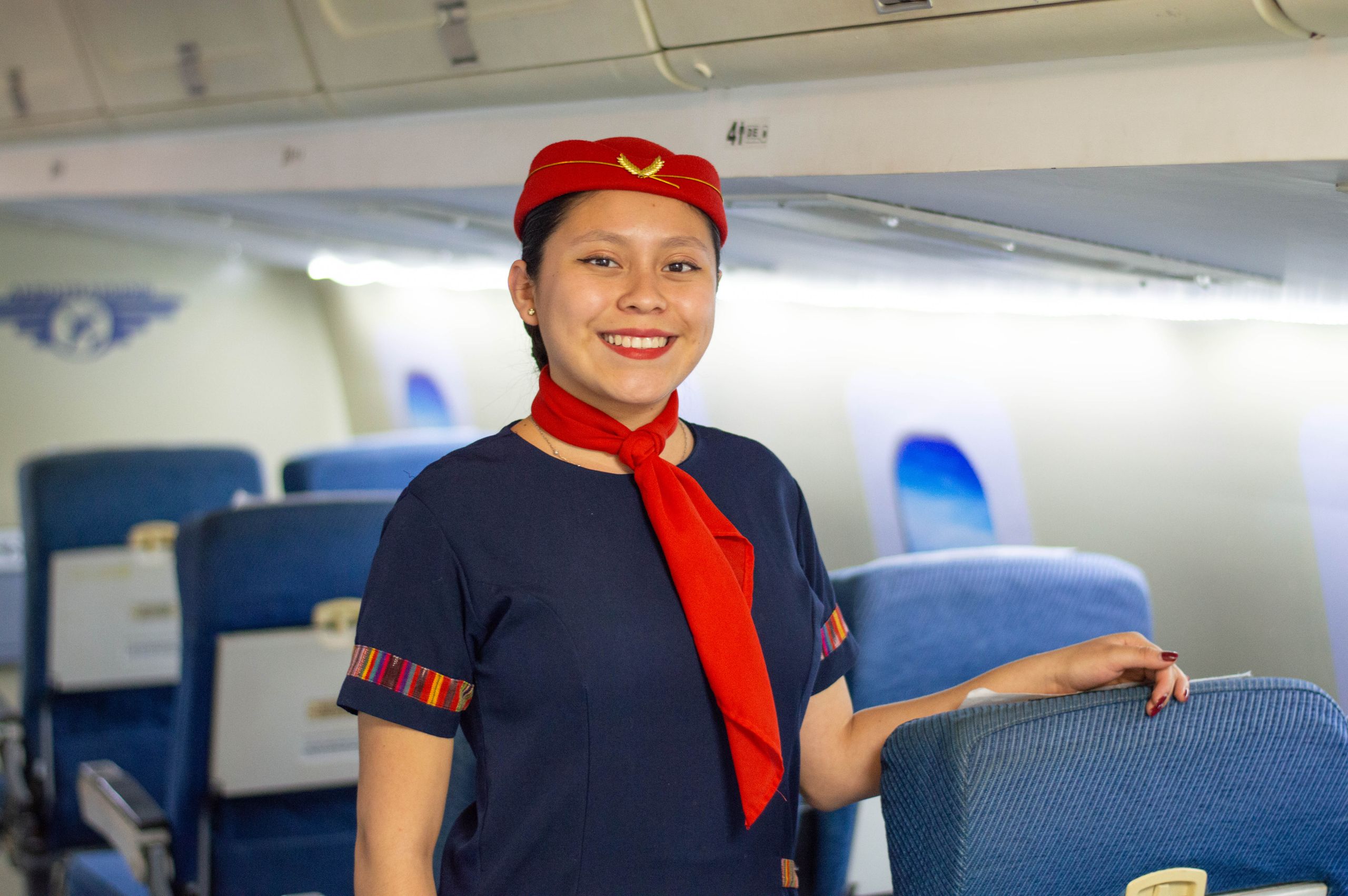
How to Become a Flight Attendant: Requirements, Training and Pay
Learning how to become a flight attendant is the first step toward a career that takes you to new cities every week, pays you to travel, and asks you to look after hundreds of people at 35,000 feet. It is also a career with real trade-offs: irregular hours, nights away from home, and a hiring process that is far more competitive than most people expect. Airlines in the United States and Europe receive tens of thousands of applications for a few hundred training places, so the people who get hired are the ones who prepare properly, understand exactly what airlines are looking for, and apply with a polished, professional application.
A flight attendant — also called cabin crew — is responsible for the safety and comfort of passengers. The safety side comes first: demonstrating safety procedures, managing emergencies, evacuating an aircraft, and giving first aid. The service side is what passengers notice most: greeting people at the door, helping with bags, serving food and drinks, and dealing calmly with problems ranging from a nervous flyer to a difficult passenger. Airlines hire for both halves of the job at once. They want people who are warm and welcoming, but who can also stay calm, take charge, and follow procedures exactly when something goes wrong.
Table of Contents
Quick Answer
To become a flight attendant, you generally need to be at least 18 to 21 years old (depending on the airline), hold a high school diploma or equivalent, be able to pass a background check and drug test, meet the airline’s height and reach requirements, and be able to swim. Most airlines do not require a college degree or previous airline experience. You apply online, pass a video or phone screening, attend an in-person assessment or interview, and then complete four to eight weeks of unpaid or paid training at the airline’s training centre. Once you pass the final exams and the regulatory safety checks, you earn your wings and start flying on probation. The whole process, from application to first flight, typically takes three to six months.
What Does a Flight Attendant Actually Do?
Many people picture the job as serving drinks and visiting new places. Those are real parts of it, but they are only a fraction of the work. Understanding the full job is the first test of whether this career suits you, and interviewers will expect you to describe it accurately.
Safety Is the Core of the Job
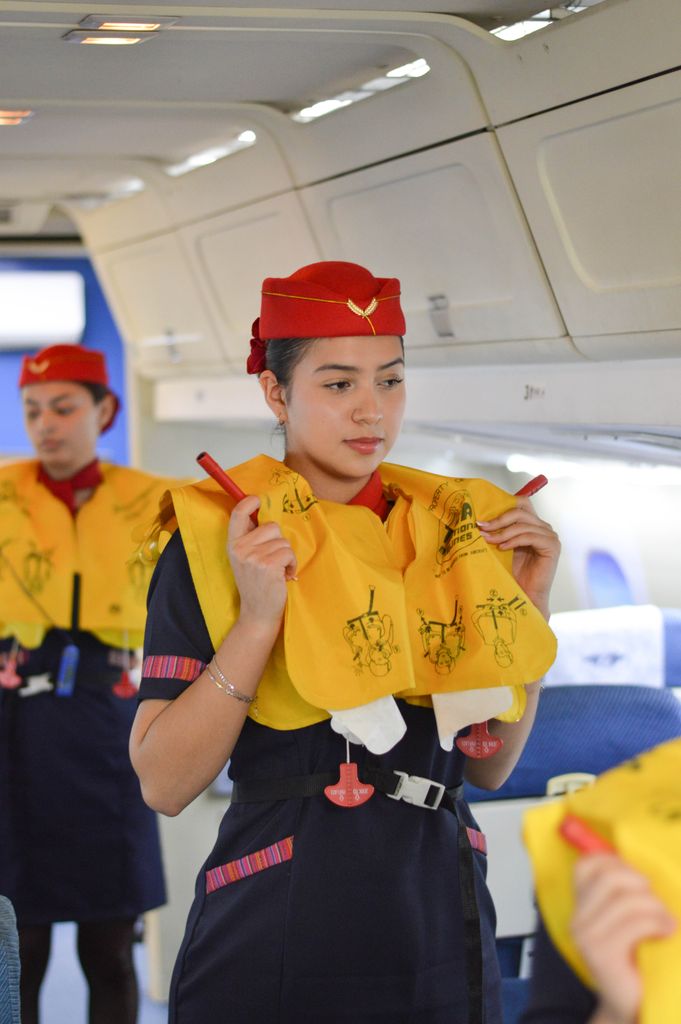
A flight attendant’s primary legal duty is passenger safety. Before every flight, crew members check emergency equipment, count safety items, and review the passenger list for special needs. During boarding they watch for anything unusual, check that bags are stowed safely, and make sure every passenger can reach an exit. The safety demonstration is not a performance — it is a legal requirement, and crew must be able to deliver it clearly in a noisy cabin full of people who are not listening.
In an emergency, flight attendants run the evacuation. They must be able to open heavy aircraft doors, operate emergency slides, direct passengers firmly, and keep order under pressure. They are also trained in first aid, CPR, and using a defibrillator, and they are often the first responder when a passenger becomes ill mid-flight. Airlines test these skills repeatedly during training, and a candidate who cannot stay calm under pressure will not pass.
Service, Sales, and Passenger Care
The visible part of the job is customer service. Crew greet passengers, help with seating problems, serve meals and drinks, answer questions about connections, and handle complaints. On long-haul flights this can mean several service rounds over eight or more hours, much of it on your feet. On short-haul flights, the pace is faster: a crew may operate four or five short sectors in a single day, with only minutes between flights to clean, restock, and board again.
Many airlines also expect crew to sell duty-free goods, food, and drinks on board, and to handle cash and card payments accurately. Good crew members are organised, quick with numbers, and comfortable using the airline’s onboard systems. They also need to manage cultural differences gracefully: a flight from New York to Paris or London to Dubai carries passengers from many countries, and a good flight attendant adapts their manner without losing professionalism.
A Day in the Life
A typical working day starts well before the flight. Crew check in at the airport, attend a briefing with the captain and the rest of the crew, review the flight details, and check the aircraft. After landing, there may be a short turnaround before the next flight, or a layover in another city. Layovers can last from a few hours to a few days, and crew usually stay in a hotel arranged by the airline. Days off are not always weekends, and rosters change monthly. Seniority matters: more experienced crew get first choice of routes and schedules, while new crew — often called junior crew — fly the routes and hours nobody else wants.
Do You Meet the Basic Requirements?
Airlines publish their minimum requirements on their careers pages, and they differ from airline to airline. The list below covers the requirements most US and European airlines share. Treat it as a starting checklist, and always confirm the exact rules on the airline you want to join, because a single failed requirement ends your application.
Age and Education
Most major US airlines require you to be at least 21 years old, because crew serve alcohol on board. Some regional airlines and many European airlines accept applicants from 18. You need a high school diploma or equivalent as a minimum. A college degree is not required by most airlines, although a degree or previous customer service experience can strengthen your application. Fluency in English is essential everywhere, and a second language — especially Spanish, French, German, or Arabic — is a genuine advantage on international routes.
Height, Reach, and Health
Airlines set height and reach requirements because crew must reach overhead bins and safety equipment. The exact figures vary, but a common standard is a minimum height of around 5 feet 2 inches (about 157 cm) and the ability to reach at least 6 feet 8 inches (about 203 cm) standing on flat feet, sometimes with a small step. Some airlines measure reach with shoes on, others without. If you are close to the limit, measure yourself carefully before applying — it is better to know now than to fail a measurement at an assessment day.
You must be able to swim, usually at least 25 metres unaided, and to tread water. You will be tested on this during training, often in a pool while wearing a life jacket and then without one. You also need good general health and vision: most airlines require vision correctable to 20/20 with glasses or contact lenses. Tattoos and piercings are a live issue. Rules have relaxed in recent years, but many airlines still require that visible tattoos can be covered by the uniform, and that facial piercings are removed while on duty. Check the airline’s grooming policy before you apply, and do not assume your tattoo is fine.
Passport, Background, and Drug Testing
You need a valid passport with no restrictions that would stop you entering the countries the airline flies to. Some countries refuse entry to people with certain criminal convictions, and airlines cannot employ crew who cannot enter their destinations. Expect a thorough background check covering the last five to ten years, including employment history, criminal records, and address history. Any gap in your history will be questioned, so keep records of every job, address, and period of study.
You must also pass a drug and alcohol test, and submit to random testing throughout your career. Airlines in the United States are required by federal regulation to test safety-sensitive staff, including cabin crew. A failed test ends your application immediately and can make it very hard to be hired by any other airline.
Customer Service Experience Helps — a Lot
No airline requires previous flying experience, but almost all of them prefer candidates with customer service experience. Working in a restaurant, hotel, shop, call centre, or healthcare role teaches you the exact skills airlines test for: staying friendly under pressure, handling complaints, working in a team, and following procedures. If you have no customer service experience at all, getting a part-time or full-time customer-facing job for six months before you apply is one of the best investments you can make. Our guide on how to get a job with no experience explains how to land that first customer-facing role and present it well on an application.
Airline-by-Airline Requirements: What the Big Names Ask For
Requirements differ enough between airlines that you should never send the same generic application to all of them. Read each airline’s careers page and tailor your application to its specific rules.
US Legacy Airlines: American, Delta, and United
The three large US legacy carriers generally require applicants to be at least 21, hold a high school diploma, and have a valid US passport. Delta and United are known for highly structured hiring: an online application, a video interview where you record answers to set questions, and then a full-day in-person event at their training centre. American follows a similar pattern. All three provide paid training, usually lasting six to eight weeks, at their own training facilities. Training is intensive and residential — you live near the training centre for the duration — and the pass mark is high. These airlines fly long-haul international routes, so a second language is a real advantage, and they value previous customer service experience highly.
US Low-Cost Airlines: Southwest, JetBlue, Spirit, and Frontier
Low-cost carriers follow the same safety standards but often have a slightly different culture and hiring style. Southwest, for example, is famous for hiring on attitude and personality as much as experience, and its interview process includes group activities designed to show how you work with others. JetBlue places a strong emphasis on customer service and its own brand of hospitality. Spirit and Frontier operate many short-haul routes, which means more sectors per day and faster turnarounds — good to know before you apply, because the pace is relentless. Pay structures at low-cost carriers can differ from the legacy airlines, especially in the first year, so compare the full package — base pay, per diem, and benefits — rather than the hourly rate alone.
US Regional Airlines: SkyWest, Envoy, Republic, and Endeavor
Regional airlines fly shorter routes on behalf of the big carriers, often with smaller aircraft. They are a common entry point into the industry because they hire more frequently and sometimes have slightly more flexible requirements, such as accepting applicants at 19 or 20. Many flight attendants start at a regional airline, gain a year or two of experience, and then move to a major carrier. Regional flying means more take-offs and landings per day and smaller crews — often just one or two flight attendants per aircraft — so you learn fast and take on responsibility early.
European Airlines: British Airways, Lufthansa, Air France, Ryanair, and easyJet
European airlines follow rules set by the European Union Aviation Safety Agency, and most require a cabin crew attestation — a certificate that proves you have completed approved safety training. Some airlines include this training in their own course; others expect you to hold it before you apply. British Airways, Lufthansa, and Air France run their own training academies and hire across Europe. Ryanair and easyJet hire large numbers of crew each year and often recruit through partner training organisations. Pay and conditions vary widely across Europe, and some low-cost carriers use different employment models, including agency contracts in the early years. Read the contract carefully before accepting: base pay, allowances, and the cost of training can differ sharply from one airline to another.
Gulf and Asian Long-Haul Carriers: Emirates, Qatar Airways, and Etihad
The Gulf carriers recruit worldwide and run some of the most competitive selection processes in the industry. They typically hold open days in major cities around the world, and they expect candidates to arrive well groomed, in business dress, and prepared for group exercises, English tests, and reach and swim assessments. Successful candidates relocate to Dubai, Doha, or Abu Dhabi, and the airline provides accommodation. The lifestyle is distinctive: long-haul flying, generous layovers, and a large international crew community, but also life far from home and a demanding roster. These airlines are a genuine option for US and European applicants, but treat the relocation as a major life decision, not just a job change.
The Application Process Step by Step
Step 1: Research Airlines and Choose Your Targets
Do not apply to every airline at once. Pick three to five that fit your situation: where you live, whether you can relocate, which routes appeal to you, and what kind of flying you want — short-haul or long-haul, domestic or international. Read each airline’s careers page carefully, note its exact requirements, and check whether it is currently hiring. Airlines open and close applications in waves, and some only recruit a few times a year.
Step 2: Build a Strong Resume
A flight attendant resume is different from a normal office resume. Airlines want to see customer service experience, teamwork, languages, and any safety or first aid training. Keep it to one or two pages, use a clean layout, and include a professional headshot only if the airline asks for one — many do ask for a full-length photograph as part of the application, so have a recent, professional-looking photo ready. List your height and your ability to swim if the application asks for them; do not hide a requirement you cannot meet, because it will be tested.
Step 3: The Online Application and Video Interview
Most airlines now start with an online application followed by a video interview. You record answers to a set of questions, usually with a time limit of one to two minutes per answer. Common questions include why you want to be a flight attendant, how you would handle an angry passenger, and a time you worked well in a team. Practise answering out loud, on camera, before you record. Look at the camera, smile, speak clearly, and keep your answers structured: situation, what you did, and the result. Good lighting and a plain background matter more than you might think. Our guide to common interview questions and answers covers the structured-answer method in detail, and it works just as well on video as in person.
Step 4: The Assessment Day
If you pass the video stage, you will be invited to an assessment day, often called a face-to-face interview or hiring event. This is a full day, and it is a selection process from the moment you arrive: how you dress, how you greet other candidates, and how you behave in group exercises are all observed. A typical day includes a group activity, a short presentation or role play, a one-to-one interview, a height and reach check, and sometimes an English or maths test. Dress as if you are already cabin crew: smart business dress, neat hair, minimal jewellery, and polished shoes. Arrive early, be friendly to everyone including other candidates, and take part in group work without dominating it. Airlines are watching for teamwork, not for the loudest voice.
Step 5: Training — Four to Eight Weeks That Decide Everything
Training is the hardest part of becoming a flight attendant. It usually lasts four to eight weeks, is full time, and is often residential. You will study aircraft safety equipment, emergency procedures, first aid, firefighting, evacuation drills, water survival, service standards, and the airline’s specific procedures. The days are long, the exams are frequent, and the pass marks are high — often 90 percent or more on safety exams.
Some airlines pay you during training; others pay only after you qualify, or provide a small allowance. Ask about this before you accept a place. A significant number of trainees fail or drop out, usually because they underestimated the volume of study or the physical demands. Treat training like a full-time exam course: study every evening, practise procedures with your classmates, and ask instructors for help early if you are struggling.
Step 6: Probation and Your First Flights
After training, you graduate — the “wings” ceremony is a real tradition — and start flying on probation, usually for six months. During probation you are closely monitored, your performance is reviewed regularly, and your schedule is set by the airline, not by you. Expect reserve duty: being on call, sometimes at short notice, to cover flights when other crew are sick or delayed. Reserve is tiring and unpredictable, but it is how every new flight attendant starts. After probation, you gain more control over your roster and can start bidding for the routes you prefer.
Pay, Benefits, and the Real Lifestyle
Pay for flight attendants is often misunderstood, so it is worth understanding how it actually works. Airlines usually pay an hourly rate for flight hours — the time from when the aircraft doors close to when they open again — plus a per diem allowance for meals and expenses while you are away from base. Your monthly pay therefore depends on how many hours you fly, and new crew fly fewer hours than senior crew. Starting pay is modest in the first year and rises with seniority, and the top of the scale — reached after many years — is substantially higher. This article does not quote specific pay figures because they change every year and differ by airline, country, and contract. Check the airline’s careers page and the current union or company agreement for up-to-date figures, and the Federal Aviation Administration for the safety rules that shape the job.
Benefits are a large part of the package. Almost all airlines offer free or heavily discounted travel for you and, in many cases, your family. You also get hotel accommodation on layovers, a uniform, health insurance in many cases, and a retirement plan. The travel benefits are genuinely valuable — many crew members use them to see the world on their days off — but remember that standby travel means you fly only if there is a spare seat, and you may not get home when you planned.
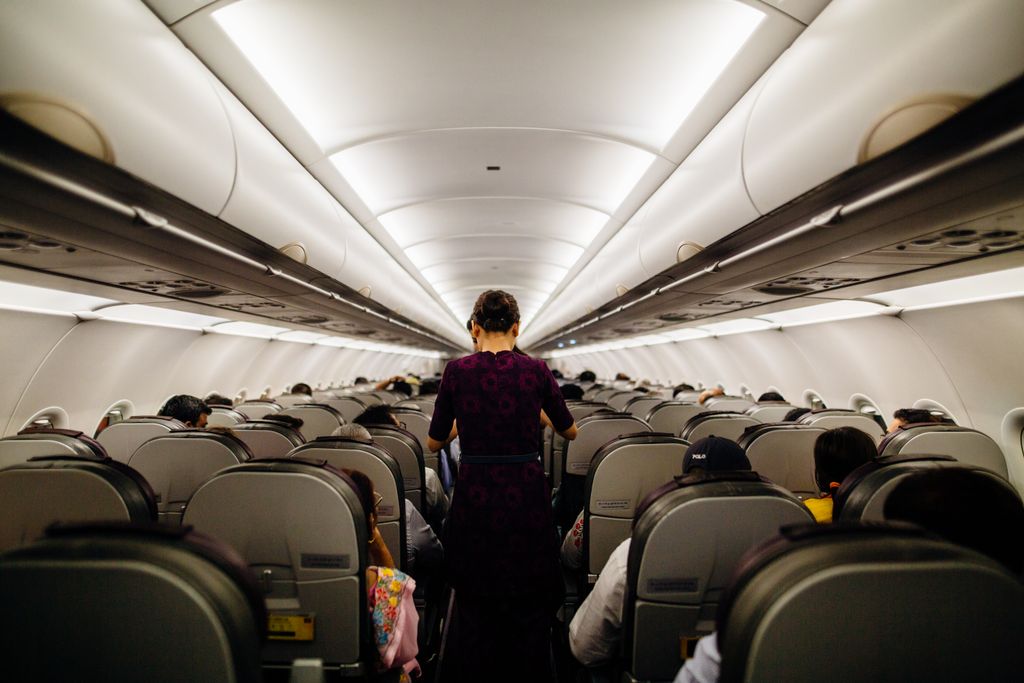
The lifestyle is the part candidates most often underestimate. You will work weekends, holidays, and nights. You will miss birthdays, weddings, and family events. You will sleep in hotels more often than in your own bed, eat at odd hours, and cross time zones so often that jet lag becomes a normal part of life. On the other hand, you will visit places most people only dream about, work with a close-knit crew community, and build a career where no two days are the same. Go in with your eyes open: the people who last in this career are the ones who genuinely enjoy the irregular life, not the ones who only liked the idea of it.
Common Mistakes That Cost Candidates the Job
Applying Before You Meet the Requirements
The most common mistake is applying to an airline whose minimum requirements you do not meet — too young, too short to pass the reach test, unable to swim, or unable to pass a background check. Each rejection costs you time, and some airlines will not let you reapply for six or twelve months. Check every requirement first, fix what you can, and only then apply.
A Generic Application Sent to Every Airline
Recruiters can tell immediately when an application has been copied and pasted. Mention the airline by name, show that you know its routes and values, and explain why you want to work for that airline specifically. A short, specific paragraph beats a long generic one.
Poor Grooming at the Assessment Day
Airlines judge grooming because cabin crew are the face of the airline. Arrive with clean, neat hair, natural-looking makeup if you wear it, clean nails, polished shoes, and a well-fitted suit. Avoid heavy perfume, visible tattoos, and excessive jewellery. This is not about looking a particular way — it is about showing that you understand the professional standard the job requires.
Talking About Travel Instead of Safety
Interviewers hear “I love to travel” from nearly every candidate. It is a fine reason to be interested, but it should not be your main answer. Talk about safety, teamwork, customer service, and staying calm under pressure. Show that you understand the job is about looking after people, not about collecting destinations.
Failing to Prepare for Group Exercises
Group exercises catch many candidates out. The assessors are watching how you listen, how you include quieter people, and whether you can reach a decision as a team. Practise with friends: take a problem, discuss it as a group, and reach an agreement in a set time. The candidate who helps the group succeed scores higher than the one who tries to stand out.
Giving Up After One Rejection
Rejection is normal in this industry. Many working flight attendants were rejected once or twice before they were hired. If you are rejected, ask for feedback if the airline offers it, work on the weak point — often interview technique or customer service experience — and apply again when the airline reopens recruitment. Each attempt makes you better prepared.
Your Getting-Started Checklist
- Confirm you meet the age, height, reach, swimming, and passport requirements for your target airlines
- Get a valid passport and check you can enter the airline’s destinations
- Build at least six months of customer service experience if you do not have it yet
- Learn or improve a second language if you can — it genuinely helps on international routes
- Take a first aid course; it strengthens your application and your training
- Choose three to five target airlines and read each one’s careers page in full
- Prepare a clean one-to-two-page resume and a professional photograph if the airline asks for one
- Practise video interview answers out loud, on camera, with a timer
- Prepare smart business dress for assessment days and check the airline’s grooming rules
- Research the airline’s training pay, contract type, and base locations before accepting a place
- Check current pay and conditions on the airline’s official careers page, not on forums
- Plan for the lifestyle honestly: irregular hours, reserve duty, and nights away from home
Conclusion
Becoming a flight attendant is a competitive but entirely achievable goal, and you do not need a degree or previous airline experience to get there. What you need is a clear understanding of the requirements, genuine customer service experience, a polished application tailored to each airline, and the stamina to get through an intensive training course. Choose your target airlines carefully, prepare properly for the video interview and the assessment day, and treat training as the serious professional course it is. If you can picture yourself enjoying the irregular hours, the teamwork, and the responsibility for hundreds of passengers, this career can give you a working life unlike any other — one where the office window really does change every day.
FAQ
How long does it take to become a flight attendant?
From application to first flight, the process usually takes three to six months, depending on how often the airline recruits and how long its training course runs. The application and interview stages typically take four to eight weeks, and training lasts a further four to eight weeks. Some airlines move faster than others, and recruitment waves can mean a wait of several months between applying and hearing back. If you are rejected at any stage, most airlines ask you to wait six to twelve months before reapplying.
Do you need a college degree to become a flight attendant?
No. Most airlines in the United States and Europe require only a high school diploma or equivalent. A college degree is not required, and many working flight attendants do not have one. What matters far more is customer service experience, a second language, and the ability to pass the interview, assessment day, and training exams. A degree can help your application stand out, but it is never a substitute for the customer service skills and safety awareness airlines test for.
How much do flight attendants get paid?
Pay varies by airline, country, seniority, and how many hours you fly each month, and it changes every year, so this article does not quote specific figures. Airlines typically pay an hourly rate for flight hours plus a per diem allowance while you are away from base. Starting pay in the first year is modest, and it rises steadily with seniority. Benefits such as free or discounted travel, hotel accommodation on layovers, and health insurance form a large part of the total package. Always check the airline’s official careers page for current pay and conditions.
Can you become a flight attendant with tattoos?
It depends on the airline. Rules have relaxed in recent years, but many airlines still require that tattoos are not visible while you are in uniform, or that they can be covered. Facial, neck, and hand tattoos are the most likely to be a problem. Some airlines now allow visible tattoos within limits, while others still prohibit them. Check the specific airline’s grooming policy on its careers page before you apply, and be honest about your tattoos — they will be checked during the assessment process.
Is it hard to become a flight attendant?
Yes, it is competitive. Major airlines receive tens of thousands of applications for a few hundred places, and training has high pass marks and a real failure rate. But the process is fair and learnable: candidates who meet the requirements, have customer service experience, prepare properly for interviews, and study hard in training have a strong chance. Many working flight attendants were rejected once before they were hired, so a rejection is a setback to learn from, not a final answer.