How to Become a Pharmacy Technician: Certification and Jobs
If you want a stable healthcare job without spending four years in college or taking on large student debt, learning how to become a pharmacy technician is one of the most practical routes into the field. Pharmacy technicians work in drugstores, hospitals, clinics, mail-order pharmacies, and specialty pharmacies. They help pharmacists fill prescriptions safely, talk with patients, manage stock, handle insurance, and keep the pharmacy running smoothly. In many places, you can be job-ready in a few months, not a few years.
This guide explains the whole path in plain language. You will learn what pharmacy technicians actually do each day, the main training routes, how the PTCB and ExCPT certification exams work, how state registration and licensing work, what the job pays in general terms, what the job outlook looks like, how to get hired with no experience, how to write a strong resume and do well in interviews, and how to move up over time. It also covers common mistakes, safety and accuracy, continuing education, and notes for readers in Europe.
Table of Contents
Quick Answer
To become a pharmacy technician in the United States, most people follow these steps: finish high school or earn a GED, complete a training program or employer training, pass a national certification exam such as the PTCB Pharmacy Technician Certification Exam (PTCE) or the ExCPT, register or get licensed with your state board of pharmacy if your state requires it, pass a background check, and apply for entry-level jobs. Some states let you start work as a trainee while you study for certification. Others require registration before you can work in a pharmacy.
Training usually takes a few months to about a year, depending on the route you choose. A certificate program at a community college or vocational school often takes 4 to 12 months. Employer training can be shorter, often a few weeks to a few months, because you learn on the job. Self-study is possible, but it works best if you are disciplined and use a good study plan and practice exams.
Certification is not the same as a license. Certification is a national credential that shows you passed an exam. Registration or licensure is a state process. Many employers prefer or require certification, and some states require it. Always check your state board of pharmacy for the current rules in your state, because requirements vary by state and they change over time.
Pay varies by location, setting, experience, certification, and shift. In general terms, entry-level pharmacy technicians in the United States often earn an hourly wage in the mid-teens to low twenties per hour, with hospital and specialty roles often paying more than retail. Experienced, certified technicians, lead technicians, and IV compounding technicians can earn more. Check current pay data from the U.S. Bureau of Labor Statistics and local job listings before you make a decision, because pay changes by city and by employer.
The job outlook is steady. Pharmacies need technicians because prescriptions keep increasing, the population is ageing, and pharmacists need help with more clinical work. Retail, hospital, mail-order, and specialty pharmacies all hire technicians. Your chances improve a lot if you are certified, flexible about shifts, willing to start in retail, and able to show that you are accurate, reliable, and good with people.
What Does a Pharmacy Technician Do?
A pharmacy technician supports a licensed pharmacist. The pharmacist is responsible for the final check of every prescription and for clinical decisions. The technician does much of the preparation, organisation, and patient-facing work that makes safe dispensing possible. The exact tasks depend on where you work, but the core purpose is the same: get the right medicine, in the right dose, to the right person, at the right time, without errors.
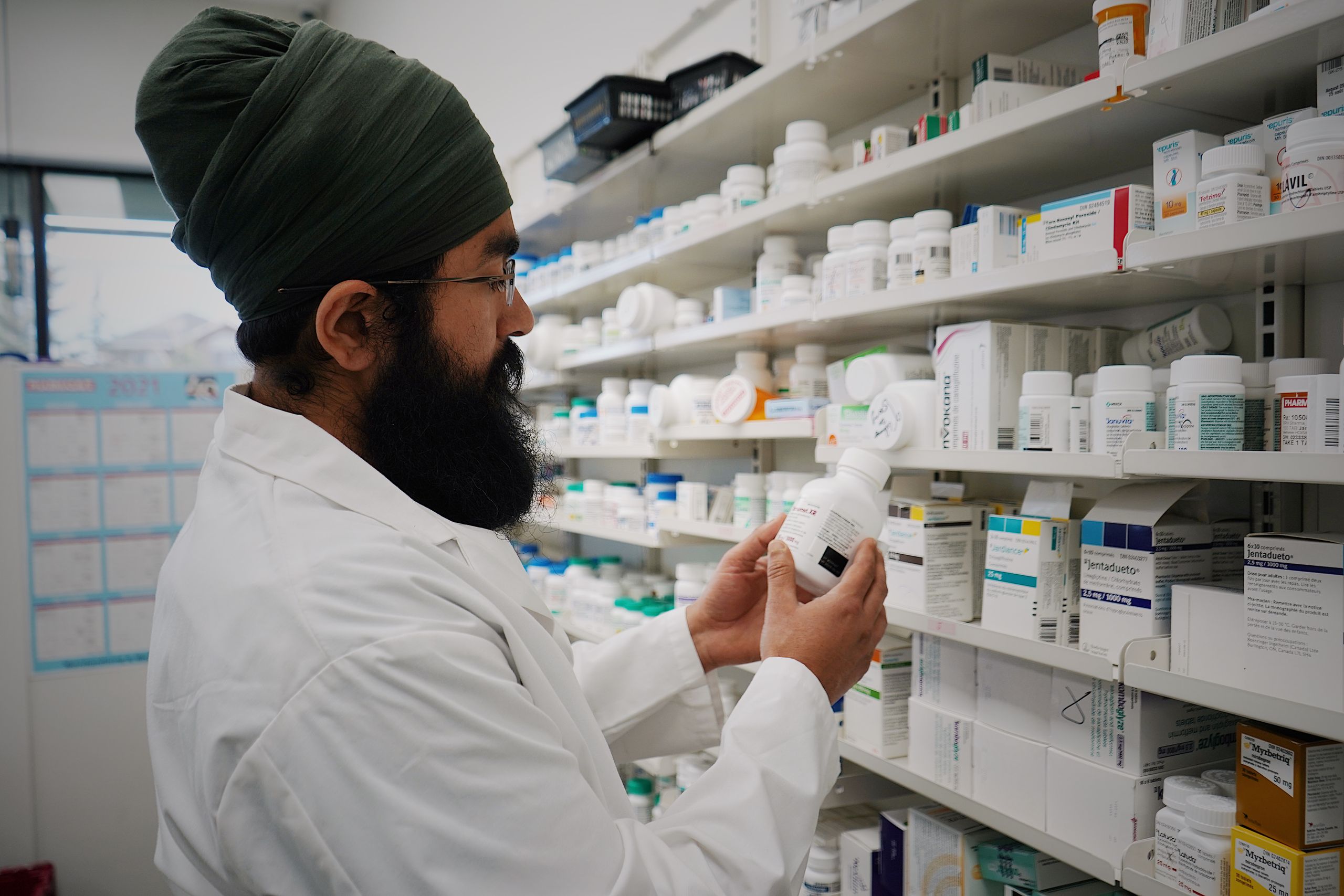
In a typical day, a technician may receive prescriptions, enter them into the pharmacy computer system, count or measure medicine, label bottles, check stock, answer phones, take payments, talk to patients about pick-up times and insurance, and contact doctors’ offices about refills or unclear prescriptions. You will also keep records, file paperwork, clean work areas, and follow strict rules about privacy and controlled medicines.
Accuracy is the most important part of the job. A small mistake in dose, drug name, or patient name can cause serious harm. That is why technicians are trained to double-check, to slow down when something looks wrong, and to ask the pharmacist when they are unsure. Good technicians are careful, organised, and calm under pressure.
A Day in a Retail Pharmacy
Retail is the most common first job for new technicians. Retail includes large chain drugstores, supermarket pharmacies, and independent community pharmacies. The pace is fast, the work is varied, and you meet many different people each day.
A retail shift often starts with checking the queue of new prescriptions, filling orders that came in overnight, and preparing the day’s work. You will greet patients at the counter and the drive-through, take new prescriptions, and explain waiting times. You will enter prescription details into the system, check insurance, and tell patients about copays. If insurance rejects a claim, you may need to call the insurance company or the prescriber to fix it.
You will count tablets, pour liquids, apply labels, and place finished prescriptions in the correct bag for pick-up. You will also manage the phone, answer questions about opening hours and refills, and transfer prescriptions from other pharmacies when a patient asks. At the end of the day, you may help with stock counts, ordering, and cleaning.
Retail teaches you speed, customer service, insurance basics, and how to handle busy periods. It can be stressful at peak times, especially during flu season or when a medicine is out of stock. But it is also a good place to learn the fundamentals and to prove that you are reliable. Many hospital and specialty employers prefer candidates who have retail experience, because it shows you can work with the public and manage a high volume of work.
A Day in a Hospital Pharmacy
Hospital pharmacy is very different from retail. You work behind the scenes, mostly with nurses, doctors, and other hospital staff rather than with the general public. The work is more clinical, more precise, and often more structured.
Hospital technicians prepare medicines for patients on wards, in emergency departments, and in intensive care. You may fill medication carts, prepare IV bags, mix sterile compounds, and deliver medicines to different units. You will check patient medication records, restock automated dispensing cabinets, and help manage controlled medicines. Some hospital technicians work in the central pharmacy, while others work on specific wards or in the operating theatre area.
Sterile compounding is a key hospital skill. This means preparing IV medicines in a cleanroom, wearing gloves, gowns, masks, and other protective gear, and following strict hygiene rules. You must learn how to avoid contamination, how to measure doses exactly, and how to document every step. Hospitals provide extra training for this work, and you may need additional certification or competency checks.
Hospital shifts can include evenings, nights, weekends, and holidays, because hospitals never close. The pay is often higher than retail, and the work can feel more connected to direct patient care. If you like detail, teamwork, and a quieter, more clinical setting, hospital pharmacy may suit you better than retail.
Mail-Order and Specialty Pharmacy
Mail-order pharmacies fill large numbers of prescriptions and send them to patients by post. The work is more like a production line, with high volume, automation, and strict quality checks. You may work at a filling station, check labels, package orders, and handle customer calls about delivery and refills. Mail-order roles suit people who like routine, speed, and working with systems. Some mail-order jobs are remote or hybrid, especially for customer service and data-entry roles, but filling and packing roles are usually on site.
Specialty pharmacy deals with complex, high-cost medicines for conditions such as cancer, rheumatoid arthritis, multiple sclerosis, HIV, and rare diseases. These medicines often need special storage, handling, and patient education. Specialty technicians work closely with pharmacists, nurses, insurance teams, and drug manufacturers. They help patients understand how to take the medicine, how to store it, what side effects to watch for, and how to get financial help if the medicine is expensive.
Specialty roles often pay more and require more training. They also require strong communication skills, because patients may be anxious, unwell, or confused about a new treatment. If you want a more specialised career path, specialty pharmacy is a good long-term goal after you gain experience.
Other Settings
Pharmacy technicians also work in long-term care pharmacies, which supply medicines to nursing homes and care facilities; in compounding pharmacies, which make custom medicines; in insurance and pharmacy benefit management companies; in pharmaceutical companies; in clinics; and in government and military pharmacies. Each setting has its own pace and skills, but the core skills — accuracy, organisation, communication, and knowledge of medicines — transfer well between them.
Long-term care work involves preparing large numbers of doses in blister packs, checking medication lists for care-home residents, and coordinating deliveries. Compounding work involves mixing creams, liquids, and capsules to a specific prescription. Insurance and benefit roles involve checking claims, authorisations, and formularies. These roles may be a good fit if you prefer less face-to-face work or want to move away from the counter over time.

Skills You Need to Succeed
You do not need to be a science expert to start, but you do need a set of practical skills. The best technicians combine attention to detail with people skills and basic maths. These are the skills that matter most when you are learning how to become a pharmacy technician.
Accuracy and attention to detail come first. You must read labels carefully, check names and doses, and notice when something does not match. A drug name that looks similar to another drug, a decimal point in the wrong place, or a patient with the same name as another patient can all cause errors. Good technicians build habits that prevent mistakes: they read the label twice, they check the prescription against the computer record, and they never rush a final check.
Basic maths matters. You will calculate doses, convert units, count tablets, measure liquids, and work out days’ supply. You do not need advanced maths, but you must be comfortable with fractions, decimals, percentages, and ratios. Practice these skills before your exam and before you start work, because they appear in both training and daily tasks.
Communication skills matter just as much. You will talk to patients who may be ill, worried, elderly, or in a hurry. You need to be clear, patient, and respectful. You also need to communicate well with pharmacists, nurses, doctors, and insurance staff. Clear notes, good phone manner, and the ability to explain a delay without blaming the patient are all valuable.
Organisation and time management help you handle a busy queue. You will juggle new prescriptions, refills, phone calls, and stock tasks at the same time. Learning to prioritise — urgent medicines first, routine refills later — is a skill you develop with experience. A tidy work area, a clear system for pending orders, and good record-keeping make the work easier and safer.
Computer skills are essential. Pharmacies use specialised software for prescriptions, insurance, stock, and patient records. You need to type accurately, learn new systems quickly, and follow data-entry rules. If you are not confident with computers, practise typing and basic office software before you apply.
Finally, you need reliability and professionalism. Pharmacies depend on staff who turn up on time, follow rules, keep patient information private, and stay calm when the queue is long. Employers notice technicians who are punctual, honest, and willing to help colleagues. Those habits often matter more than grades in the long run.
How to Become a Pharmacy Technician: Step by Step
There is no single route into this career. The steps below describe the most common path in the United States. Use them as a checklist, but always check your state rules, because some states add extra steps or have different timing.
Step 1: Finish High School or Earn a GED
Most training programs and employers require a high school diploma or GED. If you are still in school, focus on biology, chemistry, maths, and English. Good grades in science help, but they are not the only factor. If you left school early, earning a GED is a practical first step and many community colleges can help you prepare for it.
You also need to be at least 18 in most states to register as a pharmacy technician, although some trainee roles start at 17. Check your state board for the exact age rule.
Step 2: Choose a Training Route
You have four main training routes: a certificate program, a community college program, employer training, and self-study. Each route has advantages and trade-offs. The best choice depends on your budget, your time, your learning style, and your state’s rules.
A certificate program at a vocational school or online provider usually takes 4 to 12 months. It covers drug names, dosage forms, pharmacy law, calculations, insurance, and exam preparation. Some programs include an externship, which is a short work placement in a real pharmacy. An externship is valuable because it gives you experience and a reference for your first job.
A community college program often leads to a certificate or an associate degree. It may take 9 months to 2 years, depending on whether you study full-time or part-time. Community colleges are often cheaper than private vocational schools, and they may offer financial aid. An associate degree can help if you later want to move into a lead role or apply to pharmacy school, but it is not required for most technician jobs.
Employer training is the fastest and cheapest route for many people. Some large pharmacy chains and hospitals hire trainees and train them on the job. You learn while you earn, and you may get help paying for your certification exam. The trade-off is that training is focused on that employer’s systems and may be less broad than a college program. Ask during the interview what training is provided, how long it lasts, and whether the employer pays for certification.
Self-study means preparing for the certification exam on your own, using textbooks, online courses, and practice tests. This route costs less, but it requires strong discipline. It works best if you already have some pharmacy experience or a science background. If you choose self-study, use a structured study plan, take timed practice exams, and focus on your weak areas. Do not rely on free videos alone; use a recognised textbook or course that matches the current exam outline.
When you compare programs, ask these questions: Is the program accredited or recognised? What is the pass rate for the certification exam? Does it include an externship? How much does it cost in total, including books, fees, and exam costs? Can you study part-time while you work? What help does the school offer with job placement? Avoid programs that promise a guaranteed job or a high salary without evidence. Check reviews, ask to speak to past students, and compare costs before you enrol.
Step 3: Learn the Core Knowledge
Whatever route you choose, you need to learn the same core topics. These topics appear in training, in the certification exam, and in daily work.
Pharmacy law and ethics is one of the most important areas. You need to know what a technician can and cannot do, how controlled medicines are handled, how patient privacy works, and what records must be kept. You will also learn about the roles of the pharmacist, the technician, and the state board of pharmacy.
Drug names and classes are another core area. You need to learn generic and brand names, what each drug is used for, common doses, and common side effects. You do not need to memorise every drug, but you should know the most common ones in each class, such as antibiotics, blood pressure medicines, diabetes medicines, pain medicines, and asthma inhalers. Learning by drug class, rather than one drug at a time, makes this easier.
Pharmacy calculations cover dose calculations, conversions between units, days’ supply, and IV flow rates. Practise these regularly, because they are a common reason for exam failure. Use practice questions every day, even if only for 15 minutes.
Dispensing and pharmacy operations cover how prescriptions are received, entered, filled, checked, and handed to the patient. You will learn about labelling, storage, stock control, expiry dates, and how to handle returns and recalls. You will also learn about insurance, prior authorisations, and common reasons for claim rejections.
Sterile and non-sterile compounding covers how to prepare IV medicines and custom medicines safely. Even if you do not plan to work in a hospital, you need to know the basics for the exam. If you do plan hospital work, you will get more hands-on training after you are hired.
Patient safety and communication cover how to avoid errors, how to report a mistake, how to talk to patients, and how to handle difficult situations. This is not just exam knowledge; it is daily practice. Good technicians treat safety as a habit, not a checklist to pass once.
Step 4: Pass a National Certification Exam
In the United States, the two main national certification exams are the PTCB Pharmacy Technician Certification Exam (PTCE) and the NHA ExCPT (Examination for the Certification of Pharmacy Technicians). Both lead to a recognised credential, but they are run by different organisations and have slightly different requirements.
The PTCB exam leads to the Certified Pharmacy Technician (CPhT) credential. To sit the PTCE, you usually need a high school diploma or GED and completion of a PTCB-recognised training program or equivalent work experience. The exam covers medications, federal requirements, patient safety and quality assurance, and order entry and processing. It is a computer-based, multiple-choice exam. PTCB also offers advanced credentials for technicians who want to specialise, for example in sterile compounding or medication safety.
The ExCPT leads to the Certified Pharmacy Technician (CPhT) credential through NHA. The eligibility rules are similar, and the exam covers similar topics, including pharmacy law, drug classifications, calculations, and dispensing. Some employers accept either credential. Others prefer one over the other, so check job listings in your area before you choose.
Which exam should you take? If your training program prepares you for one exam, take that one. If you have a choice, look at local job listings and ask employers which credential they prefer. In many areas, PTCB is more widely recognised, especially in hospitals. In other areas, both are accepted equally. The most important thing is to pass one of them and to keep it active.
To prepare, start early and study in short, regular sessions rather than cramming. Use the official exam outline as your study guide. Take practice exams under timed conditions. Focus on calculations, drug names, and pharmacy law, because these areas carry a lot of weight. Join a study group if you can, and ask a working technician or pharmacist to explain topics you find confusing. On exam day, read each question carefully, eliminate wrong answers, and do not rush. If you fail, you can retake the exam after a waiting period. Many technicians pass on the second attempt after focused revision.
Step 5: Register or Get Licensed in Your State
This step causes the most confusion, because every state is different. Some states require registration, some require licensure, some require certification, and a few have no state registration at all. Requirements vary by state, so never assume that the rules in one state apply in another.
In general, state registration involves submitting an application to your state board of pharmacy, paying a fee, passing a background check, and providing proof of education and certification if required. Some states also require fingerprinting. Some states let you register as a trainee first and then upgrade to full registration after you pass your exam. Others require you to be certified before you can register.
Check your state board of pharmacy website for the current application, fees, and processing times. The board is the official source, and its rules override anything you read in a general guide. If you move to another state, you will usually need to register again in the new state, even if you are certified nationally. Some states have reciprocity or transfer processes, but you should not assume your registration transfers automatically.
Keep copies of all your documents: your diploma or GED, your training certificate, your exam result, your registration card, and your continuing education records. You will need them when you apply for jobs, renew your registration, or move states.
Step 6: Pass a Background Check and Meet Other Requirements
Most employers and state boards require a criminal background check. This is because technicians handle controlled medicines and have access to patient information. A past offence does not always disqualify you, but you must be honest on your application and check your state rules. Some states have specific rules about which offences prevent registration. If you have a record, contact your state board before you spend money on training, so you know where you stand.
You may also need to pass a drug test, provide proof of vaccinations if you work in a hospital, and complete a health screening. These requirements vary by employer and setting. Hospitals often have stricter health and vaccination rules than retail pharmacies.
Step 7: Apply for Jobs and Start Work
Once you are trained and registered, you can apply for entry-level pharmacy technician jobs. Retail chains, independent pharmacies, hospitals, and mail-order pharmacies all hire new technicians. Your first job may not be your dream job, but it gives you experience, references, and a foot in the door. Many technicians start in retail, gain a year of experience, and then move into hospital or specialty roles.
When you apply, tailor your resume to each job. Highlight your training, certification, externship, and any customer service or healthcare experience. If you have no pharmacy experience, highlight transferable skills such as accuracy, cash handling, stock work, computer skills, and working under pressure. A clear, error-free resume matters a lot in a job where accuracy is the core skill. For help with this step, read our guide on how to write a resume before you send your first application.
Apply widely, follow up politely, and be flexible about shifts. Evening, weekend, and holiday shifts are often easier to get as a new technician, and they can lead to a full-time role. If you are offered a trainee or part-time role, consider taking it. Many technicians start part-time and move to full-time after a few months. You can also look at part-time jobs to see what flexible roles are available while you study or gain experience.
How Long Does It Take?
The time it takes to become a pharmacy technician depends on your route and your state. A fast route can take 3 to 6 months. A typical route takes 6 to 12 months. A community college associate degree can take up to 2 years if you study part-time.
Here is a realistic timeline for the most common route. Month 1 to 2: research programs, check your state rules, and enrol in training. Month 2 to 8: complete your certificate program, including any externship. Month 8 to 9: study for and sit your certification exam. Month 9 to 10: apply for state registration and complete your background check. Month 10 onwards: apply for jobs and start work.
Employer training can be faster. Some trainees start work within a few weeks and complete their certification within 6 to 12 months of starting. Self-study can also be fast if you study full-time, but most self-study learners take 3 to 6 months to prepare for the exam.
Do not rush the process at the cost of learning. Passing the exam is important, but being safe and accurate at work is more important. A technician who passes quickly but makes errors will struggle to keep a job. A technician who takes a little longer but learns the material well will be more confident and more employable.
If you are working while you train, be realistic about your time. A part-time evening program may take longer, but it lets you earn while you learn. Talk to your program about flexible schedules, online options, and support for working students before you enrol.
How Much Does Training Cost?
Training costs vary widely, so treat any single price as a guide only. In general terms, a certificate program at a community college may cost a few hundred to a few thousand dollars in total, depending on whether you are in-state, whether you qualify for financial aid, and what is included. A private vocational school program can cost several thousand dollars. An online self-study course may cost a few hundred dollars. Employer training is often free to the trainee, because the employer pays for it.
On top of tuition, budget for textbooks, exam fees, state registration fees, background check fees, and any uniform or equipment costs. Exam fees are usually in the low hundreds of dollars. State registration fees vary by state and are usually modest, but you should check the current fee on your state board website.
Before you pay, ask for a full breakdown of costs in writing. Ask what is included and what is extra. Ask about refunds if you withdraw. Ask about financial aid, payment plans, and scholarships. Community colleges often have the best value, especially if you qualify for aid. Avoid taking on large debt for a certificate program when a cheaper community college option exists nearby.
You should also check whether your employer will pay for certification. Many large pharmacy chains offer to pay exam fees for trainees who complete their training. Hospitals may also offer tuition help for staff who want to become certified. Ask about this during your interview, because it can save you a lot of money.
Pay: What Do Pharmacy Technicians Earn?
Pay is one of the first questions most people ask, and the honest answer is that it depends. Location, setting, experience, certification, shift, and employer all affect pay. The figures below are general ranges, not a promise for your area. Always verify current pay on official pages and local job listings before you decide.
In general terms, entry-level pharmacy technicians in the United States often earn an hourly wage in the mid-teens to low twenties per hour. Retail roles are often at the lower end of that range. Hospital roles are often at the higher end. Mail-order and specialty roles can also pay more than retail, especially if they require extra skills.
Certification usually helps pay. Certified technicians often earn more than non-certified technicians doing the same job, and certification opens the door to higher-paying hospital and specialty roles. Experience also helps. A technician with two or three years of experience, especially in a hospital or specialty setting, can earn noticeably more than a new starter.
Shift differentials can add to your pay. Evening, night, weekend, and holiday shifts often pay extra per hour. Lead technicians, IV compounding technicians, and technicians with advanced credentials often earn more than general technicians. Overtime is sometimes available in busy pharmacies, but it should not be relied on as regular income.
When you compare jobs, look at the full package, not just the hourly rate. Health insurance, paid time off, retirement contributions, tuition help, and certification support all have value. A slightly lower hourly rate with good benefits and training may be better than a higher rate with no benefits and no support.
To get a realistic picture for your area, check the U.S. Bureau of Labor Statistics for national and state data, and search job listings in your city for the current advertised range. Pay changes over time, so use recent listings, not old articles or forum posts. If you are comparing two offers, ask each employer for the full pay and benefits in writing before you accept.

Job Outlook: Is It a Good Career?
The job outlook for pharmacy technicians is steady rather than explosive. Demand is supported by several long-term trends. More prescriptions are being written each year. The population is ageing, and older people tend to take more medicines. Pharmacists are taking on more clinical work, such as vaccinations and medication reviews, which means they need more help from technicians. Pharmacies are also expanding into new services, such as health screenings and chronic disease support.
Retail pharmacies will continue to hire technicians, but the retail market is competitive and some stores are closing or reducing hours. Hospital, mail-order, and specialty pharmacies are growing areas, and they often offer more stable hours and better pay. Long-term care and home infusion are also growing, because more care is being delivered outside hospitals.
Automation is changing the job, but it is not replacing technicians. Robots and automated dispensing systems can count tablets and fill routine orders, but they cannot talk to patients, solve insurance problems, check for errors, or handle complex medicines. The technicians who do best in the future will be those who can work with automation, learn new systems, and focus on the human parts of the job: patient care, problem-solving, and safety.
Your job prospects improve if you are certified, willing to work flexible shifts, willing to start in retail, and willing to learn new skills. They also improve if you live near a hospital, a large pharmacy chain, or a mail-order centre. If you live in a rural area, there may be fewer jobs, but there may also be less competition. Check local listings before you train, so you know what employers near you are asking for.
How to Get Hired With No Experience
Many new technicians worry that they cannot get a job without experience. In practice, employers hire new technicians every day, especially in retail. The key is to show that you are trainable, reliable, and safe, even if you have not worked in a pharmacy before. If you are working out how to become a pharmacy technician with no experience, the steps below will help you get hired.
Start with training and certification. A certificate, a good exam score, and an externship show an employer that you have learned the basics and that you can work in a real pharmacy. If your program offers an externship, take it seriously. Turn up on time, ask questions, volunteer for tasks, and ask your supervisor for a reference at the end. Many externships lead directly to a job offer.
Highlight transferable experience. If you have worked in retail, customer service, food service, warehousing, or healthcare support, you already have useful skills. Cash handling, stock work, dealing with customers, working in a team, and following procedures all transfer to pharmacy work. Make these skills clear on your resume and in your interview.
Apply for trainee and entry-level roles, not just senior roles. Large pharmacy chains often have trainee programs specifically for people with no experience. Hospitals sometimes hire pharmacy assistants or trainees and train them up. Do not be discouraged if you are offered a part-time or evening role first. Those roles are a common entry point, and they can lead to full-time work.
Volunteer or shadow if you can. Ask a local pharmacy if you can observe for a day, or volunteer in a healthcare setting. Even a short period of observation helps you understand the work and gives you something to talk about in interviews. Always ask permission first, respect patient privacy, and do not expect to handle medicines during a shadowing visit.
Network in simple ways. Tell people you know that you are training to become a pharmacy technician. Ask a pharmacist or technician you know for advice. Join a local pharmacy technician association or an online group for students. Sometimes a job comes from a recommendation, not just an online application.
Be persistent and professional. Apply to many employers, follow up politely after a week, and keep your phone and email available. If you are rejected, ask for feedback if the employer is willing to give it. Use that feedback to improve your next application. Do not take one rejection as a sign that you cannot get into the field.
Resume and Interview Tips
Your resume is often the first thing an employer sees. In a job where accuracy matters, a resume with spelling errors or inconsistent formatting sends the wrong message. Keep it short, clear, and error-free.
Start with your contact details, then a short summary of who you are and what you are looking for. For example: “Certified pharmacy technician student with customer service experience, seeking an entry-level retail pharmacy role.” Then list your training, certification, and externship. Then list your work experience, starting with the most recent job. For each job, use bullet points to show what you did and what you achieved, not just your job title.
Use action words and numbers where you can. “Served 50 customers per shift” is stronger than “worked at the counter.” “Handled cash and card payments accurately” is stronger than “worked on the till.” If you have no work experience, list school projects, volunteer work, and relevant coursework.
Tailor your resume to each job. If the job asks for insurance experience, highlight any insurance or billing work you have done. If the job is in a hospital, highlight any clinical or sterile work from your training. Do not send the same generic resume to every employer. For a step-by-step guide to structure, wording, and common mistakes, read how to write a resume and adapt it to a pharmacy technician role.
Prepare for common interview questions. Employers often ask: Why do you want to become a pharmacy technician? What would you do if you noticed a mistake in a prescription? How would you handle an angry patient? How do you stay accurate when you are busy? What is your experience with computers and cash handling? Are you available for evenings and weekends?
Practise your answers out loud. For the mistake question, show that you would stop, tell the pharmacist, and not try to fix it alone. For the angry patient question, show that you would stay calm, listen, apologise for the wait or the problem, and offer to check with the pharmacist. For the accuracy question, talk about double-checking, following procedures, and asking for help when unsure.
Dress neatly, arrive early, and bring copies of your resume, your training certificate, and your certification if you have it. Ask questions at the end of the interview. Good questions include: What training will I receive? Who will supervise me? What are the shift patterns? Is there a path to a full-time role or a hospital role? Asking questions shows interest and helps you decide if the job is right for you.
After the interview, send a short thank-you email. Thank the interviewer for their time, restate your interest in the role, and mention one thing you learned in the interview. Keep it brief and professional.
Continuing Education and Keeping Your Certification Active
Certification is not a one-time achievement. To keep your CPhT credential active, you need to complete continuing education (CE) and renew on a regular cycle, usually every two years. The exact number of CE hours and the renewal process depend on your certifying body. PTCB and NHA both have renewal rules, and your state may have its own CE requirements as well.
CE can include online courses, live training, conferences, and workplace training. Topics often include pharmacy law updates, patient safety, new medicines, calculations, and sterile compounding. Many CE courses are free or low-cost, and some employers pay for them or provide them in-house. Keep a record of every CE course you complete, including the date, provider, and number of hours, so you can prove it at renewal time.
Do not leave renewal to the last minute. Set a reminder a few months before your renewal date. Check that your contact details are up to date with your certifying body and your state board. If you let your certification lapse, you may need to retake the exam or complete extra CE to reinstate it, which costs time and money.
Continuing education is not just a rule to follow. It is how you stay safe and up to date. New medicines, new laws, and new systems appear every year. A technician who keeps learning is more valuable to an employer and safer for patients than one who stopped learning after the exam.
Career Progression: Where Can You Go Next?
Pharmacy technician is not a dead-end job. With experience, certification, and extra training, you can move into more senior, specialised, or better-paid roles. The path you choose depends on your interests, your setting, and your willingness to keep learning. If you are planning how to become a pharmacy technician as a long-term career, the routes below show how far the role can take you.
Lead Technician and Supervisor
After a few years, experienced technicians can become lead technicians or supervisors. A lead technician helps train new staff, manages the rota, handles stock ordering, deals with complex insurance issues, and supports the pharmacist with day-to-day operations. This role needs strong organisation, communication, and problem-solving skills. It often pays more than a general technician role and is a good step if you like leadership but do not want to become a pharmacist.
IV Compounding and Sterile Preparation
Technicians who specialise in sterile compounding prepare IV medicines in hospitals and home infusion pharmacies. This work requires extra training, competency checks, and strict attention to hygiene and accuracy. It is a skilled, in-demand area, and it often pays more than retail work. If you enjoy precise, hands-on work and a clinical setting, this is a strong specialisation to aim for.
Specialty Pharmacy and Clinical Support
Specialty technicians work with complex medicines and patients with long-term conditions. They may help with prior authorisations, patient education, adherence calls, and coordination with doctors and insurance companies. Some specialty roles involve more phone and computer work and less counter work. They often require good communication skills and a willingness to learn about specific diseases and treatments.
Other Advanced Roles
With further training, technicians can move into roles in medication safety, quality assurance, informatics, purchasing, and training. Medication safety technicians help review errors and near-misses and suggest improvements. Informatics technicians help manage pharmacy computer systems and data. Purchasing technicians manage stock, suppliers, and contracts. Training technicians teach new staff and students.
Some technicians use the role as a stepping stone to pharmacy school. Working as a technician gives you real experience of pharmacy practice, which can strengthen a pharmacy school application. It also helps you decide whether you want to become a pharmacist, which requires a Doctor of Pharmacy degree and several more years of study. If pharmacy school is your goal, talk to a pharmacist or an admissions adviser early, so you know what courses and experience you need.
Other technicians move into related fields, such as pharmaceutical sales, medical writing, healthcare administration, or teaching. The knowledge you gain about medicines, law, and patient care transfers well to many healthcare roles. Keep an open mind about where the career can lead, and keep building skills that are useful beyond one setting.
Common Mistakes to Avoid
New technicians make the same mistakes again and again. Most are avoidable if you know what to watch for.
The first mistake is rushing. When the queue is long, it is tempting to work faster and skip checks. That is when errors happen. Slow down for the final check, even if it takes a few extra seconds. A short delay is better than a wrong medicine.
The second mistake is not asking for help. New technicians sometimes feel embarrassed to ask the pharmacist a question. Asking is part of the job. If a prescription is unclear, if a dose looks wrong, or if you are unsure about a drug name, ask. Pharmacists expect questions from new staff, and they would rather answer a question than fix a mistake.
The third mistake is poor communication with patients. Giving a patient the wrong waiting time, failing to explain an insurance problem, or sounding impatient can damage trust. Be honest about waiting times, explain what you are doing to fix a problem, and apologise when there is a delay. Most patients are understanding if they feel respected.
The fourth mistake is sloppy record-keeping. Failing to document a phone call, a stock change, or a near-miss can cause problems later. Write clear notes, follow your pharmacy’s procedures, and keep records up to date. Good documentation protects patients, protects you, and helps the whole team.
The fifth mistake is ignoring continuing education and renewal deadlines. Letting certification lapse, missing CE hours, or forgetting to renew state registration can stop you from working. Set reminders, keep records, and treat renewal as part of your job, not an afterthought.
The sixth mistake is choosing a training program based on advertising alone. A program that promises a fast, easy route to a high salary may not prepare you for the exam or for real work. Compare programs, check pass rates, and talk to past students before you pay.
The seventh mistake is assuming that one state’s rules apply everywhere. A technician who moves states without checking the new state’s registration rules can face delays or be unable to work. Always check the new state board before you move.
Safety, Accuracy, and Patient Privacy
Safety is not a separate topic in pharmacy work. It is part of every task. The best technicians build safety into their routine, so it becomes automatic.
Use a systematic approach to every prescription. Check the patient name and date of birth. Check the drug name, strength, dose, and quantity. Check the prescriber’s instructions. Check the label before you put it on the bottle. Check the finished prescription against the original order before you hand it to the patient. If anything does not match, stop and check with the pharmacist.
Be extra careful with look-alike and sound-alike drugs. Many drug names look or sound similar but have very different uses and doses. Use tall-man lettering where your system provides it, read the full name, and check the strength. Be careful with decimal points, leading zeros, and trailing zeros. A dose of 5.0 mg is not the same as 50 mg.
Keep your work area clean and organised. Do not leave multiple prescriptions open at the same time if you can avoid it. Finish one prescription before you start the next, or use a clear system to keep them separate. Clean surfaces, wash your hands, and follow infection control rules, especially when you handle sterile products.
Report errors and near-misses honestly. If you make a mistake, tell the pharmacist immediately. If you almost make a mistake, report it through your pharmacy’s reporting system. Reporting is not about blame. It is about learning what went wrong and preventing it from happening again. Pharmacies with a strong reporting culture are safer than those where staff hide mistakes.
Protect patient privacy at all times. Do not discuss a patient’s medicines where other patients can hear. Do not share patient information with family members unless you have permission and it is allowed by law. Do not look up patient records out of curiosity. Follow your employer’s privacy policy and the relevant privacy law in your country. In the United States, this includes HIPAA rules for protected health information.
Handle controlled medicines with extra care. Follow your pharmacy’s procedures for storage, counting, documentation, and disposal. Never take medicines for yourself or for someone else without a valid prescription. If you see something that looks wrong, report it to the pharmacist or your manager.
Working in Europe: General Notes
This guide focuses mainly on the United States, because that is where PTCB certification and state registration apply. If you are in Europe, the path is different, and it varies by country. Do not assume that US certification will be recognised in Europe, or that European qualifications will be recognised in the US.
In many European countries, pharmacy technicians are called pharmacy assistants, pharmaceutical technicians, or similar titles. Training is often through a vocational qualification, an apprenticeship, or a college diploma, and it may take 2 to 3 years. In some countries, you need to complete a recognised apprenticeship in a community or hospital pharmacy. In others, you study at a vocational school and complete a work placement.
Registration and regulation also vary. Some European countries have a professional register for pharmacy technicians. Others regulate the role through the employer or through general healthcare rules. Pay, working hours, and scope of practice also vary by country. For example, what a technician is allowed to do in one country may be restricted to pharmacists in another.
If you are in Europe, check the official regulator or professional body in your country for the current route, qualifications, and registration rules. Look for the national pharmacy regulator, the ministry of health, or the pharmacy technicians’ association in your country. Use official sources, not general articles, to confirm what you need. If you plan to move between European countries, check whether your qualification is recognised in the new country before you move.
The core skills are the same everywhere: accuracy, knowledge of medicines, good communication, and respect for patient safety. If you train in Europe, focus on those skills, learn the local law and language, and keep your qualifications and work references in order.
A Realistic Example: From No Experience to Certified Technician
It helps to see how the path works in practice. Here is a realistic example, not a promise, of how one person might become a pharmacy technician.
Maria is 24, works in a supermarket, and wants a healthcare job without a four-year degree. She checks her state board website and learns that her state requires registration and prefers certification. She compares three training options: a private online course, a community college certificate, and employer training with a large chain. She chooses the community college program because it is affordable, includes an externship, and has a good exam pass rate.
Maria studies part-time for 9 months while she keeps her supermarket job. She learns drug names by class, practises calculations every day, and does a 120-hour externship in a retail pharmacy. During the externship, she learns to enter prescriptions, handle insurance, and talk to patients. Her supervisor gives her a reference.
After her program, Maria spends 6 weeks preparing for the PTCB exam. She uses practice tests, revises her weak areas, and passes on her first attempt. She applies for state registration, passes her background check, and receives her registration card. She applies for 15 retail jobs, gets 3 interviews, and is offered a full-time evening role at a chain pharmacy.
In her first year, Maria focuses on accuracy and learning the pharmacy’s systems. She completes her continuing education, keeps her certification active, and asks her manager about hospital roles. After 18 months, she applies for a hospital technician role and is hired, with higher pay and a chance to learn sterile compounding. Her path took time, but each step built on the last.
Your path may be different. You may start with employer training, you may study full-time, or you may take longer to pass the exam. That is normal. What matters is that you keep moving forward, keep learning, and keep safety first.
How to Choose the Right Training Program
Choosing a program is a big decision, and it is worth doing carefully. Use the checklist below when you compare options.
Look at accreditation and recognition. Is the program recognised by PTCB or by your state? Does it prepare you for the PTCE or ExCPT? Ask the school for evidence, not just a claim on its website.
Look at the exam pass rate. A good program should be able to tell you what percentage of its students pass the certification exam on the first attempt. If the school cannot or will not share this, treat that as a warning sign.
Look at the externship. Does the program include a work placement? How many hours? Where will you be placed? Will the school help you find a placement, or do you need to arrange it yourself? An externship is one of the most valuable parts of training, so do not choose a program without one if you have no pharmacy experience.
Look at the total cost and what is included. Ask for a written breakdown. Check whether books, exam fees, uniforms, and background checks are included or extra. Compare the total cost, not just the headline tuition fee.
Look at flexibility. Can you study part-time, in the evening, or online? How long do you have to complete the program? What happens if you need to pause your studies? If you are working or caring for family, flexibility matters.
Look at support. Does the program offer tutoring, career advice, or job placement help? Can you talk to past students? A program that supports you after graduation is more valuable than one that only teaches the exam.
Look at reviews and complaints. Search for independent reviews, check with your state’s education regulator if relevant, and ask local pharmacists whether they have heard of the program. A program with a good local reputation will help you get hired.
Your Checklist: Becoming a Pharmacy Technician
- Finish high school or earn a GED, and check the minimum age rule in your state
- Check your state board of pharmacy website for registration, certification, and background check rules
- Compare training routes: certificate program, community college, employer training, and self-study
- Choose a program with a good exam pass rate, an externship, and a clear total cost
- Learn drug names by class, pharmacy law, calculations, and dispensing procedures
- Practise pharmacy calculations every day, including doses, conversions, and days’ supply
- Study the official PTCB or ExCPT exam outline and take timed practice exams
- Pass the PTCE or ExCPT and keep your result and certificate safe
- Apply for state registration or licensure, and complete any fingerprinting or background check
- Prepare a clear, error-free resume tailored to each pharmacy job
- Apply for trainee and entry-level roles, including retail, hospital, and mail-order
- Be flexible about evening, weekend, and holiday shifts for your first role
- Complete continuing education on time and renew your certification and registration before they expire
- Build safety habits: double-check every prescription, ask the pharmacist when unsure, and report near-misses
- Protect patient privacy, follow controlled medicine procedures, and keep accurate records
- Plan your next step after a year of experience, such as hospital work, IV compounding, or a lead role
Conclusion
Learning how to become a pharmacy technician is a practical way into healthcare. You do not need a four-year degree, you can train in months rather than years, and you can start in a role that teaches you real skills from day one. The work is demanding, especially in retail, but it is also stable, useful, and full of opportunities to specialise and move up.
The path is clear: finish high school, choose a training route that suits your budget and schedule, learn the core knowledge, pass a national certification exam, register with your state if required, and apply for entry-level jobs. Along the way, focus on accuracy, communication, and reliability. Those qualities matter more than speed, and they are what employers and patients remember.
Do not rush the process, and do not skip the checks. Verify your state’s rules on the official board of pharmacy website. Verify pay and job listings in your area before you decide. Verify training costs and exam pass rates before you enrol. A little research at the start can save you time, money, and stress later.
If you are ready to start, take one concrete step this week. Check your state board website, compare two training programs, or talk to a pharmacist or technician in your area. Small steps add up. With steady study, careful practice, and a focus on patient safety, you can build a solid career as a pharmacy technician and keep growing from there.
Frequently Asked Questions
How long does it take to become a pharmacy technician?
It usually takes a few months to about a year, depending on your training route and your state. A certificate program often takes 4 to 12 months. Employer training can be shorter, often a few weeks to a few months on the job, with certification completed within 6 to 12 months. A community college associate degree can take up to 2 years part-time. Add time for exam preparation, state registration, and background checks. The fastest route is not always the best route, so choose a program that prepares you well for the exam and for real work, not just the quickest option.
Do I need a degree to become a pharmacy technician?
No, you do not need a four-year degree for most pharmacy technician jobs in the United States. Most employers and training programs require a high school diploma or GED. A certificate from a recognised program and national certification are usually enough to get started. An associate degree can help if you want to move into a lead role, hospital work, or pharmacy school later, but it is not required for entry-level work. Always check your state rules and local job listings, because some employers may prefer a degree for specific roles.
Is the PTCB exam hard?
Many students find the PTCB exam challenging, but it is passable with good preparation. The exam covers medications, pharmacy law, patient safety, and order entry, with a strong focus on calculations and drug names. The most common reasons for failing are weak calculation skills, poor knowledge of drug classes, and lack of timed practice. To improve your chances, study the official exam outline, practise calculations daily, take timed practice exams, and revise your weak areas. If you fail, you can retake the exam after a waiting period, and many technicians pass on the second attempt.
Can I become a pharmacy technician with no experience?
Yes, many technicians start with no pharmacy experience. Large retail chains and some hospitals hire trainees and train them on the job. A certificate program with an externship also gives you experience and a reference before you apply. To improve your chances, highlight transferable skills from retail, customer service, or healthcare support, such as accuracy, cash handling, stock work, and working under pressure. Apply for trainee and entry-level roles, be flexible about shifts, and consider starting part-time. Your first job is a stepping stone, not your final role.
How much do pharmacy technicians make?
Pay varies by location, setting, experience, and certification. In general terms, entry-level pharmacy technicians in the United States often earn an hourly wage in the mid-teens to low twenties per hour, with hospital and specialty roles often paying more than retail. Certified and experienced technicians, lead technicians, and IV compounding technicians can earn more, and evening, night, and weekend shifts may pay extra. Check current pay data from the U.S. Bureau of Labor Statistics and local job listings in your area, because pay changes by city and by employer, and always look at the full benefits package, not just the hourly rate.