
How to Become a Cosmetologist: Training & Licensing Guide
Learning how to become a cosmetologist is the first step toward a hands-on, creative career in hair, skin, nails, and beauty. Cosmetologists help people look and feel their best, whether they are cutting hair in a busy salon, giving a facial in a spa, doing makeup for a wedding, or running their own chair as a self-employed stylist. It is a career that rewards practical skill, patience, and good people skills as much as artistic talent, and it is one of the few licensed professions where you can start earning in a relatively short time after training.
A cosmetologist is not just someone who is good at hair or makeup. In most U.S. states, it is a licensed professional who has completed an approved training program, passed a state licensing exam, and keeps that license current. The exact rules change from state to state, which is why this guide gives general information and tells you, at every important step, to check your state board of cosmetology for the current requirements. Hours, exam content, fees, and renewal rules are set at the state level, and they do change. What does not change is the basic path: train, practice, pass the exam, get licensed, and keep learning.
This guide walks through that whole path in plain language. You will learn what cosmetologists actually do day to day, how long training takes, what the licensing exam covers, how much it can cost, which skills employers and clients value most, and how to build a career after you are licensed — in a salon, a spa, a barbershop, a hotel, a cruise ship, or your own business. If you are still deciding whether this career fits you, our guide to how to choose a career path can help you weigh your interests, strengths, and practical needs before you commit to a school.
Table of Contents
Quick Answer
To learn how to become a cosmetologist in the United States, complete a state-approved cosmetology program at a licensed beauty school, complete the training hours your state requires, pass your state’s licensing exam, and apply for your cosmetology license.
Training typically takes around nine months to two years depending on whether you study full time or part time, and the number of required hours varies widely by state — commonly from about 1,000 to 1,600 hours, though some states require more or fewer. After you are licensed, you can work in a salon or spa, rent a chair, specialise in hair, skin, nails, or makeup, or build your own client base. Always check your state board of cosmetology for the exact hours, exam, fees, and renewal rules where you live, because those details are set by the state, not nationally.
What Does a Cosmetologist Do?
A cosmetologist provides personal beauty services, most often for hair, skin, and nails. The exact mix depends on the job and the license. In many states, a general cosmetology license covers hair cutting, colouring, and styling, basic skin care and facials, makeup application, manicures, and pedicures. Some states issue separate licenses for narrower roles, such as esthetician for skin care, nail technician for nails, or barber for hair and shaving. If you want to do only one of those things, a specialist license may be a shorter route. If you want to do all of them, a full cosmetology license gives you the widest range of work.
A typical day in a salon is a mix of booked appointments and walk-in clients. You might start with a haircut and colour, move on to a blow-dry and style, then do a manicure, then a bridal makeup trial in the afternoon. Between clients, you clean and disinfect tools, restock products, take notes on what each client likes, and confirm the next day’s bookings. In a spa, the day leans more toward facials, waxing, and skin treatments. In a freelance role, you may travel to clients for weddings, photo shoots, or special events, and you carry your own kit.
The work is physical and social. You stand for long periods, use your hands constantly, and talk with clients all day. Good cosmetologists listen carefully before they pick up scissors or a brush. A client may say “just a trim” and mean half an inch, or they may say “lighter” and mean something very different from what you pictured. Asking clear questions, showing pictures, and confirming before you start are skills that matter as much as technique. Clients return to people they trust, and trust is built by listening, being honest about what a style will and will not do, and remembering details from the last visit.
Cosmetologists also sell products and services, though the best ones do it by helping, not pushing. If a client’s hair is dry, recommending the right conditioner and showing them how to use it is part of the service. If a treatment would damage their hair, saying so — even if it means a smaller bill today — is how you keep that client for years. Hygiene is non-negotiable in this work. You disinfect tools between clients, wash your hands often, keep your station clean, and follow your state’s sanitation rules exactly. A clean, safe salon is a legal requirement and a mark of professionalism.
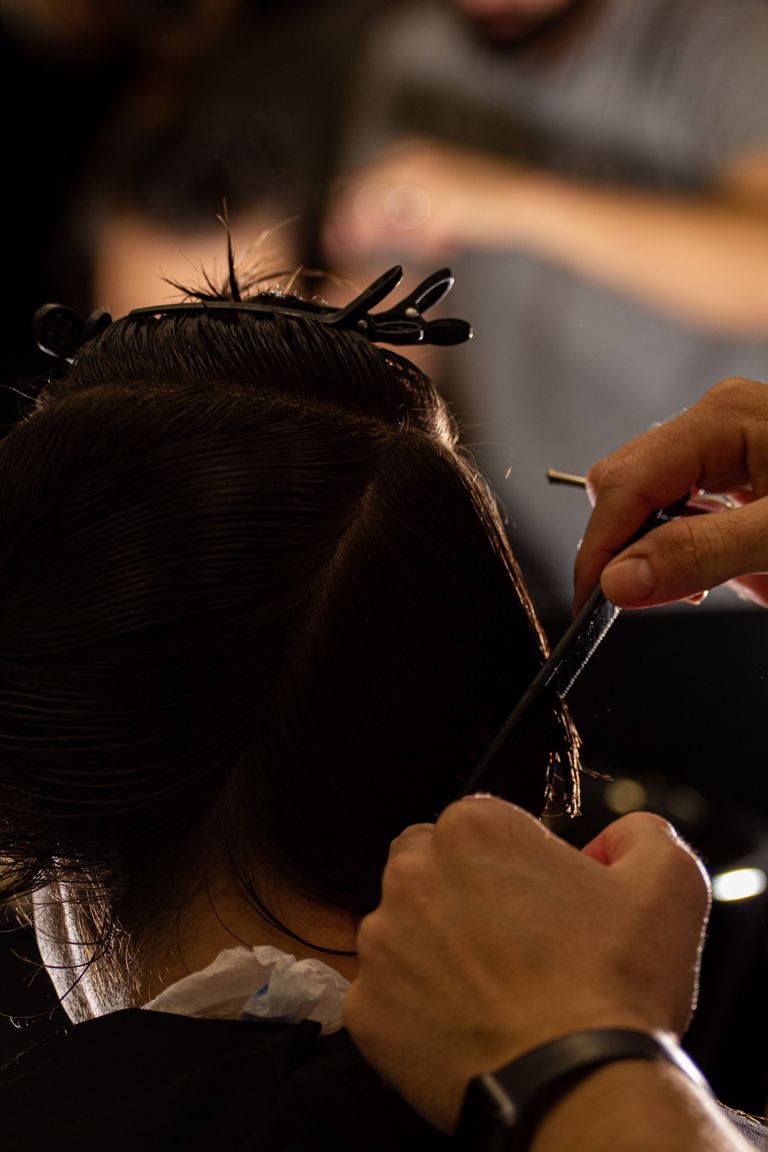
Is Cosmetology the Right Career for You?
Cosmetology suits people who enjoy working with their hands, talking with people, and seeing a visible result at the end of each appointment. You do not need to be a fine artist, but you do need an eye for colour, shape, and proportion, and a willingness to practise the same cut or technique many times until it becomes natural. If you like variety — a different client, a different style, a different challenge every hour — you will probably enjoy this work. If you prefer quiet, solitary work at a desk, you probably will not.
Ask yourself a few honest questions before you enrol. Do you enjoy being on your feet for most of the day? Are you comfortable touching other people’s hair and skin, and being touched by close contact in return? Can you stay patient and friendly with a difficult client? Are you willing to work evenings and weekends, when salons are busiest? Are you happy to keep learning new styles, products, and techniques throughout your career, because trends change every year? If the answer to most of these is yes, cosmetology is worth a serious look.
It is also worth thinking about money honestly. Many cosmetologists start as employees on an hourly wage plus tips, or on commission. As they build a regular client base, their income usually grows, because regular clients book again, bring friends, and buy products. Some cosmetologists later rent a chair, which means paying the salon a fixed rent and keeping what they earn, or open their own salon. Those routes can earn more, but they also carry more risk and more responsibility for rent, supplies, and finding clients. There is no single right path — the best one depends on your confidence, your savings, and how much business risk you want to take.
One more practical point: cosmetology is a licensed trade, so you cannot simply start charging clients after watching a few videos. You need the training hours and the license first. That protects clients and it protects you. It also means the time and money you spend on school are an investment in a credential that employers recognise everywhere in your state.
How to Become a Cosmetologist: Step by Step
Step 1: Check Your State Board Requirements First
Before you choose a school or spend any money, look up your state board of cosmetology — sometimes called the board of barbering and cosmetology, or the department of licensing. Find the current rules for a cosmetology license: how many training hours are required, whether the state uses a written and practical exam, what the exam fees are, whether you need a high school diploma or equivalent, and whether there is a minimum age. Write these down. They are the rules your school must follow, and they are the standard your exam will test. Knowing these requirements is the first step in learning how to become a cosmetologist in your state.
This step matters because the differences between states are large. One state may require around 1,000 hours of training, another may require 1,500 or 1,600, and a few require even more. Some states accept training from another state if you move; others require extra hours or a new exam. Some states have separate licenses for hair, skin, and nails; others fold them into one cosmetology license. Do not rely on a friend’s experience in another state, or on a school’s advertising, as your source for these rules. Check your state board’s official page, and check again before you apply for the exam, in case the rules have changed.
If you plan to move to another state in the next few years, ask both state boards about license transfer, often called reciprocity or endorsement. Some states accept an out-of-state license if you have held it for a certain time and your training hours meet their minimum. Others ask you to take their exam. Knowing this in advance can save you from repeating training.
Step 2: Finish High School or an Equivalent
Most states require a high school diploma or a GED or equivalent before you can enrol in a cosmetology program or apply for a license. Some states allow you to enrol at 16 or 17 with parental permission and finish the diploma alongside training, but the diploma is usually needed before the license is issued. If you have not finished high school, completing that first is the fastest way to keep your options open. If you are still in high school, ask your school counsellor whether a vocational or career-technical program offers an introduction to cosmetology — some do, and it can give you a useful head start.
Step 3: Choose a State-Approved Cosmetology School
Your training must come from a school approved or licensed by your state. This is not optional. An unapproved course, however good it looks online, will not count toward your license hours and will not qualify you for the exam. When you compare schools, check the following:
- Is the school licensed by your state board, and in good standing?
- Does its program cover the full number of hours your state requires?
- What is the total cost, including tuition, kit, books, and exam fees — and what is included in the kit?
- Is the school accredited, and does it offer federal financial aid if you qualify? Accreditation matters for aid and for the quality of the program.
- What is the school’s exam pass rate, and how many graduates find work in salons within a few months?
- Does the school run a student salon where you practise on real clients under supervision?
- Can you study full time or part time, and what are the class hours? Part-time study takes longer, but it lets you keep a job.
- Where are graduates working now? Ask to speak to a recent graduate if you can.
Visit at least two schools in person if you can. Watch a class. Look at the student salon. Is it clean and well organised? Are instructors watching and correcting students, or are students left alone? Do students look busy and engaged? A school visit tells you more in an hour than a brochure ever will. Be careful with schools that pressure you to sign on the same day, promise a guaranteed job, or quote a price that seems far below every other school. Ask for the full cost in writing before you sign anything.
If cost is a worry, ask about financial aid, scholarships, and payment plans. Some students qualify for federal aid at accredited schools. Some schools offer payment plans that spread tuition over the course. Community colleges in some areas also run cosmetology programs, sometimes at a lower cost than private beauty schools. Compare the total cost and the total hours, not just the monthly payment.
You can also build useful background knowledge before and during school with free learning. Our guide to free online courses with certificates lists legitimate free courses that can strengthen your business, customer service, and study skills while you train.
Step 4: Complete Your Training Hours
Cosmetology training is mostly practical. You will learn hair cutting, colouring, and styling; shampooing and scalp care; chemical treatments such as perms and relaxers; skin care, facials, and makeup; manicures and pedicures; waxing and hair removal; sanitation and safety; salon management; and how to talk with clients. The exact mix follows your state’s curriculum, but hair usually takes the largest share of hours, because it is the largest part of most cosmetologists’ work.
Training is divided into classroom theory and hands-on practice. Theory covers the science you need to work safely: the structure of hair and skin, how chemicals work, how to recognise skin conditions you should not treat, infection control, and state law. Practical work starts on mannequin heads and practice hands, then moves to real clients in the school’s student salon, under an instructor’s supervision. That supervised client work is where you learn the skills that no textbook can teach: how to manage your time, how to handle a nervous client, how to fix a mistake calmly, and how to work at a professional pace.
Attendance matters. Your hours only count if you attend and your school records them correctly. Missing classes does not just slow you down — it can delay your exam date. Treat school like a job: arrive on time, keep your station clean, practise on every opportunity, and ask instructors for feedback. The students who improve fastest are usually the ones who volunteer for the difficult cuts and the clients other students avoid.
Most full-time programs take around nine months to a year to complete, though this varies with the state’s hour requirement and the school’s schedule. Part-time programs can take 18 months to two years. Plan your finances for the whole period, not just the first month. You will need money for tuition, your kit, travel, and living costs, and you may not be able to work full time while you study full time.
Step 5: Pass the State Licensing Exam
When you finish your hours, your school will help you apply for the licensing exam. In most states the exam has two parts: a written theory exam and a practical exam. The written exam tests your knowledge of hair, skin, nails, sanitation, safety, and state law. The practical exam asks you to demonstrate skills on a mannequin or a model — for example, a haircut, a colour application, a facial, a manicure, or a sanitation routine — while an examiner watches and scores each step.
How to prepare well:
- Use your school’s revision materials and any practice exams it provides, and take them under timed conditions.
- Revise sanitation and state law carefully. Many students focus only on styling and lose marks on the safety and law questions that are easy to learn.
- Practise the practical tasks in the exact order and with the exact timing the exam requires. Speed matters, but accuracy and cleanliness matter more.
- Prepare your kit the night before, check it twice, and arrive early with your ID and any paperwork the exam centre asks for.
- Read each exam instruction twice before you start a task. A missed instruction can cost marks even if your technique is good.
If you do not pass the first time, you can usually retake the exam after a waiting period and a further fee. Ask your school what support it offers for retakes, and focus your revision on the areas where you lost marks. Failing once does not mean you cannot become a cosmetologist — many licensed professionals passed on a second attempt.
Step 6: Apply for Your License and Start Work
After you pass, you apply to your state board for your license, pay the license fee, and receive your license. You must hold a valid license before you charge clients for cosmetology services. Keep a copy of your license, note its expiry date, and learn your state’s renewal rules — most states require renewal every one to two years, and some require continuing education hours. Renew on time. Working with an expired license can lead to fines and can damage your reputation with employers.
Your first job is usually as a junior stylist, an assistant, or a salon employee. That first job is where you build speed, confidence, and a client base. Choose it for what you will learn, not only for the pay. A salon with experienced stylists who mentor new staff, a steady flow of clients, and a clean, professional atmosphere will teach you more in a year than a higher-paying job in a salon where you are left alone.
What the Licensing Exam Covers in Depth
The written exam usually covers the science of hair and skin, chemical services, sanitation and infection control, and state rules. You will need to know, in general terms, how hair grows, how colour and chemical treatments change hair, which skin conditions mean you should refer a client to a doctor, and how to prevent the spread of infection. You do not need to memorise every product name, but you do need to understand the principles well enough to make safe choices.
The practical exam tests whether you can work safely, cleanly, and in the right order. Examiners watch how you set up your station, whether you disinfect tools, whether you wash your hands, how you handle a client, and whether you finish in the time allowed. Small habits — labelling your tools, keeping your work area tidy, disposing of used materials correctly — earn marks and show that you are ready to work on real clients. Practise these habits at school until they are automatic, not something you have to think about on exam day.
Your state board publishes a candidate information bulletin or exam guide for most states, and your school should give you a copy. Read it. It tells you exactly which tasks are tested, what supplies to bring, and how each task is scored. If your state uses a national testing provider, the same guide will explain how to book the exam, what ID to bring, and what happens on the day. Do not rely on old exam stories from other students — use the current official guide.
How Long It Takes and How Much It Costs
Training length depends on your state’s hour requirement and whether you study full time or part time. As a general guide, a full-time student in a state requiring around 1,000 hours may finish in about six to nine months; a state requiring around 1,500 to 1,600 hours may take nine months to a year full time, or up to two years part time. These are general estimates only. Your school can give you an exact schedule based on its class hours and your state’s requirement, so ask for that in writing before you enrol.
Cost also varies widely. Tuition at a private beauty school can run into several thousand dollars or more, plus the cost of a kit, books, and exam and license fees. Community college programs may cost less. Total cost depends on your state, your school, and whether you qualify for financial aid. Do not choose a school on price alone. A cheaper school with a low pass rate and no student salon may cost you more in the long run if you have to retake the exam or struggle to find work. Compare the full cost, the pass rate, the hours, and the graduate employment record together.
Check your state’s official pages for current exam and license fees before you budget, and keep a small reserve for retake fees and renewal fees. Fees change, and a guide written today cannot promise what a fee will be next year. The principle is simple: budget for tuition, kit, books, exam, license, and a few months of living costs, and keep a record of every payment you make to the school and the board.
For national pay and job outlook figures, see the U.S. Bureau of Labor Statistics.
Skills That Make a Cosmetologist Successful
Technical skill gets you licensed. The skills below get you booked, tipped, and recommended.
- Listening and consultation: Ask what the client wants, show pictures, confirm the plan, and check in during the service. Clients who feel heard come back.
- Attention to detail: A good cut, colour, or manicure depends on small, careful steps done in the right order. Rushing shows in the result.
- Steady hands and stamina: You will use scissors, brushes, and tools all day while standing. Good posture and regular breaks protect your back, wrists, and shoulders.
- Hygiene and safety: Clean tools, clean hands, clean station, every client, every time. This is both a legal duty and a trust signal.
- Communication: Explain what you are doing, what it will cost, how long it will take, and how the client should care for the result at home. Clear explanations prevent disappointment.
- Time management: Salons run on appointments. Finishing on time, without rushing the client, is a professional skill that takes practice.
- Business sense: Even as an employee, you need to understand pricing, retail, rebooking, and how to build a repeat client base. As a freelancer or owner, you need those skills even more.
- Adaptability: Trends, products, and client tastes change. Cosmetologists who keep learning — a new colour technique, a new skin treatment, a new styling method — stay in demand.
You can build the business side of this career gradually. Start by learning how your salon prices services, how it handles rebooking, and how it records client notes. Watch how the busiest stylists in the salon work: they are usually the ones who remember clients, run on time, and make each person feel like their only client that day.

Career Paths After You Are Licensed
Working in a Salon or Spa
Most new cosmetologists start here. You work as an employee, the salon provides the premises, the bookings, and the products, and you earn a wage, commission, tips, or a mix of these. The advantage is steady work and a chance to learn from experienced colleagues without the risk of running a business. The trade-off is less control over your hours, your prices, and which clients you see. Look for a salon that offers training, a fair commission structure, and a clear path to more responsibility.
Renting a Chair or Becoming Self-Employed
After you have experience and a regular client base, you may rent a chair in a salon. You pay the salon a fixed rent, usually weekly or monthly, and keep what you earn from your clients, minus your own product costs. This gives you more freedom over your hours and prices, but you are responsible for finding and keeping clients, buying products, and handling your own tax and insurance. Do not rent a chair until you have enough regular clients to cover the rent comfortably, and get the rental agreement in writing before you start.
Specialising in Hair, Skin, Nails, or Makeup
Many cosmetologists specialise over time. You might become known for colour, for bridal hair and makeup, for textured hair, for skin treatments, or for nail art. Specialising lets you charge more for expert work and attract clients who want that exact skill. It also means further training. Short courses, manufacturer training, and advanced classes can add a new service to your menu, but check whether your state requires an additional license or endorsement for that service before you offer it.
Other Settings: Hotels, Cruise Ships, Film, and Teaching
Licensed cosmetologists also work in hotel spas, on cruise ships, in care homes, in film and television, and in retail beauty counters. Each setting has its own pace and expectations. Cruise and hotel work often means long hours and living away from home, but it can offer travel and a steady wage. Film and editorial work is project-based and competitive, and it usually needs a strong portfolio. Teaching in a beauty school usually requires several years of experience and, in many states, an instructor license. These are longer-term goals to keep in mind as you gain experience.
Common Mistakes to Avoid
Choosing a School Without Checking State Approval
The most expensive mistake is enrolling in a program that does not count toward your license. Always confirm state approval in writing before you pay a deposit.
Underestimating the Hours and the Cost
Training takes months, and the total cost includes tuition, kit, books, exam fees, and living costs. Plan for the whole course, not just the first month, and keep a written budget.
Skipping the Theory and Sanitation Revision
Students who focus only on styling often lose marks on sanitation, safety, and state law. Those topics are a large part of the written exam and a daily part of safe practice. Revise them properly.
Practising Only on Mannequins
Mannequin practice is useful, but real clients move, talk, have different hair textures, and change their minds. Volunteer for real clients in the student salon as often as you can. That is where professional confidence comes from.
Trying to Do Everything at Once After Licensing
Newly licensed cosmetologists sometimes try to offer every service, rent a chair immediately, and build a social media following all in the first month. Start with employed work, master your core services, build regular clients, and add new services one at a time.
Ignoring Your Body
Standing all day, repeating the same hand movements, and working with chemicals can strain your back, wrists, and skin. Use good posture, wear comfortable shoes, take breaks, use gloves where required, and follow product safety instructions. A long career depends on looking after yourself as well as your clients.
Getting Started Checklist
- Check your state board of cosmetology for the current hours, exam, fees, and age and education rules
- Confirm you have, or are working toward, a high school diploma or equivalent
- Visit at least two state-approved schools and compare total cost, hours, pass rates, and student salon experience
- Ask each school for the full cost in writing, including kit, books, and exam fees
- Check financial aid, scholarships, and payment plans if you need them
- Enrol, attend every class, and keep a record of your training hours
- Practise on real clients in the student salon whenever you can
- Revise theory, sanitation, and state law alongside your practical skills
- Book the licensing exam when your school confirms you are ready, and prepare your kit in advance
- Apply for your license, note the renewal date, and start work as a junior stylist or salon employee
- Build a regular client base, ask for feedback, and add new skills one at a time
Conclusion
Learning how to become a cosmetologist is a practical, step-by-step path: check your state board, complete an approved training program, pass the licensing exam, and start work with a valid license. The exact hours and exam details depend on your state, so check your state board’s official page before you make any decision — and check again before your exam. Choose a school for its approval, its pass rate, and its real-client practice, not for its advertising. Treat training like a job, revise sanitation and law as seriously as styling, and take your first salon job for what it will teach you. Build your client base one satisfied client at a time, keep learning new techniques, and look after your health so you can enjoy a long career. If beauty, people, and hands-on work are what you love, cosmetology offers a licensed, recognised route into a career where your skill shows in every client who walks out smiling.
FAQ
How long does it take to become a cosmetologist?
How long it takes to learn how to become a cosmetologist depends on your state and whether you study full time or part time. Full-time programs commonly take around nine months to a year, while part-time study can take up to two years. The exact time depends on the number of training hours your state requires, so check your state board of cosmetology for the current figure where you live.
How many training hours do I need to become a cosmetologist?
The required hours vary widely by state, commonly from about 1,000 to 1,600 hours, though some states require more or fewer. There is no single national number. Your state board sets the requirement, and your school’s program must cover it. Always check your state board’s official page for the current hours.
Do I need a license to work as a cosmetologist?
Yes, in almost every U.S. state you need a state license before you can charge clients for cosmetology services. The license is issued after you complete approved training and pass the state licensing exam. Working without a license can lead to fines and can close the door to salon employment. Check your state board for the exact rules.
How much does cosmetology school cost?
The total cost varies by state and school, and it usually includes tuition, a kit, books, and exam and license fees. Private beauty schools can cost several thousand dollars or more in total, while community college programs may cost less. Some students qualify for financial aid at accredited schools. Ask each school for the full cost in writing before you enrol, and check the current exam and license fees on your state board’s page.
Can I become a cosmetologist without going to beauty school?
In most states, no. You must complete a state-approved training program and pass the licensing exam. A few states allow an apprenticeship route instead of, or alongside, school, but the rules are strict and vary by state. If you are interested in that route, check your state board first to see whether it is offered and what it requires.