Best Electrician Jobs: Pay, Training Routes and Specialisms Explained
Quick Answer
The best electrician jobs are roles with clear pay, proper training, strong safety standards, and real progression. They are not always the highest advertised rate. A steady role with a licensed mentor and safe systems often beats a rushed job with poor supervision.
Most electricians start through an apprenticeship. You earn while you learn, then qualify and choose a specialism. Residential, commercial, industrial, and renewable energy work all offer strong long-term paths.
This guide compares each type honestly. It explains pay in general ranges, training routes, and licensing. It also shows how to start, step by step, in the US, UK, and Europe.
Table of Contents
What “Best” Means for Electricians
Best means different things at different stages. A beginner needs training, patience, and close supervision. An experienced electrician may want autonomy, complex work, and higher pay. A parent may value daytime hours and local work most.
Write down four priorities before you search. First, the type of work you enjoy. Second, the hours and travel you can sustain. Third, the training you still need. Fourth, the minimum pay you need after tools, travel, and tax.
Use that list as your filter. The best electrician jobs for you should still fit on a hard week, not just a good one. Prestige and a big project name mean little without safety and fair treatment.
What Makes the Best Electrician Jobs Worth Taking
Good employers share clear habits. You can spot them in adverts, interviews, and trial days.
Pay and hours are stated in writing. You know the rate, the pay date, and the overtime rules. Training is planned, not promised vaguely. A qualified person checks your early work and answers questions without mocking them.
Safety is visible every day. Panels are labelled, circuits are isolated properly, and protective equipment is worn as routine. Workers can stop unsafe work without fear.
Progression is also discussed early. Good firms explain the next step clearly. That might be a licence, a testing qualification, or a supervisory role. If nobody mentions progression, the role may be a dead end.
Types of Electrician Jobs Compared
Electricians share core skills, but daily work varies greatly. Setting, clients, and risk change with each specialism. Understanding the differences helps you choose well.
The sections below cover the main routes. None is best for everyone. Comparing them carefully is the first step towards the best electrician jobs for your goals.
Residential Electricians
Residential electricians work in homes and small apartment buildings. They install wiring, lighting, sockets, consumer units, and home charging points. They also find faults and carry out repairs and safety checks.
The work is varied and personal. You meet homeowners directly and explain problems in plain language. Trust and tidiness matter greatly in someone’s home.
Entry is often the most accessible route. Many apprentices start with residential firms and learn core skills fast. Pay is usually steady rather than top-end. Self-employment is common later, once you are qualified and trusted locally.
Challenges include tight spaces, old wiring, and urgent call-outs. Evening and weekend emergency work can also occur.
Commercial Electricians
Commercial electricians work in offices, shops, schools, hospitals, and warehouses. They install larger distribution systems, lighting controls, fire alarms, and data cabling. Projects are usually planned and team-based.
The scale is bigger than house work. You read detailed drawings and coordinate with other trades. Deadlines are firm, and documentation matters more.
Pay often sits above basic residential rates. Experience with three-phase systems and large installations is valued. Large sites also offer structured progression into supervision.
Some commercial electricians work alongside teams in large logistics sites. The electrical demands there differ greatly from general warehouse jobs, which focus on goods handling. Commercial roles require full electrical qualification.
Hours are often regular on large projects. However, fit-out work can involve nights, and travel between sites is common.
Industrial and Maintenance Electricians
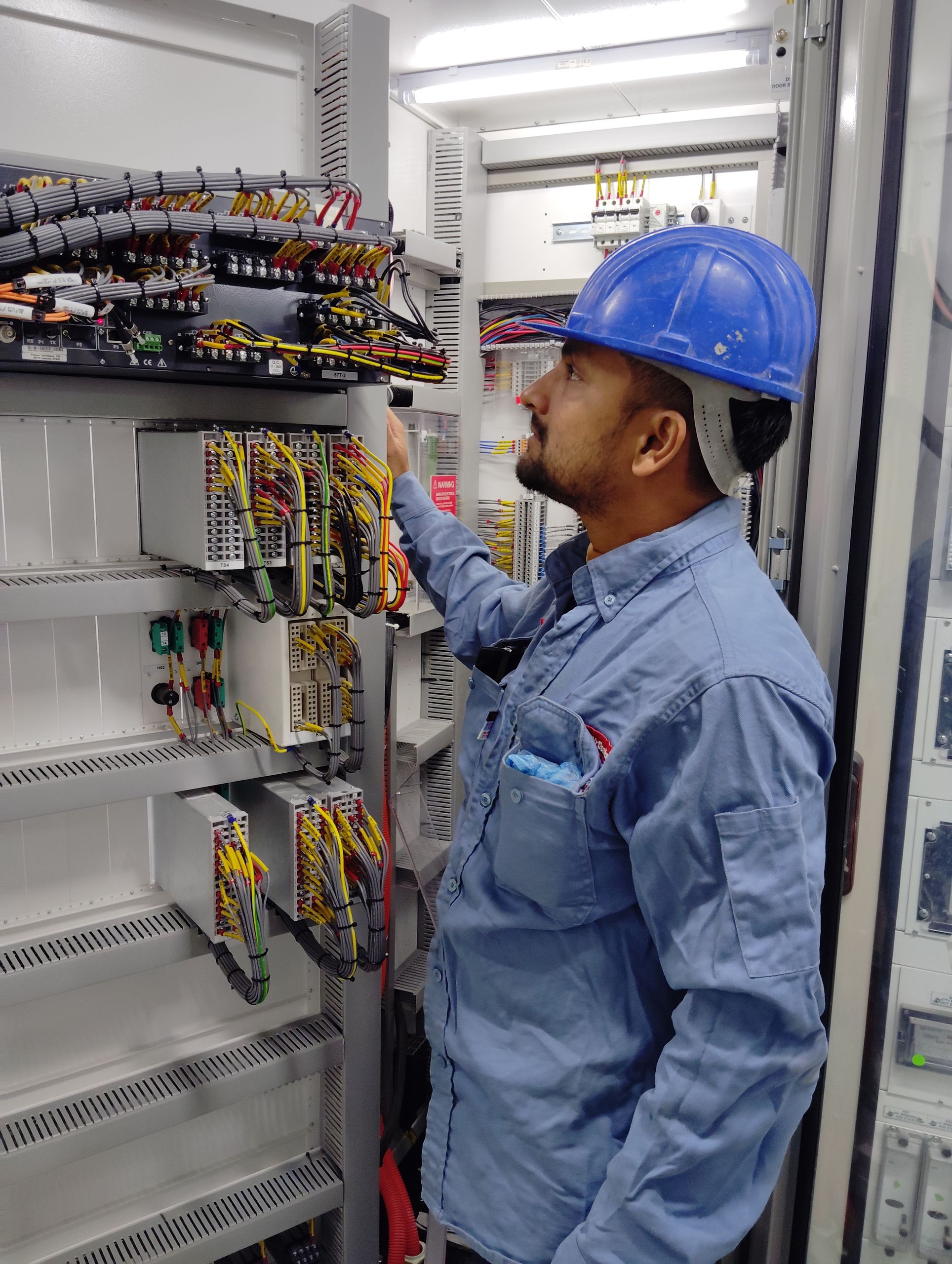
Industrial electricians work in factories, plants, and production sites. They maintain motors, control panels, conveyors, and automated machinery. Fault-finding under time pressure is central to the role.
When production stops, money is lost quickly. Employers value calm diagnosis and clear communication. You need strong knowledge of controls, sensors, and programmable systems.
Maintenance roles are often permanent and site-based. That stability appeals to many electricians. Shift patterns are common, including nights and weekends, with allowances added.
These roles often appear among high paying jobs for skilled trades. Pay reflects responsibility, shift work, and scarce fault-finding skill. It is not guaranteed, and it varies by industry and region.
Industrial work suits methodical problem-solvers. Shortcuts are especially dangerous around heavy machinery.
Renewable Energy, Solar and EV Charging
Renewable energy is the fastest-changing area of electrical work. Electricians install solar panels, battery storage, heat pump wiring, and electric vehicle charging points. Demand grows as homes and firms cut carbon and fuel costs.
This area attracts electricians who like new technology. Systems evolve quickly, so regular updating is essential. Training in solar installation and battery safety is increasingly valuable.
Many of the best electrician jobs in coming years may sit in this sector. That is an outlook, not a promise. Local incentives and energy policy affect demand in each country.
Work is often outdoors and at height for solar roles. Roof safety matters daily. EV charging work is usually at ground level in homes, workplaces, and public car parks.
Utility and Power Line Work
Utility electricians and line workers build and repair power networks. They work on overhead lines, underground cables, substations, and transformers. Their work keeps homes and businesses supplied.
This is highly specialised and physically demanding work. It often involves heights, outdoor weather, and emergency repairs after storms. Training is rigorous and closely supervised.
Pay is often strong, reflecting risk and specialism. Overtime during major outages can raise earnings further. Unions and large utility employers play a big role in the US and Europe.
Entry is usually through a dedicated utility apprenticeship. General electrician experience helps, but it does not replace line training. Never attempt line work without that specific training and authorisation.
Specialist Controls, Testing and Inspection
Some electricians specialise in testing, inspection, and control systems. They verify that installations are safe and meet current standards. They produce reports that owners and insurers rely on.
Testing work suits detail-focused electricians. You need deep knowledge of regulations and honest judgement. You must report faults even when clients dislike the cost.
Controls specialists work with building automation and industrial controls. The work blends electrical skill with software basics. It is less physical and more diagnostic.
These specialisms usually require experience first. Extra qualifications in inspection and testing open these doors.

Pay: General Ranges From Official Sources
This guide does not invent salaries for named employers. It does not list specific openings. Pay varies by country, city, specialism, experience, and contract type. Use official data first, then compare live local adverts carefully.
For the US, the U.S. Bureau of Labor Statistics – Electricians page publishes national pay and outlook from official survey data. In recent BLS data, the national median for electricians sits in the low $60,000s per year. The lowest-paid 10 percent earn notably less, in the high $30,000s. The highest-paid 10 percent earn over $100,000. Treat these only as clearly labelled general ranges from a citable source. Check the BLS page for the current figures before you decide.
Apprentices earn less at first, by design. Pay rises with each year of training. Licensed journeymen earn more than apprentices in every system. Supervisors and specialists often earn more again.
Overtime and shift allowances change totals. Self-employed electricians may charge higher rates. They also carry tool, insurance, tax, and unpaid gap costs. Compare full annual reality, not a headline rate.
In the UK, compare offers against the National Minimum Wage and National Living Wage. In much of Europe, collective agreements set pay scales by qualification level.
Among skilled trades, electricians compare well on pay stability. Demand is broad because every building needs safe power. That breadth is one reason the best electrician jobs attract career changers as well as school leavers.
Training Routes in the US, UK and Europe
There is no single route into electrical work. Every serious route combines study with supervised practical work. That combination is what the best electrician jobs are built on.
United States: Apprenticeship First
Most US electricians complete a registered apprenticeship. Programmes usually last about four to five years. Apprentices work paid jobs and attend classroom instruction alongside. Topics include wiring, code requirements, maths, and safety.
Programmes are run by unions, employers, and trade associations. Entry usually needs a high school diploma or equivalent. Algebra is commonly required or strongly valued. Some applicants complete a pre-apprenticeship course first.
After the apprenticeship, you take a licensing exam. Passing makes you a journeyman electrician in most states. Further experience and exams lead to master electrician status.
United Kingdom: Apprenticeship and NVQ
In the UK, the standard route is an apprenticeship. It combines site work with college study over several years. Learners work towards an NVQ or SVQ in electrical installation. They also complete theory qualifications and a final practical assessment, the AM2.
Adult trainees can follow similar diploma routes. They must still gain real site experience and pass the same final assessment. Short courses alone do not make a qualified electrician.
Many employers and schemes expect the relevant competence cards. Registration with a competent person scheme matters for certain domestic work. Always check current requirements for your part of the UK.
Europe: Dual Training Systems
In Germany and several other European countries, dual training is standard. Trainees split time between an employer and a vocational school. Training usually lasts around three to three and a half years. It ends with formal chamber examinations.
Other European countries use vocational schools with long placements. Titles and rules differ by country. Recognition of qualifications across borders also varies. Check the rules in the country where you plan to work.
Whichever country you choose, choose accredited training. Ask what qualification you will hold at the end. Ask who assesses your practical work. Vague answers are a warning sign.
Licence and Certification Requirements in General Terms
Licensing protects the public from unsafe electrical work. Rules differ, so treat this section as general guidance only. Always check your state, national, or local authority for current law.
In the US, electricians are licensed at state or local level. Most states require an apprenticeship, an exam, and licence renewal. Working without a required licence can bring fines and invalidate insurance. Some work, such as low-voltage systems, has separate rules in some states.
In the UK, there is no single national licence card. Instead, qualifications, competence, and scheme rules apply. Certain domestic work must be notified or carried out by a registered competent person. Employers often require specific cards as proof of competence on site.
In the EU, national systems govern electrical qualifications. Some countries reserve specific work for authorised electricians only. Mutual recognition can help qualified workers move countries.
In every country, only do work you are qualified for. High-voltage work may need extra certification. Honest limits keep people alive.
Skills That Strong Electricians Share
Technical skill comes first. You need maths for calculations, physics basics, and confident tool use. You must read drawings, diagrams, and manufacturer instructions accurately. Fault-finding needs logic and patience in equal measure.
Physical skills also matter. The work involves standing, climbing, lifting, and confined spaces. Good colour vision matters for identifying wires.
People skills decide progression. You explain problems clearly to clients and colleagues. You write accurate test results and stay calm when equipment fails.
Digital skills are growing fast. Modern systems use apps, testing software, and smart controls. Electricians who learn controls and renewables stay in demand longer. The best electrician jobs increasingly reward that wider skill mix.
Reliability underpins everything. Arrive on time, work tidily, and label your work. Supervisors promote electricians they can trust unsupervised. Trust is earned slowly on every job. The best electrician jobs reward that reliability with steady, well-paid work.

How to Get Started and Apply
A clear plan beats scattered applications. Follow the steps below in order. Adjust the details to your country and current experience. A clear plan also helps you find the best electrician jobs that fit your training stage.
Step 1: Check You Meet the Basics
Most routes need basic maths, literacy, and legal permission to work. In the US, a diploma or equivalent is usual. In the UK, employers often expect maths and English qualifications or equivalents. Check eyesight and colour vision requirements early too.
Step 2: Choose Your First Target
Pick one main target for now. For most beginners, that is an apprenticeship. If you are changing careers, consider trainee roles with structured training. If you lack experience, read how to get a job with no experience for honest ways to show your skills.
Step 3: Build Proof of Readiness
Show practical interest with evidence. That could be a short pre-apprenticeship course or supervised voluntary experience. Practise safe tool handling and basic maths. Never practise live electrical work at home unsupervised. That is dangerous and, in many places, illegal for certain tasks.
Step 4: Prepare a Short, Honest Application
Keep your resume or CV to one or two pages. Lead with relevant training, practical experience, and reliability. Mention driving status, availability, and any safety certificates accurately. Never claim qualifications or licences you do not hold.
Step 5: Apply Through Verifiable Channels
Use employer websites, union or trade body listings, and college apprenticeship services. Established job boards are also useful. Be cautious with adverts asking for large upfront fees. Legitimate employers do not charge you to hire you.
Step 6: Prepare for Interview and Assessment
Expect maths tests, practical aptitude tasks, and safety questions. Interviewers want methodical thinking, not speed without care. Give an example of following instructions exactly. Explain what you would do if you saw unsafe work. Safety-first answers build trust quickly.
Step 7: Check the Offer in Writing
Confirm pay, hours, training provider, and who pays for tools and courses. Confirm your employment status and start date. Good offers survive clear questions. Start well by listening carefully, asking before improvising, and keeping every work area tidy.
Following these steps will not guarantee an offer. It will make you a credible candidate for the best electrician jobs open to beginners. Employers can train skills. They look first for safety, honesty, and commitment.
Safety: The Non-Negotiable Part of the Job
Electricity can kill without warning. It can also cause severe burns, falls, and fires. Safety is therefore not a section to skim. It is the foundation of the whole trade.
Isolate circuits before you work on them. Prove they are dead using approved testing equipment. Lock off and tag where the system requires it. Never trust a switch position or someone else’s word alone.
Wear the protective equipment provided, correctly, every time. That includes eye protection, insulated gloves where required, and safety footwear. Use insulated tools for appropriate tasks. Keep water away from electrical work areas.
Work at height adds further risk. Use ladders and access equipment as trained. Stop and reassess when weather makes conditions unsafe.
You have the right and duty to stop unsafe work. In the US, OSHA rules protect workers who raise safety concerns. In the UK, the Health and Safety Executive oversees workplace safety. Good employers welcome concerns raised early.
Common Mistakes to Avoid
The first mistake is choosing only by pay. Unpaid travel, tool costs, and gaps between contracts reduce real income. Compare the full package over a typical month. Training value matters greatly in your early years.
The second mistake is claiming skills you lack. Saying you can test installations or work on three-phase systems when you cannot is dangerous. It is usually discovered quickly, and trust is lost. Honest beginners get trained and supervised.
The third mistake is taking shortcuts on safety. Skipping isolation, rushing tests, or removing guards saves minutes only. One serious incident can end a career and change lives forever. Never let deadline pressure change that.
The fourth mistake is ignoring study during training. Practical skill alone will not pass theory exams. Set a weekly study routine from the start.
The fifth mistake is staying without a plan. Specialism raises your options and pay. Set a goal for your next qualification within your first qualified year.
Frequently Asked Questions
What are the best electrician jobs for beginners?
Apprenticeship roles with residential or commercial firms are the strongest start. They combine paid work, structured study, and supervised practice. Dedicated renewable energy apprenticeships are also growing. Avoid any beginner role that expects unsupervised live work. Proper supervision is essential while you learn.
Do I need a degree to become an electrician?
No. Electricians qualify through apprenticeships and vocational training, not university degrees. You do need maths, theory study, and formal assessments. Some engineers and designers hold degrees, but installation electricians follow the trade route. That route is respected and well established.
How long does electrician training take?
Most apprenticeships take about three to five years, depending on country. The US route often takes four to five years. UK apprenticeships usually take around three to four years. German dual training often takes about three and a half years. Short courses can support entry, but they do not replace full qualification.
Which electrician specialism pays most?
It varies by country, region, and demand. Industrial maintenance, utility line work, and specialist controls often sit toward the higher end. Supervisory roles also pay more. Compare official data and local adverts rather than single online claims. Shift patterns and overtime strongly affect totals.
Is electrician work a good long-term career?
Yes, for people who respect safety and keep learning. Every building needs electrical installation and maintenance. New demand from solar, batteries, and vehicle charging adds further work. Careers can progress into testing, supervision, design support, or self-employment. Physical demands are real, so looking after your health matters.
Conclusion
Electrician work offers a rare mix of practical skill, clear training, and lasting demand. Residential work builds trust and variety. Commercial and industrial roles offer scale and specialism. Renewable energy and vehicle charging are shaping future demand. The best electrician jobs combine clear training with safe, well-organised work.
Start with accredited training and honest applications. Judge employers on safety, pay clarity, and real teaching. Then build steadily, qualify fully, and choose a specialism that fits your strengths.
Do that, and you give yourself a trade for life. That steady approach leads to the best electrician jobs over time.