How to Become a Sonographer: Training, Exams & Career Guide
If you want to know how to become a sonographer, you are looking at one of the most rewarding careers in healthcare. Sonographers use ultrasound machines to create images of the inside of the body, helping doctors diagnose illness, monitor pregnancies, and check the health of organs such as the heart, liver, and kidneys. It is hands-on, patient-facing work that combines technology with care, and it does not require medical school. Most sonographers qualify in about two years, and demand for the role is strong across the United States.
A sonographer is also known as a diagnostic medical sonographer or an ultrasound technician. The work goes far beyond taking pictures of babies, although obstetric ultrasound is the specialty most people know. Sonographers also scan hearts, blood vessels, abdomens, and muscles, and they work in hospitals, clinics, imaging centres, and doctors’ offices. This guide explains the full path: the education you need, how to choose an accredited program, the ARDMS certification exams, the specialty tracks you can follow, and what the career really looks like day to day.
Table of Contents
Quick Answer
To become a sonographer, complete a CAAHEP-accredited diagnostic medical sonography program — usually an associate degree taking about two years — then pass the ARDMS certification exams, starting with the Sonography Principles and Instrumentation exam and one specialty exam. Choose a specialty such as obstetrics and gynaecology, abdomen, or cardiac sonography, complete your clinical training hours, and apply for jobs in hospitals, clinics, and imaging centres. Requirements vary by state, so check your state’s rules before you enrol.
What Does a Sonographer Do?
A sonographer’s job is to operate ultrasound equipment and produce clear, accurate images that a doctor uses to make a diagnosis. The work is more skilled than it looks from the outside. You need to understand anatomy, know how to position a patient, adjust the machine settings for each body type, and recognise when an image shows something abnormal that the doctor needs to see.
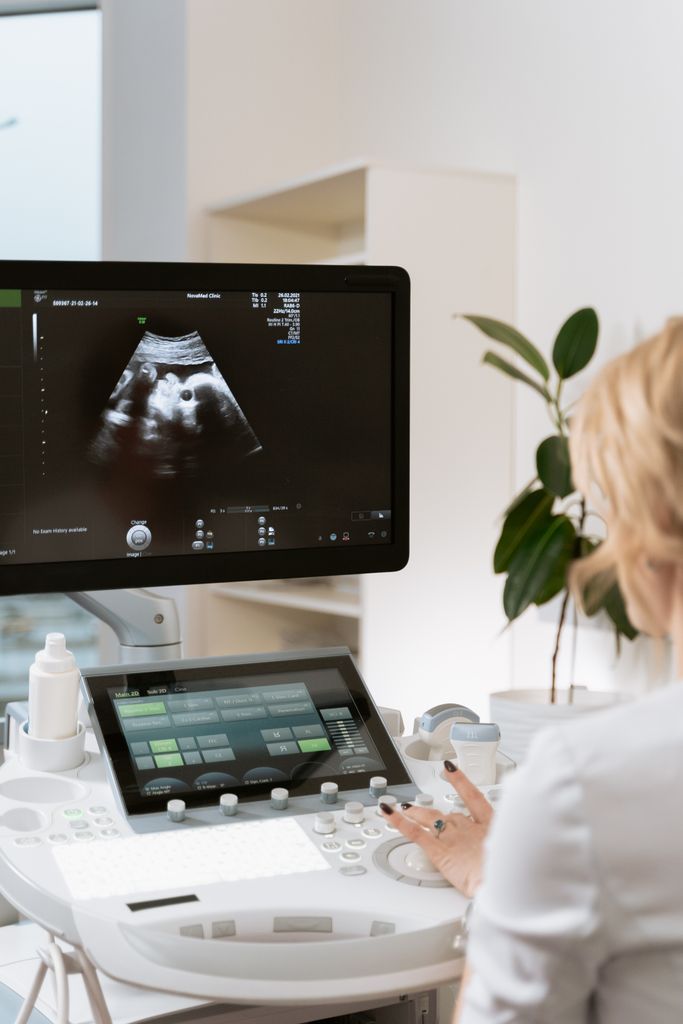
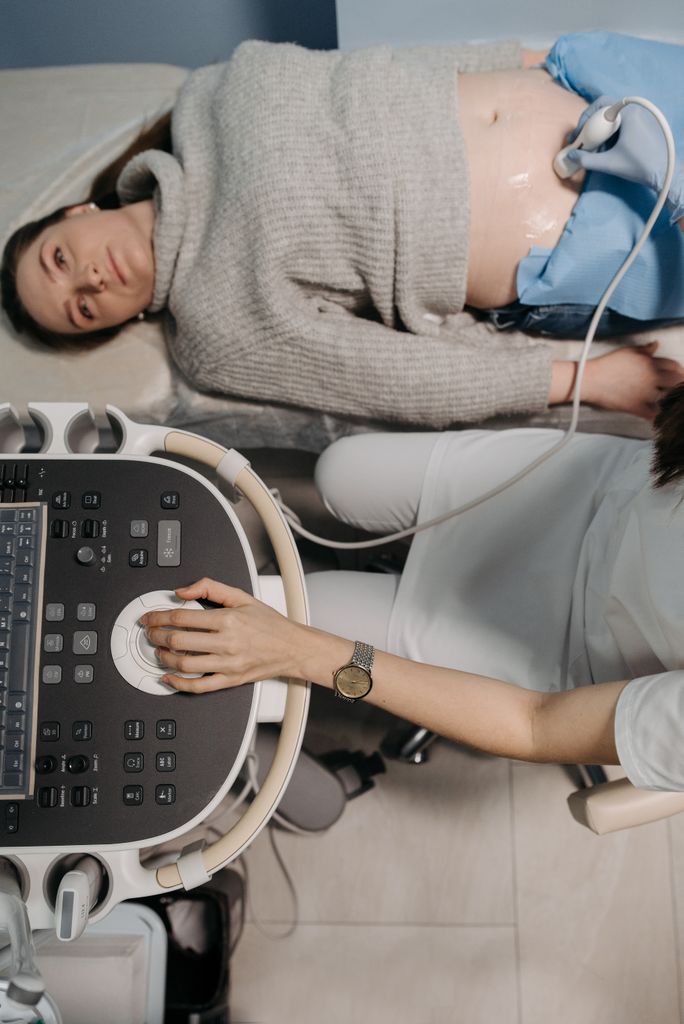
A typical day starts with reviewing the day’s patient list and the reason for each scan. You prepare the examination room, greet the patient, explain the procedure, and help them into position. You apply gel to the skin, move the transducer — the handheld device that sends sound waves into the body — and capture images on screen. You measure structures, label the images, and write a short technical summary for the radiologist or doctor who will interpret the results. In obstetrics, you may also be the first person to show parents their baby on screen, which is a moment patients never forget.
Sonographers work closely with patients, so communication skills matter as much as technical skill. Patients are often anxious, in pain, or receiving difficult news. A good sonographer explains what is happening in plain language, works gently and respectfully, and knows when to bring in a doctor. The role suits people who like science, enjoy working with technology, and are comfortable with close patient contact.
The Main Specialty Tracks
Sonography is not one job. It is several specialties that share the same core skills, and the specialty you choose shapes your training, your exams, and where you work.
Obstetric and Gynaecologic Sonography
This is the best-known specialty. Obstetric sonographers scan pregnant patients to check the baby’s growth, heartbeat, and position, and to look for complications. Gynaecologic sonography covers the female reproductive system outside pregnancy. This track suits people who enjoy working with expectant parents and who can handle the emotional side of the work, including scans where the news is not good.
Abdominal Sonography
Abdominal sonographers scan organs such as the liver, gallbladder, kidneys, pancreas, and spleen. This is the broadest specialty and is found in almost every hospital and imaging centre. It suits people who like variety, because no two abdominal scans are quite the same.
Cardiac Sonography (Echocardiography)
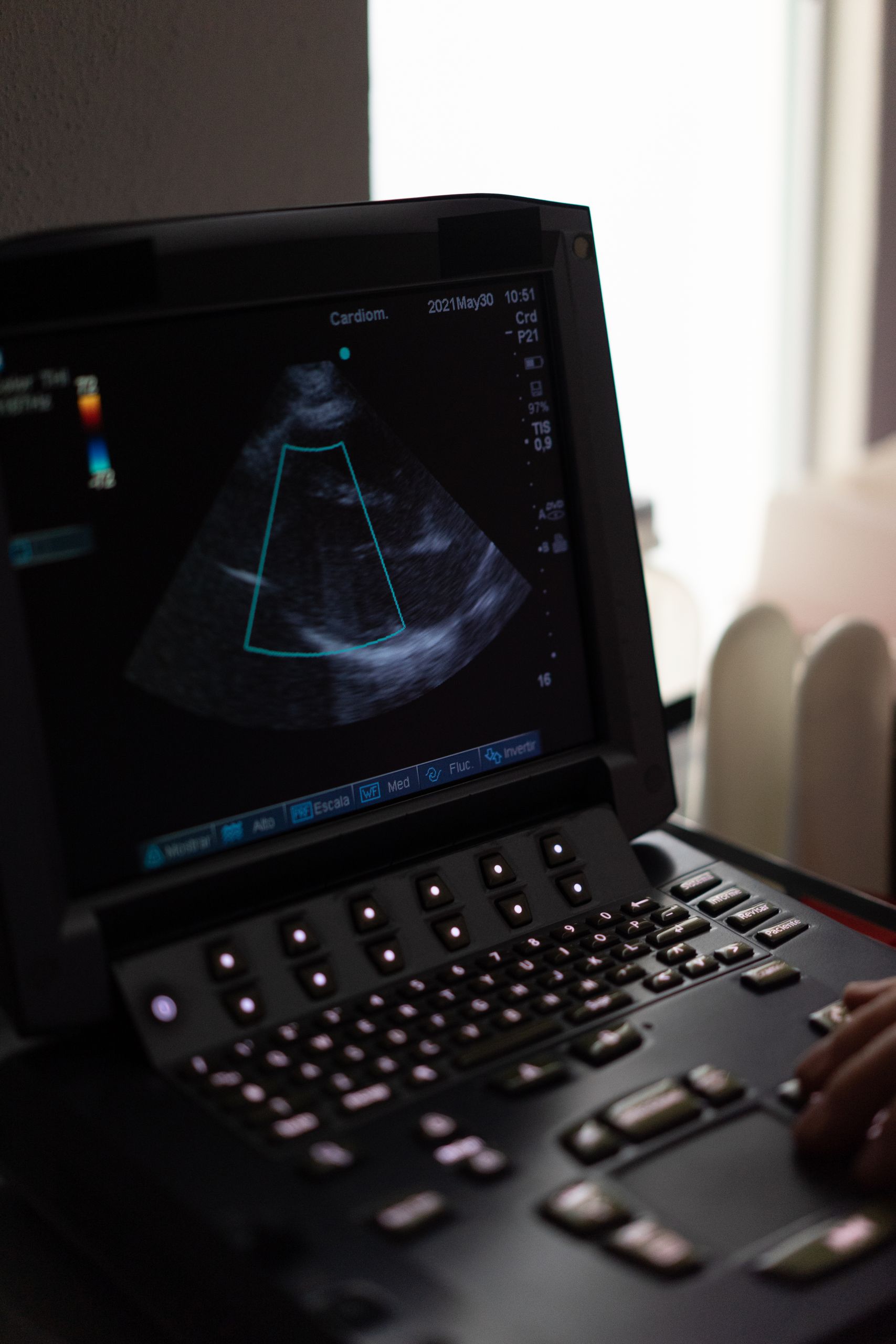
Cardiac sonographers, also called echocardiographers, use ultrasound to image the heart and its valves, chambers, and blood flow. This specialty needs a strong understanding of heart anatomy and disease, and it is one of the most technically demanding tracks. Cardiac sonographers work in hospitals, cardiology clinics, and heart centres.
Vascular Sonography
Vascular sonographers image blood vessels to check for blockages, clots, and circulation problems. They use Doppler ultrasound, which shows blood flow in real time. This track is common in hospitals and vascular clinics.
Breast Sonography
Breast sonographers scan breast tissue, often as a follow-up to a mammogram. This is a smaller specialty but a growing one, and it is often added as a second credential by sonographers who already hold another specialty.
Many sonographers start with one specialty and add a second later. Each additional specialty usually means one more ARDMS exam and more clinical experience, but it also widens your job options and can increase your pay. You do not need to decide your specialty before you start training — most programs introduce you to several areas during clinical placements, and you can choose after you have tried them.
Step 1: Check the Requirements in Your State
Before you spend money on a program, check your state’s rules. Sonography is regulated differently from state to state. Some states require sonographers to hold a licence or specific certification to practise. Others have no state licence at all and leave the requirements to employers, who almost always ask for ARDMS certification anyway. A few states are moving towards stricter rules, so what is true today may change.
Check the official state health department or licensing board website for your state, and also look at real job listings in your area to see what employers actually ask for. If local employers ask for ARDMS certification and graduation from a CAAHEP-accredited program, treat those as your requirements even if the state itself does not licence the role. Choosing the accredited route from the start keeps every door open, including jobs in states with stricter rules. That is the safest starting point for anyone learning how to become a sonographer.
Step 2: Complete Your General Education
Most sonography programs ask for a high school diploma or equivalent, plus some college-level science courses. The usual prerequisites are human anatomy and physiology, physics, college maths, medical terminology, and basic communication or English. If you have already completed a degree in another field, you may already meet many of these. If you are coming straight from school, a community college can help you complete the prerequisites cheaply before you apply.
Strong grades in science matter, because sonography programs are competitive. Admissions often look at your grade point average in prerequisite courses, and some programs have more applicants than places. Take the science courses seriously, and if you struggle with physics, get help early — ultrasound physics is a core part of the training and the certification exam, and a weak foundation in physics is one of the most common reasons students struggle. Short free courses can also help you build background knowledge before you apply — our guide to free online courses with certificates lists options that can strengthen your application.
If you are unsure whether a healthcare career is right for you, our guide on how to choose a career path walks through how to test a career idea before you commit time and money to training.
Step 3: Choose a CAAHEP-Accredited Program
This is the most important decision in the whole process. CAAHEP is the Commission on Accreditation of Allied Health Education Programs, and it accredits diagnostic medical sonography programs in the United States. Graduating from a CAAHEP-accredited program is the standard route to ARDMS certification, and it is what most employers look for.
There are three common program formats. An associate degree in diagnostic medical sonography usually takes about two years of full-time study after prerequisites, and it is the most common entry route. A bachelor’s degree takes about four years and can help if you want to move into teaching, management, or research later. A certificate program, usually lasting 12 to 18 months, is designed for people who already hold a healthcare qualification, such as a radiologic technologist or a nurse, and want to add sonography.
When you compare programs, look beyond the brochure. Check the program’s graduation rate, its ARDMS exam pass rate, and its job placement rate — accredited programs publish these figures, and a strong program will share them proudly. Ask where clinical placements happen, because you will spend hundreds of hours in real hospitals and clinics, and the quality of those placements shapes how job-ready you are. Ask about class sizes, lab equipment, and how much hands-on scanning time you get before your first clinical placement. A program with modern machines and plenty of lab practice is worth more than a cheaper one with outdated equipment.
Be careful with programs that are not CAAHEP-accredited. Some unaccredited programs promise a faster or cheaper route, but their graduates may not be eligible for the ARDMS exams, which closes off most jobs. Always verify a program’s accreditation on the official CAAHEP website before you enrol, and confirm the current tuition and fees directly with the school, because costs change and vary widely between public and private institutions.
Step 4: Complete the Program and Clinical Training
A sonography program combines classroom study with clinical placements. In the classroom you study anatomy, physiology, ultrasound physics, instrumentation, pathology, and patient care. You learn how sound waves create images, how to recognise normal and abnormal anatomy, and how to operate the machine safely. The physics content is demanding — it covers the behaviour of sound, Doppler principles, and image artefacts — but it is essential, because the certification exam tests it in depth.
Clinical training is where the learning becomes real. You will spend many hours in hospitals and clinics, scanning real patients under supervision. At first you will observe, then assist, and then perform scans yourself with a supervisor checking your work. You will scan a wide range of patients and conditions, and you will learn the practical skills no textbook can teach: how to put a nervous patient at ease, how to get a clear image on a difficult body type, and how to work quickly when a department is busy.
Treat your clinical placements as a long job interview. The supervisors and staff you work with are often the people who hire new graduates, and a student who is reliable, keen, and professional is remembered. Turn up on time, ask good questions, volunteer for extra scans, and keep a log of the examinations you perform — you will need the numbers for your certification application.
Step 5: Pass the ARDMS Certification Exams
The American Registry for Diagnostic Medical Sonography (ARDMS) is the main credentialing body for sonographers in the United States. Most employers require or strongly prefer ARDMS certification, and it is the credential that proves you meet a national standard.
The usual first credential is Registered Diagnostic Medical Sonographer (RDMS). To earn it, you pass two exams. The first is Sonography Principles and Instrumentation (SPI), which tests ultrasound physics and how the machine works. The second is a specialty exam in your chosen area, such as Obstetrics and Gynaecology, Abdomen, or Breast. Cardiac sonographers take a separate route to the Registered Diagnostic Cardiac Sonographer (RDCS) credential, and vascular sonographers aim for the Registered Vascular Technologist (RVT) credential.
To sit the exams, you need to meet ARDMS eligibility requirements, which depend on your education route. Graduates of CAAHEP-accredited programs usually qualify directly. You will need to submit your transcripts and proof of your clinical experience, pay the exam fees, and book your exams at a testing centre. Check the current fees and eligibility rules on the official ARDMS website before you apply, because both change from time to time.
Prepare for the exams seriously. The SPI exam in particular has a reputation for being tough, because ultrasound physics is not intuitive. Use a dedicated exam review book, take practice tests, and study in a group if you can. Most graduates take the SPI exam during or soon after their program, while the physics is still fresh, and then take the specialty exam after more clinical experience. Passing both exams earns you the RDMS credential and the right to use those letters after your name.
Step 6: Find Your First Job
Newly qualified sonographers usually find work in hospitals, which hire the most sonographers and offer the widest range of scans. Outpatient imaging centres, private clinics, and doctors’ offices also hire, and they often offer more regular hours. Some sonographers work for mobile imaging services, travelling to different facilities, and a few work in education or for ultrasound equipment companies.
When you apply, highlight your clinical placement experience, your ARDMS credential, and any additional specialties. Employers want to know what you can scan independently and how quickly you can work. A short, honest resume that lists your clinical hours, the types of examinations you performed, and your exam results is more convincing than a long list of general claims.
Be flexible about your first role. A hospital job with varied shifts may not be your dream schedule, but it builds experience fast and makes you far more employable. After a year or two of solid experience, you can move towards the setting and hours you prefer, add a second specialty, or apply for senior roles.
Salary and Career Outlook
Sonographer pay varies by specialty, location, and experience. Cardiac and vascular specialists often earn more than general sonographers, and pay is usually higher in large cities and in states with a high cost of living. Shift work, on-call duties, and overtime can also add to earnings. For current, authoritative figures, check the U.S. Bureau of Labor Statistics page for diagnostic medical sonographers, which publishes national wage and employment data.
The career outlook is strong. Demand for diagnostic imaging is growing as the population ages and as ultrasound is used for more conditions. The BLS projects steady growth for the occupation, and employers in many areas report difficulty finding qualified sonographers. That said, demand varies by region, so check job listings in your target area before you commit to training. It is one reason so many people are asking how to become a sonographer right now.
Career progression is real. Experienced sonographers can become lead sonographers, supervisors, or department managers. Some move into teaching, training new students in a college or hospital program. Others become application specialists for ultrasound equipment companies, or move into research. Adding specialties is the simplest way to increase your value: a sonographer who holds two or three ARDMS credentials is more employable than one who holds a single credential
Common Mistakes to Avoid
Choosing an Unaccredited Program
This is the costliest mistake. An unaccredited program may be cheaper or faster, but if its graduates cannot sit the ARDMS exams, you may finish training and still be unemployable. Verify CAAHEP accreditation before you enrol, every time.
Underestimating the Physics
Many students expect sonography to be mostly practical and are surprised by how much physics the course and the SPI exam contain. Take physics seriously from the start. It is the foundation of everything else.
Rushing the Specialty Choice
You do not need to commit to a specialty before you have scanned patients in that area. Use your clinical placements to try different specialties, talk to sonographers in each one, and then decide. A specialty you enjoy will carry you through a long career; one you chose for the wrong reasons will not.
Skipping the Certification Exams
Some new graduates delay the ARDMS exams, intending to take them later. Most employers ask for certification, so delaying the exams delays your job search. Take the exams as soon as you are eligible, while the material is fresh.
Ignoring the Emotional Side
Sonography involves difficult moments: scans that reveal a serious illness, or a pregnancy that has gone wrong. If you are not prepared for that side of the work, it can be overwhelming. Talk to working sonographers about how they handle it, and be honest with yourself about whether you can.
Getting Started Checklist
- Check your state’s licensing and certification rules for sonographers
- Complete prerequisite courses in anatomy, physiology, physics, and medical terminology
- Research CAAHEP-accredited programs and compare pass rates, costs, and clinical placements
- Verify the program’s accreditation on the official CAAHEP website before enrolling
- Complete the program and log all your clinical scanning hours
- Prepare for and pass the ARDMS SPI exam and your specialty exam
- Apply for hospital, clinic, and imaging centre roles, highlighting your clinical experience
- Plan your first additional specialty within your first few years of practice
Conclusion
Becoming a sonographer takes about two years of focused training, a demanding physics exam, and a lot of hands-on clinical practice — but it leads to a skilled, respected healthcare career with strong demand and real progression. The path is clear: check your state’s rules, complete your prerequisites, choose a CAAHEP-accredited program, finish your clinical training, and pass your ARDMS exams. Choose your specialty based on real experience during placements, not on a guess, and take the certification exams as soon as you are eligible. If you like science, technology, and working closely with patients, sonography is a career worth the effort. Start by checking accredited programs in your area this week.
FAQ
How long does it take to become a sonographer?
Most people qualify in about two years through a CAAHEP-accredited associate degree program, after completing prerequisite science courses. Certificate programs for people who already hold a healthcare qualification can take 12 to 18 months, and a bachelor’s degree takes about four years. The exact time depends on your starting point and whether you study full time. The steps for how to become a sonographer are the same on every route: accredited training, clinical hours, and the ARDMS exams.
Do I need a licence to work as a sonographer?
It depends on the state. Some states require a licence or specific certification, while others do not licence sonographers at all. However, most employers across the country require ARDMS certification, so you should plan to earn that credential regardless of your state’s rules. Check your state board’s official website before you enrol.
What is the difference between a sonographer and an ultrasound technician?
The terms are often used for the same role. “Sonographer” and “diagnostic medical sonographer” are the more formal titles, while “ultrasound technician” is a common informal name. The training, certification, and work are the same. Be aware that some employers use “technician” for roles with less training, so check the job description carefully.
Is the ARDMS exam hard?
The Sonography Principles and Instrumentation exam is widely considered the hardest part, because it tests ultrasound physics in depth. Most students who prepare properly — with a review book, practice tests, and study during their program — pass. Taking the exam soon after your program, while the physics is fresh, gives you the best chance.
Which sonography specialty pays the most?
Cardiac and vascular sonography often pay more than general or obstetric sonography, but pay varies by location, employer, and experience. A sonographer who holds multiple ARDMS credentials usually earns more than one with a single specialty. Check current wage data for your area on the BLS website before choosing a specialty for pay reasons alone.