
How to Become a Massage Therapist: Training & MBLEx Guide
If you want to know how to become a massage therapist, you are looking at a hands-on wellness career that helps people in a very direct way. Massage therapists use touch to ease pain, reduce stress, improve mobility, and help clients recover from injury or simply feel better in their own bodies. It is calm, skilled, people-focused work, and training usually takes less than a year. You can work in a spa, a clinic, a hospital, a sports team, or your own practice, and you can shape the career around the life you want.
Massage therapy is also a regulated profession in most of the United States, which means the path has rules — and this guide covers them all. This guide explains how to become a massage therapist, step by step — state hour requirements, choosing a program, the MBLEx exam, licensing, and how to build a successful practice.
Table of Contents
Quick Answer: How to Become a Massage Therapist
To become a massage therapist, complete an approved massage therapy training program — usually 500 to 1,000 hours depending on your state — then pass the MBLEx licensing exam and apply for a licence in your state. Choose a program approved by your state board, complete your hands-on clinical practice, and apply for jobs in spas, clinics, and wellness centres or start your own practice. Requirements vary by state, so check your state’s rules before you enrol.
What Does a Massage Therapist Do?
A massage therapist’s work starts before the massage begins. You talk to the client about why they have come: pain, stress, a sports injury, a medical condition, or simply the need to relax. You ask about their health history, any injuries or conditions, and what they hope to get from the session. This conversation shapes everything that follows, because the right massage for a stressed office worker is very different from the right massage for an athlete recovering from a hamstring strain.
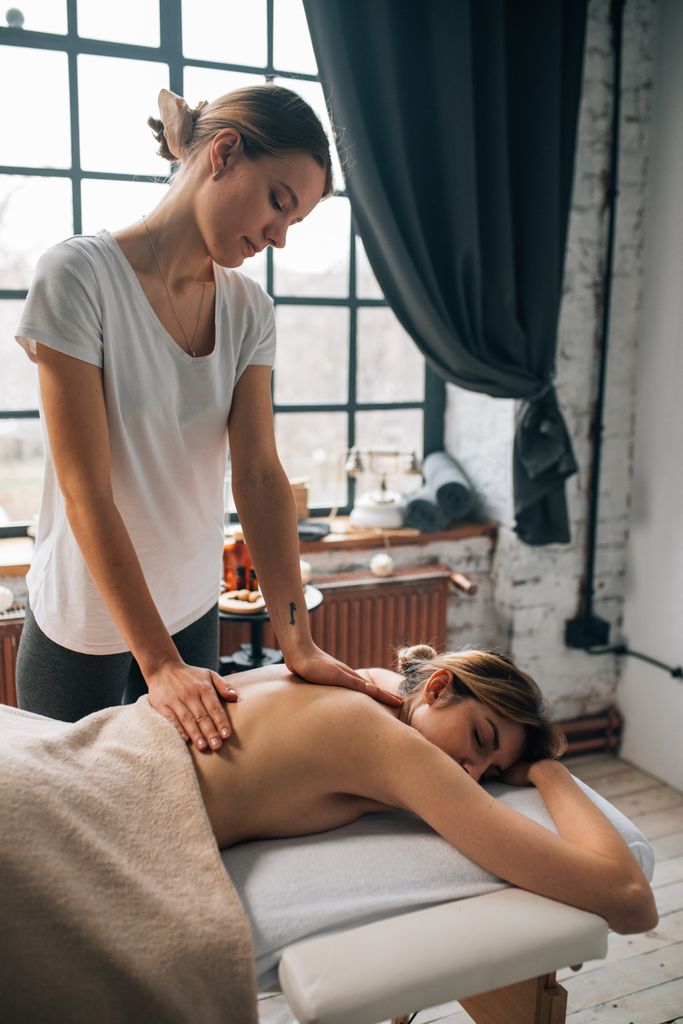
During the session, you use your hands, fingers, forearms, and sometimes elbows to manipulate the client’s muscles and soft tissue. The techniques vary: long smooth strokes to relax, deeper pressure to release tight muscles, kneading, tapping, and stretching. You adjust the pressure constantly based on the client’s feedback and what you feel under your hands. A good therapist reads the body as well as listening to the client, noticing where tension sits and how the tissue responds.
After the session, you talk to the client about what you found, suggest stretches or self-care, and recommend how often they should return. You keep notes on each client so you can track their progress over time. You also clean and reset the room, wash linens, restock oils and lotions, and manage your schedule. If you are self-employed, you also handle bookings, payments, and marketing.
Massage therapists work with a wide range of clients: office workers with neck and back pain, athletes, pregnant clients, older adults, people recovering from surgery, and people managing chronic conditions such as fibromyalgia or anxiety. The work is physically demanding and emotionally rewarding in equal measure, and it suits people who are calm, patient, observant, and comfortable with close physical contact in a professional setting.
The Main Types of Massage
Massage therapy is not one technique. Most training programs teach several, and many therapists specialise over time.
Swedish Massage
Swedish massage is the most common type and the foundation of most training. It uses long, smooth strokes, kneading, and circular movements to relax the whole body, improve circulation, and ease general tension. It is the standard relaxation massage in spas and the starting point for most therapists.
Deep Tissue Massage
Deep tissue massage uses slower, firmer pressure to reach deeper layers of muscle and connective tissue. It is used for chronic pain, tight muscles, and recovery from injury. It needs more strength and better body mechanics than Swedish massage, and it is a popular specialisation because many clients specifically ask for it.
Sports Massage
Sports massage is designed for athletes, before and after training and competition. It focuses on the muscle groups used in a particular sport, aims to prevent injury and speed recovery, and often includes stretching and range-of-motion work. Sports massage therapists may work with teams, at events, or in clinics alongside physiotherapists.
Prenatal Massage
Prenatal massage is adapted for pregnant clients, using safe positioning and techniques for each stage of pregnancy. It can ease back pain, swelling, and stress, but it requires specific training, because there are conditions and areas that must be avoided. Many therapists take an extra course in prenatal work before offering it.
Other Specialities
Other common specialities include hot stone massage, reflexology, lymphatic drainage, trigger point therapy, and chair massage for workplaces. You do not need to learn them all at once. Most therapists start with Swedish and deep tissue, then add specialities as their client base grows and their interests develop.
Step 1: Check the Requirements in Your State
This is the most important step, and it comes first for a reason. Massage therapy is regulated state by state, and the rules are very different. Almost every state requires a licence to practise, but the number of training hours required ranges widely — commonly from 500 to 1,000 hours, depending on the state. Some states require more. A few states have no state licence at all and leave regulation to cities or counties, which may have their own rules.
Check your state massage therapy board’s official website before you do anything else. Note the exact number of training hours required, whether the program must be approved by the state board, whether you must pass the MBLEx exam, what the licence application costs, and whether a background check is required. Also check whether your state accepts training completed in another state, because that matters if you trained elsewhere or plan to move.
If you are comparing this career with other options, our guide to career options after graduation can help you weigh massage therapy against other healthcare and wellness routes.
Step 2: Choose an Approved Training Program
Once you know your state’s hour requirement, choose a program that meets it and is approved by your state board. This is not optional: if the program is not approved, your hours may not count towards your licence, and you could finish training and still be unable to practise.
Massage therapy programs are offered by dedicated massage schools, community colleges, and some vocational schools. Full-time programs usually take six to twelve months, depending on the number of hours required. Part-time programs take longer but let you keep working while you study.
When you compare programs, ask the questions that matter. Is the program approved by your state board? What is the total number of hours, and how are they split between classroom study, hands-on practice, and student clinic work? What is the MBLEx pass rate of recent graduates? Who teaches the courses, and what is their experience? How much hands-on practice do you get before you work on real clients? What does the tuition include — textbooks, oils, linens, exam fees — and what costs extra? Confirm the current tuition directly with the school, because prices vary widely and change over time.
Also check the school’s reputation. Talk to graduates if you can, read reviews, and visit the school in person. A good school will let you observe a class and tour the clinic. Be cautious of schools that promise a licence in an unrealistically short time, or that cannot show you their state approval in writing. If you need help with the cost of training, our guide on how to find scholarships covers funding options that may apply to vocational and healthcare training.
Step 3: Complete the Training Program
A massage therapy program covers anatomy and physiology, kinesiology — the study of how the body moves — pathology, ethics, business practice, and the massage techniques themselves. You will study the muscles, bones, and systems of the body in detail, because you need to know what you are touching and how it works. You will learn about common conditions, when massage is safe and when it is not, and how to recognise a client who needs a doctor rather than a massage.
Hands-on practice is the heart of the program. You will practise on fellow students first, learning the strokes, the pressure, and the body mechanics that protect your own hands, wrists, and back. Then you will work in the student clinic, massaging real clients under supervision. This is where the learning becomes real: real bodies are different from textbooks, real clients give feedback, and you learn to adapt your technique to each person.
Take your body mechanics seriously from the first week. Massage therapy is physically demanding, and therapists who use poor technique injure their hands, wrists, and backs. Learn to use your body weight rather than your arm strength, keep your wrists straight, and vary your techniques. Your career will last much longer if your body does.
Most programs also include a business and ethics component, covering client records, boundaries, hygiene, and the practical side of running a practice. Pay attention to this part even if you plan to work for someone else: understanding the business helps you negotiate better jobs and protects you professionally.
Step 4: Pass the MBLEx Exam
The Massage and Bodywork Licensing Examination — the MBLEx — is the licensing exam used by most states. It is run by the Federation of State Massage Therapy Boards (FSMTB), and it is the exam you will need to pass to get your licence in most of the country.
The MBLEx is a computer-based multiple-choice exam, usually taken at a testing centre. It covers anatomy and physiology, kinesiology, pathology, the effects and benefits of massage, client assessment, ethics, boundaries, laws and regulations, and professional practice. It tests your judgment as well as your knowledge — for example, whether massage is safe for a client with a particular condition, or how to handle an ethical situation.
To sit the exam, you apply through the FSMTB, submit proof that you have completed or are near completing an approved program, pay the exam fee, and book your test. Check the current fee and eligibility rules on the official FSMTB website before you apply, because details change. Prepare with a dedicated study guide and practice tests, and study in the weeks after your program ends, while the material is still fresh. Most students who prepare properly pass on their first attempt, and if you do not, you can retake the exam after a waiting period.
Some states use a different exam or have additional requirements, so always confirm the exam your state requires on the state board’s official website. Do not assume the MBLEx is the right exam for your state until you have checked.
Step 5: Apply for Your State Licence
Once you have passed the exam and completed your training hours, apply for your licence through your state board. The application usually asks for proof of your training, your exam results, a background check, and a fee. Processing times vary, so apply as soon as you are eligible and do not book paying clients until your licence is in hand. Working without a licence where one is required can result in fines and can damage your ability to get licensed later.
Your licence will need renewing, usually every one to two years depending on the state, and renewal normally requires continuing education hours. Plan for this from the start: keep records of every course you take, and complete your continuing education well before the renewal deadline. If you move to another state, check whether your licence transfers or whether you need to apply fresh, because rules vary and some states have reciprocity agreements while others do not.
Step 6: Find Your First Job
Newly licensed massage therapists usually start in one of four settings. Spas and salons offer a steady flow of clients and a ready-made workplace, but the pay is often commission-based and the schedule can include evenings and weekends. Chiropractic and physiotherapy clinics offer more clinical work, often with regular hours and a focus on pain and rehabilitation. Hospitals and hospices employ massage therapists for patient comfort and pain management, and the work there is rewarding but can be emotionally demanding. Sports teams and fitness centres offer work with athletes, often on an irregular schedule around events and training.
Your resume should list your program, your total training hours, your MBLEx result, your licence number, and the techniques you are trained in. Employers want to know what you can do and how much supervised practice you have had. Be honest about your experience level: employers expect new graduates to need support, and they value honesty over exaggeration.
Consider starting in a spa or clinic rather than going independent immediately. Working for someone else gives you a steady stream of clients, teaches you how a practice runs, and lets you build your skills and reputation without the pressure of finding your own clients. After a year or two, you will know whether you prefer employment or your own practice.
Building Your Own Practice
Many massage therapists eventually go self-employed, either full time or alongside employed work. It offers the most control over your hours, your clients, and your income, but it also means you are responsible for everything: finding clients, booking, payments, marketing, insurance, laundry, and supplies.
Before you go independent, get professional liability insurance, which protects you if a client is injured or makes a claim. Check your local rules about where you can practise — some areas have zoning rules for home-based businesses. Set up a simple booking system, a clear cancellation policy, and a way to take payments. Decide your prices by researching what therapists in your area charge for similar services, and do not undercharge: a fair rate that reflects your training and skill attracts clients who value your work.
Marketing a massage practice is mostly about trust and word of mouth. A simple, professional website, a Google business profile, and a few genuine client reviews go a long way. Offer a good first experience, ask happy clients to refer friends, and consider a loyalty offer for regular clients. Local partnerships help too: a referral relationship with a chiropractor, a physiotherapist, or a gym can bring a steady flow of clients.
Salary and Career Outlook
Massage therapist income varies by setting, location, and whether you are employed or self-employed. Spa and clinic therapists often earn an hourly wage plus tips, while self-employed therapists keep more per session but must cover their own costs and find their own clients. Tips can be a significant part of income in spa settings, and experienced therapists with a loyal client base usually earn more than new graduates.
For current, authoritative employment data, see the U.S. Bureau of Labor Statistics page for massage therapists, which publishes national wage and job growth figures. The BLS reports steady growth for the occupation, driven by rising demand for massage as part of wellness, pain management, and stress relief, and by the growing use of massage in healthcare settings.
Career progression is available. Experienced therapists can specialise in a high-demand area such as sports massage, oncology massage, or prenatal massage, and specialisation usually means higher rates. Some open their own studio or spa. Others move into teaching, training new students at a massage school. A few move into related healthcare roles, using their anatomy and client-care experience as a foundation.
Common Mistakes to Avoid
Enrolling in a Program Your State Does Not Approve
This is the costliest mistake. If your state board does not approve the program, your hours may not count towards your licence. Verify state approval in writing before you pay any tuition.
Ignoring Your Own Body
Massage therapy is physically demanding. Therapists who ignore body mechanics, work too many hours, or skip rest injure themselves and shorten their careers. Learn good technique, limit the number of massages you do in a day, and look after your own health as carefully as you look after your clients’.
Delaying the MBLEx
Graduates who put off the exam often find the material harder to recall later, and they delay their licence and their job search. Take the exam as soon as you are eligible, while your training is fresh.
Skipping Insurance and Business Basics
Even employed therapists should understand liability insurance, client records, and professional boundaries. Self-employed therapists need all of these from day one. Do not take your first paying client without insurance in place.
Undercharging
New therapists often set their prices far too low, hoping cheap prices will win clients. They usually win the hardest clients instead, and they burn out quickly. Research local rates, set a fair price, and raise it as your experience and demand grow.
Getting Started Checklist
- Check your state board’s official website for hour requirements, approved programs, and the exam you need
- Choose a state-approved program that meets your state’s hour requirement
- Confirm the current tuition and what it includes directly with the school
- Complete the program, including all hands-on clinical practice hours
- Prepare for and pass the MBLEx exam as soon as you are eligible
- Apply for your state licence and wait for it before taking paying clients
- Get professional liability insurance
- Apply for spa, clinic, or hospital roles, or plan your own practice once you have experience
- Keep your licence current with continuing education
Conclusion
Learning how to become a massage therapist takes less than a year of training in most states, a national licensing exam, and a state licence — and it leads to a flexible career in a growing wellness industry. If the work appeals to you, start with your state board, choose an approved program, and plan for the MBLEx. You can build a career that is stable, rewarding, and genuinely helpful to the people you work with.
FAQ
How long does it take to become a massage therapist?
Most full-time programs take six to twelve months, depending on your state’s required training hours, which commonly range from 500 to 1,000 hours. Part-time programs take longer. After training, you must pass the MBLEx exam and apply for your state licence, which can add a few more weeks.
How many hours of training do I need to become a massage therapist?
It depends on your state. Most states require between 500 and 1,000 hours of training from an approved program. Check your state massage therapy board’s official website for the exact number, because it varies widely and your program must meet it for your hours to count.
What is the MBLEx exam?
The MBLEx is the Massage and Bodywork Licensing Examination, run by the Federation of State Massage Therapy Boards. It is a computer-based multiple-choice exam covering anatomy, physiology, kinesiology, pathology, massage techniques, ethics, and professional practice. Most states require it for licensing, but confirm the exam your state requires on the state board’s official website.
Do I need a licence to practise massage therapy?
In most states, yes. Almost every state requires a licence, and working without one where it is required can lead to fines. A few states have no state licence and leave regulation to local authorities, so check your state and local rules before you start practising.
Can I work for myself as a massage therapist?
Yes, many massage therapists are self-employed, either full time or alongside employed work. You will need a licence, professional liability insurance, a booking and payment system, and a way to find clients. Most therapists gain experience working for a spa or clinic first, then go independent once they have skills, a reputation, and a client base.