Best Plumber Jobs: High-Paying Roles and How to Get Them
Quick Answer
The best plumber jobs are the ones that combine steady demand, skilled work you can be proud of, and pay that grows with experience. For most people in the US and UK, the strongest options are residential service plumber, commercial plumber, industrial plumber, pipefitter, and — in the UK — gas engineer or heating engineer. These roles are available in every town and city, they cannot be outsourced or done remotely, and they offer a clear route in through an apprenticeship, trade school, or a helper job, even if you have no experience yet.
There is no single best role for everyone. A new starter who wants to earn while learning will choose differently from an experienced tradesperson who wants the highest pay on large commercial sites, or from someone who prefers the variety of call-out work in people’s homes.
The best plumber jobs share four things: work that is needed every week of the year, a recognised qualification or licence that protects your pay, a clear way to progress from apprentice to journeyman to master or senior engineer, and an employer or client base that values reliable, well-finished work. This guide compares the leading roles honestly — what the work is really like, who it suits, what it generally pays, how to get in, which licences you need, and where to apply — so you can choose with confidence
Table of Contents
What Makes a Plumber Job One of the Best?
Plumbing is one of the most secure skilled trades in the US and UK, and that security is the first reason the best plumber jobs rank so highly. Every home, school, hospital, office, restaurant, and factory needs water, drainage, heating, and gas systems that work safely. When a pipe bursts, a boiler fails, or a new building needs its water supply connected, someone has to be there in person, with tools and training, to fix it or install it. That work cannot be automated away, moved overseas, or postponed indefinitely. Demand stays steady in good times and bad, and it rises when housing is built, when old systems are replaced, and when energy-efficiency upgrades are fitted.
The second reason is pay that rewards skill. Plumbing is not unskilled labour. A qualified plumber understands water pressure, drainage falls, pipe materials, heating controls, gas safety, and building regulations, and can diagnose a fault that a homeowner cannot see. Employers and customers pay for that knowledge.
According to the U.S. Bureau of Labor Statistics Occupational Outlook Handbook, plumbers, pipefitters, and steamfitters in the United States earn a general median pay well above the national median for all occupations, with the highest-paid tenth earning considerably more, particularly in commercial and industrial work and in high-cost cities. In the UK, experienced plumbers and gas engineers commonly earn well above the national average wage, and self-employed plumbers who build a strong local reputation can earn more still, though their income varies with workload, call-outs, and the cost of running a van and tools.
All pay figures in this guide are general ranges based on the U.S. Bureau of Labor Statistics Occupational Outlook Handbook and UK labour-market data, clearly labelled as general ranges. They are not promises for any individual vacancy, employer, or location, and you should always check the advertised rate, whether overtime or call-out pay is included, and whether tools, a van, or fuel are provided.
The third reason is the route in. Unlike many well-paid careers, plumbing does not require a four-year university degree or large student debt. The standard route is an apprenticeship of around four years in the US, or two to four years in the UK, during which you earn a wage while you learn on the job and in the classroom.
Trade school, college courses, and helper or labourer jobs offer other ways in, and many employers will take on a motivated beginner who is reliable, physically fit, and willing to learn. The fourth reason is progression. A newly qualified plumber can become a senior plumber, a supervisor, a project manager, an estimator, a specialist in heating, gas, or water systems, or a self-employed business owner. Few careers offer so many different directions from a single starting qualification. If you are starting from scratch, our guide on how to get a job with no experience explains how to present yourself when you have no trade history yet.
Best Plumber Jobs at a Glance
The table below compares the leading roles side by side. Pay ranges are general US and UK ranges from Bureau of Labor Statistics data and UK labour-market sources. They vary by city, employer, experience, and whether the work is employed or self-employed.
| Role | Best for | Entry route | General US pay | General UK pay |
|---|---|---|---|---|
| Residential service plumber | Varied work, customer contact | Apprenticeship or helper route | $50,000–$75,000/yr | £32,000–£48,000/yr |
| Commercial plumber | Large sites, team work | Apprenticeship, trade school | $55,000–$85,000/yr | £36,000–£52,000/yr |
| Industrial plumber | Factories, high pay, shift work | Apprenticeship, industrial experience | $60,000–$95,000/yr | £40,000–£58,000/yr |
| Pipefitter | Construction, large pipe systems | Apprenticeship, union training | $55,000–$90,000/yr | £36,000–£55,000/yr |
| Gas engineer / heating engineer (UK) | Heating, boilers, Gas Safe work | NVQ, Gas Safe Register | $55,000–$80,000/yr equiv. | £35,000–£55,000/yr |
| Apprentice plumber | New starters, earn while learning | Direct apprenticeship application | $30,000–$45,000/yr | £18,000–£28,000/yr |
| Self-employed plumber | Independence, local business | Qualification, then own clients | $60,000–$110,000/yr | £40,000–£70,000/yr |
Pay figures are general ranges based on the U.S. Bureau of Labor Statistics Occupational Outlook Handbook and UK labour-market data. They are not guarantees for any specific job, employer, or location. Self-employed figures are before business costs such as a van, fuel, insurance, tools, and tax. Check the advertised rate on each vacancy, and check whether overtime, call-out pay, or a company van is included.
Residential Plumber Jobs: The Best Plumber Jobs for Variety
Residential plumbing is the most familiar of the best plumber jobs, and for many people it is the best place to start and to stay. Residential plumbers work in people’s homes, installing and repairing taps, toilets, showers, baths, sinks, water heaters, dishwashers, and washing machines, fixing leaks, unblocking drains, and fitting new bathrooms and kitchens. No two days are the same: one morning you may be replacing a leaking tap in a flat, the afternoon may be installing a new bathroom suite in a family home, and the next day may be tracing a hidden leak behind a wall.
The work suits people who like variety, who enjoy meeting customers, and who can explain a problem in plain language. A residential plumber needs more than technical skill. You are working in someone’s home, often at a stressful moment — a burst pipe, a flooded kitchen, no hot water on a cold morning — so calm communication, tidiness, and respect for the property matter as much as the repair itself. Good residential plumbers protect floors and worktops, clean up after themselves, explain what went wrong and what it will cost before they start, and leave the customer confident that the job is done properly. Those habits build repeat customers and word-of-mouth recommendations, which are the lifeblood of a residential plumbing business.
Entry is usually through an apprenticeship or as a plumber’s helper, also called a mate or labourer in the UK. Helpers carry tools, prepare materials, tidy the site, and learn by watching, and a good helper who shows up on time, asks sensible questions, and works hard is often offered an apprenticeship. In the US, residential plumbers are typically licensed at state or local level after an apprenticeship and an exam, and the exact requirements vary by state, so check your state licensing board before you start. In the UK, residential plumbers usually hold an NVQ Level 2 or Level 3 in Plumbing and Heating, and many also hold water regulations and unvented hot water certificates.
Pay generally starts lower than commercial work, but experienced residential plumbers, especially those who do emergency call-outs, can earn well, and the hours are usually more regular than on construction sites. If you prefer a job with a different kind of physical work and a regular shift pattern, compare this with our guide to warehouse jobs.
Commercial Plumber Jobs: Large Buildings, Larger Teams
Commercial plumbers work on offices, schools, hospitals, hotels, restaurants, shops, and public buildings. The systems are bigger, the drawings are more detailed, and the work is usually done as part of a team under a site manager or project manager. A commercial plumber may install pipework for a new office block, fit out the bathrooms and kitchens of a hotel, maintain the water systems of a hospital, or replace the drainage of a school during the summer holidays. The work is planned in stages, follows architectural and engineering drawings, and must meet strict building codes and safety rules.
This is one of the best plumber jobs for people who like structured work, teamwork, and large projects. You will work alongside electricians, carpenters, heating engineers, and other trades, and you will learn to read drawings, follow a schedule, and coordinate with other teams. The physical demands are real — lifting heavy pipe, working at height, and working in plant rooms and ceiling voids — but the work is usually more predictable than residential call-outs, with set site hours, often Monday to Friday, and overtime when a project deadline approaches.
Commercial work also tends to pay more than residential work for the same level of experience, and it offers a clear path into supervision, site management, and estimating. A commercial plumber who understands drawings, materials, and costing can move into a foreman role, then a contracts manager role, without ever leaving the trade.
Entry is usually through a formal apprenticeship with a commercial plumbing contractor, a trade school course, or a union apprenticeship programme in the US. In the UK, large contractors often recruit apprentices through colleges and take on several each year. You will need the same core qualifications as a residential plumber, plus site safety cards — in the US, OSHA safety training is commonly required on larger sites, and in the UK a CSCS card is the standard proof that you have passed the health and safety test for construction sites.
Commercial plumbers should be comfortable working from drawings, using power tools safely, and keeping accurate records of what has been installed and tested. If you like the idea of working on big sites but want to compare another skilled, hands-on route, our guide to delivery driver jobs shows a very different kind of mobile work with its own pay and hours.
Industrial Plumber Jobs: The Highest-Paid Best Plumber Jobs
Industrial plumbers work in factories, power stations, chemical plants, refineries, food-processing plants, and water treatment works. They install, maintain, and repair the large, high-pressure pipe systems that carry water, steam, gas, chemicals, and compressed air through an industrial plant. The pipework is larger, the pressures are higher, the materials are more specialised — stainless steel, carbon steel, and high-density plastics — and the safety rules are stricter than in any other plumbing role. A mistake in an industrial plant can shut down production, damage expensive equipment, or put people at risk, so the work is checked, tested, and documented carefully.
This is often the highest-paid of the best plumber jobs, and the pay reflects the skill, the responsibility, and the working conditions. Industrial plumbers may work shifts, including nights and weekends, to keep a plant running or to carry out maintenance during a shutdown, when a whole factory stops for a few days so that essential work can be done.
Shutdown work can mean long hours and good overtime pay, but it can also mean working away from home for days or weeks at a time. The role suits experienced plumbers and pipefitters who are comfortable with technical drawings, welding and jointing, pressure testing, and working in noisy, hot, or confined spaces with strict permit-to-work systems. It is not usually a first job for a new apprentice, but it is a realistic goal after a few years of commercial or pipefitting experience.
To get into industrial plumbing, most people start with a plumbing or pipefitting apprenticeship, gain a few years of experience, and then add specialist training in areas such as welding, high-pressure systems, or working in hazardous environments. In the US, industrial employers often prefer candidates with a journeyman licence and experience on commercial sites, and some roles require additional safety certifications.
In the UK, industrial plumbers usually hold an NVQ Level 3 and may hold additional certificates for welding, working in confined spaces, or working with specific materials. If you are drawn to the highest pay in the trade, industrial work is worth aiming for, but go in with your eyes open about shifts, travel, and the safety culture, which is strict for a good reason.
Service Plumber Jobs: Call-Outs, Diagnosis, and Customer Service
A service plumber is the plumber most homeowners meet. Service plumbers respond to call-outs, diagnose faults, carry out repairs, and maintain boilers, water heaters, taps, toilets, and drainage systems. Unlike a new-build plumber, who installs systems in an empty building, a service plumber works in occupied homes and businesses, often under time pressure, and must be able to find the cause of a problem quickly, explain it clearly, and fix it neatly. The job is part detective work, part skilled repair, and part customer service.
This is one of the best plumber jobs for people who like problem-solving and who do not want to do the same task all day. A service plumber may start the day with a blocked drain, then a leaking radiator, then a boiler that will not start, then a tap that will not stop dripping. Each job needs a different diagnosis and a different set of parts and tools, so you need a well-stocked van, good diagnostic skills, and the ability to stay calm when a customer is worried. The work can include an on-call rota, with evening and weekend call-outs paid at a higher rate, and in winter, when boilers fail and pipes freeze, the workload rises sharply.
That seasonality is worth knowing: summer is often quieter, winter is busy, and a good employer or self-employed plumber plans for both.
Service plumbers are usually qualified plumbers with a few years of experience, because diagnosis is harder than installation and customers expect a confident, accurate answer.
Many service plumbers work for a plumbing company, a housing association, a local authority, or a facilities management firm, while others are self-employed and build a round of regular customers. Pay is generally in the middle to upper part of the range for plumbers, and it rises with experience, with call-out and overtime pay, and with specialist skills such as boiler repair, leak detection, or drain camera work. If you enjoy fixing things and talking to people, and you can handle the occasional emergency call, service plumbing is one of the most satisfying roles in the trade.
Pipefitter Jobs: Big Pipes, Big Projects
Pipefitters are close cousins of plumbers, and in the US the two trades are often grouped together by the U.S. Bureau of Labor Statistics Occupational Outlook Handbook under plumbers, pipefitters, and steamfitters. Pipefitters install and maintain the pipe systems that carry liquids and gases in commercial and industrial buildings: heating and cooling systems, sprinkler systems, process pipework in factories, and the large-bore pipework in hospitals, power stations, and office towers. The pipes are larger and heavier than domestic plumbing, the joints are often welded or flanged rather than soldered or push-fit, and the work is usually done from detailed engineering drawings on a construction site or in a plant.
Pipefitting is one of the best plumber jobs for people who like construction, who enjoy working with their hands on large, physical tasks, and who want to work on landmark projects. A pipefitter may spend months on a single large building, installing the heating and chilled-water pipework floor by floor, then move on to the next project. The work is team-based, the hours are usually site hours, and the pay is generally higher than residential plumbing, particularly on unionised projects in the US and on large commercial contracts in the UK.
Pipefitters need to be able to read isometric drawings, cut and thread pipe accurately, use welding and cutting equipment safely, and pressure-test systems before they are handed over. It is physically demanding work, often at height or in plant rooms, and it requires a good head for measurements and a steady, careful approach.
Entry is through a pipefitting apprenticeship, often run by a union or a large mechanical contractor in the US, or through a plumbing apprenticeship followed by pipefitting experience in the UK. Many pipefitters start as plumbers and move across, because the core skills — measuring, cutting, jointing, testing, and reading drawings — are the same, and the specialist skills can be learned on the job. If you like the idea of large-scale work and you are comfortable with heights, heavy lifting, and site life, pipefitting is a strong choice, and it is one of the roles where overtime and project bonuses can lift pay well above the general range.
Gas Engineer and Heating Engineer Jobs in the UK
In the UK, gas engineer and heating engineer roles are among the best plumber jobs, and they deserve a section of their own because the rules are different from general plumbing. A gas engineer installs, services, and repairs gas boilers, cookers, fires, and central heating systems. A heating engineer does similar work, often with a broader focus on the whole heating system — radiators, pipework, controls, underfloor heating, and heat pumps — as well as the boiler itself. In practice, many UK plumbers hold both plumbing and gas qualifications and move between the two kinds of work, which makes them more employable and better paid
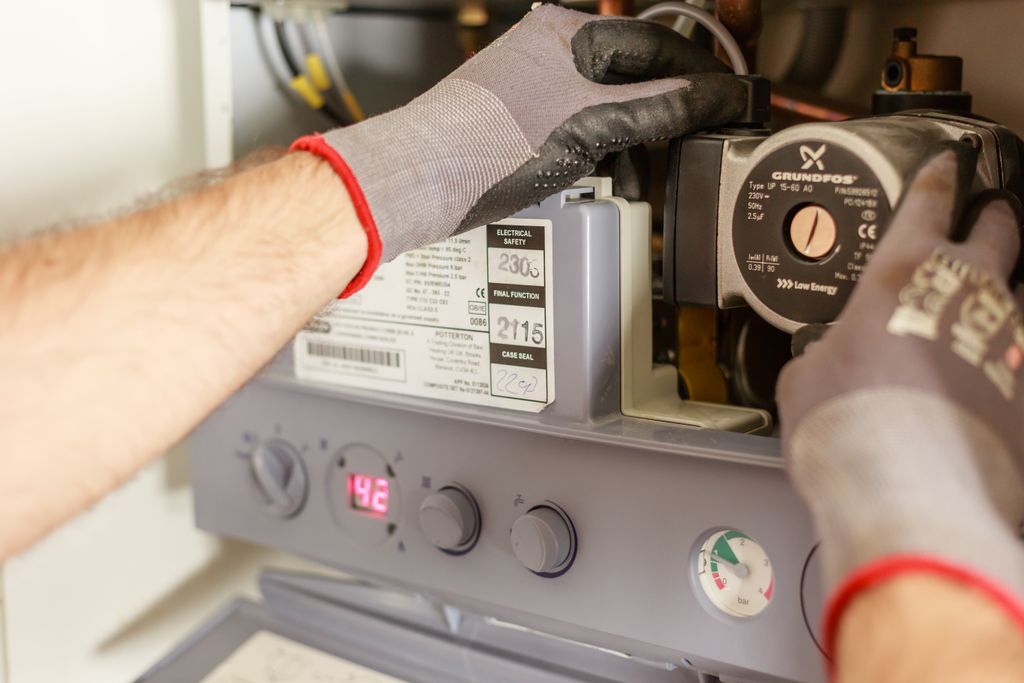
The key point for the UK is the Gas Safe Register. By law, anyone who works on gas appliances in the UK must be on the Gas Safe Register, and it is a criminal offence to work on gas without being registered. To get on the register, you need a recognised gas qualification, usually the ACS (Accredited Certification Scheme) assessments, and you need to renew those assessments every five years.
Most gas engineers start with a plumbing qualification — an NVQ Level 2 or Level 3 in Plumbing and Heating — and then take a gas course and the ACS assessments, often with a period of supervised on-the-job gas work to build the portfolio of evidence that the assessment requires. New entrants should be wary of short courses that promise a gas qualification in a few weeks with no supervised work: employers and the Gas Safe Register expect real, supervised experience, and a reputable training provider will be clear about that.
Gas and heating work pays well in the UK, with general ranges of roughly £35,000 to £55,000 a year for employed gas and heating engineers, and more for experienced engineers who do breakdown work, work on call, or run their own business. The work is steady, because every home with a gas boiler needs an annual service, and boilers break down most often in winter, when demand is highest.
Heating engineers are also increasingly working with low-carbon heating — air source heat pumps, solar thermal, and high-efficiency boilers — as the UK moves away from fossil-fuel heating, and engineers who train in heat pumps and renewables are likely to be in strong demand in the coming years. If you are based in the UK and want the most secure and best-paid route in domestic plumbing, gas and heating is the one to aim for, and you should plan your training around the NVQ and the Gas Safe Register from the start.
In the US, gas work is handled differently. Plumbers who work on gas lines are usually licensed plumbers, and the rules vary by state and city. Some states require a separate gas licence or an endorsement on a plumbing licence, and local building codes set the rules for gas pipe installation and testing. In both countries, the principle is the same: gas is dangerous if it is handled badly, so the work is regulated, the training is serious, and the qualification protects both the public and your pay. Never work on gas without the proper qualification and registration for your country, and never let an employer ask you to.
Apprentice Plumber Jobs: Earn While You Learn
An apprenticeship is the standard way into the best plumber jobs, and for most new starters it is the best way in.
An apprentice plumber is employed by a plumbing company, a contractor, or a local authority, and learns the trade on the job under an experienced plumber, while also attending college or trade school for classroom learning, usually one day a week or in blocks. In the US, a plumbing apprenticeship typically lasts four to five years, with around 8,000 hours of on-the-job training and 500 to 700 hours of classroom instruction, and it leads to a journeyman licence after an exam. In the UK, a plumbing apprenticeship typically lasts two to four years, leads to an NVQ Level 2 and then Level 3, and is usually open to people aged 16 and over, with no upper age limit — adult apprenticeships are common, and many career changers in their twenties, thirties, and forties retrain as plumbers.
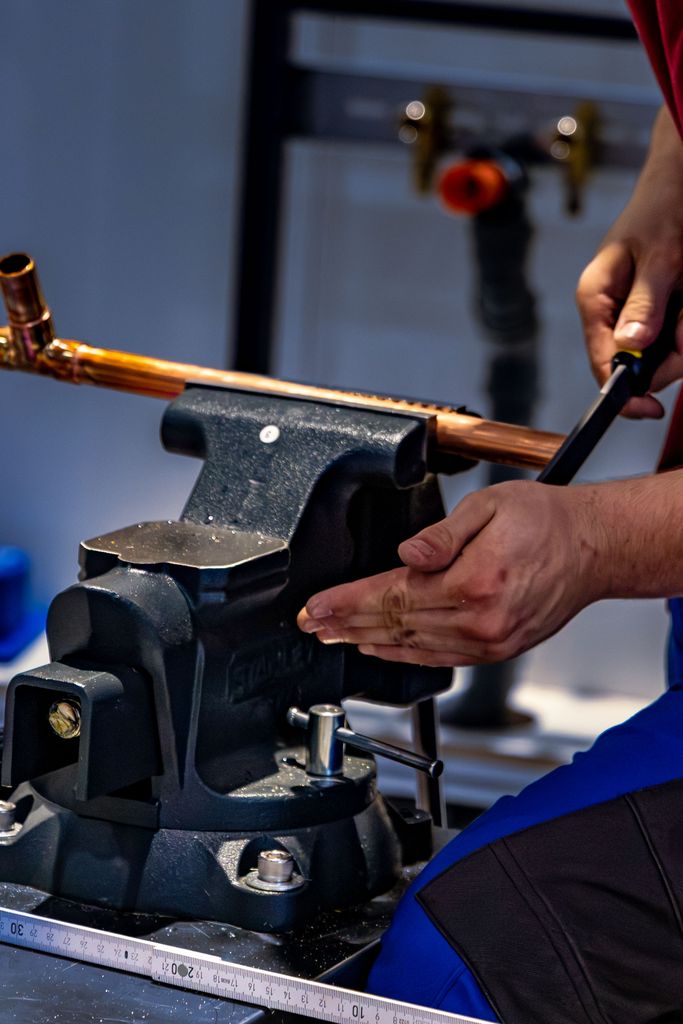
Apprentice pay is lower than qualified pay, and that is the honest trade-off. In the US, apprentices generally start at roughly 40 to 50 percent of a journeyman’s wage and receive regular pay rises as they progress through the programme, with general starting ranges of around $30,000 to $45,000 a year depending on location and employer. In the UK, apprentice wages are set by the national minimum wage for apprentices in the first year, with many employers paying more, and general ranges of around £18,000 to £28,000 a year once you include the second year onwards and larger employers. The advantage is that you are paid to learn, you finish with a recognised qualification and several years of real experience, and you have no student debt.
Many apprentices are offered a permanent job by the employer who trained them, and those who are not will find that a completed apprenticeship and a good reference open doors with other employers.
To get an apprenticeship, start by applying directly to local plumbing companies, mechanical contractors, and larger employers, and by checking college and trade school apprenticeship vacancies, government apprenticeship services, and union apprenticeship programmes in the US. A short, honest application helps: say why you want to be a plumber, show that you understand the work is physical and sometimes dirty, mention any relevant experience such as helping with DIY, working on a building site, or a school workshop course, and be clear that you can turn up on time, every day.
Good grades in maths and English help, because plumbers measure, calculate, and write records, but they are not always a formal requirement, and many employers care more about attitude and reliability. If you cannot get an apprenticeship straight away, a pre-apprenticeship course at a college or trade school, or a job as a plumber’s helper, can be a useful stepping stone, and you should keep applying while you do it. For general advice on starting with no trade history, see our guide on how to get a job with no experience.
How to Get Into Plumbing With No Experience
If you have no experience, you still have three realistic routes into the best plumber jobs, and the best route for you depends on your age, your finances, and how quickly you need to earn.
The first route is an apprenticeship, described above, and it is the route most employers and trade bodies recommend. The second route is trade school or college. In the US, a trade school or community college plumbing programme typically lasts six months to two years and teaches the theory, the tools, and the practical skills in a workshop, often with a work placement. In the UK, a college course such as a Level 2 Diploma in Plumbing can be taken full-time or part-time and gives you the underpinning knowledge that employers look for, though you will still need on-the-job experience and an NVQ to become fully qualified.
A trade school course costs money and time, so check the total cost, whether it includes a work placement, and what qualification you will actually hold at the end, before you enrol.
The third route is to start as a helper, labourer, or plumber’s mate. Helpers work alongside a qualified plumber, carrying tools and materials, preparing the work area, clearing up, and learning the trade by watching and helping. It is the least formal route, but it is a real one, and many plumbers started this way. To get a helper job, approach small local plumbing firms directly, explain that you want to learn the trade, and be ready to start at the bottom and work hard. A helper who is reliable, learns fast, and shows genuine interest is often offered an apprenticeship or sponsored through college.
Whichever route you choose, do not pay for a short course that promises to make you a qualified plumber in a few weeks. Plumbing is a regulated, skilled trade, and no short course can replace an apprenticeship or a proper college course with supervised workplace experience. Be wary of any training provider that will not tell you clearly what qualification you will hold, who awards it, and what employers think of it.
While you are looking for a route in, you can also build useful evidence. Learn the names of common tools and fittings, practise basic DIY plumbing at home where it is safe and legal to do so, and read the U.S. Bureau of Labor Statistics Occupational Outlook Handbook entry for plumbers, pipefitters, and steamfitters to understand the work, the training, and the job outlook in the US. If you are in the UK, read the National Careers Service profile for plumbers and the Gas Safe Register guidance on becoming a gas engineer. A driving licence helps a great deal, because many plumbing jobs involve driving a van to different sites, and in the US a clean driving record is often a condition of employment.
Physical fitness matters too: plumbing involves lifting, kneeling, working in tight spaces, and working outdoors in all weathers, so be honest with yourself about whether that suits you.
Licences and Certifications You Need
Licensing is one of the things that makes the best plumber jobs a good career, because it protects qualified workers and keeps unqualified workers out of skilled, well-paid work. In the US, plumbing licences are issued at state or local level, and the rules vary a great deal. Most states require plumbers to complete an apprenticeship, pass a licensing exam, and hold a journeyman licence before they can work unsupervised, and a master plumber licence after further experience and another exam before they can run their own business or supervise other plumbers.
Some states have no state licence and leave licensing to cities and counties, so you must check the rules where you plan to work. The exam typically covers plumbing codes, water supply and drainage, venting, fixtures, and safety, and you will need to know the code that applies in your state. Keep your licence current, complete any continuing education your state requires, and check whether your licence is recognised in another state before you move.
In the UK, there is no single plumber’s licence, but there are qualifications and registrations that employers and customers expect. The core qualification is an NVQ Level 2 in Plumbing and Heating, followed by Level 3 for more advanced work.
Water Regulations and unvented hot water certificates are commonly required, and a CSCS card is needed for construction sites. As explained above, gas work requires Gas Safe registration, and electrical work that a plumber may do as part of a heating installation may require additional qualifications. In both countries, you should also hold a basic health and safety qualification for the sites you work on — OSHA training in the US, and a CSCS health and safety test in the UK — and you should keep your certificates in a safe place and renew them before they expire.
One certification that US plumbers should know about is EPA 608. The EPA 608 certification is required by the US Environmental Protection Agency for technicians who handle refrigerants, and it is relevant to plumbers who work on refrigeration, air conditioning, or heat pump systems. It is not required for every plumber, but it is a useful extra qualification if you want to work on heating and cooling systems, and many employers will pay for it or expect you to hold it. Other useful certifications include backflow prevention, medical gas installation for hospital work, and welding certifications for pipefitting and industrial work. You do not need all of these at the start.
Get your core qualification and licence first, work for a year or two, and then add the specialist certifications that match the direction you want to take.
What Plumbers Actually Earn: General Pay Ranges
Pay is one of the main reasons people choose the best plumber jobs, so it is worth looking at the figures honestly, with the important warning that all figures here are general ranges, not promises. According to the U.S. Bureau of Labor Statistics Occupational Outlook Handbook, the median annual wage for plumbers, pipefitters, and steamfitters in the United States is well above the median for all occupations, and the highest-paid tenth earn considerably more than the median, while the lowest-paid tenth, usually apprentices and new starters, earn less.
In practice, a newly qualified residential plumber in the US might earn roughly $50,000 to $60,000 a year, an experienced commercial or service plumber might earn $60,000 to $80,000, and an experienced industrial plumber or pipefitter on large projects might earn $70,000 to $95,000 or more, particularly with overtime, shift pay, and work in high-cost cities such as New York, San Francisco, or Boston. Apprentices start lower, at roughly $30,000 to $45,000, and their pay rises each year of the apprenticeship.
In the UK, general ranges are lower in cash terms but still strong compared with many other jobs that need no degree. A newly qualified plumber might earn roughly £28,000 to £35,000 a year as an employee, an experienced plumber might earn £35,000 to £48,000, and an experienced gas or heating engineer might earn £35,000 to £55,000, with higher figures for engineers who do breakdown work, work on call, or work in London and the South East, where pay is higher to reflect the cost of living.
Self-employed plumbers in both countries can earn more than these employed ranges, but their gross income is not the same as their take-home pay: they must pay for a van, fuel, insurance, tools, materials, advertising, tax, and time when they are not working, and their income varies from month to month. A self-employed plumber who is busy, well organised, and well reviewed can earn £40,000 to £70,000 a year in the UK or $60,000 to $110,000 in the US before business costs, but a self-employed plumber who is starting out or who has quiet periods will earn less.
Pay also varies by where you live, by the sector you work in, and by whether you are employed or self-employed. Plumbers in large cities usually earn more than plumbers in rural areas, but the cost of living is also higher. Industrial and commercial work usually pays more than residential work. Unionised work in the US often pays more and includes better benefits, such as health insurance and a pension, than non-union work, and it is worth asking about benefits, not just the hourly rate, when you compare jobs.
Overtime, call-out pay, and shift allowances can add a great deal to a plumber’s annual income, particularly in service and industrial roles, so ask at interview how often overtime is available and how it is paid. Finally, remember that pay grows with experience and with specialist skills. A plumber who can diagnose faults quickly, who holds gas, heat pump, or backflow qualifications, and who has a reputation for reliable, tidy work will always earn more than a plumber who can only do the basics.
A Day in the Life of a Plumber
A plumber’s day starts early, usually between 7am and 8am, with a check of the day’s jobs, the van, and the parts and tools needed. A residential or service plumber may have four to six jobs in a day, each lasting from half an hour for a simple tap replacement to half a day for a bathroom fitting, and will drive between homes, talk to customers, diagnose faults, order parts, and complete paperwork or invoicing between jobs. A commercial or industrial plumber will usually spend the whole day on one site, working to a plan, attending a morning safety briefing, and working alongside other trades. A pipefitter may spend the day cutting, threading, and fitting large-bore pipe, pressure-testing a system, and recording the results.
The work is physical. Plumbers lift heavy boilers, baths, and lengths of pipe, kneel and crouch in tight spaces under sinks and in lofts, work outdoors in rain and cold, and climb ladders and scaffolding. They use hand tools — wrenches, pipe cutters, soldering equipment, and drain rods — and power tools, and they need to be comfortable with measurements, calculations, and reading drawings. They also need to be organised: keeping the van stocked, ordering parts in time, keeping records of what was done and what was charged, and keeping customers informed. The best plumbers are tidy, punctual, and good communicators, and they treat a customer’s home with the same care they would treat their own.
There are downsides, and an honest guide should name them. Plumbing can be dirty work, especially drainage and repair work. Emergency call-outs can mean evening and weekend work, and in winter the workload is heavy.
Working in occupied homes requires patience with customers who are stressed, and working on construction sites requires patience with dust, noise, and changing plans. But for people who like hands-on work, who enjoy solving problems, and who want to see a finished job at the end of the day, those downsides are outweighed by the satisfaction of the work, the security of the trade, and the pay. If you prefer a job that is less physical but still hands-on, compare the hours and demands here with a driving role in our guide to delivery driver jobs.
Skills, Tools, and Qualities That Make a Good Plumber
The best plumber jobs reward a mix of practical skill, knowledge, and personal qualities, and you can start building all of them before you are qualified. Practical skills include measuring and cutting pipe accurately, soldering and jointing, fitting taps, toilets, and radiators, reading drawings, and using hand and power tools safely. Knowledge includes water supply and drainage systems, heating controls, gas safety, building regulations, and the plumbing code that applies where you work. You will learn the practical skills and the knowledge during an apprenticeship or trade school course, but you can get a head start by learning the names of tools and fittings, by practising basic DIY safely, and by reading trade guidance.
Personal qualities matter just as much. Reliability is the most important: turn up on time, every day, and do what you said you would do. Customers and employers remember a plumber who arrives when promised and finishes when promised, and they do not forget a plumber who does not. Problem-solving is the second quality: every fault is a puzzle, and a good plumber works through it methodically — what is the symptom, what could cause it, how can I test it, and what is the simplest safe fix — rather than guessing and replacing parts at random.
Communication is the third: explain the problem in plain language, give a clear price before you start, and tell the customer what you have done and what to watch for. Physical fitness, comfort with heights and tight spaces, and a tidy, careful approach to work are also important, and they are qualities you can develop. Finally, a good plumber keeps learning. Codes change, boilers change, heat pumps are becoming more common, and water-efficiency rules are tightening, so the plumbers who stay in demand are the ones who keep their training up to date.
Where to Apply for the Best Plumber Jobs
Start with the employers who actually hire for the best plumber jobs. In the US, that means local plumbing companies, mechanical contractors, union apprenticeship programmes, home builders, facilities management firms, hospitals, schools, and local government. In the UK, it means local plumbing and heating firms, larger contractors, housing associations, local authorities, facilities management companies, and house builders. Many of these employers advertise on their own websites and careers pages, and small firms often hire through a direct approach, a phone call, or a recommendation, so do not rely only on job boards. If you are looking for an apprenticeship, check your local college, your government’s apprenticeship service, and, in the US, the local plumbers’ union.
Use general job boards for breadth. In the US, Indeed, LinkedIn, and ZipRecruiter list plumbing jobs by location and by licence level, and you can filter by apprentice, journeyman, or master plumber. In the UK, Indeed, Totaljobs, Reed, and the government’s Find a Job service list plumbing and gas engineering jobs, and specialist trade job boards list roles for qualified plumbers and gas engineers.
Set up email alerts for the roles and locations you want, and apply quickly when a good vacancy appears, because popular apprenticeships and well-paid qualified roles are filled fast. Use specialist routes for specialist roles: gas engineering jobs are often advertised through heating companies and the Gas Safe Register’s own guidance, industrial roles through mechanical contractors and recruitment agencies that specialise in construction and engineering, and self-employed work through local advertising, online trade directories, and customer reviews.
Be careful with listings that look too good to be true. A genuine vacancy names the employer, describes the work and the hours, states the pay range or the licence required, and never asks you to pay for training, equipment, or a job offer, or to share bank details before an interview. If a listing promises a high salary for no experience and no qualification, or asks you to pay a fee to apply, walk away.
A genuine employer will want to see your qualification or your apprenticeship record, will ask about your experience, and will interview you in person or by video before offering you a job. If you are applying for your first job in any trade, our guide on how to get a job with no experience has practical advice on CVs, interviews, and following up.
How to Choose the Best Plumber Job for You
Choosing well is a short exercise in honesty about your life, your strengths, and what you want from work. First, how do you want to spend your day? If you like variety and meeting people, residential or service plumbing will suit you. If you like large projects, teamwork, and a site routine, commercial plumbing or pipefitting will suit you better. If you want the highest pay and you are comfortable with shifts and industrial sites, aim for industrial plumbing after a few years of experience. If you are in the UK and you want the most secure domestic route, gas and heating engineering is the strongest choice.
Second, how quickly do you need to earn? An apprenticeship pays less at first but leads to a qualification with no debt, while a helper job pays sooner but may take longer to lead to a qualification. Third, where do you want to live and work? Plumbing is needed everywhere, but pay, licensing, and demand vary by state in the US and by region in the UK, so check the rules and the general pay ranges where you plan to work before you commit to a training route.
Finally, think about the long term. Do you want to stay employed, with a steady wage, a van, and paid holiday, or do you want to run your own business one day? Both are realistic in plumbing, but they need different planning. An employed plumber should look for an employer who offers training, a clear path to senior roles, and good benefits. A future self-employed plumber should look for varied experience, a good reputation with customers, and the business skills — pricing, invoicing, advertising, and customer service — that running a small business requires.
Whichever path you choose, the first step is the same: get a recognised qualification, build a few years of solid experience, and keep learning. The best plumber jobs are not the ones with the highest advertised pay on a single listing, but the ones that fit your life, pay fairly for your skill, and leave you with a qualification and a reputation that will carry you for the rest of your working life.
Checklist: Getting One of the Best Plumber Jobs
- Choose your route: apprenticeship, trade school or college course, or a helper job with a local firm.
- Check the licensing rules where you plan to work, including state licensing in the US and Gas Safe registration for gas work in the UK.
- Apply to several employers at once, including small local firms, larger contractors, and union or college apprenticeship programmes.
- Prepare a short CV that shows reliability, any practical experience, maths and English, and a driving licence if you hold one.
- Ask at interview about pay progression, training, tools and van provision, overtime, and call-out rotas.
- Get your core qualification first, then add specialist certificates such as EPA 608, backflow prevention, or heat pump training.
- Keep your licences and certificates current and renew them before they expire.
- Build a reputation for punctual, tidy, well-explained work, and ask satisfied customers for reviews.
- Plan for winter: service and emergency work is busiest in cold weather, so keep your skills and your van ready.
- Never work on gas without the proper qualification and registration for your country.
FAQ
What are the best plumber jobs for beginners?
The best plumber jobs for beginners are apprentice plumber and plumber’s helper roles, because they let you earn while you learn and they lead to a recognised qualification. Residential plumbing is often the best first setting, because the work is varied and you learn customer service as well as practical skills. Apply to local firms, colleges, and union programmes, and be ready to start at the bottom and work hard.
How long does it take to become a plumber?
In the US, a plumbing apprenticeship typically takes four to five years, including on-the-job training and classroom learning, followed by a licensing exam. In the UK, a plumbing apprenticeship typically takes two to four years and leads to an NVQ Level 2 and then Level 3. A trade school or college course can be shorter, usually six months to two years, but you will still need supervised workplace experience to become fully qualified.
Do plumbers earn good money?
Yes, qualified plumbers generally earn well compared with many jobs that need no university degree. General US ranges are roughly $50,000 to $85,000 a year for qualified plumbers, with higher figures in industrial and commercial work and in high-cost cities, according to the U.S. Bureau of Labor Statistics Occupational Outlook Handbook. General UK ranges are roughly £32,000 to £55,000 a year for experienced plumbers and gas engineers. All figures are general ranges, not guarantees, and pay varies by location, sector, experience, and whether you are employed or self-employed.
Do I need a licence to be a plumber?
In the US, yes, in most states you need a licence, usually a journeyman licence after an apprenticeship and an exam, and a master licence to run your own business. The exact rules vary by state, so check your state licensing board. In the UK, there is no single plumber’s licence, but employers expect an NVQ Level 2 or Level 3, and gas work legally requires Gas Safe registration. Never work on gas without the proper qualification and registration.
Can I become a plumber with no experience?
Yes. The standard route with no experience is an apprenticeship, which is designed for beginners and pays you while you learn. A trade school or college course and a helper job with a local plumbing firm are also realistic routes in. What employers look for in a beginner is reliability, physical fitness, a willingness to learn, and a genuine interest in the trade, rather than previous plumbing experience.
Conclusion
The best plumber jobs offer something that few careers can match: steady demand in every town and city, skilled work that cannot be outsourced, a clear route in without a university degree, pay that grows with experience and specialist skill, and a choice of directions, from residential service work to commercial sites, industrial plants, pipefitting, and gas and heating engineering. Start by choosing your route — an apprenticeship is the strongest choice for most beginners — check the licensing rules where you plan to work, and apply to several employers at once.
Get your core qualification, build a few years of solid, well-reviewed experience, and then add the specialist certificates that match the direction you want to take. If you are starting from scratch, read our guide on how to get a job with no experience, compare the physical, mobile nature of this trade with warehouse jobs and delivery driver jobs if you are still weighing your options, and check the U.S. Bureau of Labor Statistics Occupational Outlook Handbook for the official US outlook on plumbers, pipefitters, and steamfitters. The right plumber job is out there — and with a qualification, a good reputation, and a patient search, you are well placed to find it.