How to Become a Postal Worker: USPS Jobs, Exam and Pay
Learning how to become a postal worker is one of the most straightforward ways to start a stable federal career without a university degree. Postal workers deliver mail and packages, sort letters at processing centers, sell stamps and postal products at post office counters, and keep one of the largest delivery networks in the world running every single day. It is steady, public-facing work with a clear hiring process, structured training, and the kind of benefits that are hard to find in many entry-level jobs.
The path is clear, but it is also specific, and that is the first thing to understand. You do not apply through a job board or hand a resume to your local post office. Every application goes through the official USPS online system, and almost every applicant must pass a written postal exam before they can be hired. The roles are also more varied than most people realize: city carriers walk and drive delivery routes, rural carriers serve countryside routes often in their own vehicles, clerks work the counter and sort mail indoors, and mail handlers move bulk mail inside large processing plants. This guide walks through every step in order, including the eligibility rules, the USPS application, the Postal Exam 473 and 474, the background check and driving record review, the training period, the benefits, and the job scams that target postal applicants.
Table of Contents
Quick Answer
To become a postal worker, first check that you meet the basic requirements — generally at least 18 years old (or 16 with a high school diploma) and a United States citizen or permanent resident — then create a profile on the official USPS Careers website and apply for an open position in your area. After you apply, you will be invited to take a postal exam, most commonly the Postal Exam 473 for delivery and clerk roles or the Postal Exam 474 for mail handler and processing roles. If your exam score is high enough, USPS will review your background, driving record where the job requires driving, and other checks, then invite you for an interview or a job offer.
New hires complete paid training and a probationary period before becoming career employees. The whole process can take several weeks to a few months, so apply early and check your email and your USPS application account regularly. Always verify current requirements, exam details, and deadlines on the official USPS Careers website before you apply.
What Does a Postal Worker Do?
Postal workers collect, sort, and deliver mail and packages, and the exact work depends on the role. There is no single “postal worker” job — there are several, and each one has a different daily routine, a different work environment, and different physical demands. If you are learning how to become a postal worker, understanding the roles before you apply is important, because the role you choose shapes the exam you take, the schedule you work, and the kind of day you will have.
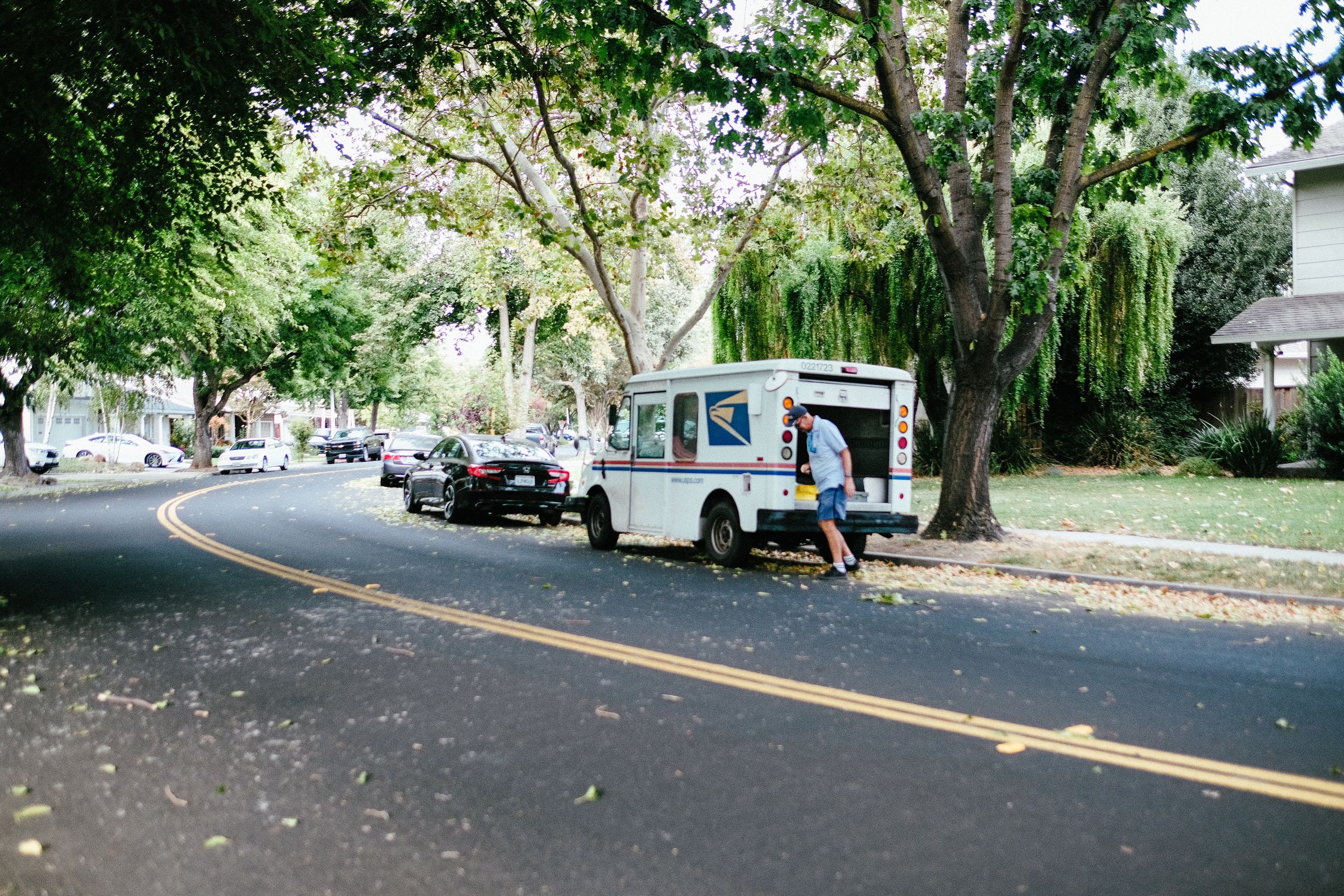
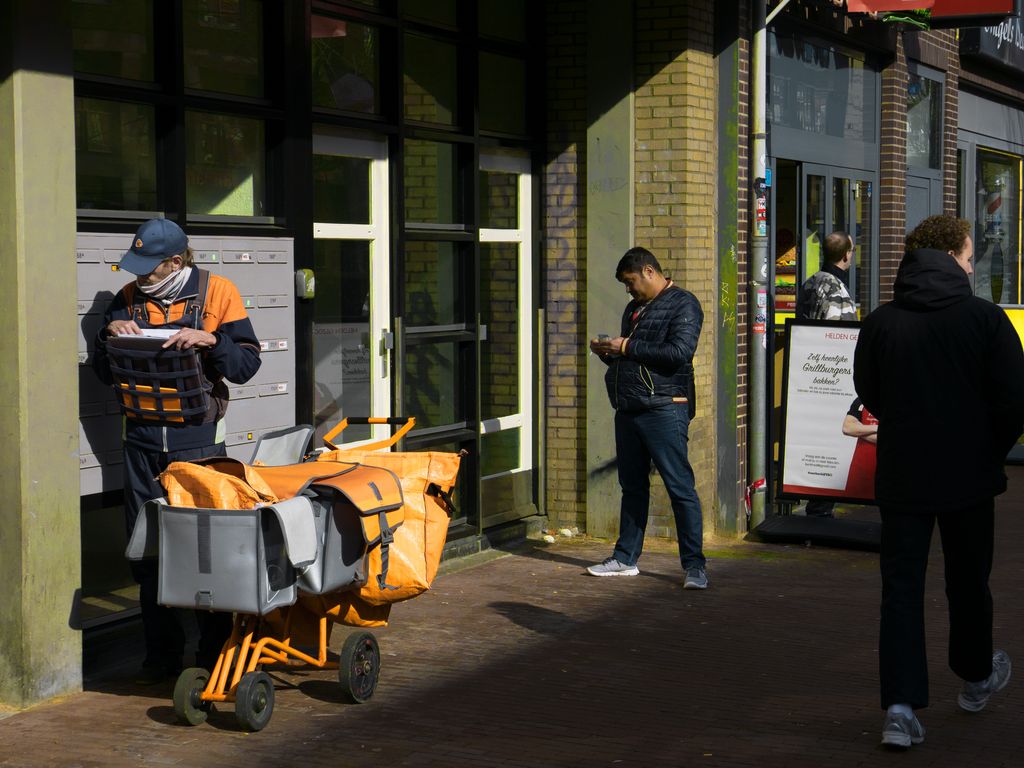
City carriers deliver and collect mail on foot or by vehicle in an assigned area of a town or city. A typical day starts early at the post office, where the carrier sorts and organizes the mail for the route, loads it into a vehicle or delivery bag, and then spends most of the day outdoors walking between homes and businesses, delivering letters and parcels, collecting outgoing mail, and getting signatures for registered or certified items when required. It is physical work in all weather, and carriers walk several miles on many routes.
Rural carriers deliver and collect mail along a rural route, usually by vehicle. They sort and case the mail before leaving the post office, then drive a long route with widely spaced stops. In some cases a rural carrier uses a personal vehicle when a postal vehicle is not available, so a reliable car and a clean driving record matter more in this role than in any other.
Postal clerks, also called sales and services distribution associates, work inside the post office. They sell stamps, money orders, envelopes and boxes, and other postal products, help customers choose the right mailing service, accept packages, and sort incoming and outgoing mail. Clerks work at the counter, at sorting stations, and sometimes in the back of the post office processing mail with automated equipment.
Mail handlers and mail processing clerks work inside large mail processing centers. They load and unload trucks, move bulk mail, operate sorting machines, and prepare incoming and outgoing mail for distribution. This is indoor shift work, often at night or in the early morning, and it suits people who prefer a plant or warehouse environment to a public-facing counter or an outdoor route.
Other postal roles include drivers who move mail in bulk between facilities, mechanics who maintain the postal vehicle fleet, custodians, and a wide range of professional and corporate roles in areas such as finance, information technology, and legal work. USPS lists more than 2,000 job functions, but the delivery, clerk, and mail handler roles are the ones most people apply for first, and they are the focus of this guide.
Is Being a Postal Worker a Good Career?
Postal work suits people who want stability, structure, and a clear path forward. The work is steady, the employer is the federal government, and the hiring process is the same for everyone, which means your chances depend on your exam score and your record rather than on who you know. For someone who is still choosing a career path, that fairness and predictability are real advantages.
It also has honest downsides to weigh. The work is physical and repetitive, the hours can include early mornings, evenings, weekends, and holidays, and new hires often start in part-time or non-career assistant roles before they can move into a full-time career position. Carriers work outdoors in rain, snow, and summer heat. Clerks and handlers work shifts that can include nights. The hiring process is slow, and many applicants wait weeks between each stage. Before you commit, ask yourself whether you enjoy routine, physical work, dealing with the public, and following strict procedures — because those are the core of the job, every day, for years.
Step 1: Check the Basic Requirements
Before you apply, make sure you meet the basic eligibility rules. USPS generally requires applicants to be at least 18 years old at the time of appointment, or 16 years old if they hold a high school diploma. Applicants must be a United States citizen, a lawful permanent resident, or a citizen of American Samoa or another United States territory. You will also need to be able to pass a criminal background check and, for roles that involve driving, a driving record review.
Most entry-level postal jobs do not require a university degree or previous experience in the postal service. The Bureau of Labor Statistics notes that no formal educational credential is typically required to enter these occupations, though most postal workers have at least a high school diploma. What USPS does require is a clean record, the ability to pass the exam for the role, and, for driving roles, a valid driver’s license and a safe driving history. Some roles require you to lift heavy items, stand for long periods, or work outdoors, so read the physical requirements in the job posting carefully.
Also check the requirements for the specific job you want. A city carrier role will have different driving and physical requirements from a clerk role, and a rural carrier role may require you to provide your own vehicle. Read the full job posting on the official USPS Careers website and note every requirement before you apply, because applying for a role you are not eligible for wastes the time of the whole process.
Step 2: Choose the Right Postal Role for You
The second step is to pick a role that fits your strengths, your schedule, and the way you like to work. The four main entry-level roles are the ones listed on the USPS Careers page, and each one is a different job in practice.
City carrier and city carrier assistant roles are the best fit if you like being outdoors, staying active, and working with people face to face. You will walk a lot, carry a delivery bag, and deal with customers on your route every day. The assistant version of the role is a part-time position with the chance to advance into a full-time career carrier job, so many new hires start here and work their way up.
Rural carrier and rural carrier associate roles suit people who prefer driving to walking and who live in or near a rural area. The routes are longer, the stops are farther apart, and you will spend most of the day alone in a vehicle. If you have a reliable personal vehicle and a clean driving record, this role can be a good fit — but confirm in the job posting whether a personal vehicle is required for that route.
Clerk roles, including the PSE mail processing clerk and the PSE sales and services associate, are the best fit if you prefer indoor work and customer service. Clerks work at the counter, help customers, and sort mail, and the hours are usually more regular than a carrier’s route. This role suits people who are organized, patient with customers, and comfortable with a computer and a cash register.
Mail handler and mail handler assistant roles suit people who prefer physical, behind-the-scenes work in a processing plant. You will load and unload mail, operate machinery, and work shifts that often start at night or in the early morning. If you like warehouse or plant work and do not want a public-facing role, start here.
Look at the openings in your area before you decide. USPS posts jobs by location, and the roles available near you may be limited. Apply for the role that genuinely fits you, not just the first opening you see — a good fit means you are more likely to pass the probation period and stay in the job long enough to move into a career position.
Step 3: Create Your Profile and Apply on the Official USPS Careers Site
All USPS applications go through one place: the official USPS Careers website. This is the only legitimate way to apply for a postal job, and it is also the first place where job scams try to trick you — more on that in the scam warning section below.
Start by visiting the official USPS Careers page and creating an account in the USPS online application system, known as eCareers. You will need a valid email address that you check regularly, because USPS will send exam invitations, interview notices, and job offers by email and through your application account. Use an email address you will keep, and write down your login details somewhere safe.
Next, search for open positions in your area. You can search by location, keyword, or job type, and the results will show the role, the facility, whether the job is full-time or part-time, and whether it is a career position with benefits or a non-career assistant position with the chance to advance. Read the full posting, including the duties, the requirements, the shift, and the application deadline, before you click apply.
When you apply, you will fill in your personal details, your work history, and your education, and you will answer questions about your eligibility. Be accurate and complete. Do not exaggerate your experience or leave gaps unexplained, and double-check your contact details before you submit — a wrong email address or phone number can mean a missed exam invitation and a lost opportunity. After you submit, save or note the application number and the closing date of the posting, and check your account regularly for updates.
One important point: USPS never charges you to apply. If any website, email, or message asks you to pay a fee to apply for a postal job, to see job listings, or to take the exam, it is not USPS. Walk away and report it. The application itself is free, and so is the exam when USPS invites you to take it.
Step 4: Pass the Postal Exam — Exam 473 and Exam 474
Almost every applicant for a delivery, clerk, or mail handler role must pass a written postal exam, and this is the stage that decides most hiring outcomes. Your exam score is used to rank you against other applicants, so a higher score means a better chance of being called for the next stage. The exam is taken online, usually at home on your own computer or at a testing location, depending on what USPS arranges for your application.
The two exams you are most likely to meet are the Postal Exam 473 and the Postal Exam 474. Exam 473 is the assessment used for delivery and customer service roles, including city carrier and clerk positions. Exam 474 is the assessment used for mail handler and mail processing roles. The exam you are invited to take depends on the job you applied for, and USPS will tell you which one applies to you in the invitation email.
The exams test practical job skills rather than academic knowledge. Expect sections that measure your ability to check addresses and names for accuracy, remember sequences of letters and numbers, compare information quickly, and handle everyday workplace situations such as dealing with a difficult customer or following a supervisor’s instructions. Speed and accuracy both matter, because many sections are timed.
How to Prepare for the Postal Exam
Preparation makes a real difference, because the exam format is unfamiliar to most people and the time limits are tight. Start with the official information USPS sends you in the exam invitation, including the exam number, the deadline for completing it, and any instructions about the testing format. Then practice the skills the exam measures: checking lists of addresses for errors, memorizing short sequences and recalling them, and working quickly through simple comparison tasks.
Set aside several short practice sessions over a week or two rather than one long cramming session. Time yourself, because working under a time limit is a skill in itself, and review your mistakes so you understand what slowed you down. On the day of the exam, find a quiet place with a reliable internet connection, read every instruction carefully, and work steadily through each section without rushing past the questions you can answer. If you do not pass on the first attempt, you can apply again for future openings — many postal workers were not hired on their first application.
Be careful about exam preparation products sold online. Some are genuine study guides, but others are overpriced or misleading, and none of them is required by USPS. USPS does not sell exam preparation material, and you do not need to buy anything to take the exam. Use free practice material and the official information USPS provides, and treat any site that claims to guarantee a passing score with suspicion.
Step 5: Background Check, Driving Record, and Other Checks
If your exam score is high enough, USPS will move your application to the next stage, which is a set of checks on your background and your suitability for the role. These checks are a normal part of federal hiring, and you should expect them to take time.
The criminal background check reviews your history for convictions that would disqualify you from postal employment. Be honest on every form you complete. A past offence does not always disqualify you, but lying about it almost certainly will, because USPS will find the record anyway. If you have questions about whether something in your past affects your eligibility, check the official guidance rather than guessing.
For roles that involve driving, USPS will review your driving record. A history of serious traffic offences, a suspended license, or a recent pattern of accidents can disqualify you from a driving role, even if it would not matter for a clerk or handler job. Make sure your driver’s license is valid and that you know what is on your driving record before you apply for a carrier or driver role. If your record has a problem, consider applying for a non-driving role instead.
Depending on the role, you may also be asked to complete a drug screening and a medical assessment. These are standard for safety-sensitive federal positions and for roles that involve driving or operating machinery. You will be told what is required and when, so follow the instructions exactly and meet every deadline. Missing a check or a deadline can remove you from consideration even if your exam score was strong.
Step 6: Interview and Job Offer
After the checks, successful applicants are invited for an interview or are sent a conditional job offer. The interview for an entry-level postal role is usually straightforward: the hiring team wants to confirm that you understand the job, that you can work the hours and the shifts, that you are reliable, and that you can handle the physical and customer-facing parts of the role.
Prepare by re-reading the job posting and thinking about your answers in advance. Be ready to explain why you want the job, what experience you have that fits — even if that experience is from a different field, such as retail, warehouse work, delivery, or customer service — and how you would handle common situations, such as a customer who is upset about a late delivery or a day when the workload is heavier than expected. Dress neatly, arrive early, and bring identification and any documents USPS asked for.
This is also the stage where your work history matters, so if you are new to the workforce, read our guide on getting a job with no experience before the interview. It will help you present school, volunteering, part-time work, and other experience in a way that shows a hiring manager you are reliable and ready to learn.
If you are offered the job, the offer will be conditional on completing the remaining checks and the onboarding paperwork. Read the offer carefully, note the start date, the location, the shift, and whether the position is a career role or a non-career assistant role, and accept it by the deadline USPS gives you. If you miss the deadline, the offer can go to the next applicant.
Step 7: Paid Training and the Probationary Period
New postal workers do not start delivering mail on their own on day one. USPS provides paid training that covers the rules of the job, the safety procedures, the equipment, and the systems you will use. Carriers learn how to sort and case mail, how to drive a postal vehicle safely, and how to run a route. Clerks learn the counter systems, the mailing services, and the sorting equipment. Mail handlers learn the plant layout, the machinery, and the safety rules for moving bulk mail.
After training, you will work under supervision and then on your own, and you will be in a probationary period. This is the stage where many new hires succeed or fail, and the rules are simple: show up on time every day, follow the procedures you taught, ask questions when you are unsure, and treat customers and colleagues with respect. The work is demanding, and the first weeks are the hardest, because the route or the sorting system is new and the pace feels fast. Give yourself time to learn it.
Many new hires start in non-career assistant roles, such as city carrier assistant or rural carrier associate. These are part-time positions with the chance to advance into full-time career roles, and that is the normal path into the Postal Service for many employees. Once you become a career employee, you gain access to the full benefits package, including health insurance, retirement, and paid leave, and you can bid for better routes and positions as your seniority grows.
Scam Warning: USPS Never Charges for Applications or Exams
This section matters more than almost any other in this guide, because postal job scams are common and they target exactly the people this article is written for: job seekers who are hopeful, in a hurry, and unfamiliar with the process.
Here is the rule in one sentence: USPS never charges for employment information, for applications, or for exams. You apply only on the official USPS Careers website, and you never pay anyone for the privilege. Any website, email, text message, social media advertisement, or phone call that asks you to pay a fee to apply, to see job listings, to take the postal exam, or to guarantee yourself a postal job is a scam.
Watch for these warning signs. A website that looks like USPS but has a different web address, or that asks for payment before showing you any jobs. An email or text that claims you have been selected for a postal job you never applied for, and asks you to pay a fee or send personal documents to claim it. A social media post that promises a postal job with a high salary and no exam, and links to a payment page. A caller who claims to be from USPS and asks for your bank details, your Social Security number, or a payment by gift card or wire transfer. All of these are scams.
If you come across a suspicious site or message, do not pay anything, do not send personal information, and do not click links in the message. Go directly to the official USPS Careers website by typing the address yourself, and use only that site for applications. If you have already paid money to a suspected scam, contact your bank and report the incident to the appropriate authorities in your country, and be aware that USPS cannot refund money paid to a scammer. The safest habit is simple: if it asks for money, it is not USPS.
Pay and Benefits: What to Expect in General Terms
Postal workers are federal employees, and career employees receive a benefits package that includes health insurance, retirement, and paid leave, along with opportunities for advancement and, in many roles, overtime. Non-career assistant roles have more limited benefits, which is one reason many employees work toward a career position.
This guide deliberately does not quote specific salary figures, because pay rates change, differ by role and location, and are set by USPS pay scales and union agreements. For current figures, check the job posting itself, which states the pay for that position, and the official USPS Careers website. If a third-party website quotes a salary that looks far higher than the posting, treat it with caution and trust the official posting instead.
The real value of a postal career is the combination of steady work, federal benefits, and a clear path from an entry-level assistant role to a career position with seniority. That combination is rare in entry-level work, and it is the main reason the hiring process is competitive and the exam matters so much.
Common Mistakes New Postal Applicants Make
Applying on the Wrong Website
The most expensive mistake is applying — and paying — on a fake job site. Only the official USPS Careers website is legitimate. If you found the job through a search engine or a social media post, check the web address carefully and go to the official site directly before you enter any personal information.
Missing the Exam Invitation
Exam invitations arrive by email and through your USPS application account, and they come with a deadline. Applicants who do not check their email regularly miss the deadline and lose the opportunity. Check your email and your application account every day after you apply, including the spam folder.
Applying for a Role That Does Not Fit
A carrier role and a clerk role are very different jobs. Applicants who choose a role only because it is the first opening they see often struggle in training or leave during probation. Pick the role that fits how you like to work, and read the duties and the physical requirements before you apply.
Ignoring the Driving Record
For driving roles, your driving record is part of the hiring decision. Applicants who do not know what is on their record are surprised when a past offence disqualifies them. Check your record before you apply for a carrier or driver role, and consider a non-driving role if your record has a problem.
Rushing the Exam
The postal exam is timed, and many applicants lose points by rushing the early sections and running out of time later, or by working too slowly and leaving questions unanswered. Practice under timed conditions before the exam so you know the pace you need.
Giving Up After One Rejection
USPS posts new openings on a rolling basis throughout the year, and many postal workers were hired on their second or third application. If you are not hired the first time, review what happened — your exam score, the role you chose, the timing — and apply again for the next suitable opening.
Getting Started Checklist
- Confirm you meet the basic requirements: age, citizenship or residency, and a clean background
- Decide which role fits you best: city carrier, rural carrier, clerk, or mail handler
- Visit the official USPS Careers website and create your eCareers account
- Search for open positions in your area and read the full job posting
- Apply before the closing date and save your application number
- Check your email and your application account every day for the exam invitation
- Prepare for the postal exam with timed practice in address checking and sequence memory
- Take the exam before the deadline in a quiet place with a reliable connection
- Complete the background check, driving record review, and any other checks honestly and on time
- Prepare for the interview by re-reading the job posting and your work history
- Accept any job offer by the deadline and note the start date, location, and shift
- Complete paid training, follow procedures, and show up on time every day during probation
- Never pay anyone for a postal application, exam, or job listing — USPS never charges for these
Conclusion: How to Become a Postal Worker
Learning how to become a postal worker is a clear, achievable goal for anyone who wants a stable federal career without a university degree. The steps are straightforward: check the requirements, choose the role that fits you, apply on the official USPS Careers website, prepare properly for the postal exam, complete the background and driving checks honestly, and then give your training and probationary period your full attention. None of these steps is difficult on its own — the challenge is doing them in the right order and not falling for the scams that target job seekers along the way.
Take the process seriously and be patient with it. The hiring timeline can be slow, the exam is competitive, and the first weeks on the job are demanding, but the reward is steady work, federal benefits, and a career with a clear path forward. Verify every current requirement, exam detail, and pay figure on the official USPS Careers website before you apply, and remember the one rule that protects you from the start: USPS never charges for applications or exams. If you keep that in mind and prepare well, you give yourself the best possible chance of joining the Postal Service.
FAQ
How long does it take to become a postal worker?
The full process of learning how to become a postal worker, from application to starting work, usually takes several weeks to a few months. The timing depends on how quickly USPS invites you to the exam, how long the background and driving checks take, and when the next training class starts. Apply early, meet every deadline, and check your email and application account regularly so you do not miss an invitation or an offer.
Do I need a degree to become a postal worker?
No. Most entry-level postal roles do not require a university degree, and the Bureau of Labor Statistics notes that no formal educational credential is typically required to enter these occupations. Most postal workers have at least a high school diploma, and what matters most is meeting the age and residency requirements, passing the postal exam, and clearing the background and driving checks.
What is the Postal Exam 473?
Postal Exam 473 is the assessment USPS uses for delivery and customer service roles, including city carrier and clerk positions. It tests practical skills such as checking addresses for accuracy, remembering sequences, and handling everyday workplace situations, and it is timed. Your score is used to rank you against other applicants, so preparation and practice under timed conditions are important. USPS will tell you which exam applies to your application in the invitation email.
What is the Postal Exam 474?
Postal Exam 474 is the assessment USPS uses for mail handler and mail processing roles. Like Exam 473, it tests practical job skills rather than academic knowledge, and your score helps decide whether you move to the next stage of hiring. The exam you take depends on the job you applied for, so always follow the instructions in your own invitation rather than advice about a different exam.
Does USPS charge for job applications or exams?
No. USPS never charges for employment information, applications, or exams. You apply only on the official USPS Careers website, and the application and the exam are free. Any website, email, or message that asks you to pay a fee to apply, to see job listings, or to take the postal exam is a scam — do not pay, do not send personal information, and report it.