How to Become a Welder: Training, Certification and Pay
Learning how to become a welder is one of the most practical career moves for someone who enjoys hands-on work, building things that last, and seeing a finished result at the end of the day. Welders join metal parts together using heat, pressure, or both, creating everything from steel beams in buildings and bridges to pipelines, ships, cars, machinery, and railings. It is skilled trade work that is needed in construction, manufacturing, energy, shipbuilding, automotive repair, and many other industries, and it does not require a four-year university degree.
Welding is a career that rewards steady hands, patience, attention to detail, and a respect for safety. A good weld is strong, clean, and built to the specification it was made for. A poor weld can fail, and that failure can be dangerous, which is why training, practice, and certification matter so much in this trade.
The good news is that the path into welding is clear: learn the basic processes, get structured training through a school, an apprenticeship, or on-the-job learning, practise until your welds pass inspection, earn a recognised certification such as the AWS Certified Welder credential, and then keep building experience and specialisms. This guide walks through every step in order, including the four main welding processes, the three main training routes, the American Welding Society (AWS) certification, safety gear, pay, and the mistakes that slow new welders down.
Table of Contents
Quick Answer
If you want to know how to become a welder, start by learning the basics of welding safety and the main welding processes, then complete structured training through a welding school, an apprenticeship, or supervised on-the-job training. Practise the processes your target jobs require — most commonly MIG, stick, TIG, and flux-core — and build a set of test-quality welds in different positions and on different materials. Then take a performance-based certification test, such as the AWS Certified Welder test at an AWS Accredited Testing Facility, to prove you can make welds that meet the required standard. After that, apply for entry-level welding jobs, keep practising, and add further certifications or specialisms as your career grows. Many people complete their initial training in several months to about a year, depending on the programme and whether they study full time or part time, but becoming a confident, employable welder takes longer, because skill in welding comes mainly from hours of guided practice. Always verify current training costs, certification requirements, and fees on the official websites of the school, the employer, and the American Welding Society before you enrol or book a test.
What Does a Welder Do?
A welder joins metal parts together, repairs metal structures and equipment, and sometimes cuts metal to size. The work starts with reading a drawing, a blueprint, or a work order, and understanding what needs to be made or fixed, what metal is involved, how thick it is, and what kind of joint is required. The welder then prepares the metal — cleaning it, cutting it, grinding edges, clamping parts in place, and checking the fit — before choosing the right welding process, settings, and filler material for the job.
During welding itself, the welder controls the heat, the speed, the angle, and the distance of the torch or electrode, watching the molten weld pool closely to make sure the joint is full, even, and free of defects such as cracks, holes, or weak spots. After the weld cools, the welder inspects it, cleans off slag or spatter, grinds it smooth where needed, and checks it against the specification. In many jobs, welds are inspected by someone else as well, sometimes with visual checks and sometimes with tests such as X-ray or ultrasonic inspection, especially in pipelines, pressure vessels, and structural steel.
Welders work in many different settings. Some work in a fabrication shop, making gates, railings, frames, tanks, or machine parts in a controlled environment. Others work on construction sites, fitting steel structures, or in shipyards, factories, power plants, and refineries. Some welders travel to different sites, work outdoors in all weather, or work at height or in confined spaces. Others specialise in repair work, fixing broken machinery, vehicles, or farm equipment. The work is physical: it involves standing for long periods, lifting metal, wearing heavy protective gear, and working in hot, noisy, and sometimes dirty conditions. It suits people who are comfortable with that and who enjoy the satisfaction of making something solid and useful with their hands.
Is Welding a Good Career?
Welding suits people who like practical, physical work and who want a trade they can carry anywhere. Metal needs joining and repairing in almost every industry, so the skills are widely useful and not tied to one employer or one town. Many welders start in a shop or on a site, then move into better-paid specialist work — pipe welding, structural welding, underwater welding, or inspection and supervision — as they gain experience and certifications. For people who do not want a desk job, and who would rather build, fix, and work with their hands, welding can be a rewarding long-term career.
It also has real downsides to weigh honestly. The work can be hot, tiring, and dirty, and it carries real safety risks, including burns, eye injuries, electric shock, and breathing in fumes, if safety rules are not followed carefully. Some jobs involve shift work, overtime, travel, or working outdoors in bad weather. Starting pay for entry-level welders is modest in many places, and higher pay usually comes only with experience, specialist skills, and certifications. Demand also varies by industry and region: construction and manufacturing booms create plenty of work, while slowdowns reduce it. Before committing, spend time on choosing a career path and ask yourself whether you enjoy careful, repetitive, physical work, whether you can concentrate for long periods, and whether you are willing to follow safety rules every single time, even when they feel slow.
Step 1: Understand the Four Main Welding Processes
Before you choose a training route, it helps to know the four welding processes you will hear about most often. Most training programmes cover more than one, but jobs often ask for strength in one or two in particular, so your choice of specialism matters.
MIG Welding (GMAW)
MIG welding, short for Metal Inert Gas welding and formally called Gas Metal Arc Welding (GMAW), uses a wire electrode that is fed continuously through a welding gun, together with a shielding gas that protects the molten weld from the air. It is one of the easiest processes to learn, it is fast, and it produces clean welds with little cleanup. MIG is widely used in manufacturing, automotive work, fabrication shops, and general repair, especially on steel and aluminium. It is a good first process for many beginners, and many entry-level jobs ask for MIG skills first.
Stick Welding (SMAW)
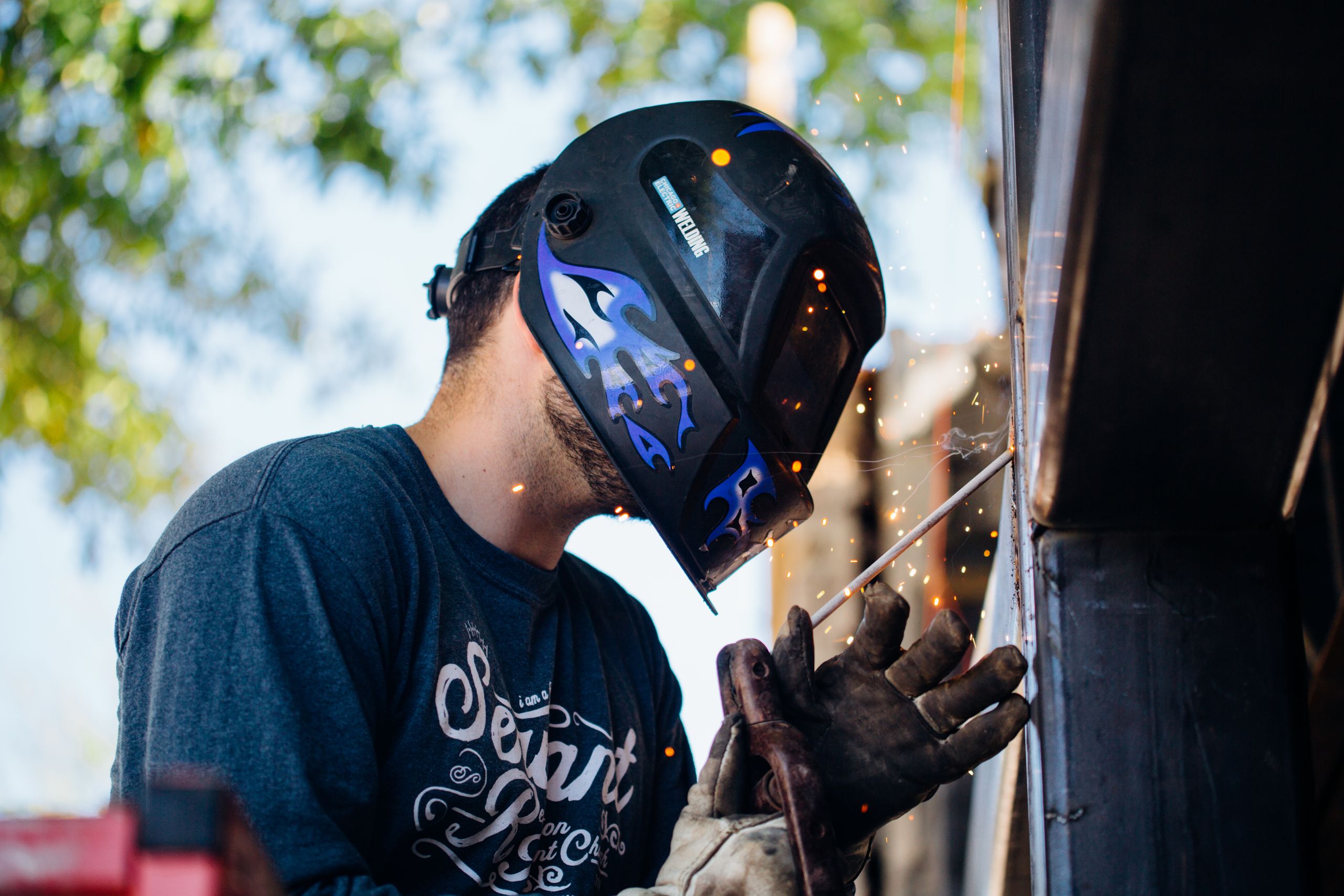
Stick welding, formally called Shielded Metal Arc Welding (SMAW), uses a consumable electrode rod, or stick, that is coated in flux. As the rod melts, the flux creates a gas shield and a layer of slag over the weld. Stick welding is versatile, works well outdoors and in windy conditions, and is used heavily in construction, structural steel, pipelines, and repair work in the field. It takes more practice to master than MIG, because the welder must control the rod angle, the arc length, and the speed by hand, but it is a highly valued skill, and many of the best-paid field jobs rely on it.
TIG Welding (GTAW)
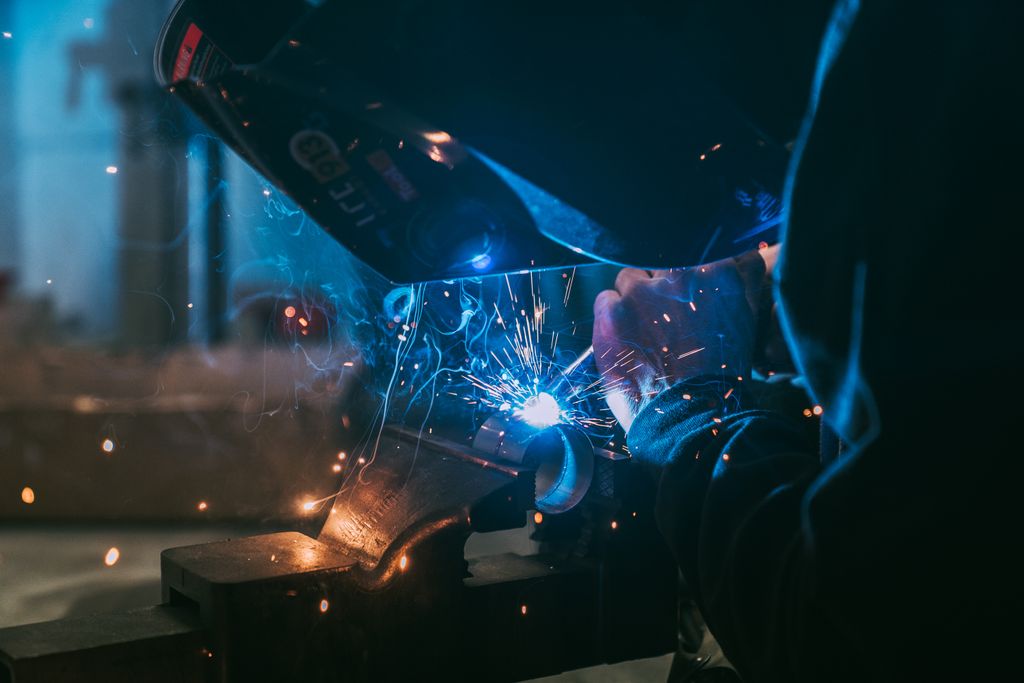
TIG welding, short for Tungsten Inert Gas welding and formally called Gas Tungsten Arc Welding (GTAW), uses a non-consumable tungsten electrode and a separate filler rod, with a shielding gas protecting the weld. It is the slowest of the four main processes, but it gives the welder the most control and produces the cleanest, most precise welds. TIG is used for thin metals, stainless steel, aluminium, and work where appearance and quality matter most, such as aerospace, food processing equipment, and high-end fabrication. It is the hardest process to learn well, and it usually comes after a welder is comfortable with MIG or stick, but TIG specialists are in demand and are often paid well.
Flux-Core Welding (FCAW)
Flux-core welding, formally called Flux-Cored Arc Welding (FCAW), is similar to MIG in that it uses a continuously fed wire, but the wire has a flux core that provides the shielding, sometimes with an additional shielding gas and sometimes without. It is fast, works well on thicker metals, and is used in construction, shipbuilding, and heavy fabrication, including outdoor work where wind would blow away the shielding gas used in MIG. Many training programmes teach flux-core alongside MIG, and many employers in heavy industry ask for it specifically.
You do not need to master all four processes before your first job. A sensible approach is to learn MIG and stick first, because they open the most entry-level doors, and then add TIG or flux-core as you find out which industries and employers are hiring near you. Look at job adverts in your area and note which processes they ask for — that tells you where to focus your practice time.
Step 2: Check What Employers and Certification Bodies Expect
Welding is not licensed in the same way in every country or state, and there is no single worldwide licence that every welder must hold. What employers usually want is proof that you can make welds to a required standard. That proof normally comes from a combination of training, work experience, and a performance-based certification test.
Before you pay for any course, do three things. First, look at job adverts for welders in your area and note the processes, materials, positions, and certifications they ask for. Second, read the information from the American Welding Society (AWS) about its Certified Welder programme, because it is one of the most widely recognised credentials in the trade. Third, if you are aiming at a particular industry — construction, pipelines, shipbuilding, manufacturing, or automotive repair — find out whether that industry has its own qualification tests, codes, or employer-specific tests you will need to pass as well.
This early research shapes everything else. A course that teaches only one process when local employers want two, or a certification that is not recognised by the employers you want to work for, wastes your time and money. Write down what employers actually ask for, and measure every training option against that list.
Step 3: Choose Your Training Route — School, Apprenticeship, or On-the-Job
There are three main ways to learn welding, and each suits a different kind of person. Many welders use more than one over their career, starting with one route and adding another later.
Welding School
A welding school, often run by a community college, a technical college, or a private trade school, offers a structured programme that teaches safety, metallurgy, blueprint reading, the main welding processes, and hands-on practice in a workshop. Programmes vary in length: some are short certificate courses lasting a few months, while others are longer diploma programmes lasting a year or more. The best programmes give you many hours of booth time — actual time welding under an instructor’s eye — rather than mostly classroom theory. They also teach you how to read drawings, how to set up machines, and how to inspect your own welds.
Welding school is a good choice if you are starting from zero and want a structured, full-time route into the trade, or if you are changing careers and can commit to a course. Before you enrol, visit the workshop if you can, ask how many hours of practical welding you will actually get, ask what certifications the programme prepares you for, and ask what share of graduates find welding work. Check whether the school is accredited, whether its instructors are experienced welders, and what the total cost is, including materials, safety gear, and exam fees. Confirm all current fees and programme details directly with the school, because they change often and differ a great deal between providers.
Apprenticeship
An apprenticeship combines paid work with structured training. You work for an employer as an apprentice welder, learning on the job from experienced welders, while also attending classroom or workshop training, often at a college or training centre. Apprenticeships usually last longer than a school course — often one to several years — but you earn while you learn, you build real workplace experience from day one, and you finish with both a qualification and a work history.
Apprenticeships are competitive, and places are limited, so you need to apply early and be ready to show genuine interest and reliability. Look for apprenticeship schemes through employers, trade associations, unions, colleges, and government apprenticeship services in your country. A good apprenticeship teaches you not only how to weld, but how a real workplace runs: how to work safely on a site, how to work to deadlines, how to deal with supervisors and inspectors, and how to keep your work consistent over a full shift. If you can get one, an apprenticeship is often the strongest start in the trade.
On-the-Job Training
Some welders start as a helper, labourer, or fabricator in a workshop, and learn welding on the job from experienced colleagues, gradually taking on more welding work as their skill improves. This route costs little upfront and gives you immediate income and workplace experience, but it depends heavily on the employer: some workplaces teach carefully and give you time to practise, while others expect you to pick it up with little guidance. On-the-job training works best when you combine it with a short formal course or evening classes, so that you learn the theory — safety, metallurgy, and drawing reading — alongside the practical skill.
Whichever route you choose, the key question is the same: how many hours of real, supervised welding practice will you get, and will your welds be checked against a standard? Welding is a skill learned by doing, and no amount of reading replaces time in the booth. Aim for a route that gives you regular practice, honest feedback on your welds, and a clear path to a certification test.
Step 4: Learn Safety First — Every Single Day
Welding safety is not a single lesson at the start of a course. It is a set of habits you must follow every time you weld, for your whole career. Welding involves intense heat, bright light, electricity, hot metal, sparks, and fumes, and each of these can injure you or the people working near you if you are careless.
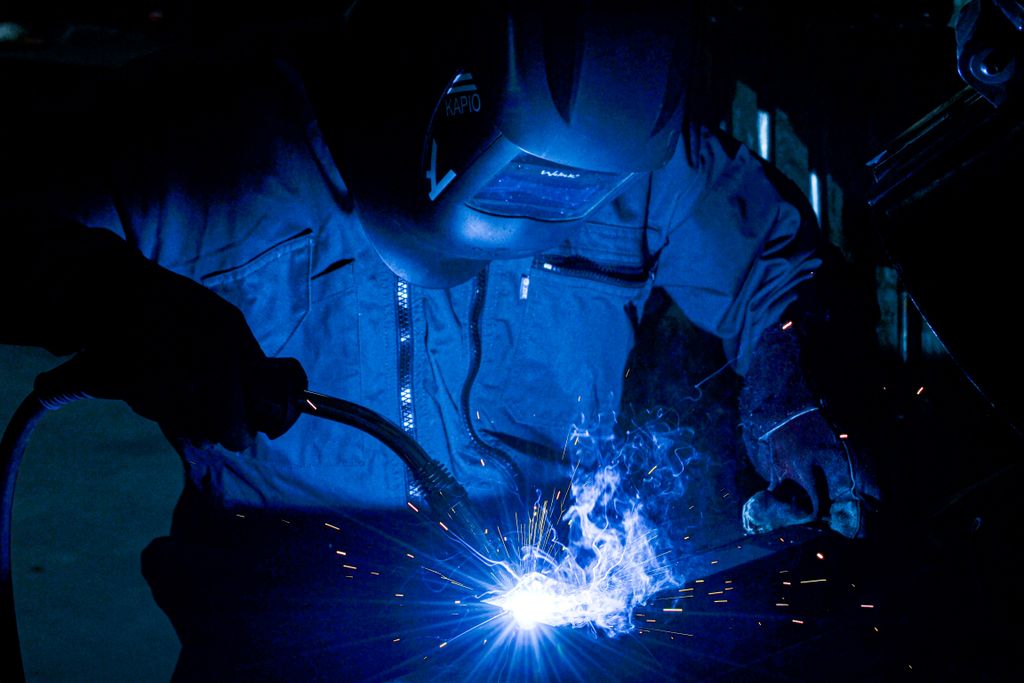
The essential safety gear includes a proper welding helmet with the correct shade of lens for the process you are using, safety glasses worn underneath, flame-resistant clothing, leather gloves, a welding jacket or apron, and steel-toed boots. A respirator or proper ventilation matters when you are welding materials that produce harmful fumes, such as galvanised steel or stainless steel, and you should always know what metal you are welding and what fumes it produces before you start. Never weld on a closed container, a tank, or a drum that may hold flammable material unless it has been properly cleaned and made safe by a qualified person. Keep a fire extinguisher nearby, clear flammable materials away from your work area, and check your surroundings before you strike an arc.
Eye protection deserves special attention. The light from a welding arc is far brighter than sunlight and can cause a painful eye injury known as arc eye or welder’s flash, even from a brief glance. Always wear your helmet when welding, and never look directly at someone else’s arc without protection. Burns are also common, from hot metal, sparks, and spatter, so wear your gloves and protective clothing properly, and never touch a weld to check whether it is cool — it almost certainly is not.
Learn the safety rules of your workplace or school, follow them even when experienced workers cut corners, and speak up if you see something unsafe. A welder who works safely is a welder an employer can trust, and safe habits protect your health for the whole of your working life.
Step 5: Practise Until Your Welds Pass Inspection
Training gives you the basics, but employability comes from practice. A welder’s skill is judged by the weld itself: is it the right size, is it in the right place, is it free of cracks, holes, and other defects, and does it hold under test? The only way to get there is to weld, inspect your work honestly, find the fault, adjust, and weld again.
Practise in the positions employers test. Welding flat on a bench is the easiest position. Welding in the horizontal, vertical, and overhead positions is harder, and many jobs require it, so do not avoid the positions you find difficult — they are the ones that matter most. Practise on different thicknesses of metal and, when you are ready, on different materials such as mild steel, stainless steel, and aluminium, because each behaves differently under the arc.
Learn to inspect your own welds critically. Look for a consistent bead, good fusion at the edges, no undercut, no porosity, and no cracks. Learn what causes each defect: too much or too little heat, the wrong speed, the wrong angle, dirty metal, or the wrong settings. Keep a simple log of what you practised, what went wrong, and what you changed, because that record helps you improve faster and shows an employer or instructor that you take the craft seriously.
If your school or workplace offers practice tests or mock certification tests, take them. They show you what a real test feels like, including the time pressure, the positions required, and the standard your welds will be judged against. The welders who pass certification tests most reliably are usually the ones who have already practised under test conditions many times.
Step 6: Earn the AWS Certified Welder Credential
The AWS Certified Welder credential, run by the American Welding Society, is one of the most widely recognised welding certifications. It is a performance-based test: you make welds to a set procedure at an AWS Accredited Testing Facility (ATF), and your welds are inspected and tested to check that they meet the required standard. There are no prerequisite courses or certifications required before testing — if you can make the welds to the required standard, you are eligible to take the test. That makes it an honest test of skill, and it is why employers trust it.
The certification can cover different processes, materials, and positions, and welders can earn multiple certifications over time to widen the range of work they can do. Each certification documents the process, material, and position you were tested in, so employers can see exactly what you are qualified to weld. Certification is not permanent: it needs to be maintained and renewed, and you should check the current maintenance and renewal requirements on the AWS website before you apply and again before your certification expires.
To prepare, start by reading the current AWS Certified Welder programme information on the American Welding Society website at aws.org, and find your nearest Accredited Testing Facility. Contact the facility, ask which test procedures they offer, what materials and positions are covered, and what the current application and test fees are. Practise the exact test procedure — the same process, material, thickness, and position — until your welds pass comfortably, not just barely. On test day, treat it like a normal welding job: prepare your metal properly, check your settings, work steadily, and do not rush.
Other certifications are also worth knowing about. AWS runs further certification programmes for welding inspectors, welding educators, and other specialist roles, and these become relevant later in your career if you move into inspection, supervision, or teaching. Some industries also run their own qualification tests, and some employers test every new welder themselves before offering a job, even if the welder already holds a certification. That is normal in the trade, and it is another reason to keep your skills sharp even after you are certified.
Welding School vs Apprenticeship vs On-the-Job Training
Each route has strengths and trade-offs, and the best choice depends on your situation.
A welding school gives you structured learning, dedicated booth time, and a fast route to a test, but it usually costs money upfront and you do not earn while you study. An apprenticeship lets you earn while you learn and gives you real workplace experience, but places are competitive and the programme lasts longer. On-the-job training costs little and gives you immediate income, but the teaching can be uneven, and you may need to add formal training yourself to fill the gaps.
Many welders combine routes: a short school course to learn the basics and pass a first certification, then a job where they keep learning on the job, then further training or a second certification when they want to move into better-paid specialist work. There is no single right answer. Choose the route that gives you the most supervised practice, the clearest path to a recognised certification, and a realistic way to support yourself while you learn.
Step 7: Find Your First Welding Job
Once you have basic training and, ideally, a first certification, you are ready to apply for entry-level welding jobs. These are often advertised as welder, welder fabricator, junior welder, MIG welder, or welding apprentice, and they are found in fabrication shops, manufacturing plants, construction companies, repair workshops, and staffing agencies that supply welders to local employers.
When you apply, employers will care most about what you can actually weld. A short, honest CV that lists the processes you have trained in, the materials and positions you have practised, any certifications you hold, and any workshop or site experience you have will serve you better than a long list of claims. If you have photographs of your best welds, or a record of practice tests you have passed, bring them to an interview or a practical test. Many employers will ask you to take a weld test on the day — a short practical test in their workshop — so be ready for that, and treat it as your real interview.
If you have no work experience yet, do not let that stop you. Many welders get their first job by applying to small fabrication shops, by registering with staffing agencies, by asking a school or training provider for employer contacts, or by starting in a related role, such as a welder’s helper or a fabricator, and moving into welding as their skill is recognised. For practical advice on applying when your work history is short, read our guide on how to get a job with no experience. It covers how to present your training, how to use a practical test to your advantage, and how to keep applying without losing momentum.
Be realistic about your first job. It may involve simple, repetitive welding, night shifts, or work you find less interesting than the specialist jobs you have read about. That is normal. The first job is where you build speed, consistency, and workplace habits, and where you learn how a real employer judges a weld. Do the simple work well, ask questions, keep your certifications current, and look for chances to learn a new process or take on a harder weld. The welders who progress fastest are usually the ones who treat every job as practice.
How Much Do Welders Earn?
Pay for welders varies a great deal, and this guide deliberately does not quote specific salary figures, because pay changes often and differs by country, region, industry, experience, and specialism. In general, entry-level welders earn less than experienced welders, and welders in specialist work — pipe welding, structural welding, underwater welding, and work in energy, shipbuilding, and heavy industry — tend to earn more than welders in general fabrication, especially where the work involves travel, overtime, shift work, or hazardous conditions.
The best way to research current pay is to look at the official source for your country. In the United States, the Bureau of Labor Statistics (BLS) publishes information on welders, cutters, solderers, and brazers, including typical pay, job outlook, and the industries that employ the most welders. Check the current BLS page for welders before you make any career decision, and compare it with live job adverts in your area, which show what employers are actually offering right now. That combination — an official source plus live local adverts — gives you a far more accurate picture than any single figure quoted in a guide.
As a general rule, your pay will rise with your skill and your certifications. A welder who can pass tests in several processes and positions, who can weld pipe, who can read drawings, and who has a clean safety record is worth more to an employer than a welder who can only do one process in one position. Treat every new certification and every new process you learn as an investment in your future pay.
Common Mistakes New Welders Make
Skipping Safety Gear
The most dangerous mistake is welding without proper protection because it feels faster or more comfortable. A single flash can injure your eyes, a single spark can burn you, and breathing in fumes over months and years can damage your lungs. Wear your helmet, gloves, and protective clothing every time, without exception.
Practising Only in the Easy Position
Many beginners spend most of their time welding flat on a bench, because it feels good and looks good. The jobs that pay better usually need vertical, horizontal, and overhead welding, and those positions feel awkward at first. Practise the hard positions deliberately, even when your early welds look rough.
Rushing the Preparation
A weld is only as good as the preparation behind it. Dirty metal, rust, paint, oil, poor fit-up, and the wrong gap between parts all cause defects. Clean the metal, check the fit, and set your machine correctly before you strike an arc. The minutes spent preparing save hours of grinding out a bad weld.
Chasing Speed Before Quality
Speed matters in production welding, but not before quality. A fast weld that fails inspection has to be ground out and redone, which is slower than doing it properly the first time. Learn to make a good weld slowly, then build speed gradually while keeping the quality.
Learning One Process and Stopping
A welder who can only do one process has fewer job options and less bargaining power. Once you are confident in your first process, start learning a second one. The second process is usually easier to learn than the first, because you already understand heat, the weld pool, and preparation.
Neglecting Blueprint Reading
Many new welders focus only on the torch and ignore drawings. In real work, the drawing tells you what to build, and misreading it wastes material and time. Learn to read weld symbols, dimensions, and tolerances early, and practise with real drawings whenever you can.
Letting Certification Lapse
A certification that has expired is no use in a job application. Keep a note of your renewal dates, complete the required maintenance on time, and check the current renewal rules on the AWS website well before your certification expires.
How to Become a Welder: Getting Started Checklist
- Research the four main processes — MIG, stick, TIG, and flux-core — and note which ones local employers ask for
- Check job adverts in your area for the processes, materials, positions, and certifications employers want
- Read the AWS Certified Welder programme information on the American Welding Society website at aws.org
- Choose your training route: welding school, apprenticeship, or on-the-job training with formal classes
- Confirm the total cost, length, booth time, and certification preparation of any course before you enrol
- Buy or borrow the essential safety gear: welding helmet, safety glasses, gloves, flame-resistant clothing, and steel-toed boots
- Learn welding safety rules, including fume awareness, fire prevention, and eye protection, before your first weld
- Practise in flat, horizontal, vertical, and overhead positions, not just the easy one
- Learn to read blueprints and weld symbols
- Practise the exact AWS Certified Welder test procedure for your chosen process and position until your welds pass comfortably
- Book and pass your certification test at an AWS Accredited Testing Facility
- Write a short, honest CV listing your processes, positions, certifications, and any workshop or site experience
- Apply for entry-level welder, welder fabricator, or junior welder roles, and be ready for a practical weld test
- Keep your certification current and plan your next process or specialism
Conclusion
Learning how to become a welder is a realistic, achievable career change that rewards careful, patient, hands-on work. The steps are clear: understand the main welding processes, find out what employers in your area actually want, choose a training route that gives you plenty of supervised practice, learn safety as a daily habit, practise until your welds pass inspection, earn a recognised certification such as the AWS Certified Welder credential, and then take an entry-level job and keep building your skills from there. None of these steps is difficult on its own — the challenge is doing them in order, putting in the hours of practice, and never cutting corners on safety or quality.
Take the time to do it well. A welder who can make clean, strong welds in several positions, who reads drawings properly, and who works safely is a welder employers want to keep. Verify every fee, requirement, and certification rule on the official sources listed in this guide before you spend money, and build your skill one weld at a time. If you enjoy making things with your hands, working with metal, and seeing a solid result at the end of the day, welding can give you a trade for life.
FAQ
How long does it take to become a welder?
It depends on your training route. A short welding school certificate course can take a few months, a longer diploma programme can take about a year, and an apprenticeship usually lasts longer but lets you earn while you learn. Becoming a confident, employable welder takes longer than the course itself, because the skill comes mainly from hours of guided practice. Most new welders keep improving for a year or more after their first job, as they build speed, consistency, and experience in different positions and materials.
Do I need a degree to become a welder?
No, you do not need a four-year university degree to become a welder. What employers usually want is structured training, practical skill, and proof that you can make welds to a required standard, such as the AWS Certified Welder credential. A high school education or equivalent is usually enough to start training, and the most important qualities are steady hands, attention to detail, and a willingness to practise and follow safety rules.
What is the AWS Certified Welder certification?
The AWS Certified Welder credential is a performance-based certification run by the American Welding Society. You make welds to a set procedure at an AWS Accredited Testing Facility, and your welds are inspected and tested to check that they meet the required standard. There are no prerequisite courses required before testing. The certification documents the process, material, and position you were tested in, and welders can earn multiple certifications over time. Check the current requirements, fees, and renewal rules on the AWS website at aws.org before you apply.
Which type of welding should I learn first?
Most beginners start with MIG welding, because it is one of the easiest processes to learn and it opens many entry-level jobs in manufacturing and fabrication, often alongside stick welding, which is widely used in construction and field work. TIG welding is usually learned later, because it needs more control and patience, but it is valuable for precise, high-quality work. Look at job adverts in your area and learn the processes local employers ask for first, then add further processes as your career grows.
Is welding a safe career?
Welding can be safe when it is done properly, and it can be dangerous when safety rules are ignored. The main risks are burns, eye injuries from the arc, electric shock, and breathing in fumes, along with the general risks of working with heavy metal, heat, and machinery. Proper safety gear, good ventilation, careful preparation, and following your workplace safety rules every time greatly reduce those risks. Treat safety as part of the job, not as an extra, and speak up if you see something unsafe.