Free ATS Resume Template: Build Yours Free and Get It Right
A free ats resume template is all most job seekers need, because the features that make a resume work with applicant tracking systems cost nothing: a single-column layout, standard headings, plain text, honest keywords, and results-based bullet points. Paid resume services sell design, convenience, and sometimes a false sense of security. None of them can sell you the only things that actually get you shortlisted — relevant experience, clearly written, matched truthfully to the job you want.
This guide shows you how to build a complete, professional resume for free, using only free tools you probably already have access to. It covers where to get a genuinely free template or build one yourself in minutes, how to fill in every section, how to check your file for parser problems at no cost, and how to avoid the “free” traps — trials that demand a card, downloads locked behind payment, and pretty templates that break in tracking systems. Combined with the basics in our guide on how to write a resume, this page gives you a full no-cost route from blank page to submitted application.
Table of Contents
Why Free Is Not a Compromise Here
It helps to understand what applicant tracking systems reward. The software parses text into fields — name, titles, employers, dates, skills, education — and lets recruiters search those fields. It does not award marks for colour, icons, or design flair. In fact, the expensive-looking templates with sidebars, skill bars, photos, and two-column layouts are the ones most likely to be misread. The free ats resume template approach — build it plain, build it standard — is not the budget version of a good resume. For online applications, it is the correct version.
There is also a fairness point worth stating plainly. Students, graduates, career changers, and people between jobs are exactly the applicants who can least afford paid builders and writing services. The good news is that resume quality in an ATS process is almost entirely about structure and wording, and both are free to get right once someone explains the rules. That is what the rest of this guide does.
Where to Build Your Resume for Free
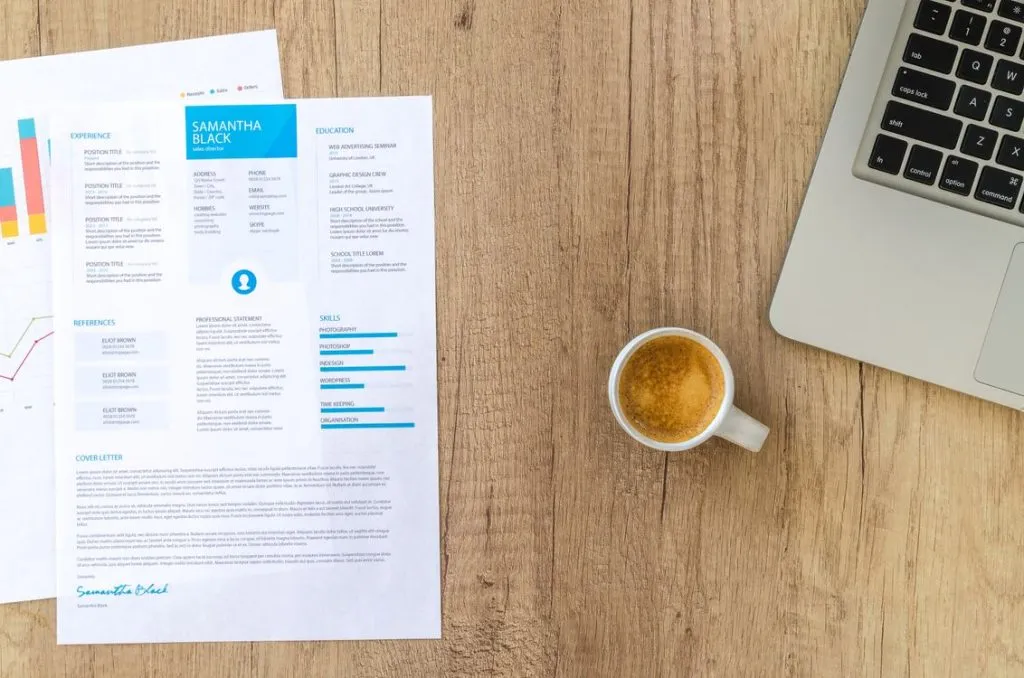
You have three honest free routes. All three can produce a parser-safe result if you follow the layout rules in the next section. Whichever route you choose, a free ats resume template built this way stays plain and parser-safe.
1. Build it yourself in a free word processor
Google Docs is free with a Google account and exports clean .docx and PDF files. LibreOffice Writer is free to download and works offline. Microsoft Word Online offers a free tier through a Microsoft account. Any of these is enough. Start from a blank document rather than a decorative built-in template: set a standard font, type your headings in a slightly larger bold size, and let simple spacing do the design work. A blank-page build gives you full control and guarantees there are no hidden tables or text boxes underneath.
2. Use a simple built-in template, then strip the design
If you prefer a starting template, choose the simplest one available — single column, no sidebar, no photo box — and remove any tables, columns, icons, or header and footer content before you start writing. Test the result with the plain-text check described later in this guide. If the template fights you, abandon it and build from a blank page; your content matters more than any template.
3. Your college, library, or public employment service
College careers services commonly provide free templates, free reviews, and sometimes free access to tools that are paid elsewhere. Public libraries often provide free computer access, printing, and job-search help. Government employment services in many countries offer free resume templates and advisor reviews. These sources have a real advantage: a human who knows local employers can read your draft. If you are a student or recent graduate, your careers service should be your first stop — it is already paid for as part of your education.
A warning about “free” builders found through search ads: many are free to type into but charge to download, or start a paid subscription after a trial. Before investing an hour in any builder, confirm the download itself is free, in .docx or clean PDF, without a card. Your own word processor never does this to you, which is why it is the recommended route.
The Free Template: Exact Structure
Copy this section order into your document. It is deliberately plain. Together, these sections form the free ats resume template used in this guide.
- Name and contact details — name, city and region, phone, professional email, LinkedIn or portfolio link if current
- Professional Summary — 2–3 lines tailored to the target role
- Skills — 8–12 honest skills matching the job description
- Work Experience — most recent first, with results-based bullets
- Education — qualification, institution, year
- Certifications — only if relevant, with awarding body and year
Layout rules that keep the file parser-safe, all free to follow:
- Single column; no tables, text boxes, columns, sidebars, headers, or footers for key content
- Standard font such as Arial or Calibri, 10–12 points; headings a little larger and bold
- Standard heading words: “Professional Summary”, “Skills”, “Work Experience”, “Education”, “Certifications”
- Simple round bullet points; no icons, images, photos, charts, or skill bars
- One consistent date format, such as “Jun 2022 – Present”
- Save and send in the format the posting requests — .docx is the safest default when nothing is specified
Filling Each Section: Examples and Wording
Summary
Two or three lines: your level, your most relevant strength, one proof point. Example for a graduate applying for support roles: “Recent graduate with customer-facing experience from two years of part-time retail work. Skilled in handling enquiries, cash handling, and stock systems. Praised by supervisors for calm problem-solving during busy periods.” Example for an experienced hire: “Warehouse team leader with six years of experience in goods-in and dispatch. Skilled in inventory systems, forklift operation, and training new staff. Led a team of eight through a peak season with zero missed dispatch deadlines.”
Skills
Read the job description, list the required skills you genuinely have, and write each in its standard form, expanding abbreviations once — “Microsoft Excel (spreadsheets)” is unnecessary, but “Customer Relationship Management (CRM)” is worth writing in full once because recruiters search both forms. If a required skill is a genuine near-gap — something you are actively learning — free online courses with certificates are a legitimate free way to build it before you claim it. Claim the skill when you can use it, not before.
Experience
For each job: title, employer, location, dates, then three to five bullets in the pattern verb + task + result. Free wording help is available in every word processor’s thesaurus, but strong verbs are easy to collect yourself: handled, resolved, trained, processed, organised, reduced, improved, delivered, maintained, supported.
Weak to strong, using the same facts:
- “Did filing and admin.” → “Filed and retrieved 200+ case records weekly, maintaining an accurate index used by a team of six.”
- “Worked on tills.” → “Processed card and cash payments for a busy store, balancing the till accurately at close on every shift.”
- “Helped customers.” → “Answered product and delivery questions for in-store and phone customers, referring complex cases with clear notes.”
Numbers impress because they are evidence, not because they are magic. Use true figures, or honest scale words such as daily, weekly, a team of five, or three sites. Never invent results; interviews expose invention quickly.
Include part-time, temporary, freelance, and voluntary roles, especially early in your career. Unpaid experience written with results counts far more than an empty gap.
Education and certifications
Qualification, institution, year — that is enough for most applicants, with relevant modules or a strong project added for recent graduates. List certifications with the awarding body and year. For standard occupational titles and the skills employers associate with them, the U.S. Bureau of Labor Statistics’ Occupational Outlook Handbook is a useful free reference for describing your target role in common language.

The Free Checks That Replace Paid “ATS Scores”
Many paid services sell an “ATS score” for your resume. You can perform the checks that actually matter yourself, free, in about ten minutes:
Check 1 — The plain-text test. Open your resume, select all, copy it, and paste it into a plain text editor such as Notepad or TextEdit. Read the result. If names, headings, jobs, and bullets appear in the right order and make sense as plain text, a parser will very likely read your file correctly. If the order is scrambled or content is missing, your layout has a hidden structure problem — rebuild that section in a single column.
Check 2 — The keyword match. Place the job description beside your resume. Highlight every required skill and qualification in the posting, then tick each one that appears in your resume with honest evidence behind it. Aim to match the requirements you truly meet, using the posting’s own wording where it describes what you did.
Check 3 — The six-second scan. Show the first page to a friend for six seconds, then ask what job you are applying for and what your strongest evidence is. A human scan test predicts the recruiter’s experience better than any score. If they cannot answer, strengthen your summary and move your best bullets higher.
Check 4 — The format check. Confirm the file type matches the posting, the file name is professional (Firstname-Lastname-Resume.docx), and the document opens correctly on another device or in a different free viewer.
Check 5 — The proofread. Read the Skills section and job titles letter by letter, since a misspelled keyword will not be found in searches. Then read the whole document once aloud; your ear catches errors your eye skips.
Mistakes Specific to Free Templates and Builders
- Choosing the prettiest free template instead of the plainest. Galleries reward looks; parsers reward structure. Pick boring and readable.
- Getting locked into a builder that charges at download. Check the export terms before you write a word, or use your own word processor.
- Leaving placeholder or sample text in the file. It happens more often than people admit. Search your final document for words like “lorem”, “example”, and the template author’s sample name before sending.
- Copying example bullets word for word. Recruiters recognise stock phrases, and the facts will not match your record at interview. Use examples as patterns, then write your own evidence.
- Assuming free means no tailoring needed. The template is free; the tailoring is your work. A short, honest adjustment for each application — summary, skills order, top bullets — is what turns a template into an application.
- Hiding keywords or stuffing skills you do not have. Free or paid, dishonesty is detected at search, at reading, or at interview. Match honestly.
Keeping It Free Across a Whole Job Search
A job search can involve dozens of applications, so build a small free system. Keep one master resume file with your full record. For each application, duplicate it, tailor the copy, and save it with the employer and date in the file name, in a single “Applications” folder. Keep a free spreadsheet or notebook log of employer, role, date, version sent, and outcome. Back everything up in free cloud storage so a lost laptop does not cost you your search. Total cost: nothing — and the system is better organised than most paid dashboards. Your free ats resume template is the master file that system is built around.
Finally, remember what free cannot do and does not need to. It cannot give you experience you do not have, and no paid service can either. What moves an application forward is a clear record of real work, matched honestly to a real job, in a file that any system can read. That is entirely achievable at zero cost.
Frequently Asked Questions
Is a free ATS resume template really as good as a paid one?
For online applications, yes — usually better. Tracking systems reward plain structure and standard wording, which free templates and blank-page builds provide. Paid templates often add design elements that parsers misread. Money in resume services buys convenience and design, not better parsing.
Which free tool is best for building an ATS friendly resume?
The one you already have: Google Docs, LibreOffice Writer, or Microsoft Word Online all export clean files. Start from a blank document or the simplest single-column template, follow standard headings, and run the plain-text test before submitting. College careers services and libraries can add a free human review.
How do I know if a “free” resume builder is actually free?
Check before you start whether downloading your finished resume in .docx or PDF is free without entering card details or starting a subscription trial. If the export is paywalled, switch to your own word processor, where the same layout takes only a few extra minutes to build.
Can I test my resume for ATS problems without paying?
Yes. Use the free checks in this guide: the plain-text paste test for parsing order, a manual keyword match against the job description for search terms, a six-second human scan for readability, and a careful proofread of skills and titles. Together they cover the issues that cause most rejections.
Should I pay for a professional resume writer instead?
Most applicants do not need to, especially early in their careers when free careers services, library help, and the method in this guide cover what is required. If you are senior, changing fields at a high level, or returning after a complex gap, paid advice is a personal choice — but the ATS rules stay exactly the same, and any writer’s draft should still pass the free checks above.
Conclusion
A free ats resume template is not a lesser option; built correctly, it is the standard that expensive designs often fail to meet. Build yours in a free word processor, in one column with standard headings, fill it with honest skills and results-based evidence, and verify it with the plain-text test and a careful keyword match for every application. Keep your master file, tailor briefly each time, and spend your money and energy on the things that genuinely improve your chances — skills, experience, and preparation. The template was never the expensive part. Your record is the valuable part, and it is already yours.