Best Housekeeping Jobs: Roles, Pay and How to Get Hired
Quick Answer
The best housekeeping jobs are roles that offer clear duties, fair and clearly stated pay, safe working conditions, proper equipment, and a respectful team. They are not a secret list of employers, and they are not invented openings. The best housekeeping jobs match the setting you prefer, the hours you can actually work, and the level of responsibility you want.
Comparing the best housekeeping jobs side by side makes it easier to spot the role that fits your hours, pay needs and preferred setting.
In practice, that might mean a hotel housekeeper role with steady shifts and training, a private household housekeeper role with a small, stable household, a hospital housekeeper role with strong hygiene training, or a supervisor role after you have built experience. Some roles are full-time with benefits. Others are part-time or seasonal and suit people who need flexibility around family, study, or a second job.
This guide explains what each main role involves day to day, what skills employers look for, how to get started with no experience, and how to read pay information honestly. It is written for readers in the United States first, with notes for readers in the United Kingdom and Europe, where titles, contracts, and pay bands work in slightly different ways. Salary figures are only given as clearly labelled general ranges from official sources, and you should always check the current figures directly before you apply or negotiate.
Start by deciding what “best” means for you. Then compare the roles below, check the skills and entry routes, and use the step-by-step plan to apply safely and well.
Table of Contents
What Counts as the best housekeeping jobs?
When people search for the best housekeeping jobs, they often mean different things. For one person, best means the highest hourly pay in their city. For another, it means daytime hours only, no weekends, and a short commute. For a third, it means a calm workplace, a kind supervisor, and work that feels useful and visible at the end of every shift.
A useful way to judge any role is to look at six factors together. First, look at the work itself. Will you clean guest rooms, private homes, hospital wards, offices, or a mix of spaces? Each setting has a different pace and a different set of rules. Second, look at pay clarity. Does the advert state an hourly rate or salary range, how often you are paid, and whether overtime is paid? Vague pay is a warning sign.
Third, look at safety and equipment. A good employer provides proper cleaning products, gloves and other protective equipment, trolleys or caddies that are in good repair, and training on how to use chemicals safely. You should never be expected to mix chemicals you have not been trained on, lift unsafe loads alone, or clean areas that put you at risk without support.
Fourth, look at the team and supervision. Housekeeping is physical work, and a fair rota, realistic room or area targets, and a supervisor who checks in and helps when a shift gets difficult make a huge difference. Fifth, look at stability and benefits. In the US, that can include health cover, paid time off, and retirement plans with larger employers. In the UK and much of Europe, check holiday entitlement, sick pay rules, pension contributions, and whether the contract is permanent, fixed-term, or agency work.
Sixth, look at growth. Some roles stay at the same level for years, which suits some people perfectly. Others lead to senior housekeeper, supervisor, inspector, or facilities roles. Neither path is better in itself. What matters is whether the path matches what you want over the next two or three years.
Think about your own priorities before you search. Write down your top three — for example, daytime hours first, steady full-time hours second, and a short commute third. Score each advert against that list. It keeps your search focused, prevents you from chasing roles that look good in a headline but fail in daily life, and helps you compare offers calmly when more than one role is available.
Remember that a famous hotel brand or a large hospital name does not guarantee a good job on its own. A smaller hotel, a well-run care setting, or a single private household can offer better training, fairer workloads, and a more respectful culture. Judge the daily reality described in the advert and at interview, not just the name on the building.
Housekeeping Roles at a Glance
Housekeeping covers several settings, and the same job title can mean different work in different places. That overlap can confuse new applicants. The sections below explain what each main role really does, who it tends to suit, and what employers usually ask for, so you can target the setting that fits you best.
The roles below cover most of the best housekeeping jobs advertised in the United States and Europe. They range from entry-level roles that train you on the job to a supervisor role that usually needs experience first. Read each one and note which daily tasks sound most manageable and most satisfying to you.
Do not worry if you do not fit a role fully yet. Most housekeepers learn the core routines in their first weeks, then build speed, consistency, and specialist knowledge over time. A good first employer expects that learning curve and supports it with checklists, shadowing, and feedback.
Hotel Housekeeper
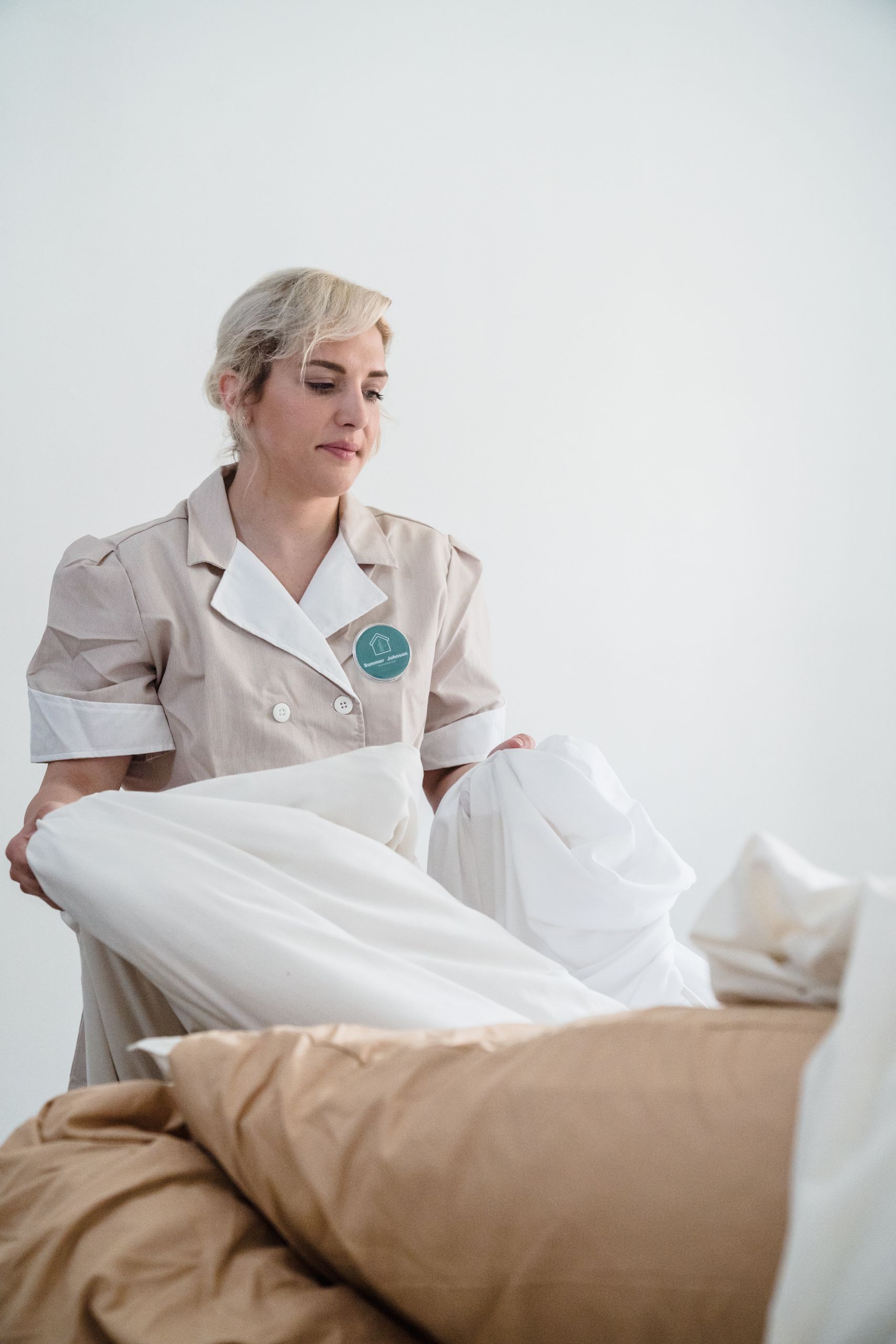
The hotel housekeeper — also advertised as a room attendant — cleans and prepares guest rooms and, in some hotels, public areas such as lobbies, hallways, and restrooms. The work follows a clear routine for each room: remove used linen and trash, clean and disinfect the bathroom, dust and wipe surfaces, vacuum or mop floors, make beds with fresh linen, replace towels and toiletries, and check that lights, remotes, and other items work and are in place.
Timing matters in hotels. Check-out rooms must be ready before new guests arrive, while stay-over rooms need a lighter service that respects the guest’s belongings and privacy. Housekeepers usually work from a daily assignment sheet or app that lists rooms in priority order, and a supervisor or inspector may check finished rooms against a standard checklist.
This role suits people who like a clear routine, visible results, and working independently for much of the shift while still being part of a team. Shifts often include weekends and holidays, because hotels are busiest then, but many hotels offer a mix of full-time and part-time patterns. Larger hotel groups in the US and Europe often provide uniforms, training, meals on shift in some cases, and benefits for full-time staff — always confirm what a specific advert actually offers rather than assuming it.
No formal education is usually required. Employers look for reliability, attention to detail, the ability to work at a steady physical pace, and respect for guest privacy and property. Previous cleaning, laundry, or customer service experience helps, but many hotels train new starters from scratch.
Private Household Housekeeper
A private household housekeeper cleans and helps run a private home. Duties vary much more than in a hotel, because every household is different. Alongside general cleaning, the role can include laundry and ironing, care of delicate surfaces and furnishings, kitchen and bathroom deep cleaning, changing beds, organising cupboards, and sometimes grocery shopping, simple meal preparation, pet care, or receiving deliveries. Some roles are live-in, but many are live-out, daily roles for set hours each week.
Trust and discretion are central in this setting. You work inside someone’s home, around their family, belongings, and private life. Good employers set out duties, hours, and boundaries in writing, agree how changes to duties will be handled, and respect your time off. A clear written agreement protects both sides, whether you are hired directly by a household in the US, the UK, or Europe, or placed through a reputable domestic staffing agency.
This role suits people who prefer one workplace, a personal working relationship, and variety within a familiar home. It can offer regular daytime hours, often Monday to Friday, though some households need early mornings, evenings, or occasional weekends. Pay varies widely by city, duties, hours, and whether accommodation is included in a live-in role, so read the full package carefully and compare it with local norms for similar household roles.
Experience in private homes helps for higher-paying households, but it is not the only route in. Hotel or care-setting experience, strong references from any cleaning or support work, and a calm, trustworthy manner can all open doors. Never pay an agency a fee to be placed, and be cautious of any household role that refuses to put hours and duties in writing.
Hospital and Healthcare Housekeeper
Hospital and healthcare housekeepers — sometimes called environmental services technicians, EVS workers, or domestic assistants in UK healthcare settings — clean patient rooms, wards, clinics, operating areas, waiting rooms, and restrooms to strict hygiene standards. The purpose is not only appearance. Correct cleaning and disinfection help prevent infections and keep patients, visitors, and staff safe.
The work follows detailed protocols. You will be trained on which products to use on which surfaces, how long disinfectants must stay in contact with a surface to work, how to handle waste safely, how to clean after a patient discharge, and how to use protective equipment. Colour-coded cloths and mops, hand hygiene rules, and careful record-keeping are normal parts of the job. Some areas need extra precautions, and you will be told exactly what they are before you work there.
This role suits people who take pride in precision and understand why each step matters. It can be emotionally demanding at times, because you work around people who are ill or anxious, so a kind, calm manner and respect for privacy and dignity matter as much as cleaning skill. Shifts can include early mornings, evenings, nights, and weekends in larger hospitals, while clinics and smaller care settings may offer more regular hours.
Formal qualifications are usually not required to start, but employers will typically require background checks appropriate to the setting, occupational health clearance, and completion of their hygiene and safety training. In return, large healthcare employers often offer structured training, stable employment, and clear routes into senior domestic, supervisor, or wider facilities roles.
Office and Commercial Cleaner as a Lead-In Role
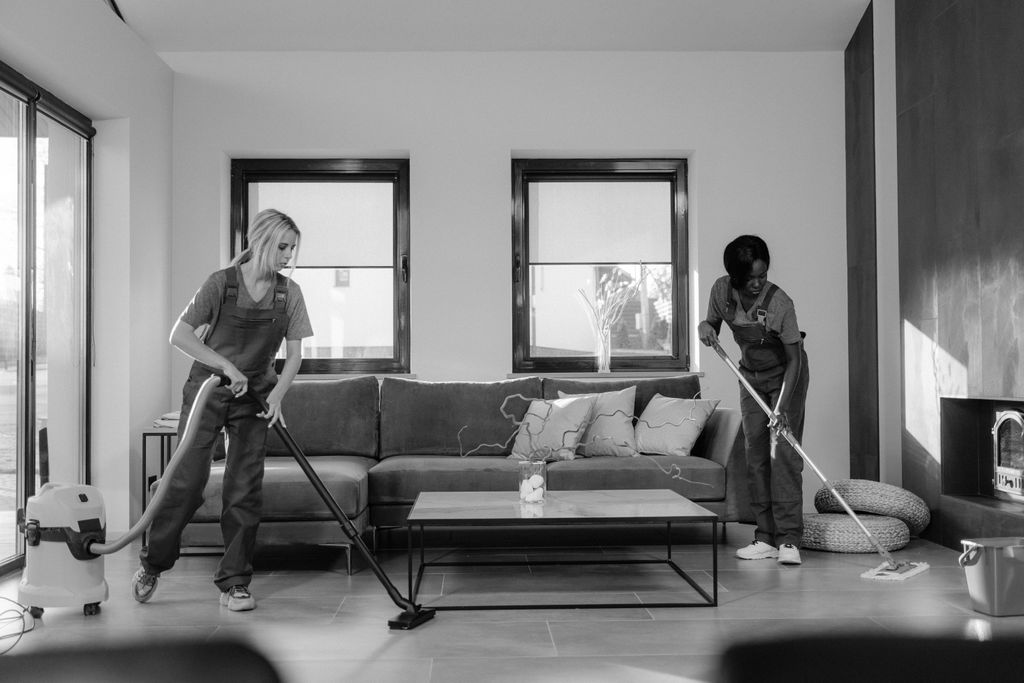
Office and commercial cleaning is not always labelled housekeeping, but it is one of the most common lead-in routes into the wider field, and many of the skills transfer directly. Commercial cleaners clean offices, schools, retail spaces, gyms, and other workplaces, usually in the early morning, in the evening after staff have left, or overnight. Tasks include emptying bins and recycling, cleaning desks and touchpoints, vacuuming and mopping floors, cleaning kitchens and restrooms, and restocking supplies.
This setting suits people who need hours outside the standard working day — for example, evening work around study, caring duties, or a daytime job. It also suits beginners because routines are clearly set out, work is often done in small teams, and employers frequently hire and train people with no previous cleaning work history, as long as they are reliable and can follow safety instructions.
Experience here builds exactly the evidence housekeeping employers want: working to a checklist and a time standard, using cleaning chemicals safely, operating vacuum cleaners, floor machines, and other equipment, keyholding and alarm procedures in some posts, and communicating with a supervisor about supplies or problems. After six to twelve months of reliable commercial cleaning, many people move successfully into hotel, healthcare, or private household roles, or into a senior cleaner post in the same company.
Check the practical details carefully in this sector. Ask who provides equipment and products, how travel between sites is handled if you cover more than one building, whether lone working is involved and what safety procedures apply, and how extra hours are recorded and paid. Good commercial cleaning employers answer those questions clearly in the advert or at interview.
Housekeeping Supervisor
The housekeeping supervisor — also called a housekeeping manager in smaller properties, an executive housekeeper in larger hotels, or a domestic supervisor in healthcare — leads the team rather than spending the whole shift cleaning individual rooms or areas, although most supervisors still help on the floor during busy periods.
Typical duties include preparing daily assignments and rotas, briefing the team, inspecting rooms or areas against quality standards, training new starters, ordering and controlling linen and cleaning supplies, recording completed work, handling guest or patient requests and complaints linked to cleaning, and reporting maintenance problems such as broken fixtures or damaged furnishings. In private service, a head housekeeper may supervise a small household team and manage household supplies and schedules in a similar way.
This is rarely a first job in the field. Employers usually ask for solid housekeeping or cleaning experience, proven reliability, and some evidence of leading, training, or checking the work of others. You do not always need a formal qualification, but supervisory, hygiene, or health and safety certificates can strengthen an application, and basic computer skills help because rotas, stock lists, and inspection records are often digital.
This path suits experienced housekeepers who enjoy organising work, coaching others, and solving problems under time pressure. Pay is generally higher than for front-line housekeeping roles, reflecting the responsibility, but so are expectations around flexibility, standards, and communication. If you enjoy the floor work but not paperwork or difficult conversations, a senior housekeeper or trainer role may fit you better than full supervision — and choosing honestly is part of finding the best housekeeping jobs for your own strengths.
Skills Employers Look For
Employers test a core set of practical skills again and again. Cleaning technique comes first. You need to know, or be willing to learn quickly, how to clean different surfaces without damaging them, how to work through a room or area in a logical order so nothing is missed, and how to check your own work before you move on. Working from the cleanest tasks to the dirtiest, using the right cloth and product for each job, and leaving a space safe and dry are habits good employers train and value.
Attention to detail is the skill supervisors mention most. Guests, patients, and households notice the details: streak-free mirrors, fresh-smelling bathrooms, correctly made beds, restocked supplies, and no missed corners or bins. Speed matters too, especially in hotels with checkout deadlines, but speed that sacrifices standards leads to failed inspections and rework. Good housekeepers build both together — a steady routine first, then pace within that routine.
Physical stamina and safe working matter. Housekeeping involves standing and walking for most of a shift, bending, reaching, pushing a trolley or vacuum, and lifting linen bags or supplies within safe limits. You do not need to be an athlete, but you do need to work safely: use the lifting techniques and equipment you are shown, take your breaks, and report pain, hazards, or faulty equipment early instead of pushing through and risking injury.
Reliability is often the deciding factor between candidates. Housekeeping teams are planned around exact staffing numbers, so turning up on time, every scheduled shift, and communicating early if you are ill or delayed is essential. Employers keep and promote people they can depend on. A strong attendance record from any previous job — in retail, food service, care, warehouses, or cleaning itself — is powerful evidence, and our guide to warehouse jobs (https://careerschooled.com/warehouse-jobs/) shows a similar pattern in another physical, shift-based field: reliability and safety habits are what hiring managers screen for first.
Employers who advertise the best housekeeping jobs usually highlight reliability first, because a missed shift leaves rooms and guests waiting.
Trustworthiness and respect for privacy cut across every setting. You will enter guest rooms, homes, and patient areas where people keep money, medication, documents, and personal belongings. Never touching what is not yours to touch, reporting anything valuable you find through the proper channel, and never discussing what you see in a room or home are non-negotiable rules. Background checks are common, especially in healthcare and private households.
Finally, basic communication skills help more than many beginners expect. You need to understand instructions and safety information, report a broken item or a room that needs maintenance, respond politely to a guest or resident request, and work cooperatively with colleagues whose first language may differ from yours. In the US, UK, and Europe, housekeeping teams are often wonderfully international, and patience and clear, simple communication are real professional strengths.
How to Get Started With No Experience
Housekeeping is one of the more accessible fields for beginners. Most front-line roles do not require a degree or a formal certificate, and many employers train new starters in their own routines, products, and standards. If you are exploring work that does not require a degree more broadly, our guide to jobs without a degree (https://careerschooled.com/jobs-without-a-degree/) sets housekeeping alongside other practical routes so you can compare your options honestly.
Start by gathering evidence of the qualities employers want, even if you have never held a cleaning job. Regular cleaning of your own home does not count as employment, and you should never present it as if it does, but volunteering, caring responsibilities, school or community work, and any paid work involving reliability, physical tasks, or dealing with the public all provide real examples. Think of a time you followed a routine carefully, handled a busy day without cutting corners, or were trusted with keys, money, or someone’s property. Those stories belong in your application and interview.
Short, low-cost training can strengthen a beginner application when it is genuine. Basic courses in cleaning principles, infection control awareness, food hygiene if a role involves kitchens, first aid, or health and safety are offered by community colleges, adult education services, workforce programmes in the US, and further education colleges in the UK and Europe. Choose reputable providers, be wary of expensive courses that promise a guaranteed job — no honest course can promise that — and remember that many employers provide all required training free after hiring.
Seasonal and agency work can be a practical first step. Hotels and resorts hire extra housekeepers for peak seasons, holiday parks and student accommodation providers hire for changeover days, and cleaning agencies place staff across several settings. These roles build experience, references, and speed quickly. Check agency terms carefully: confirm who employs you, how and when you are paid, what happens if a shift is cancelled, and that no unlawful deductions or placement fees are taken from your pay.
If the whole process of applying with a blank work history feels daunting, work through our step-by-step guide on how to get a job with no experience (https://careerschooled.com/how-to-get-a-job-with-no-experience/) alongside this article. It covers how to structure a resume or CV with no formal work history, how to use references well, and how to answer common interview questions — all of which apply directly to a first housekeeping application.
Apply for roles that state they welcome beginners or provide training, and be honest about being new. Good supervisors would rather train a reliable beginner with the right attitude than retrain bad habits. What they screen for at interview is simple: Will this person turn up? Will they follow the routine and safety rules? Can I trust them in a room alone? Answer those three questions with evidence and a calm, willing manner, and you are competitive for many entry-level posts.
Pay: General Ranges and How to Read Them
Pay varies by country, state or region, city, setting, and experience, and a single figure you see shared online rarely tells the full story. Use official sources first, then compare live adverts in your own area. That habit protects you from both hype and low offers, and it gives you solid ground in any pay conversation.
For US context, the main official source is the U.S. Bureau of Labor Statistics, Occupational Outlook Handbook — Maids and Housekeeping Cleaners (https://www.bls.gov/ooh/building-and-grounds-cleaning/maids-and-housekeeping-cleaners.htm). Check the current figures there directly before you negotiate, because the Bureau updates its data over time and this article cannot keep pace with each update.
As a clearly labelled general range from that source type, recent BLS data has placed the national median pay for maids and housekeeping cleaners in the general range of around $30,000 to $36,000 per year in the United States — roughly the mid-teens per hour for a full-time schedule — with the lowest-paid 10 percent earning notably less and the highest-paid 10 percent earning notably more. Treat this only as national context, not as a promise for any single role, city, or employer. Healthcare and supervisor roles often sit above the front-line median, while part-time and seasonal roles should be compared by their hourly rate and guaranteed hours rather than by an annual figure.

Setting makes a real difference. Hotels in high-cost cities and luxury properties may pay more, and tips can add to earnings in some guest-facing roles, though tips are never guaranteed and should never be counted as base pay. Hospitals and large public employers often offer steadier hours and stronger benefits even when the hourly rate looks similar. Private household pay varies the most of all, because duties, hours, and any live-in accommodation all change the value of the package.
UK readers should check the pay band and hourly rate stated in each advert, and confirm the rate meets the National Minimum Wage or National Living Wage for your age at the time you start — rates change, so check the current official figures. EU readers should check national minimum wage rules and any sector agreements that apply, since terms differ by country. In every country, live adverts in your city give the clearest local signal once you have the official context.
Compare the full package, not just the headline rate. Guaranteed hours, overtime rates, weekend or night premiums where offered, paid holidays, sick pay, uniforms and equipment provided, meals on shift, travel support between sites, and training all change what a job is really worth. A slightly lower hourly rate with guaranteed full-time hours and real benefits can be worth more over a year than a higher rate with only a few uncertain shifts each week. Use that wider view whenever you judge which of the best housekeeping jobs is truly best for you.
Where to Apply Safely and How to Spot Scams
Start with employer websites and careers pages. Hotel groups, hospital systems, universities, care providers, and larger cleaning companies list roles there first, and applying directly helps you avoid copycat adverts posted elsewhere. Bookmark the employers you respect in your area and check them regularly, because housekeeping vacancies often open and fill quickly.
Use reputable job boards as a second channel. Filter by setting, distance, and hours, and set up alerts for your exact titles, such as hotel housekeeper, room attendant, domestic assistant, or environmental services technician. For private household roles, use established domestic staffing agencies with a real office, verifiable reviews, and written terms, and meet or video-call before accepting any placement. Local community boards and workforce centres in the US, and Jobcentre and council services in the UK, can also list genuine local vacancies.
Referrals matter in this field. Let former supervisors, colleagues, and community contacts know you are looking. Many housekeeping posts, especially in private households and smaller hotels, are filled through trusted recommendations before they are widely advertised. A short, polite message saying what hours and settings you are looking for makes it easy for people to pass your name on.
Now the safety rules, which matter because cleaning and household job scams do exist. A real employer never asks you to pay to apply, pay for your own background check through an unusual payment method, or buy equipment or supplies upfront with a promise of repayment by cheque or transfer. Never accept a cheque or overpayment you are asked to forward on — that is a classic fraud pattern. Be wary of adverts with no employer name, no address, interviews conducted only by text message, pressure to accept immediately, or requests for bank details, identity documents, or personal information before a genuine offer and contract stage.
For private household work, take extra care. Meet in a safe way for a first interview, confirm the household’s identity and address through the agency or a verifiable route, get duties, hours, and pay in writing before you start, and tell someone you trust where you will be for a first visit. Trust your instincts. A respectful household will understand and support sensible precautions, just as you should respect theirs.
Keep copies of every advert, offer letter, and contract, and note your hours from your first shift. If pay does not arrive as agreed, raise it promptly in writing, keep your records, and seek advice from a local labour or employment advice service in your country. Knowing your rights is part of applying safely, in every setting.
How to Apply: Step by Step
Step one: choose your setting and hours. Decide whether hotels, private households, healthcare, commercial cleaning, or a mix fits your life, and be realistic about weekends, early starts, travel time, and physical demands. A focused search for roles you can actually sustain beats a scattered search for anything at all.
Step two: prepare a simple, honest resume or CV. Lead with your most relevant experience — cleaning, laundry, care support, hospitality, retail, or any physical team work — and describe duties and standards, not just job titles. Add your reliability evidence, such as a strong attendance record, any training or certificates, languages you speak, and whether you hold any checks or licences relevant in your country. Keep it to one or two clean pages, with dates that match what you will say at interview.
Step three: tailor each application. Mirror the key words in the advert where they honestly fit you — room attendant experience, infection control awareness, laundry, deep cleaning, or whatever the role names — and write two or three sentences on why that setting suits you. Employers read many near-identical applications. One specific, honest paragraph about their hotel, hospital, or household stands out.
Step four: prepare for the interview and any practical element. Some employers include a short trial shift or a room-cleaning exercise, which should be clearly explained and, where the law requires it, paid — ask politely if that is unclear. Expect questions about how you would order tasks in a room, what you would do if you found valuables, how you handle a day when you are running behind, and how you use cleaning chemicals safely. Prepare short, concrete answers using real examples from any work or responsibilities you have had.
Step five: ask good questions before you accept. Ask about the rota and how far ahead it is published, the room or area target per shift, training and shadowing for new starters, who provides uniform and equipment, overtime and how it is paid, and who you report problems to. The answers tell you as much about the employer as your answers tell them about you, and they help you choose between offers with your eyes open.
Step six: start well and keep a record. Arrive early in your first weeks, learn the checklist exactly as taught before adding your own shortcuts, ask when you are unsure rather than guessing with chemicals or equipment, and note positive feedback and any extra duties you take on. Those notes become the evidence for your first pay review, a move to a better setting, or a future supervisor application — the practical route by which people progress through the best housekeeping jobs over time.
Common Mistakes That Cost People Good Roles
One common mistake is applying for every setting with the same generic application. A hospital needs to hear about hygiene discipline and care for patients’ dignity. A private household needs to hear about trust, discretion, and flexibility within agreed duties. A hotel needs to hear about pace, standards, and guest service. Ten minutes of tailoring per application will do more for your results than fifty identical submissions.
A second mistake is exaggerating experience. Claiming hotel or hospital experience you do not have will be exposed within days, because routines, products, and standards are specific and supervisors check work closely. It can cost you the job and a reference. Honesty about being a beginner, paired with evidence of reliability, is a far stronger position.
A third mistake is ignoring the physical and practical reality of a role. Accepting night shifts you cannot sustain, a commute you cannot afford, or room targets you have not understood leads to quitting within weeks, which helps no one. Read the advert’s hours and location carefully, plan your travel, and ask about targets before you accept.
A fourth mistake is treating safety rules as optional. Skipping gloves, mixing products, ignoring wet-floor signs, or rushing with equipment causes injuries to you, colleagues, guests, and patients, and it is taken seriously by every good employer. Following safety training exactly is part of professional pride in this field, not a bureaucratic extra.
Finally, do not share sensitive personal or bank information early, pay any fee to secure a role, or accept a private household post with nothing in writing. Protecting yourself at the application stage is not rudeness. It is professionalism, and genuine employers respect it. Avoiding these errors will save you time and trouble as you sort the best housekeeping jobs from roles that only look good in an advert.
Frequently Asked Questions About the best housekeeping jobs
Many readers ask the same first questions about housekeeping work. The answers below give short, honest guidance. Use them to plan your next step, then return to the sections above for detail.
Do I need experience to get a housekeeping job?
No, not for most entry-level roles. Hotels, cleaning companies, hospitals, and accommodation providers regularly hire beginners and train them in their routines and safety rules. What you need is evidence of reliability, a willingness to follow checklists and hygiene rules, and a trustworthy manner. Experience helps you start faster and can support higher pay over time, but a good attitude and a strong attendance record from any previous work can get you hired. That is why many people count housekeeping among the best housekeeping jobs to start with when they are changing fields or returning to work.
Which housekeeping setting pays the most?
It depends on your city, hours, and experience, so check official data and live local adverts rather than trusting a single headline figure. In general, supervisor roles pay more than front-line roles, healthcare and large-city hotel roles often sit above the general median for cleaners, and some private household roles pay well when duties are broad — but packages differ, and benefits and guaranteed hours change the real value. Always compare the full package, and check the Bureau of Labor Statistics figures directly for US context.
Are housekeeping jobs full-time or part-time?
Both patterns are common. Hotels, hospitals, and larger employers offer full-time roles, often with benefits, alongside part-time roles covering peak days and weekends. Private households frequently hire part-time for set days each week, and commercial cleaning is often part-time in the mornings or evenings. Read each advert for guaranteed hours rather than assuming, and be clear at interview about the hours you need and the hours you can offer.
What checks or documents do employers usually require?
Requirements vary by country and setting. Employers will normally check your identity and your legal right to work. Healthcare, care settings, schools, and private households commonly require a criminal record or background check appropriate to the setting, and healthcare roles may add occupational health clearance. Legitimate employers explain what they need, when they need it, and handle your documents securely — and they never ask you to pay unusual fees or send bank details before a genuine offer stage.
How can I move from housekeeper to supervisor?
Build a record of reliability and consistently inspected, high-standard work first. Volunteer to train new starters, learn the stock, linen, and reporting systems in your workplace, and take any hygiene, safety, or supervisory training your employer offers. Tell your supervisor you are interested in progressing, and ask what evidence they would need to see. Many supervisors are promoted from within, because employers already trust their standards and attendance. Progress takes time, but the route is clear and achievable in many of the best housekeeping jobs.
Conclusion
Finding the best housekeeping jobs takes a clear idea of what “best” means for you, an honest look at each setting, and a careful, safe application process. Start by choosing the setting that fits your life — hotel, private household, healthcare, commercial cleaning as a lead-in, or, with experience, supervision. Then build the evidence employers trust: reliability, attention to detail, safe working, and respect for privacy.
With that clear picture, you can shortlist the best housekeeping jobs in your area and apply to the one that fits you best.
Check pay from official sources such as the Bureau of Labor Statistics, compare the full package in live local adverts, and put agreements in writing, especially for household roles. Take one clear step this week: update your resume, contact one reputable agency or employer, or apply to one well-matched role. Small, consistent steps compound. With a focused search and a professional approach, you can find housekeeping work that is fair, stable, and genuinely satisfying — and build from there for as long as you choose to stay in this essential field.