How to Become a Phlebotomist: Training, Certification and Jobs
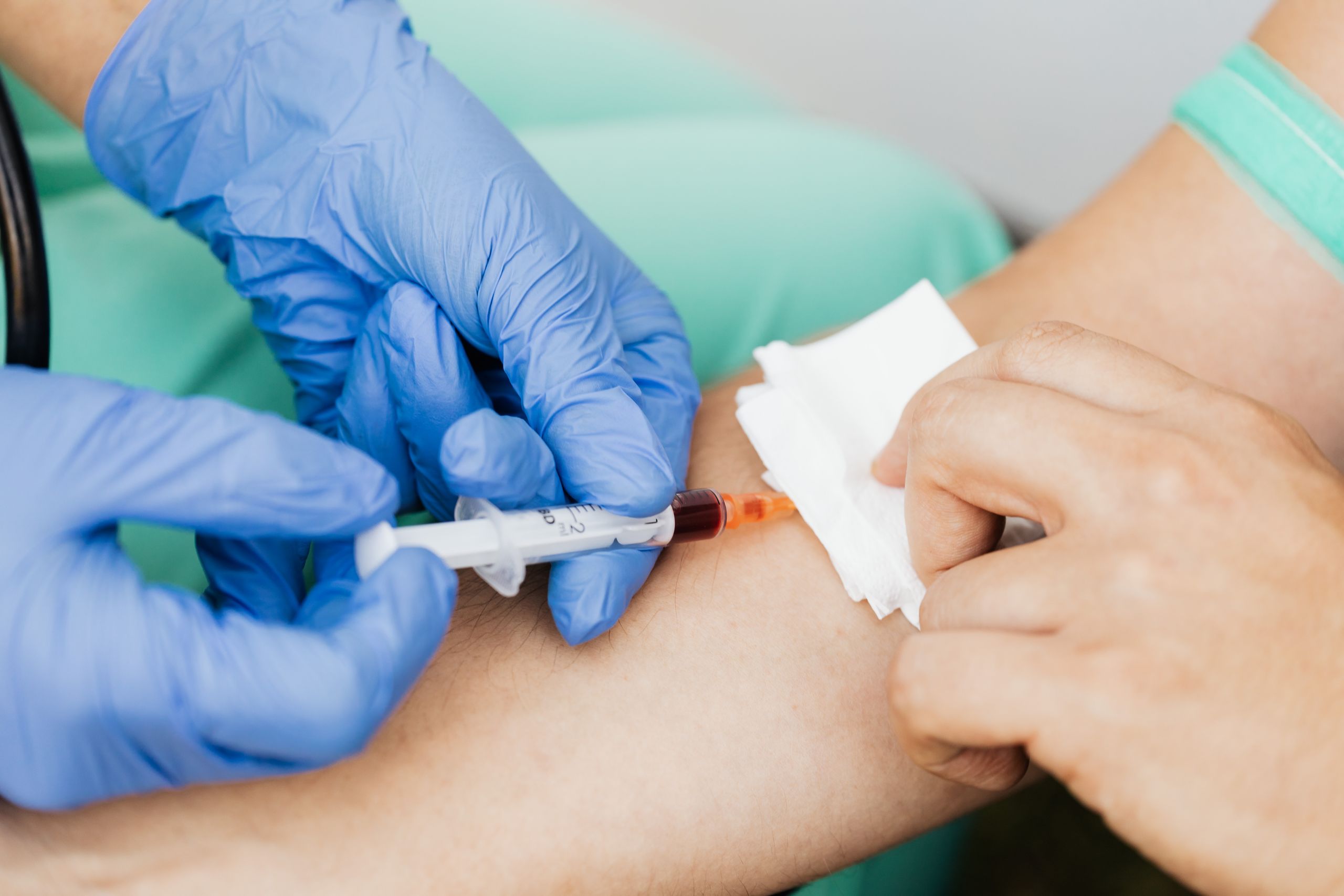
Learning how to become a phlebotomist is one of the fastest ways to start a hands-on healthcare career. A phlebotomist is the person who draws blood for tests, donations, transfusions, and research. You do not need a four-year degree to begin, and most training programs take months rather than years. That combination — short training, clear certification steps, and steady demand from hospitals, clinics, and laboratories — makes this career attractive to school leavers, career changers, and anyone who wants to work directly with patients without spending years in university first.
This guide explains the full path in plain terms. You will learn what a phlebotomist does day to day, who this job suits, how long training takes, which certification to choose, how state rules change the requirements, what the work pays in general terms, and how to find your first job. It also covers training in Europe, common mistakes that slow new phlebotomists down, and a practical checklist you can follow from your first enquiry to your first shift. Requirements vary by state and by country, so wherever a rule depends on where you live, this guide tells you to check the official source before you enrol or apply.
Table of Contents
Quick Answer
To become a phlebotomist, you usually need a high school diploma or equivalent, completion of an accredited phlebotomy training program, hands-on clinical practice drawing blood, and a nationally recognised certification exam. In most US states, certification is not required by law, but most employers ask for it. In a few states, including California, Louisiana, and Nevada, there are extra state rules, such as a state licence or registration, so you must check your state before you start. Training commonly takes a few months for a certificate program, longer if you choose a diploma or associate degree route. After certification, you apply for entry-level jobs in hospitals, diagnostic laboratories, blood donation centres, and clinics, and you build experience from there.
If you want the shortest route, it looks like this: finish high school, choose an accredited certificate program with a clinical placement, complete your required venipunctures under supervision, pass a certification exam, and apply for jobs while your training is still fresh. If you want more options later, such as moving into laboratory work, nursing, or medical assisting, choose a program that gives you transferable credits and a strong clinical record.
What Does a Phlebotomist Do?
A phlebotomist collects blood samples safely and accurately. That sounds simple, but the work is precise, people-centred, and safety-critical. A wrong label, a contaminated sample, or a missed vein can delay a diagnosis or force a patient to be tested again. Good phlebotomists combine steady hands with calm communication.
Daily tasks
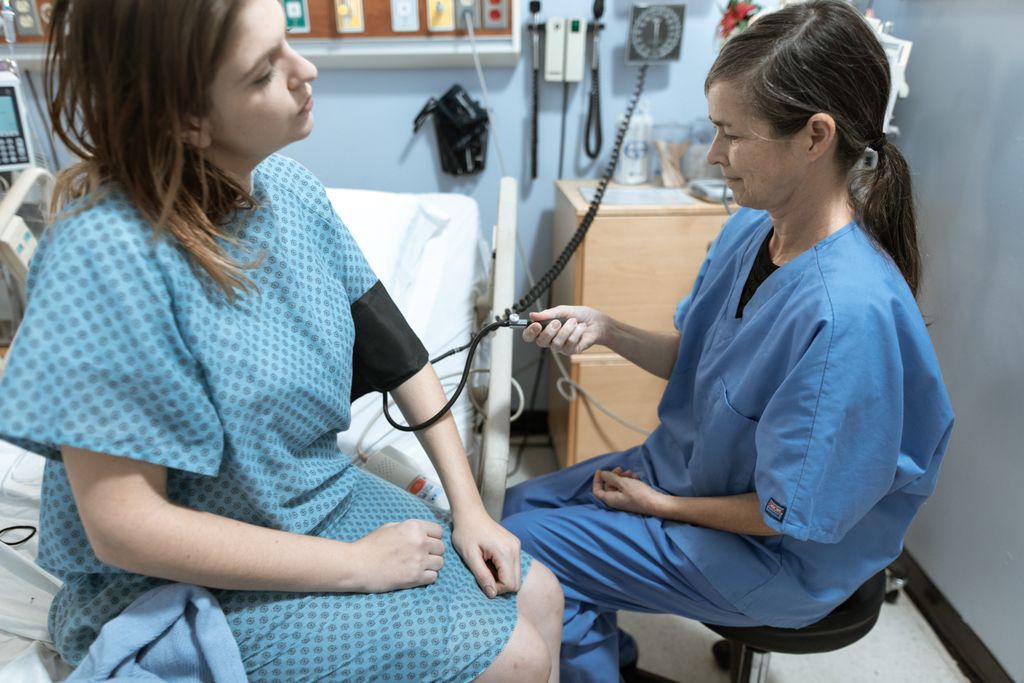
A typical shift includes many of the following tasks:
- Greeting patients and explaining the blood draw in simple, reassuring language
- Checking the patient’s identity against the test request, using two identifiers such as name and date of birth
- Reviewing the test order to confirm which tubes, additives, and volumes are needed
- Selecting the right vein, usually in the arm, and preparing the site with antiseptic
- Performing venipuncture with a needle and collection tube, or a finger or heel prick when a small sample is enough
- Labelling tubes correctly at the patient’s side, before leaving the room
- Handling, storing, and transporting samples at the right temperature
- Following infection control rules, including hand hygiene, gloves, and safe sharps disposal
- Recording the collection in the laboratory or hospital computer system
- Calming nervous patients, including children and people who feel faint
- Working with nurses, doctors, and laboratory staff to sort out unclear orders
You will repeat these steps many times a day. Speed matters, but accuracy matters more. Employers value phlebotomists who are careful, consistent, and kind, even when the clinic is busy.
Where phlebotomists work
Phlebotomists work in more places than most people realise. Hospitals are the largest employer, including inpatient wards, emergency departments, and outpatient clinics. Diagnostic laboratories employ phlebotomists in patient service centres where people walk in for a blood test ordered by their doctor. Blood donation centres, such as those run by the Red Cross and other blood services, need phlebotomists to collect donations safely. You can also find work in doctors’ offices, community clinics, nursing homes, research centres, mobile collection services, and public health programs.
Each setting feels different. A hospital phlebotomist may visit patients in their beds, including people who are very ill. A laboratory service centre is more predictable, with scheduled appointments and a steady flow of walk-in patients. A blood donation centre involves longer collections and a strong focus on donor care. A mobile phlebotomist travels to homes, care homes, or workplaces. When you choose your first job, think about which setting fits your temperament. If you like variety and movement, a hospital or mobile role may suit you. If you prefer a regular routine, a laboratory service centre may be a better start.
What a phlebotomist does not do
A phlebotomist is not a nurse, a doctor, or a medical laboratory scientist, although the roles overlap. Phlebotomists do not diagnose illness, prescribe treatment, or analyse samples in the laboratory, unless they hold extra qualifications. They do not usually insert intravenous lines for fluids or medicines, although the exact boundary depends on the employer and the state. Understanding this boundary helps you set realistic expectations and helps you explain your role clearly to patients and to future employers.
Is Phlebotomy Right for You?
Phlebotomy suits people who like practical work, clear routines, and direct contact with patients. It also suits people who want a healthcare career without a long degree. Before you commit, check yourself against the realities of the job, not only the appealing parts.
Strengths that help
You do not need to be perfect at everything on day one, but these qualities make training and work much easier:
- Comfort around blood and needles, or a willingness to build that comfort step by step
- Steady hands and good hand-eye coordination
- Attention to detail, especially with labels, orders, and patient identity
- Calm, clear communication with people who are anxious, in pain, or unwell
- Patience with children, older adults, and people who are hard to draw blood from
- Reliability, punctuality, and respect for hygiene and safety rules
- Physical stamina, because you will be on your feet for much of the shift
- A professional manner, including discretion with confidential patient information
If you faint at the sight of blood, that does not automatically rule you out, but you should test your reaction honestly before you pay for training. Many programs let you observe a session or speak to a tutor first. Use that chance. It is better to discover a problem early than halfway through a paid course.
Challenges to expect
Phlebotomy is rewarding, but it is not an easy job. You will meet patients who are frightened, unwell, or in pain. Some veins are difficult to find. Some patients will be upset if a draw hurts or needs a second attempt. You may work early mornings, evenings, weekends, or on-call shifts, depending on the employer. In hospitals, you may see people who are seriously ill. You must follow strict safety rules every time, even when you are tired or rushed.
You also need to accept that the work is repetitive. You will perform the same core procedure many times a day. The variety comes from the people, not from the task itself. If you need constant novelty, you may find the repetition tiring. If you enjoy mastering a skill and doing it well for each person, you will find it satisfying.
Who this career suits best
This career often suits school leavers who want a quick route into healthcare, career changers who want stable work, parents returning to work who need a practical qualification, and healthcare assistants who want to add a recognised skill. It also suits people who plan to study further. Many nurses, medical laboratory technicians, physician assistants, and other healthcare professionals started with phlebotomy because it gave them patient experience and confidence. If you have a longer-term healthcare goal, phlebotomy can be a useful first step rather than a final destination.
How Long Does It Take to Become a Phlebotomist?
There is no single answer, because the route you choose changes the timeline. The table below gives a general guide. Always confirm the exact length with the training provider and the certification body you plan to use.
| Route | Typical length | Best for |
|---|---|---|
| Certificate program | A few months | Fastest entry to work |
| Diploma program | Several months to about a year | More classroom and clinical time |
| Associate degree | About two years | Broader education and future study |
| On-the-job training | Varies by employer | People already working in healthcare |
| Short course plus work experience | Varies | People seeking certification through experience |
A certificate program is the most common route. It usually includes classroom learning, laboratory practice on training arms, and a supervised clinical placement where you draw blood from real patients. Some programs are full-time and finish quickly. Others are part-time or evening-based and take longer, which can suit people who work while they study.
An associate degree takes longer, but it includes general education and a wider set of healthcare subjects. It can help if you later apply for a laboratory science degree or a nursing program. A diploma sits between a certificate and a degree in length and depth.
On-the-job training is less common for complete beginners, but some hospitals and laboratories train healthcare assistants or other staff in phlebotomy. This route depends on the employer and on state rules. Do not assume you can learn on the job without formal training. Ask the employer and the state authority first.
Whatever route you choose, add time for the certification exam, background checks, and job applications. Many new phlebotomists are ready to apply for jobs within a few months of starting training, but the exact time depends on how quickly you complete your clinical hours and pass your exam.
Step 1: Finish High School and Meet the Basic Requirements
The first step is simple, but it is essential. Most phlebotomy programs and certification bodies require a high school diploma or an equivalent qualification, such as a GED in the United States. If you have not finished high school, complete that first. Some programs accept students who are still finishing their diploma, but you will usually need the diploma before you can sit the certification exam or start clinical work.
Age and health requirements
Most programs require students to be at least 18 years old, although some accept 17-year-olds with parental consent. Check the program’s rules before you apply. You will also need to meet health and safety requirements for clinical work. These commonly include:
- Proof of vaccinations, including hepatitis B and other vaccines required by the clinical site
- A tuberculosis test or screening
- A background check, because you will work with vulnerable patients
- A drug screening, if the employer or clinical site requires it
- A basic health check to confirm you can perform the physical tasks of the job
These requirements protect patients and staff. They also protect you. If you have a health condition that affects your ability to perform venipuncture safely, speak to the program before you enrol. The program can often advise on adjustments, but it cannot waive patient safety rules.
Useful school subjects
You do not need advanced science to become a phlebotomist, but a basic understanding of biology, human anatomy, and health helps. If you are still at school, useful subjects include biology, chemistry, health science, and mathematics. English and communication skills also matter, because you will explain procedures, listen to patients, and write clear records. If you have already left school, do not worry. A good training program teaches the science you need from the beginning. You can also refresh your knowledge with a basic anatomy or medical terminology course before you start.
English and communication
In the United States and Europe, you will need to communicate clearly in the local language of the workplace. That includes speaking with patients, reading test orders, and writing notes. If English is not your first language, make sure your English is strong enough for patient care before you enrol. Some programs ask for proof of English ability. Even if they do not, clear communication is a patient safety issue, not only a language test.
Step 2: Choose the Right Phlebotomy Training Program
Choosing a training program is the most important decision in this process. A good program teaches you the skill properly, gives you enough real clinical practice, and prepares you for the certification exam. A weak program may leave you with a certificate but too little practice to get hired.
What to look for in a program
Use this checklist when you compare programs:
- Accreditation or approval by a recognised body, such as a national accrediting agency for allied health education
- A clear curriculum that covers anatomy, venipuncture technique, safety, infection control, and specimen handling
- Hands-on laboratory practice before you work with real patients
- A supervised clinical placement in a hospital, clinic, or laboratory, not only classroom practice
- A stated number of successful venipunctures and skin punctures you will complete during training
- Experienced instructors who have worked as phlebotomists or in laboratory medicine
- Preparation for a recognised certification exam, with practice tests or revision support
- Clear information on total cost, what is included, and any extra fees for exams, uniforms, or background checks
- A realistic job placement or career support service, without a guarantee that sounds too good to be true
- Positive feedback from past students, ideally including employment outcomes
Be cautious of programs that promise certification in a few days with no clinical placement, or that charge a high fee but do not explain what is included. Short courses can teach theory, but employers want to see real clinical experience. If a program cannot tell you how many venipunctures you will perform, keep looking.
Certificate, diploma, or associate degree
A certificate program is the fastest and most focused route. It teaches phlebotomy and the related science you need, and little else. It is a good choice if you want to start work quickly and you are sure phlebotomy is your goal.
A diploma program is broader. It may include more healthcare subjects, more clinical hours, and more time in the laboratory. It can suit people who want a stronger foundation or who plan to move into a related role later.
An associate degree is the longest route, but it gives you a college qualification as well as phlebotomy training. It can help if you want to apply for further study, such as a bachelor’s degree in medical laboratory science or nursing. It also gives you general education credits that may transfer to another program.
There is no single best choice for everyone. Think about your time, your budget, your long-term goals, and the employers in your area. Look at job adverts in your area and note which qualifications they ask for. If most local employers ask for certification and clinical experience, a certificate program with a strong placement may be enough. If you want to keep the door open to a degree, an associate degree may be worth the extra time.
Community colleges, vocational schools, and hospitals
In the United States, community colleges are a common and often affordable choice. They usually offer accredited certificate or associate programs, and they may have links with local hospitals for clinical placements. Vocational and technical schools also offer phlebotomy programs, often with flexible start dates. Some hospitals run their own training programs for staff or for new recruits. Online programs exist, but they cannot replace hands-on clinical practice. If you choose an online program, make sure it includes an in-person laboratory and clinical component arranged in your area.
In Europe, the route is different. In the United Kingdom, for example, phlebotomy training is often provided by the employer, such as the NHS or a private healthcare provider, and there is no single national licence in the same way as in some US states. In other European countries, phlebotomy may be part of nursing, laboratory, or medical assistant training rather than a standalone profession. If you plan to work in Europe, check the route for that specific country, not a general US guide.
Cost and funding in general terms
Costs vary widely by provider, location, and program length. A short certificate program usually costs less than a diploma or associate degree, but the total cost can still be significant once you add exam fees, textbooks, uniforms, background checks, and travel to a clinical site. Some community colleges charge lower fees for local residents. Some employers pay for training if you commit to work for them afterwards. Some workforce programs, veterans’ benefits, and financial aid options may help, depending on where you live and your eligibility.
Do not choose a program on price alone. A very cheap program with little clinical practice may cost you more in the long run if you cannot get hired or cannot pass the certification exam. Ask for a written breakdown of costs before you enrol. Ask what happens if you need to repeat a module or an exam. Ask whether the exam fee is included. Compare at least two or three programs before you decide.
Questions to ask before you enrol
Before you pay any fee, ask the provider these questions:
- Is the program accredited, and by whom?
- How many hours of classroom, laboratory, and clinical training are included?
- How many successful venipunctures will I complete, and where?
- Which certification exam does the program prepare me for?
- What is the program’s certification pass rate?
- What is the total cost, and what is included?
- What support is available if I struggle with a skill?
- What happens if my clinical placement is delayed?
- Do you help with job applications or interviews after training?
A good provider will answer clearly and in writing. If the answers are vague, or if the provider pressures you to pay immediately, treat that as a warning sign.
Step 3: Learn What Training Covers
Phlebotomy training is practical and focused. You will learn the science behind the procedure, the technique itself, and the safety rules that protect you and the patient. Most programs follow a similar structure, even if the order of topics varies.
Anatomy and physiology basics
You need to know enough about the circulatory system to find veins safely and to understand why a test is ordered. Training usually covers the structure of veins, arteries, and capillaries, the main veins used for blood collection, and the difference between venous, arterial, and capillary blood. You will learn about the antecubital area of the arm, where the median cubital, cephalic, and basilic veins are found, and why some veins are preferred over others. You will also learn about blood composition, including plasma, red cells, white cells, and platelets, and how different tests require different tubes.
You do not need to memorise every detail of human anatomy, but you do need to understand the structures you will work with. A good instructor will link each anatomy lesson to a practical decision, such as which vein to choose or when to ask for help.
Venipuncture technique
Venipuncture is the core skill. Training usually starts with theory, then moves to practice on a training arm, then to supervised practice on real patients. You will learn how to:
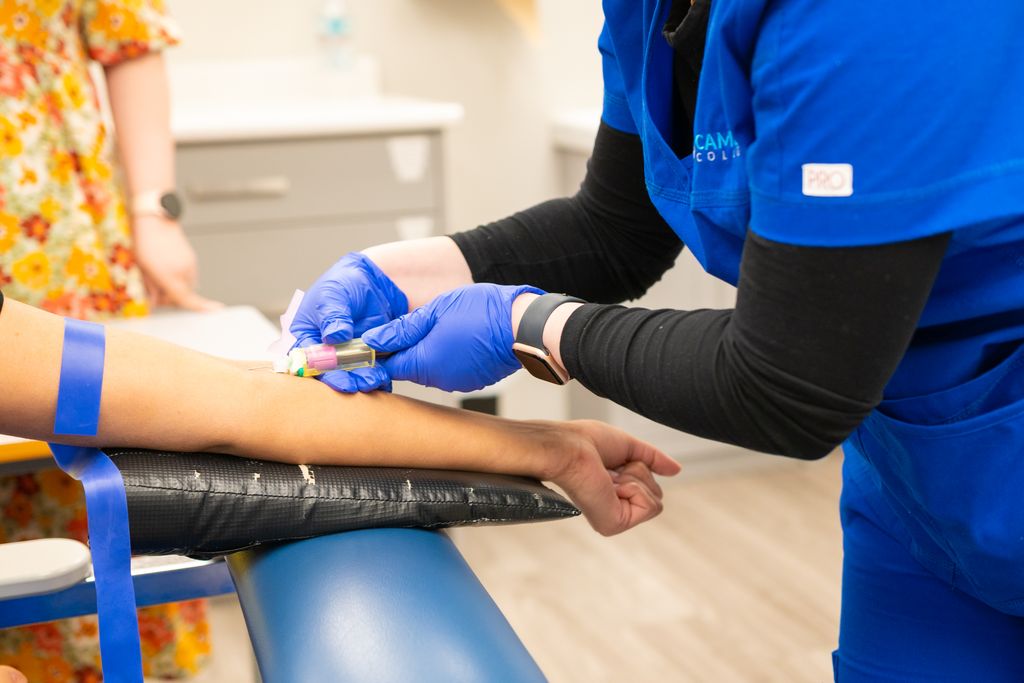
- Prepare your equipment, including needles, holders, tubes, tourniquets, antiseptic, gauze, and bandages
- Apply a tourniquet correctly and release it at the right time
- Palpate a vein to check its size, depth, and direction
- Clean the site and avoid touching it after cleaning
- Insert the needle at the correct angle and depth
- Fill tubes in the correct order of draw, so additives do not contaminate other samples
- Remove the needle safely, apply pressure, and dispose of sharps immediately
- Label tubes at the bedside and complete the paperwork
The order of draw matters. Different tubes contain different additives, and using them in the wrong order can affect test results. Your program will teach you the standard order and why it matters. You will also learn how to handle a difficult draw, when to stop and seek help, and how to document what happened.
Skin puncture and special collections
Not every sample comes from a vein. You will also learn skin puncture, such as a finger prick for adults and a heel prick for infants. This is used when only a small sample is needed, or when venous access is difficult. Training covers when skin puncture is appropriate, how to choose the site, how to avoid squeezing the tissue too hard, and how to collect the sample without contamination.
Some programs also introduce special collections, such as blood cultures, glucose tolerance tests, and timed samples. You may not perform these often as a new phlebotomist, but you should understand the principles, including sterile technique for blood cultures and the importance of timing for certain tests.
Infection control and safety
Infection control is not an optional extra. It is central to phlebotomy. Training covers hand hygiene, glove use, personal protective equipment, safe handling of needles and sharps, cleaning of work surfaces, and what to do if you are exposed to blood. You will learn about bloodborne pathogens, including hepatitis B, hepatitis C, and HIV, and how vaccination, safe practice, and prompt reporting reduce risk.
You will also learn about patient safety, including correct patient identification, allergy checks, and recognising when a patient is about to faint. You will practise what to do if a patient feels dizzy, has a seizure, or has an allergic reaction. You will learn how to report incidents and near misses, so the team can learn from them.
Specimen handling and laboratory basics
After collection, the sample must reach the laboratory in good condition. Training covers how to handle, label, store, and transport samples, including which samples need to be kept cool, which need to be protected from light, and which need to reach the laboratory quickly. You will learn about haemolysis, which happens when red cells break down and can affect results, and how to avoid it by using the right technique and handling samples gently.
You will also learn basic laboratory terminology, including common test names, tube colours and additives, and the difference between serum, plasma, and whole blood. You do not need to analyse samples, but you need to understand enough to spot an error, such as a wrong tube or a missing label, before the sample leaves the collection area.
Communication and patient care
Technical skill alone is not enough. Patients remember how you treated them. Training covers how to introduce yourself, explain the procedure in plain language, gain consent, and answer common questions. You will learn how to work with children, older adults, people with disabilities, and people who do not speak the local language fluently. You will practise how to stay calm if a patient is upset, how to distract a nervous child, and how to support a patient who has had a bad experience in the past.
You will also learn about confidentiality and professional conduct. Patient information is private. You must not discuss a patient’s test or condition with people who are not involved in their care. You must treat every patient with respect, regardless of their background, and you must work within your scope of practice.
Step 4: Complete Your Clinical Hours and Venipunctures
Classroom learning is only the start. You must practise on real patients under supervision before you can work alone. This is the clinical placement, sometimes called an externship or practicum.
How many draws do you need?
The number of successful venipunctures and skin punctures you need depends on the program and the certification body. Different certification bodies set different minimums, and some states set their own minimums as well. As a general guide, programs often require dozens of successful venipunctures and a smaller number of skin punctures, plus a set number of clinical hours. Some programs require more. Always check the exact requirement for the certification you plan to take, and for your state, before you start.
Do not aim for the minimum only. The minimum is a floor, not a target. The more supervised practice you get, the more confident and competent you will be in your first job. If your program offers extra clinical hours, take them if you can. Employers notice the difference between a graduate who has performed the minimum number of draws and one who has performed many more in a busy setting.
What clinical placement feels like
Your first clinical days can feel intense. You will work in a real hospital, clinic, or laboratory, with real patients who may be unwell, anxious, or in a hurry. A supervisor will watch your technique, check your labels, and give you feedback. You will make mistakes, and that is normal. The point of supervision is to catch mistakes safely and help you improve.
To get the most from your placement, arrive on time, dress professionally, follow the site’s rules, and ask questions. Volunteer for difficult draws when your supervisor thinks you are ready, because that is how you learn. Keep a log of your venipunctures, including the type of draw, the site, and any problems. This log may be required for certification, and it also helps you track your progress.
Building confidence with difficult veins
Most patients are straightforward to draw blood from, but some are not. Older adults, people who are dehydrated, people who have had chemotherapy, and people with small or deep veins can be challenging. You will learn techniques for these situations, such as using a smaller needle, warming the arm, asking the patient to make a fist, or choosing a different site. You will also learn when to stop. If you cannot find a vein after a reasonable number of attempts, you should seek help from a more experienced colleague rather than causing the patient unnecessary pain.
Confidence grows with practice, but it also grows from knowing your limits. A good phlebotomist knows when to ask for help. That is a strength, not a weakness. Patients prefer a calm, honest approach to a rushed attempt that fails.
Common clinical mistakes to avoid
New phlebotomists often make the same mistakes. Watch for these during your placement:
- Rushing patient identification and skipping the second identifier
- Touching the cleaned site again before inserting the needle
- Leaving the tourniquet on for too long
- Filling tubes in the wrong order
- Labelling tubes away from the patient, or after leaving the room
- Forgetting to release the tourniquet before removing the needle
- Disposing of sharps incorrectly or leaving them on a tray
- Not checking for allergies or for a previous bad reaction
- Failing to apply enough pressure after the draw, leading to bruising
Your supervisor will correct these mistakes during training. Take the feedback seriously. Each correction is a chance to build a safe habit that will stay with you for your whole career.
Step 5: Get Certified as a Phlebotomist
Certification is the step that turns your training into a credential employers recognise. In the United States, certification is usually offered by a national body, not by the training program itself. You complete the training, meet the eligibility requirements, and then sit an exam.
Which certification should you choose?
There are several recognised certification bodies in the United States. The most commonly mentioned include the National Healthcareer Association (NHA), which offers the Certified Phlebotomy Technician (CPT) credential, the American Society for Clinical Pathology (ASCP), which offers the Phlebotomy Technician (PBT) credential, the American Medical Technologists (AMT), which offers the Registered Phlebotomy Technician (RPT) credential, and the National Center for Competency Testing (NCCT), which offers the National Certified Phlebotomy Technician (NCPT) credential. Other bodies also exist. This list is not exhaustive, and the best choice depends on your training, your state, and what local employers ask for.
Before you choose, check job adverts in your area. Note which credentials employers list as required or preferred. Ask your training provider which exam their graduates usually take and what their pass rate is. Check the eligibility rules for each body, because they differ. Some require completion of an approved program. Others allow a combination of education and work experience. Some require a set number of venipunctures. Make sure you meet the rules before you pay the exam fee.
Do not assume one certification is accepted everywhere. Most employers accept more than one credential, but some have a preference. If you plan to move to another state, check whether that state has extra rules. Certification is a national credential. A state licence or registration, where required, is separate.
How to prepare for the exam
The certification exam usually covers anatomy, venipuncture technique, order of draw, safety, infection control, specimen handling, and professional practice. It may include multiple-choice questions and, in some cases, a practical assessment. Your training program should prepare you, but you should also revise systematically.
A practical revision plan includes:
- Reviewing your course notes and textbook chapter by chapter
- Using practice questions from your training provider or a reputable study guide
- Revising the order of draw until you can recall it without hesitation
- Revising tube colours, additives, and common tests
- Revising safety rules, including sharps disposal and exposure response
- Practising patient identification and labelling steps until they are automatic
- Taking timed practice tests to build exam stamina
Study in short, regular sessions rather than cramming the night before. Focus on understanding why each step matters, not only memorising lists. If you understand why the order of draw matters, you will remember it more easily than if you only memorise a sequence.
Exam costs and retakes in general terms
Exam fees vary by certification body and by location, and they can change. As a general guide, expect a fee in the low hundreds of dollars in the United States, plus any costs for study materials or travel to a test centre. Some training programs include the exam fee in their total cost. Others charge it separately. Ask before you enrol, so there are no surprises.
If you do not pass on the first attempt, you can usually retake the exam after a waiting period and after paying the fee again. Check the body’s retake policy before you sit the exam. A failed attempt is disappointing, but it is not the end of your career. Use the score report to identify weak areas, revise those topics, and try again. Many phlebotomists pass on a second attempt after focused revision.
Maintaining certification
Certification is not always for life. Many credentials require renewal every few years, often through continuing education and a renewal fee. Some bodies require a set number of continuing education hours. Others require proof that you are still working in the field. Check the renewal rules for your credential and keep a record of your continuing education from the start. It is easier to maintain certification than to let it lapse and have to requalify.
Continuing education also helps you stay current. Guidelines, equipment, and safety rules change over time. A short course or a workplace training session can keep your skills sharp and show employers that you take your professional development seriously.
Step 6: Understand State Rules — Check Your State
This step is essential, and it is where many new phlebotomists get confused. In the United States, phlebotomy is regulated differently from state to state. There is no single national licence that covers every state. You must check the rules for the state where you plan to work, and you must check them on an official state page, not only on a training provider’s website.
States with extra rules
Most US states do not require a state licence to work as a phlebotomist, but they do expect employers to hire trained and certified staff. A small number of states have extra requirements. California, Louisiana, and Nevada are the states most often cited as having additional rules, such as a state licence, registration, or specific training and experience requirements. The exact rules can change, and the details matter. For example, California has a state certification process with different levels and specific training hour requirements. Louisiana and Nevada also have state-level requirements that go beyond national certification alone.
If you plan to work in one of these states, do not assume that national certification alone is enough. Check the state health department or the relevant state licensing authority for the current requirements. Check what training hours, clinical experience, and exams are required. Check whether you need to apply for a state licence before you start work, and how long the application takes. If you are moving to a new state, check its rules before you move, not after you arrive.
States without a state licence
In states without a specific phlebotomy licence, employers still set their own standards. Most ask for completion of an accredited program and national certification. Some ask for a background check, proof of vaccinations, and a drug screening. Some require you to complete their own competency assessment during onboarding. Even without a state licence, you must follow the employer’s policies and the laboratory’s quality rules.
Do not treat a lack of state regulation as a lack of standards. Employers, accreditation bodies, and laboratory quality programs all set expectations. A phlebotomist who is well trained and certified will find it easier to get hired, even in a state with no licence requirement.
If you move states
If you move to another state, your national certification usually travels with you, but your state licence or registration may not. You may need to apply for a new state credential, provide proof of your training and experience, or take an additional exam. Some states have reciprocity or a simpler process for people who are already certified elsewhere. Others do not. Check the new state’s rules early, and keep copies of your training records, clinical logs, certification, and employment history. Those documents make a move much easier.
Europe: a different system
In Europe, there is no single phlebotomy licence that covers every country. The route depends on the country and the healthcare system. In the United Kingdom, phlebotomists are often trained by the employer, and there is no statutory licence in the same sense as in some US states. Training may include a short course, supervised practice, and a competency assessment. In other European countries, blood collection may be part of a nursing, medical laboratory, or healthcare assistant qualification. In some countries, only nurses or doctors may collect blood in certain settings.
If you plan to work in Europe, research the specific country, not Europe as a whole. Check the national health service, the relevant professional body, and job adverts in that country. If your qualification is from outside Europe, check whether it is recognised and whether you need additional training, language proof, or registration. Do not assume a US certification alone will qualify you to work in a European country.
Step 7: Build Your Resume and Apply for Your First Job
Once you are trained and certified, the next step is to find work. Your first job matters. It gives you experience, references, and confidence. It also shapes your habits. Choose a first job that offers good supervision and a supportive team, even if the pay is not the highest available.
What employers look for in a new phlebotomist
Employers look for more than a certificate. They look for evidence that you can do the job safely and work well with patients and colleagues. The strongest new graduates can show:
- Completion of an accredited program with a clinical placement
- National certification, or a clear plan to sit the exam soon
- A log of supervised venipunctures, with a good number of successful draws
- A clean background check and up-to-date vaccinations
- Good communication skills and a professional manner
- Reliability, punctuality, and a willingness to work flexible shifts
- Basic computer skills for laboratory systems and patient records
- A positive attitude to learning and to feedback
If you have previous healthcare experience, such as work as a healthcare assistant, medical assistant, or care worker, highlight it. Even non-healthcare experience can help if it shows customer service, teamwork, or attention to detail. For example, experience in retail, hospitality, or childcare can show that you are comfortable working with people and handling pressure.
Writing a strong entry-level resume
Your resume should be clear, honest, and focused on what you can do. For a first phlebotomy job, include your training, your clinical placement, your certification status, and any relevant experience. List your clinical hours and the number of venipunctures you completed, if your program provides that information. Mention any additional skills, such as basic life support, first aid, or experience with electronic health records.
Keep the resume to one or two pages. Use plain language and bullet points. Avoid exaggeration. Do not claim experience you do not have. Employers check references and may ask you to demonstrate a blood draw during the hiring process. A clear, honest resume builds trust. If you want a step-by-step guide to structure, tone, and common mistakes, read how to write a resume and adapt the advice to a healthcare role.
Your cover letter, if required, should be short and specific. Explain why you want to work for that employer, what you learned during training, and what you can offer. Mention the setting, such as a hospital or a laboratory service centre, and show that you understand the work. Avoid generic statements that could apply to any job. A tailored letter stands out.
Where to find phlebotomy jobs
Phlebotomy jobs are advertised in many places. Start with the careers pages of local hospitals, diagnostic laboratories, and blood donation services. These employers often list vacancies before they appear on general job boards. Use general job sites as well, and set up alerts for phlebotomist, phlebotomy technician, and blood collection roles. Recruitment agencies that specialise in healthcare can also help, especially for temporary or locum work.
Networking helps too. Ask your training provider about employers who hire their graduates. Ask your clinical supervisor for advice. Join a professional group or online community for phlebotomists. Attend a local healthcare careers event if one is available. Many jobs are filled through word of mouth, so let people know you are looking.
Do not limit yourself to one type of employer. A hospital, a laboratory, and a blood donation centre offer different experiences. Apply to several, compare the supervision, training, and shift patterns, and choose the role that gives you the best start. A first job with good mentoring is worth more than a slightly higher hourly rate with no support.
The interview and skills check
A phlebotomy interview usually includes questions about your training, your experience, and how you handle patients. You may be asked about a difficult draw, a nervous patient, or a labelling error. The interviewer wants to see that you think about safety, communication, and teamwork.
You may also be asked to demonstrate a blood draw on a training arm or to talk through the steps in detail. Some employers use a competency assessment during onboarding, where you perform supervised draws until you meet their standard. This is normal. It protects patients and helps you settle into the employer’s procedures.
Prepare for the interview by reviewing the order of draw, infection control steps, and patient identification rules. Think of examples from your clinical placement that show your skills. For example, describe a time when you calmed a nervous patient, or when you spotted a labelling error before it caused a problem. Be honest about your experience. If you have not yet performed many draws on a particular patient group, say so and explain how you would handle it safely.
Step 8: Start Work, Learn the Systems, and Grow
Your first weeks in a job are a learning period, even after training. Every employer has its own procedures, computer systems, and team routines. Use this time to learn them properly.
Your first weeks on the job
In your first weeks, you will usually work under supervision or with a mentor. You will learn the employer’s specific procedures for patient identification, labelling, sample handling, and documentation. You will learn how to use the laboratory information system, how to order tests, and how to handle urgent or timed samples. You will learn where equipment is stored, how to report a problem, and who to ask for help.
Take notes. Ask questions. Do not pretend to know something you do not. It is better to ask than to make a mistake that affects a patient. Keep a record of the procedures you have been signed off to perform, and ask for feedback regularly. Most employers expect new phlebotomists to need time to build speed. Focus on accuracy first, and speed will follow.
Shift patterns and work-life balance
Phlebotomists often work early mornings, because many blood tests are done before breakfast. Some roles involve evenings, weekends, or on-call work, especially in hospitals. Laboratory service centres may have more regular daytime hours. Blood donation centres may have weekend sessions. When you apply, check the shift pattern and think about whether it fits your life. Ask about overtime, weekend working, and holiday cover. A job that fits your life is more sustainable than one that pays slightly more but leaves you exhausted.
Continuing to learn
Healthcare changes. New equipment, new tests, and new safety guidance appear regularly. Keep learning after you start work. Attend workplace training, complete your continuing education for certification renewal, and ask to learn new skills, such as paediatric collections or blood culture technique, when you are ready. If your employer offers training in a related area, such as electrocardiography or specimen processing, consider it. Extra skills make you more useful to the team and open up new roles.
Career progression
Phlebotomy can be a career in itself, or a stepping stone to other roles. With experience, you can become a senior phlebotomist, a team leader, a trainer, or a quality lead. You can specialise in paediatric phlebotomy, blood donation, or research collections. You can move into laboratory work as a medical laboratory assistant or, with further study, as a medical laboratory technician or scientist. You can use your patient experience to apply for nursing, physician assistant, or other healthcare programs. Some phlebotomists move into management, education, or sales roles for laboratory equipment.
Think about your long-term goals early, but do not rush. A year or two of solid phlebotomy experience gives you a strong foundation for any of these paths. It also helps you decide which direction you enjoy most.
Phlebotomist Salary and Job Outlook in General Terms
Pay for phlebotomists varies by country, state, city, employer, setting, shift, and experience. It is important to understand the general pattern rather than relying on a single figure from one job advert.
What affects pay
In the United States, entry-level phlebotomists usually earn an hourly wage rather than an annual salary. Pay tends to be higher in large cities, in hospitals, and in states with a higher cost of living. Night, weekend, and on-call shifts may attract extra pay. Experience, additional certification, and specialist skills, such as paediatric collections, can also increase pay over time. In Europe, pay structures differ by country and by health system. Public health service roles often have a set pay band, while private employers may pay differently.
As a general guide, phlebotomy is a modestly paid healthcare role. It pays more than many entry-level jobs without a qualification, but less than nursing or laboratory science roles that require longer training. That is an important trade-off to understand. You are choosing a faster route into healthcare, not the highest-paid route. If pay is your main goal, you should compare phlebotomy with other healthcare careers and consider how further study could raise your earnings later.
For official, up-to-date employment and wage information in the United States, check the US Bureau of Labor Statistics and look for its pages on phlebotomists. The Bureau publishes data on employment, projected growth, and median pay, and it updates that data regularly. Use that official source, not a single job advert, when you compare pay across states or over time. Always check the date of the data you are reading, because pay and job growth figures change.
Negotiating your first pay offer
When you receive your first job offer, do not accept it without checking the full package. The hourly rate is only part of the offer. Ask about shift differentials, overtime, paid time off, sick leave, health insurance, retirement contributions, and training support. Ask whether certification is required for a pay increase, and whether there is a clear pay scale for progression.
If you want to negotiate, do so politely and with evidence. Research the typical pay range for your area, using official sources and several job adverts, not only one. Highlight your training, your clinical hours, your certification, and any relevant experience. Be realistic. As a new graduate, you have less bargaining power than an experienced phlebotomist, but you can still ask about the pay scale, the review process, and the next step up. For a practical approach to a first-job negotiation, including what to say and what to avoid, read how to negotiate salary for your first job before you reply to an offer.
Job outlook
Demand for phlebotomists is generally steady, because blood tests are a routine part of diagnosis, monitoring, and preventive care. Hospitals, laboratories, and blood services need staff to collect samples every day. Demand can vary by region, and it can be affected by changes in healthcare funding, technology, and the number of trained graduates in an area. Some areas have more vacancies than others. Before you enrol, look at job adverts in the area where you plan to work. If there are regular vacancies, that is a good sign. If there are very few, ask your training provider about employment outcomes for recent graduates.
Phlebotomy is also a resilient career in the sense that blood collection cannot be done remotely. It requires a person, a patient, and a safe technique. Automation may change some laboratory processes, but it does not replace the need for a trained person to collect a sample from a patient. That gives the role a degree of stability, even as healthcare changes.
Working in Different Settings: What to Expect
Choosing a setting is not only about pay. It affects your daily routine, your patients, and your career development. Here is a closer look at the main settings.
Hospitals
Hospital phlebotomists work with inpatients, outpatients, and emergency patients. You may visit wards, collect samples from people who are very ill, and work with a wide range of ages and conditions. The work is varied and fast-paced. You will learn to work with difficult veins, to collect timed samples, and to coordinate with nurses and doctors. Hospital roles often involve early starts and weekend work. They also offer good learning opportunities and a clear route to senior roles.
Diagnostic laboratories and patient service centres
In a laboratory service centre, patients arrive with a test request from their doctor. You will see a steady flow of people, most of whom are well enough to attend an appointment. The work is more predictable than hospital work, and you will become fast and efficient at routine draws. You will also learn a lot about test names, tube types, and laboratory procedures. This setting suits people who like a regular routine and a calm, organised workplace.
Blood donation centres
In a blood donation centre, you collect whole blood or blood components from donors. The collection takes longer than a routine blood test, and donor care is a large part of the role. You will check donor eligibility, monitor donors during and after collection, and respond if a donor feels unwell. This setting suits people who enjoy building rapport with regular donors and working in a team with a clear mission.
Doctors’ offices and community clinics
In a small clinic or doctors’ office, you may be the only phlebotomist, or you may combine phlebotomy with other tasks, such as reception, specimen processing, or basic clinical support. The work is varied, and you will get to know regular patients. This setting suits people who like a small team and a broad role, but it may offer less supervision than a large hospital or laboratory.
Mobile and home collection
Mobile phlebotomists travel to patients’ homes, care homes, schools, or workplaces. You need to be organised, independent, and comfortable driving to different locations. You will carry your equipment with you and work alone for much of the day. This setting suits people who like independence and variety, but it is not usually the best first job for a new graduate who still needs close supervision.
Research and public health
Research centres and public health programs also employ phlebotomists for studies, screening programs, and vaccination campaigns. These roles may be project-based or part-time. They can offer interesting experience, but they may not offer the same continuity as a hospital or laboratory role. If you are interested in research, ask about these opportunities after you have some core experience.
Phlebotomy in Europe: Routes and Differences
If you plan to work in Europe, do not assume the US route applies. The profession, the training, and the regulation are different in each country. This section gives a general overview, but you must check the specific country where you plan to work.
In the United Kingdom, phlebotomy is often learned on the job. The NHS and private providers train staff through a short course, supervised practice, and a competency assessment. There is no single national licence for phlebotomists in the UK in the same way as in some US states. Many UK phlebotomists start as healthcare assistants or in another support role and add phlebotomy training. If you want to work in the UK, look for NHS and private healthcare vacancies, and check what training the employer provides.
In Ireland, phlebotomy is also often part of a healthcare assistant or laboratory role, and training may be provided by the employer or through a further education college. In other European countries, such as Germany, France, the Netherlands, and the Nordic countries, blood collection may be performed by nurses, medical assistants, or laboratory staff, rather than by a standalone phlebotomist. The job title, the training, and the legal scope vary.
If you are moving to Europe from outside, check whether your qualification is recognised, whether you need to prove language ability, and whether you need registration with a professional body. Check the immigration rules as well, because the right to work is separate from the right to practise. Do not pay for a US certification course and assume it will qualify you to work in Europe. Research the destination country first.
Common Mistakes That Slow New Phlebotomists Down
Many new phlebotomists make avoidable mistakes. Learning from them now can save you time, money, and stress.
Choosing a program without checking accreditation
A program that is not accredited, or that has no clinical placement, may give you a certificate but not the skills or experience employers want. Always check accreditation, clinical hours, and certification preparation before you enrol. Ask for evidence, not only a promise.
Rushing through clinical practice
Some students try to finish their clinical hours as quickly as possible. That is understandable, but it can leave you underprepared. Use your placement to learn, not only to count draws. Volunteer for different patient groups, ask for feedback, and practise difficult techniques while you still have a supervisor beside you.
Picking the wrong certification
Choosing a certification without checking local employer preferences can lead to extra cost and delay. Check job adverts, ask your training provider, and confirm the eligibility rules before you pay. Make sure your certification is recognised in the state where you plan to work.
Ignoring state rules
Assuming that national certification alone is enough can cause problems, especially in California, Louisiana, and Nevada. Check your state rules early. If you need a state licence, apply in good time. Do not wait until you have a job offer to discover that you need extra paperwork.
Underestimating the importance of soft skills
Technical skill is essential, but employers also value communication, reliability, and teamwork. A phlebotomist who is technically good but rude, unreliable, or careless with records will struggle to keep a job. Practise your communication skills as seriously as your venipuncture technique.
Applying with a weak resume
A vague resume that does not mention your training, clinical hours, or certification status will be overlooked. Be specific. List your program, your placement, your venipuncture numbers, and your certification. Tailor your resume to each job, and proofread it carefully. A single spelling error in a healthcare resume can undermine trust.
Expecting high pay immediately
Phlebotomy is a good entry point, but it is not a high-paying role at entry level. If you expect a senior salary in your first job, you will be disappointed. Focus on gaining experience, building a good reputation, and planning your next step, whether that is a senior phlebotomy role or further study.
Neglecting self-care
Phlebotomy is physically and emotionally demanding. You will be on your feet, you will work with unwell patients, and you will sometimes work unsocial hours. Look after your own health. Take breaks, stay hydrated, use good posture and hand hygiene, and seek support if you find the work stressful. A phlebotomist who burns out cannot care well for patients.
Your Phlebotomy Checklist
Use this checklist to track your progress from your first enquiry to your first job. Tick off each step as you complete it, and keep your documents in one folder, either paper or digital.
- Confirm you have a high school diploma or equivalent, or a clear plan to complete it
- Check the age, health, vaccination, and background check requirements for clinical work
- Research at least three training programs and compare accreditation, cost, and clinical hours
- Check your state rules on an official state page, especially if you plan to work in California, Louisiana, or Nevada
- Ask each training provider about total cost, exam fees, and certification pass rates
- Enrol in an accredited program with a supervised clinical placement
- Complete classroom, laboratory, and clinical training, and keep a log of your venipunctures
- Revise anatomy, order of draw, tube types, safety, and specimen handling
- Choose a recognised certification and confirm you meet its eligibility rules
- Sit and pass your certification exam, and keep a copy of your certificate
- Apply for any state licence or registration required in your state, if applicable
- Keep your certification renewal and continuing education records up to date
- Write a clear, honest resume that lists your training, clinical hours, and certification
- Prepare examples from your clinical placement for interview questions
- Apply to hospitals, laboratories, blood donation centres, and clinics in your area
- Check the shift pattern, pay scale, and supervision offered before you accept a job
- Complete your employer’s onboarding and competency assessment
- Ask for feedback in your first weeks and keep learning from experienced colleagues
- Plan your next step, whether that is a senior role, a specialism, or further study
Conclusion
Learning how to become a phlebotomist is a practical, achievable goal for many people. You do not need a long degree, but you do need proper training, supervised clinical practice, and, in most cases, national certification. The shortest route is a certificate program with a strong clinical placement, followed by a recognised exam and entry-level work in a hospital, laboratory, or blood donation centre. The longer routes, such as a diploma or associate degree, can give you more options for further study.
The key is to choose your program carefully, check your state rules, and take your clinical practice seriously. A good phlebotomist is not only someone who can find a vein. It is someone who identifies the patient correctly, labels the sample at the bedside, follows safety rules every time, and treats each person with calm and respect. Those habits are what employers trust, and what patients remember.
If you are ready to start, begin with three actions this week. First, check the official state rules for where you plan to work. Second, compare at least three accredited training programs and ask them about clinical hours, costs, and certification. Third, look at current job adverts in your area to see which qualifications employers ask for. Those three steps will give you a clear, realistic plan, and they will help you avoid the most common mistakes new phlebotomists make. From there, your path is straightforward: train well, practise under supervision, get certified, and apply for your first job with confidence.
FAQ
How long does it take to become a phlebotomist?
It usually takes a few months to complete a certificate program, including classroom learning and a supervised clinical placement, plus time to sit and pass a certification exam. A diploma program can take several months to about a year, and an associate degree usually takes about two years. The exact time depends on whether you study full-time or part-time, how quickly you complete your clinical hours, and how soon you can sit the exam. Add time for background checks, vaccinations, and job applications when you plan your timeline.
Do you need a degree to become a phlebotomist?
No, you do not need a four-year degree to become a phlebotomist. Most programs require a high school diploma or equivalent, and most employers ask for completion of an accredited phlebotomy training program and national certification. An associate degree can be useful if you plan to study further, such as for a laboratory science or nursing degree, but it is not required for entry-level phlebotomy work. Check the requirements for your state and for local employers, because they set the standard you need to meet.
Do you need certification to work as a phlebotomist?
In most US states, certification is not required by law, but most employers ask for it, and it makes you much more competitive. In a few states, including California, Louisiana, and Nevada, there are extra state rules, so check your state before you start. Even where certification is not legally required, employers often prefer certified candidates because certification shows that you have met a national standard for knowledge and skill. If you plan to move states, certification is also easier to carry with you than a single employer’s training record.
How much does phlebotomy training cost?
Costs vary widely by provider, location, and program length, so there is no single figure that applies everywhere. A short certificate program usually costs less than a diploma or associate degree, but you should also budget for exam fees, textbooks, uniforms, background checks, vaccinations, and travel to a clinical site. Ask each provider for a written breakdown of total costs and what is included. Compare at least three programs, and check whether financial aid, employer sponsorship, or a workforce program could help in your area. Do not choose on price alone, because a program with too little clinical practice may cost you more later if you cannot get hired.
What is the hardest part of becoming a phlebotomist?
For many students, the hardest part is building confidence with real patients, especially when veins are difficult to find or a patient is nervous. The technique itself can be learned with practice, but working calmly under pressure, communicating clearly, and handling a failed draw professionally take time. The best way to overcome this is to use your clinical placement fully, ask for feedback, volunteer for difficult draws when your supervisor thinks you are ready, and learn when to ask for help. Most new phlebotomists find that confidence grows quickly once they are working regularly with supportive colleagues.