How to Become a Barber
Learning how to become a barber is a practical choice if you enjoy hands-on work, meeting people, and building a skill that people need every week. A barber cuts and styles hair, trims and shapes beards, gives hot-towel shaves, and helps clients look and feel their best. It is a trade you can learn without a four-year university degree, and it offers a clear route to steady work, self-employment, and eventually your own shop.
Barbering is also a licensed trade. Every US state requires a barber license before you can charge for cutting hair, and each state sets its own rules for training hours, exams, and fees. That means the first thing to understand is that there is no single national path. The number of training hours, the exam you take, and even whether an apprenticeship counts toward your license all depend on the state where you plan to work. This guide walks through the whole journey in order: checking your state board’s rules, choosing between barber school and an apprenticeship, learning the core skills, passing the licensing exam, getting your first job, and building a client base. Where a number varies by state or changes from year to year, this guide gives the verified range and tells you to confirm the current figure on your state board’s official page before you spend money.
Table of Contents
Quick Answer
To become a barber, first check your state board’s licensing rules, because they decide how many training hours you need and which exam you must pass. Then complete an approved barber school program — usually 1,000 to 1,500 hours, depending on the state — or, where your state allows it, a registered apprenticeship under a licensed barber. Learn the core skills: clipper and scissor cutting, fades, beard trimming, straight-razor shaving, sanitation, and client care. Then pass your state’s licensing exam, which in most states has a written theory test and a hands-on practical test, apply for your license, and start work as an employee in a barbershop. With experience, you can move to booth rental or open your own shop. Most full-time students finish barber school in about 9 to 12 months, and apprenticeships usually take longer — often around two years — because the required hours are higher. Always confirm current hours, fees, and exam details with your state board before you enroll anywhere.
What Does a Barber Do?
A barber’s day is built around the chair. A typical client visit starts with a short consultation: what style the client wants, how their hair grows, how much time they have, and what will suit them. Then the barber cuts the hair with clippers, scissors, or a mix of both, blends and fades the sides, cleans up the neckline, and finishes the look. Many clients also ask for beard work — trimming, shaping, lining up the edges, and sometimes a hot-towel shave with a straight razor. Some barbers also offer hair colour, grey blending, scalp treatments, and facial services, depending on what their state license allows them to do.
The work is not only cutting. A good barber keeps the shop clean and safe, disinfects tools between clients, follows the hygiene rules their state board sets, and keeps accurate records. They also manage bookings, take payments, sell products such as pomade or beard oil when it genuinely suits the client, and remember the small details — how a regular likes his fade, when he is due back, what he talked about last time. That memory is part of the service. Many clients visit the same barber for years, and the relationship is a big reason they come back.
Barbers work in barbershops, salons, hotels, and sometimes in mobile or home-visit roles. Some are employees paid a wage plus tips. Others rent a chair in a shop and keep what they earn after paying the rent, which is called booth rental. A smaller number own their shop and employ other barbers. The hours often include evenings and Saturdays, because that is when most clients are free. If you are thinking about whether this trade fits you, spend time on choosing a career path and ask yourself honestly whether you enjoy close, one-to-one work with people all day, standing on your feet, and repeating precise hand movements with care.
Is Barbering a Good Career?
Barbering has real strengths. Training is short compared with a university degree — most people are licensed and earning within a year or so of starting school. Demand is steady, because hair keeps growing in every economy, and the work cannot be done online or sent overseas. The skills travel well: a license in one state can often be transferred to another through reciprocity, and the craft itself is useful anywhere. There is also a clear path to running your own business, setting your own hours, and building income from a loyal client base rather than from one employer.
If you are still weighing how to become a barber, the short training time and steady demand are two of the trade’s clearest advantages.
It has honest downsides too. Starting pay is modest. The US Bureau of Labor Statistics reports that the median hourly wage for barbers was $18.37 in May 2025, and the median pay for barbers, hairstylists, and cosmetologists combined was $35,880 a year, or $17.25 an hour. Tips add to that, and experienced barbers with a full book of clients earn considerably more, but nobody should start barbering expecting a high salary in the first year. The work is physical — you stand most of the day, use your hands and wrists constantly, and breathe in hair and product dust — so good posture and self-care matter. Income can be uneven at first, especially under booth rental, while you build clients. And the schedule often means working when other people are off. Weigh both sides before you invest in training, and read the pay figures on the Bureau of Labor Statistics site for the latest data, because wages change over time.
The job outlook is steady rather than spectacular. The Bureau of Labor Statistics projects employment of barbers, hairstylists, and cosmetologists to grow 7 percent from 2025 to 2035, which it describes as much faster than the average for all occupations, with about 80,300 openings a year on average across the group. For barbers alone, projected growth is slower, at 3 percent over the same period. In plain terms: there will be work for good barbers, but the trade rewards skill, reputation, and client loyalty more than it rewards simply holding a license.
Step 1: Check Your State Board’s Rules First
This is the step that shapes every decision after it, so do it before you pay for any course or buy any kit. Barbering is regulated state by state, and the differences are large. Your state board — sometimes called the Board of Barbering, the Board of Cosmetology and Barbering, or a department of licensing — sets the minimum training hours, approves the schools and apprenticeship programs, runs or contracts the exam, and issues and renews your license.
Start by finding your state board’s official website. The National Association of Barber Boards of America, at nationalbarberboards.org, is a useful place to find your board’s contact details. On the board’s site, write down the answers to these questions: How many training hours are required, and do apprenticeship hours count? Is there a minimum age, usually 16 or 17, and an education requirement, usually a high school diploma or GED? What exams must you pass — written only, or written and practical? What are the application and exam fees, and how often must the license be renewed? Does your state require continuing education? And does it offer reciprocity, which means accepting a license from another state, if you move later?
Also check the rules of any neighbouring state where you might work, because a license does not automatically travel with you. Some states have full reciprocity with states that have similar requirements; others ask you to take their exam or complete extra hours. Check your city or county rules too, because some places add a local business license or shop inspection on top of the state license. Do not rely on a school’s brochure or a social media post for these answers. Read the board’s own pages, and if anything is unclear, call or email the board. A ten-minute call now can save you a year of training that does not count.
Step 2: Understand State Training Hours
Training hours are the biggest difference between states, and they decide how long your training takes and roughly how much it costs. The figures below come from state licensing guides checked against official sources, but boards do change their rules, so treat them as examples and confirm your own state’s current number on the board’s website.
Texas requires 1,000 hours in a Class A Barber course at a Texas-licensed school. California also requires 1,000 hours at a Board-approved school, after Senate Bill 803 cut the minimum from 1,500 hours in 2022. Florida requires 900 hours, one of the lowest totals in the country. New York works differently: it counts an approved barber course, with New York City programs often running around 500 hours, or a two-year registered apprenticeship. Ohio sits at the high end, requiring 1,800 board-approved hours, or 1,000 hours if you already hold an Ohio cosmetology or hair designer license. Georgia requires 1,500 hours for a Master Barber license, or a 3,000-hour apprenticeship. Maryland requires 1,200 school hours or 2,250 apprentice hours. Alabama requires 1,000 school hours or 2,000 apprentice hours for a Class 2 barber license. Iowa requires 2,100 hours and Kansas 1,800, among the highest in the country. Most other states fall somewhere between 1,000 and 1,500 school hours.
Notice the pattern: apprenticeship hours are almost always higher than school hours, often roughly double. That is because an apprenticeship is spread across real working days, with time spent on shop duties as well as training, while a school program is concentrated instruction. A state that asks for 1,000 school hours may ask for 2,000 apprentice hours for the same license. California’s apprenticeship is 3,200 hours of on-the-job training plus related classroom instruction, and Georgia’s is 3,000 hours. The extra hours are not a punishment — they reflect the slower, real-world pace of learning in a shop — but they do mean a longer wait before you can sit the exam, so factor that into your decision.
Your hours only count if they come from a program your board approves. A school that is not board-approved, or an apprenticeship that is not registered with the board, will not move you toward a license, however good the teaching is. Before you enroll, check the school’s name against the board’s approved list, and check that the program length matches your state’s requirement. Some schools offer programs longer than the state minimum, which is fine, but a program shorter than the minimum will not qualify you.
Step 3: Choose Your Training Route — Barber School or Apprenticeship
There are two main routes into barbering, and many barbers use a mix of both. Neither is right for everyone, so compare them honestly against your money, your time, and how you learn best.
Barber School
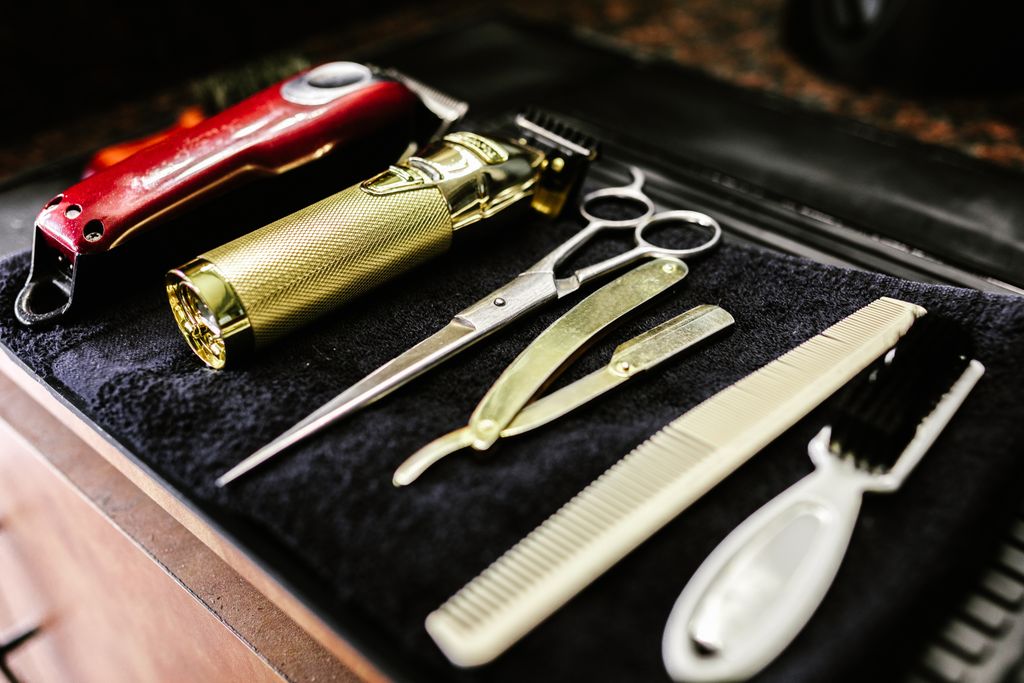
Barber school is the standard route and the only route in some states. You attend a licensed school full time or part time, work through a set curriculum, and practise on fellow students and then on real clients in the school’s student shop, under an instructor’s supervision. A good program covers haircutting with clippers and scissors, fades and blending, beard trimming and shaping, straight-razor shaving, shampooing, chemical services such as colour and perming where the license allows them, sanitation and infection control, state law, and the business side of barbering.
The strengths of school are structure and speed. The curriculum is laid out in order, the hours are counted for you, the school prepares you for the state exam, and a full-time program usually takes 9 to 12 months. Schools also give you a wide range of practice: you cut many different heads, not just the clients of one shop. The downside is cost, and the fact that a school shop is not quite a real barbershop — the pace is slower, and you do not learn the full reality of running a chair, managing a booking book, and keeping clients coming back. Before you enroll, visit the school, watch a class, ask about the exam pass rate, ask what the tuition covers, and talk to recent graduates if you can. Confirm the total cost in writing, including the kit, textbooks, and exam fees, and compare more than one school.
Apprenticeship
An apprenticeship means learning in a working barbershop under a licensed barber, while earning a wage. You start with simple work — sweeping, cleaning tools, washing hair, watching cuts — and gradually take on more: basic cuts, then fades, then beard work and shaves, until you can handle a full client on your own. The great strength of an apprenticeship is real experience from day one. You learn the pace of a busy shop, how to talk to clients, how to handle a difficult cut or an unhappy customer, and how a shop actually makes money. You also avoid tuition, because you are paid while you learn, even if the wage is low at first.
The trade-off is time and uneven quality. Apprenticeships take longer, because the required hours are higher and you are learning between real jobs. The quality of your training depends entirely on your mentor: a good barber who teaches carefully is worth more than any classroom, but a busy shop owner may leave you sweeping floors for months. Apprenticeships are also not available everywhere. Some states, including Texas, Illinois, and Florida, do not accept apprenticeship hours for a barber license, so school is the only option there. And even in states that allow apprenticeships, you usually need a registered apprentice permit before you start, a sponsor barber who meets the board’s experience requirements, and a registered shop. Check all of that with your board before you agree to anything, and get the arrangement in writing: what you will be taught, how your hours will be recorded, and what you will be paid.
The Combined Route
Some barbers combine the two routes: they complete school to learn the full range of the trade and pass the exam, then work as a junior barber in a busy shop to build speed and client skills. Others start as an apprentice, then take a short course to fill gaps in theory or exam preparation. If you can arrange it, the combined route is often the strongest, because it pairs the structure of school with the reality of the shop floor. Whatever route you choose, keep learning after you qualify — new styles, tools, and products appear constantly, and the barbers who stay in demand are the ones who keep their skills fresh.
Step 4: What Barber School Teaches You
Whatever route you take, your training should cover the same core skills. If your course or apprenticeship skips one of these areas, fill the gap with further training before you work on your own.
- Clipper cutting and fades: using guards, blending lengths smoothly, and creating clean fade lines without visible steps.
- Scissor cutting: cutting with shears and thinning shears, layering, texturising, and working with longer hair.
- Beard trimming and shaping: trimming to the face shape, lining up the edges, and keeping the beard neat between visits.
- Straight-razor shaving: preparing the skin, handling a razor safely, giving a close shave, and finishing with aftershave care.
- Sanitation and infection control: disinfecting tools, handling blood exposure safely, keeping the work area clean, and following your state board’s hygiene rules.
- Hair and scalp care: shampooing, recognising common scalp and skin conditions, and knowing when to refer a client to a doctor rather than treating a problem yourself.
- Chemical services: colouring, lightening, perming, and relaxing, where your state license allows them, including strand tests and safety precautions.
- Client consultation and communication: listening to what a client wants, explaining what will suit them, managing expectations, and handling complaints calmly.
- Shop skills: booking, payments, product advice, and keeping records.
Practice each skill until it is reliable, not just until you have done it once. A fade that looks good on a mannequin head can look very different on a real person with an unusual hairline or a scar. Speed comes with repetition, and so does the judgment to know when to slow down, check your work, and ask the client how it looks.
How Long Does Barber School Take?
A full-time barber school program usually takes 9 to 12 months, depending on your state’s required hours and whether you attend full time or part time. A 1,000-hour program at 30 to 40 hours a week finishes in roughly 7 to 9 months; a 1,500-hour program takes about a year full time. Part-time and evening programs take longer, often 15 to 18 months, but they let you keep a job while you train. Apprenticeships usually take around two years, because the hour requirement is higher and you are working at a shop’s pace. Add exam waiting time and the license application on top of the training itself, so plan for a few extra weeks after your last training day before you can legally charge for a cut.
Step 5: How Much Does It Cost to Become a Barber?
Costs vary widely by state, school, and route, and they change from year to year, so the figures in this section are typical ranges reported in current training guides, not fixed prices. Confirm every current fee with the school and your state board before you commit.
Barber school tuition commonly falls in the range of about $5,000 to $20,000 for a full program, with public community college and vocational programs often at the lower end and private academies at the higher end. Some programs cost less and some cost more, so the only figure that matters is the written quote from the school you are considering. Ask what the tuition includes: instruction hours, the starter kit, textbooks, and exam preparation are often bundled, but sometimes the kit or the exam fee is charged separately. A starter kit of clippers, trimmers, shears, razors, capes, and combs commonly costs several hundred dollars — guides often put it at roughly $300 to $1,000 — and you will replace blades, guards, and worn tools during your first year. State application, exam, and license fees are usually modest by comparison, often in the range of about $50 to $300 in total, but the exact amount depends on your state, so check your board’s fee list.
The apprenticeship route costs far less upfront, because you pay little or no tuition and earn a wage while you train, but it costs more time. That trade is the heart of the decision: school costs money and saves time; an apprenticeship saves money and costs time. Either way, make a realistic budget before you start. Add up tuition or lost wages, the kit, exam and license fees, travel, and living costs during training, and check what financial aid is available. Some schools accept federal financial aid, some states offer workforce grants, and some employers help with training costs. Ask the school’s financial aid office what you qualify for, and do not borrow heavily for training without a clear plan for paying it back from your first year’s earnings.
Step 6: Pass the Licensing Exam
After you finish your training hours, you must pass your state’s licensing exam before you can work as a barber. Most states use two parts: a written theory exam and a hands-on practical exam. A few states, including California since 2022 and Illinois, use a written exam only.
The written exam tests your knowledge: sanitation and infection control, anatomy and physiology, hair and skin science, shaving, haircutting theory, chemical services, and your state’s laws and rules. Many states use an exam written by the National-Interstate Council of State Boards of Cosmetology, known as NIC. The NIC National Barber Theory exam has 60 questions, of which 50 count toward your score, and you get 90 minutes. Its four areas are weighted as follows: scientific concepts 35 percent, implements and equipment 10 percent, hair care services 40 percent, and facial hair and skin care services 15 percent. Some states use their own exam instead — Texas writes its own barber exam, delivered by PSI, and Pennsylvania runs a state exam through Pearson VUE — so download your state’s Candidate Information Bulletin, the official exam guide, and study from that document, not from a generic practice book.
The practical exam, where your state requires one, is a timed test in front of an examiner. You work through set tasks such as setting up your work area, cutting hair, shaving with a straight razor, handling a blood exposure procedure, and, in the full NIC exam, chemical services such as permanent waving. Each task has a time limit, and you are marked on technique, safety, sanitation, and the result. You bring your own kit, labelled as the bulletin requires, and you must follow the rules exactly — including the order of tasks and the way you handle and dispose of used blades. Read the bulletin twice, practise every task against the clock, and ask your instructor to run a mock exam so the real one feels familiar.
How to Prepare for the Exam
Start preparing while you are still in training, not after you finish. Keep a notebook of the theory topics you find hardest — infection control, skin disorders, and chemical safety catch many candidates out — and review them little and often rather than cramming in the last week. Practise the practical tasks on real people, not only on mannequins, and time yourself. Learn the exact wording of your state’s rules, because exam questions often test the details: how long to disinfect a tool, what to do after a nick, and which services your license does and does not cover. If you fail, do not panic. Most states let you retake the exam after a waiting period, and your score report shows which areas to study. Use it, practise the weak areas, and sit the exam again.
Step 7: Apply for Your License and Get Your First Job
Passing the exam is not the last step. You must apply for your license, pay the fee, and wait for the board to issue it before you can legally charge for barbering. The application usually asks for proof of completed training, your exam result, and sometimes a background check. Some states also ask for proof of age and education. Keep copies of everything you submit, and note your license number and renewal date when it arrives. Renewal periods vary — California, for example, renews a barber license every two years — so check your state’s schedule and put the renewal date in your calendar on the day your license arrives.
Your first job is usually as an employee in an established barbershop. This is the best place to learn the trade after school: you get steady clients, you watch experienced barbers work, and someone else handles the bookings, the rent, and the marketing. When you look for a shop, visit in person, watch how the barbers treat clients, and ask what support a new barber gets. A shop that gives you a mentor, lets you build your client base gradually, and pays fairly is worth more than a shop that offers a slightly higher wage but leaves you on your own. If you are starting from scratch, how to get a job with no experience has practical advice on applications, interviews, and making a good first impression.
Build your reputation from the first week. Turn up on time, keep your station clean, listen to every client, and take pride in the finish of every cut, even the quick ones. Ask satisfied clients to book their next visit before they leave, and ask them to leave a review or recommend you to a friend. Keep a simple record of what each regular likes — their usual style, the guard length, how they like their beard — so you can repeat it without asking every time. That attention to detail is what turns a walk-in into a regular, and regulars are the foundation of a barber’s income.

Step 8: Booth Rental, Your Own Shop, and Growing Your Income
After a year or two of experience, many barbers move from employment to booth rental. Under booth rental, you rent a chair in a shop for a fixed weekly or monthly fee and keep the rest of what you earn. It gives you more freedom — you set your hours and keep your tips and product sales — but it also gives you more responsibility. You must find your own clients, handle your own bookings, pay your own tax and insurance, and cover slow weeks when the rent is still due. Before you move to booth rental, check that your client base is big enough to cover the rent in a quiet week, not just a busy one, and check your state’s rules, because some states have extra requirements for booth renters.
Owning your own shop is a bigger step again. It means finding premises, passing health and safety inspections, buying chairs and equipment, hiring and managing other barbers, and marketing the shop. Many successful shop owners start small — one chair, then two — and grow only when the client base supports it. Do not rush this step. A barber with a full book and a good reputation can open a shop with confidence; a new barber with no clients cannot.
There are other ways to grow your income without owning a shop. Specialising helps: fades and beard work, classic hot-towel shaves, or styling for weddings and events can all command higher prices than a basic cut. Selling products you genuinely recommend, offering packages such as a cut plus beard trim, and building an online booking page with photos of your work all help. Social media is useful if it shows your real work — clear photos of cuts you have done, with the client’s permission — rather than stock images. And never stop training: short courses in new cutting techniques, clipper work, and razor skills keep your work sharp and give regular clients a reason to stay.
Common Mistakes New Barbers Make
Enrolling Before Checking the State Rules
The most expensive mistake is paying for training that your state board does not accept. Always confirm your state’s hour requirement, approved school list, and exam rules in writing from the board before you enroll or sign an apprenticeship agreement.
Choosing a School on Price Alone
A very cheap course that teaches little, or a school with a poor exam pass rate, wastes more than it saves. Compare what a course actually covers, how much hands-on practice it includes, what the exam pass rate is, and what past students say. The same applies to tools: cheap clippers that cut unevenly will cost you clients.
Rushing Into Working Alone
School is not shop experience. New barbers who rent a chair before they have enough supervised practice are the ones who give uneven fades, nick clients with a razor, and lose customers. Work as an employee until you can handle a full day of clients confidently and know when to ask for help.
Cutting Corners on Sanitation
Sanitation is not a formality — it is part of the license exam and part of the law. Skipping disinfection between clients, reusing a blade, or working with dirty tools puts clients at risk and can cost you your license. Build clean habits from the first day of training so they are automatic by the time you are busy.
Ignoring the Business Side
Many new barbers are good with clippers and bad at business. They do not answer messages promptly, they have no booking system, they price jobs inconsistently, and they never ask for reviews. The cutting is the product, but the business is what feeds you. Answer clients quickly, turn up on time, explain prices before you start, and follow up after the first visit.
Undercharging to Win Clients
Charging very little to fill your chair feels helpful at first, but it teaches clients to expect a low price and makes it hard to raise your rates later. Price your work fairly for your skill level and your area, and raise your prices as your skill and demand grow. Clients who value good work will pay for it.
Getting Started Checklist
- Find your state board’s official website and read its licensing requirements
- Note the required training hours, minimum age, and education requirements
- Check whether your state accepts apprenticeship hours, and how many it requires
- Decide between barber school, an apprenticeship, or a combination of both
- Check the school or apprenticeship program against the board’s approved list
- Compare total costs in writing: tuition, kit, textbooks, and exam and license fees
- Learn the core skills: clipper and scissor cutting, fades, beard work, shaving, and sanitation
- Get supervised practice on real clients before working on your own
- Download your state’s Candidate Information Bulletin and prepare for the written and practical exams
- Pass the exam, apply for your license, and note the renewal date
- Get your first job as an employee in a good barbershop
- Build a client base, collect reviews, and keep a record of what each regular likes
- Keep learning: new styles, techniques, and short courses each year
Conclusion
Becoming a barber is a realistic, achievable career change that rewards careful hands, honest work, and good people skills. The steps are clear: check your state board’s rules first, complete approved training through barber school or an apprenticeship, learn the core skills properly, pass your state’s licensing exam, and then build your career one client at a time. None of these steps is difficult on its own — the challenge is doing them in the right order and not cutting corners, especially on the state rules and on sanitation.
Take the time to do it well. A well-trained barber with a good reputation gets repeat clients and referrals, while a rushed one gets complaints and empty chairs. Verify every fee, hour requirement, and exam rule on your state board’s official pages before you spend money, and confirm costs with the school in writing. If you enjoy practical work, talking to people, and seeing the result of your skill in the mirror at the end of every appointment, barbering can give you a trade you genuinely own — and a career that grows with you.
FAQ
How long does it take to become a barber?
Most full-time students finish barber school in about 9 to 12 months, depending on their state’s required hours. A 1,000-hour program takes roughly 7 to 9 months full time, and a 1,500-hour program takes about a year. Apprenticeships usually take longer, often around two years, because the required hours are higher. Add a few weeks for the exam and the license application after training ends.
How many hours of training do I need to become a barber?
It depends on your state. Common school-hour requirements include 1,000 hours in Texas and California, 900 hours in Florida, 1,200 hours in Maryland, 1,500 hours in Georgia, and 1,800 hours in Ohio. Apprenticeship routes usually require more hours — for example, 3,200 hours in California and 3,000 hours in Georgia. Always confirm the current figure on your state board’s official website before you enroll.
Do I need a license to become a barber?
Yes. Every US state requires a barber license before you can charge for cutting hair. The requirements differ by state, but they usually include completing approved training, passing a written theory exam and usually a practical exam, and applying to your state board with the required fee. Some states, such as California, now use a written exam only.
Is barber school or an apprenticeship better?
Both routes work, and many barbers combine them. Barber school is faster and more structured, and it is the only option in states that do not accept apprenticeship hours, such as Texas, Illinois, and Florida. An apprenticeship lets you earn a wage while you learn in a real shop, but it takes longer and the quality depends on your mentor. The combined route — school followed by work in a busy shop — is often the strongest path.
How much does barber school cost?
Tuition commonly falls in the range of about $5,000 to $20,000 for a full program, with public community college programs often at the lower end and private academies at the higher end. A starter kit commonly costs several hundred dollars, and state application, exam, and license fees are usually in the range of about $50 to $300 in total. Confirm the exact total in writing with the school and your state board, because prices vary and change over time.