Best Trade Schools: Find the Right Program by Trade
Choosing the best trade schools is not about finding one school that tops a list. It is about finding the right program for the trade you want to learn, in a format you can afford, with training that employers in your area actually respect. A school that is excellent for welding may be a poor choice for HVAC, and a program that works for a full-time student may not work for someone who needs to keep earning while they train. This guide breaks down the strongest trade school options by trade — electrician, plumbing, HVAC, welding, automotive, carpentry, and healthcare trades — and explains how to compare them fairly.
Trade schools, also called vocational schools or technical schools, teach hands-on skills for a specific job. Instead of four years of general college classes, most trade programs run from a few months to about two years and focus almost entirely on the skills you will use at work. That shorter path is the main attraction: you learn a trade, earn a certificate or diploma, and start working sooner. But programs vary widely in quality, cost, and job outcomes, so the choice deserves real research before you enroll or pay anything.
Rankings and prices change every year, and schools update their programs, tuition, and schedules regularly. This article describes programs in general terms and does not list specific rankings or prices, because any number printed here could be out of date by the time you read it. Always confirm current tuition, program length, start dates, and job placement claims on the school’s official website and on government pages before you commit.
Table of Contents
Quick Answer
The best trade schools are the ones that offer accredited, hands-on training in your chosen trade, with experienced instructors, modern equipment, and a clear path to certification or an apprenticeship. The strongest programs by trade are electrician training, plumbing, HVAC, welding, automotive technology, carpentry, and healthcare trades such as medical assisting and dental assisting. Compare schools on accreditation, program length, hands-on hours, certification exam preparation, job placement support, and total cost — not on advertising claims. Always verify current tuition and outcomes on the school’s official website and through government sources before enrolling.
What Is a Trade School?
A trade school is a post-secondary school that trains students for one specific skilled job. Unlike a traditional college, where you take general education classes alongside your major, a trade school focuses almost all of its time on the trade itself. You spend your days in workshops, labs, and simulated job sites, learning by doing.
Most trade school programs lead to a certificate or diploma rather than a degree, although some schools also offer associate degrees in technical fields. Programs usually take between six months and two years to complete, depending on the trade and whether you study full time or part time. Some programs are designed for people who already work in the trade and need formal training or a license; others are built for complete beginners.
Trade schools are different from apprenticeships, although the two often work together. An apprenticeship is paid on-the-job training combined with classroom instruction, usually sponsored by an employer or a union. A trade school is classroom and lab training first, with the job search coming after graduation. Many students do both: they complete a trade school program and then enter an apprenticeship, or they attend school while working as an apprentice. We explain the difference in more detail later in this guide.
Who Trade School Is For
Trade school suits people who want practical, job-ready skills without spending four years in college. It is a good fit if you learn best by doing rather than by reading textbooks, if you want to start earning sooner, or if you already know which trade interests you. It also suits career changers: many trade school students are adults in their twenties, thirties, and forties who want a more stable or better-paying career.
Trade school is not for everyone. If you are unsure what career you want, a general college program or a period of exploring options may serve you better. And if your chosen field requires a university degree — such as engineering, law, or medicine — a trade school certificate will not replace it. Before choosing a school, spend time on choosing a career path (https://careerschooled.com/how-to-choose-a-career-path/) so you pick a trade you will actually enjoy for years, not just a program that sounds good in an advert.
How to Choose the Best Trade School
There is no single best trade school for everyone. The right school depends on your trade, your budget, your schedule, and where you live. Use the checks below to compare any school fairly.
Check Accreditation First
Accreditation is the most important quality check. An accredited school has been reviewed by an independent agency and meets recognised standards for teaching, facilities, and student outcomes. Accreditation also matters for financial aid: in the United States, you generally need to attend an accredited school to qualify for federal student aid. Ask the school which agency accredits it, then verify that claim independently on the accreditor’s own website. Do not take the school’s word for it alone.
Look at Hands-On Training Hours
A trade is learned by doing. A good program spends most of its time in workshops and labs, not in lectures. Ask how many hours of hands-on practice the program includes, what equipment you will train on, and whether the equipment matches what employers in your area actually use. Outdated equipment is a warning sign: if the school’s welding booths, diagnostic tools, or HVAC trainers are decades old, your training will be too.
Ask About Instructors
Good trade instructors have real experience in the trade, not just teaching qualifications. Ask whether instructors have worked in the field, how long they have taught, and whether they hold current licenses or certifications in the trade. A teacher who spent twenty years as a working electrician will teach you things a textbook cannot.
Check Certification and Licensing Preparation
Many trades require a license or a certification exam before you can work independently. A strong program prepares you for the specific exam or license in your state. Ask the school which certifications its graduates earn, what the exam pass rate is, and whether exam fees are included in tuition. If a school cannot name the certification its program leads to, that is a serious red flag.
Compare Total Cost, Not Just Tuition
Tuition is only part of the cost. Ask about the full price: tools, textbooks, uniforms, lab fees, exam fees, and any other charges. Some programs require you to buy a large tool kit; others include it. Get the total in writing before you enroll, and compare it across schools on the same basis. Remember that rankings and prices change yearly, so confirm current figures on the school’s official website rather than relying on any article, including this one.
Ask About Job Placement Support
A good school helps graduates find work. Ask what job placement support looks like in practice: does the school have relationships with local employers, does it run a job board or career fairs, and does it help with resumes and interviews? Ask for the school’s job placement rate — and ask how that rate is calculated. Some schools count any job, including work unrelated to the trade. You want to know how many graduates find work in the trade itself.
Visit Before You Enroll
If you can, visit the campus in person. Walk through the workshops, look at the equipment, talk to current students, and sit in on a class if the school allows it. A visit tells you more in an hour than a website tells you in a week. If a school pressures you to enroll on the spot, refuses a tour, or will not let you speak to students, walk away.
Best Trade Schools by Trade
The sections below describe what strong training looks like in each major trade, and what to look for when you compare programs. These are descriptions of program types, not rankings: the best program for you depends on your location, budget, and goals.
Electrician Training
Electrician programs teach you to install, maintain, and repair electrical systems in homes, businesses, and industrial sites. A typical program covers electrical theory, wiring, circuits, the National Electrical Code, blueprint reading, and safety procedures. Most of the learning is hands-on: you wire practice panels, install circuits, and troubleshoot faults under supervision.
Electrician training usually takes between nine months and two years at a trade school, depending on the program and whether you study full time. But school alone does not make you a licensed electrician in most states. After school, you normally work as an apprentice for several years, then pass a licensing exam to become a journeyman electrician. A good program explains this path clearly and prepares you for the apprenticeship stage, including helping you find one.
When comparing electrician programs, check whether the program’s classroom hours count toward your state’s apprenticeship requirements. In some states, approved trade school hours reduce the time you must spend as an apprentice. Also check whether the school teaches the current edition of the National Electrical Code and whether its labs include residential, commercial, and industrial wiring — not just one of the three.
Electricians are needed almost everywhere, and demand tends to follow construction and renovation activity in your area. The U.S. Bureau of Labor Statistics (https://www.bls.gov/) publishes employment and wage data for electricians, and it is the most reliable source for current figures in your state before you commit to a program.

Plumbing
Plumbing programs teach you to install and repair water supply systems, drainage, gas lines, and fixtures in homes and commercial buildings. Training covers pipefitting, soldering, blueprint reading, local plumbing codes, water heater installation, and drain cleaning. Like electrician training, plumbing is heavily hands-on: you will spend most of your time in a lab working with real pipes, fittings, and fixtures.
Plumbing programs at trade schools usually run from several months to about two years. As with electrical work, most states require an apprenticeship and a licensing exam after school before you can work independently as a plumber. A good program tells you this up front, explains your state’s licensing steps, and helps you connect with apprenticeship opportunities.
When you compare plumbing programs, ask whether the training covers both residential and commercial plumbing, whether it includes gas fitting where your state requires it, and whether the school’s labs use the materials common in your area — copper, PEX, PVC, and cast iron. Also ask about the school’s record of graduates passing the state licensing exam.
Plumbing is a trade where practical problem-solving matters as much as technical knowledge. Every building is different, and a plumber often has to diagnose a problem in an old system with incomplete information. The best programs teach that diagnostic thinking alongside the technical skills.
HVAC (Heating, Ventilation, and Air Conditioning)
HVAC programs train you to install, maintain, and repair heating, cooling, and ventilation systems. Training covers refrigeration theory, electrical controls, ductwork, heat pumps, furnaces, air conditioning units, and the safe handling of refrigerants. HVAC technicians also need EPA certification to handle refrigerants legally in the United States, and good programs include preparation for that exam.
HVAC programs typically take between six months and two years. Because HVAC work is seasonal — air conditioning in summer, heating in winter — technicians often have steady work year-round, moving between installation, maintenance, and repair jobs. The trade is also changing fast: heat pumps, smart thermostats, and energy-efficient systems are becoming standard, so a program that still teaches only old furnace technology will leave you behind.
When comparing HVAC schools, check whether the program covers both heating and cooling, whether it includes heat pump training, and whether EPA certification preparation is built in. Ask what equipment you will train on and whether the school has working systems you can practise installing and servicing, rather than just classroom diagrams. Also ask whether the program covers the electrical and controls side of HVAC work, because modern systems are as much about electronics as about mechanical parts.
Welding
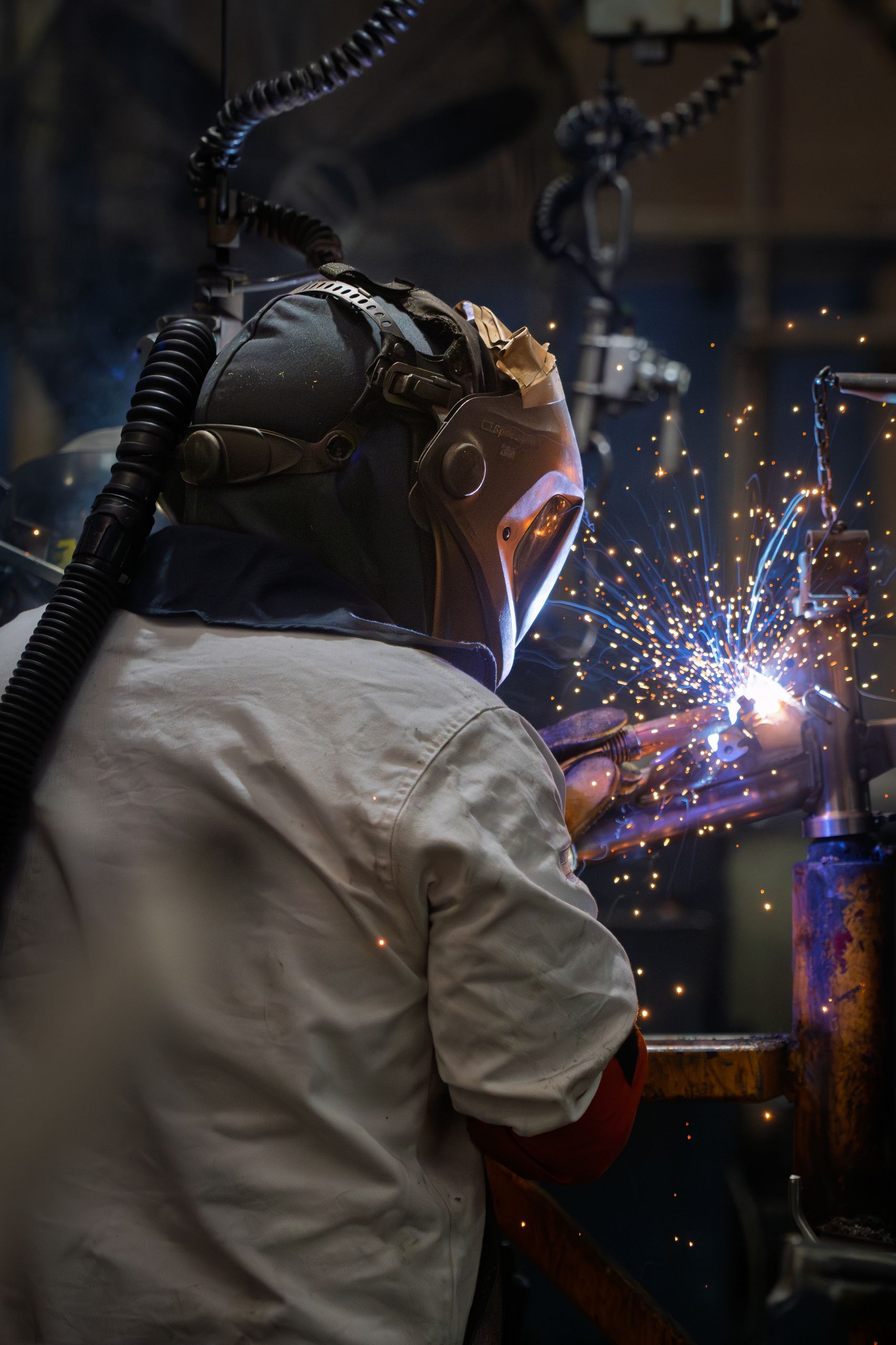
Welding programs teach you to join metal using heat and pressure, and they are among the shortest trade programs available — many take six months to a year. Training covers the main welding processes: shielded metal arc welding (stick), gas metal arc welding (MIG), gas tungsten arc welding (TIG), and flux-cored arc welding. You will spend almost all of your time in a welding booth, practising joints and positions until your welds are strong, clean, and consistent.
Welding is a trade where the quality of your hands-on practice matters more than anything else. A good program gives you many hours of booth time every week, not a few hours a month. Ask how many welding booths the school has, how much time each student gets in a booth, and which welding processes and positions the program covers. A program that only teaches one process limits your job options.
Certification matters in welding too. Many employers ask for a certification from the American Welding Society or a similar body, and some industries — such as pipeline or structural welding — have their own testing standards. A good school prepares you for the certifications employers in your area ask for, and lets you practise the exact test welds you will be asked to produce.
Welders work in construction, manufacturing, shipbuilding, automotive repair, and energy, so job options vary by region. Before enrolling, check which industries hire welders near you and whether the school’s program matches those industries’ needs.
Automotive Technology
Automotive technology programs train you to diagnose, maintain, and repair cars and light trucks. Modern training covers far more than oil changes and brake pads: you will learn engine diagnostics, electrical systems, transmissions, suspension, and the computer systems that control nearly everything in a modern vehicle. As electric vehicles become more common, good programs are adding hybrid and EV training as well.
Automotive programs usually take one to two years. A strong program gives you access to a wide range of vehicles to work on — not just one or two old cars — and teaches you to use professional diagnostic equipment. Ask what vehicles the school’s shop has, whether students work on real customer cars under supervision, and whether the program prepares you for ASE certification exams, which many employers look for.
When comparing automotive schools, check whether the program includes EV and hybrid training, because that is where the industry is heading. Also ask about the school’s connections with local dealerships and repair shops, since many automotive graduates get their first job through a school placement or an internship.
Carpentry
Carpentry programs teach you to build, install, and repair structures and fixtures made from wood and other materials. Training covers framing, roofing, drywall, cabinetry, finish work, blueprint reading, and the safe use of power tools. Carpentry is one of the oldest trades, and it is also one of the broadest: residential carpenters, commercial carpenters, and finish carpenters do quite different work.
Carpentry programs at trade schools usually run from several months to about two years. The best programs combine classroom instruction with real building projects — constructing walls, roofs, and cabinets that you can see and measure. Ask whether students work on real construction projects, whether the program covers both rough carpentry and finish carpentry, and whether it includes training in reading construction drawings.
Carpentry skills are in demand wherever homes and buildings are being built or renovated. Many carpenters eventually start their own business, so a program that includes basic business and estimating skills — how to quote a job, order materials, and manage a small project — adds real value.

Healthcare Trades
Healthcare trade programs are a different kind of trade school: they train you for support roles in medical settings rather than construction or manufacturing. Common programs include medical assisting, dental assisting, pharmacy technician, phlebotomy, and medical billing and coding. These programs are often shorter — many take under a year — and they lead to roles in clinics, hospitals, dental offices, and pharmacies.
Medical assisting is one of the most popular healthcare trade programs. Medical assistants handle both clinical tasks, such as taking vital signs and preparing patients, and administrative tasks, such as scheduling and updating records. Dental assisting is similar, with a focus on dental procedures and patient care. Pharmacy technician and phlebotomy programs are more specialised: pharmacy technicians help prepare and dispense medication, while phlebotomists draw blood for testing.
When comparing healthcare trade programs, check whether the program includes an externship — a period of supervised work in a real clinic or office. An externship is where you turn classroom knowledge into real experience, and it is often how graduates get hired. Also check whether the program prepares you for a recognised certification exam, such as the Certified Medical Assistant exam, and whether the school is accredited. Healthcare employers check credentials carefully, so accreditation and certification matter more here than in some other trades.
Trade School vs. Apprenticeship: Which Is Right for You?
Many people wonder whether they should go to trade school or start an apprenticeship. Both paths lead to the same destination — a skilled trade career — but they work differently.
Trade school is classroom and lab training first. You pay tuition, you study full time or part time, and you graduate with a certificate or diploma. The advantage is speed and structure: you learn the theory and the hands-on skills in a concentrated program, and you can often finish in under two years. The disadvantage is cost, and the fact that you still need work experience — usually an apprenticeship — after graduation before you can work independently in licensed trades.
An apprenticeship is paid work from day one. You are hired by an employer or a union, you earn a wage while you learn, and you attend classroom training alongside your job. Apprenticeships usually last three to five years. The advantage is that you earn while you learn and graduate with years of real experience. The disadvantage is that apprenticeships can be hard to get into — there are often more applicants than places — and you may need some basic skills or a pre-apprenticeship course to be accepted.
The two paths are not rivals. Many people do both: they complete a trade school program to learn the basics and improve their chances, then enter an apprenticeship with a stronger application. Some trade schools have formal links with apprenticeship programs and help their graduates apply. Ask any school you consider whether it has apprenticeship partnerships and how many of its graduates enter apprenticeships after graduation.
If you are starting with no experience at all, the combination of trade school and apprenticeship is worth considering seriously. It gives you structured training first, then paid experience. Our guide on how to get a job with no experience (https://careerschooled.com/how-to-get-a-job-with-no-experience/) covers the practical steps for breaking into a new field from zero, including how to present your training to employers.
How Much Does Trade School Cost?
Trade school costs vary enormously by school, program, and location, and they change every year. A short certificate program at a public community college can cost far less than a two-year program at a private technical school. For that reason, this article does not quote specific prices — any figure printed here could be wrong by the time you read it, and a wrong price is worse than no price.
What you should do instead is compare the total cost of each program you consider, using the same checklist for every school:
- Tuition per program, not per month or per semester, so you compare like with like
- Tools and equipment you must buy, and whether the school supplies them
- Textbooks, uniforms, and lab fees
- Certification or licensing exam fees, and whether they are included
- Any charges for retaking a class or an exam
Then look at the funding options. In the United States, accredited schools may qualify you for federal student aid, including grants and loans. Many states have their own grants for vocational training, and some employers and unions sponsor training or reimburse tuition for workers in their trade. Veterans may be able to use GI Bill benefits for approved trade programs. Ask each school’s financial aid office what aid its students typically receive, and check the official government pages for current rules — do not rely on a school’s marketing material alone for financial advice.
One more warning about cost: be cautious of any school that pressures you to sign a loan agreement quickly, or that quotes a low monthly payment without showing the total cost. Always see the full price in writing before you enroll, and take the paperwork home to read before you sign anything.
How Long Does Trade School Take?
Program length depends on the trade and on whether you study full time or part time. As a rough guide:
- Welding, HVAC, and some healthcare programs can take as little as six months to a year.
- Electrician, plumbing, automotive, and carpentry programs commonly take one to two years.
- Part-time and evening programs take longer, but they let you keep working while you train.
Remember that in licensed trades such as electrical and plumbing, graduation is not the end of the road. You will usually need several years of apprenticeship and a licensing exam before you can work independently. Factor that into your plans: the school program is the first step, not the whole journey.
Common Mistakes When Choosing a Trade School
Choosing by Advertisements Alone
Trade schools advertise heavily, and their adverts focus on the best possible outcomes. Do not choose a school because its advert is impressive. Compare schools on accreditation, hands-on hours, certification preparation, and graduate outcomes — the things that actually determine whether the program works.
Ignoring Accreditation
An unaccredited school may still teach useful skills, but its certificate may not be recognised by employers or licensing bodies, and you may not qualify for federal financial aid. Always verify accreditation independently before you enroll.
Not Checking Licensing Requirements in Your State
Licensing rules vary by state. A program that leads to a license in one state may not meet the requirements in another. Before you enroll, check your state’s licensing board for your trade and confirm that the program you are considering meets its requirements.
Enrolling Without Visiting
A website can hide a lot. A school with small, crowded workshops, old equipment, or unhappy students will not show that online. Visit in person, talk to students, and look at the facilities with your own eyes before you commit.
Borrowing More Than the Career Can Repay
Trade careers pay well, but they do not all pay the same, and starting wages are lower than experienced wages. Before you take on student debt, look up the realistic starting pay for your trade in your area — the Bureau of Labor Statistics is a good source — and work out whether the loan payments fit that income. A program that costs more than several years of entry-level earnings is a risky choice.
Picking a Trade You Do Not Enjoy
A trade is a career you will do every day, often physically, for decades. Picking a trade only because someone said it pays well is a mistake if you hate the work. Spend time shadowing a worker, watching videos of the daily job, or taking a short introductory course before you commit to a full program.
Getting Started Checklist
- Decide which trade interests you, based on the work itself and not only on pay
- Check your state’s licensing and certification requirements for that trade
- Make a shortlist of schools in your area that teach that trade
- Verify each school’s accreditation independently on the accreditor’s website
- Visit each school in person, tour the workshops, and talk to students and instructors
- Ask about hands-on hours, equipment, and which certifications the program prepares you for
- Get the total cost in writing, including tools, fees, and exam charges
- Check what financial aid, grants, or employer sponsorship is available
- Ask about job placement support and how many graduates find work in the trade
- Confirm current tuition, dates, and program details on the school’s official website
- Check apprenticeship options for your trade and whether the school helps graduates apply
- Enroll only after you have compared at least two schools on the same checklist
Conclusion
The best trade schools are not the ones with the biggest adverts or the highest rankings. They are the ones that give you real, hands-on training in the trade you want, taught by experienced instructors, on equipment employers actually use, with a clear path to certification, an apprenticeship, or a first job. Electrician, plumbing, HVAC, welding, automotive, carpentry, and healthcare trade programs each offer a genuine route into a skilled, in-demand career — but only if the program you choose is accredited, well equipped, and honest about costs and outcomes.
Take your time with the choice. Shortlist two or three schools, verify their accreditation, visit them in person, compare total costs, and confirm every important figure on the school’s official website and on government pages. A trade school is an investment in your working life, and a few weeks of careful research now can save you years of regret later. Pick your trade, pick your school carefully, and start building a career with your hands.
FAQ
What is the best trade school for electricians?
There is no single best electrician school, because the right program depends on your state, your budget, and your schedule. The best electrician programs are accredited, teach the current National Electrical Code, offer extensive hands-on wiring practice, and prepare you for your state’s apprenticeship and licensing path. Compare schools on accreditation, hands-on hours, and graduate licensing exam results, and confirm current details on each school’s official website.
How long does it take to finish trade school?
Most trade school programs take between six months and two years, depending on the trade and whether you study full time or part time. Welding, HVAC, and some healthcare programs can be as short as six months to a year, while electrician, plumbing, automotive, and carpentry programs commonly take one to two years. In licensed trades, you will usually need several years of apprenticeship after school before you can work independently.
Do trade schools help you get a job after graduation?
Good trade schools offer job placement support, such as employer connections, career fairs, resume help, and interview preparation. But the quality of that support varies widely, so ask each school how its placement service works in practice and how many graduates find work in the trade itself. A school’s placement rate can be misleading if it counts any job, including work unrelated to the trade.
Is trade school better than an apprenticeship?
Neither is better in general — they suit different people. Trade school gives you structured, concentrated training in under two years but costs tuition and is followed by work experience. An apprenticeship pays you from day one and gives you years of real experience, but places are competitive and the program lasts three to five years. Many people do both: trade school first, then an apprenticeship. Ask the schools you consider whether they help graduates enter apprenticeships.
How much does trade school cost?
Costs vary widely by school, program, and location, and they change every year, so this article does not quote specific prices. A short program at a public community college usually costs far less than a two-year program at a private technical school. Compare the total cost of each program — tuition, tools, fees, and exam charges — and confirm current figures on the school’s official website. Check what federal aid, state grants, or employer sponsorship you may qualify for before you enroll.