
Best Online Courses for Beginners (2026): Skills That Pay
The best online courses for beginners are the ones that take you from zero to a real, usable skill — not the ones with the flashiest adverts or the longest list of video hours. A good beginner course explains things in plain language, gives you something to practise after every lesson, and leaves you with work you can show an employer or a client. A bad one leaves you with a certificate and no idea how to actually do the job.
That distinction matters more than ever. Online learning has exploded, and there are now thousands of courses competing for your attention. Some are excellent and free. Some cost hundreds of dollars and teach very little. Some are perfect for a complete beginner, and some quietly assume you already know the basics. This guide sorts the real options by skill — coding, digital marketing, data, design, business, and languages — and explains when free is enough, when paying makes sense, and when a certificate actually helps you get hired.
Table of Contents
Quick Answer
The best online courses for beginners depend on the skill you want to learn, but the strongest starting points are: coding (Python or web development), digital marketing (SEO and social media), data (spreadsheets and data analysis), design (graphic design basics), business (starting a small business or project management), and languages (a language you will actually use). Start with a free course to test your interest, switch to a paid course only when you need structure, feedback, or a recognised credential, and judge every course by whether it gives you practice and a finished project — not by how many videos it contains.
How to Pick the Right Course (Before You Pay Anything)
Most people pick a course backwards: they choose a platform first, then a topic, then hope it works out. Flip that order around and you will waste far less time and money.
Start With the Skill, Not the Platform
Ask yourself what you want to be able to do in three months. “Learn to code” is too vague. “Build a simple website for a small business” is a real goal. “Learn marketing” is vague. “Run a basic ad campaign and read the results” is a real goal. A clear goal tells you exactly which course to look for — and tells you when you are done.
Your goal should connect to a job, a freelance service, or a business idea. If you cannot name what the skill will earn you or help you do, the course will be hard to finish, because motivation runs out fast when there is no finish line.
Check What the Course Actually Teaches You to Do
Read the course syllabus before you enrol. A good beginner course lists concrete skills: “write a Python script that reads a spreadsheet,” “design a logo in Canva,” “set up a Google Ads campaign.” A weak course lists vague topics: “introduction to marketing,” “understanding data,” “design principles.” Vague topics usually mean vague teaching.
Also check whether the course includes practice. Watching videos is not learning. A course that asks you to build something, solve problems, or complete a project after every few lessons will teach you far more than one that only asks you to watch and take notes. If the course description never mentions exercises, assignments, or projects, be cautious.
Check Who Made the Course and When
A course made by a working professional, a university, or a well-known company usually has better material than one made by someone who learned the skill six months ago. Look for the instructor’s name, their real-world experience, and student reviews that mention specific outcomes — “I got my first client after this course” is worth more than a hundred five-star reviews that just say “great course.”
Check the last update date too. A marketing course from 2021 may teach tools and rules that no longer exist. A coding course from 2020 may use an outdated version of a language. Anything in a fast-moving field should have been updated within the last year or two. Platforms usually show the update date on the course page — if they do not, treat that as a warning sign.
Set a Realistic Time Budget
Beginners often fail because they pick a course that needs ten hours a week when they only have three. Be honest about your time before you start. Most beginner courses are designed for three to five hours a week over four to eight weeks. If you can only spare two hours a week, pick a shorter course, or accept that it will take you longer to finish. Finishing slowly is far better than quitting fast.
Before you commit to a skill, it helps to know which skills employers are actually hiring for right now. Our guide to the most in-demand skills (https://careerschooled.com/most-in-demand-skills/) shows the skills that appear most often in job adverts, so you can pick a course that leads somewhere real.
Best Online Courses for Beginners by Skill
Here are the strongest beginner starting points among the best online courses for beginners, grouped by skill. Each section explains what the skill is good for, what a good beginner course looks like, and how to choose between free and paid options.
Coding: Python and Web Development
Coding is the most popular skill beginners choose, and Python is the best first language for most people. It is used in web development, data analysis, automation, and artificial intelligence, and its syntax reads almost like plain English, which makes it far less intimidating than other languages.
A good beginner Python course should teach you variables, loops, functions, and data types, and then ask you to build small programs — a calculator, a simple game, a script that sorts a list of names. If the course is only videos with no coding exercises, skip it. You learn to code by typing code, making mistakes, and fixing them.
Web development is the other strong starting point. A beginner web course teaches HTML, CSS, and a little JavaScript — the three building blocks of every website. By the end, you should have built at least one complete web page from scratch, and ideally a small multi-page site. That finished site is your first portfolio piece, and it proves to employers and clients that you can do the work.
Free options for coding are genuinely strong. Many of the best free coding courses come from universities and large tech companies, and they include interactive exercises where you write code in the browser. Paid courses add structure, graded assignments, and sometimes a mentor or a community. Pay when you need accountability — when you know you will quit a free course halfway through — not because the paid version teaches secret information. The core material is the same.
How long does it take? Most beginners can write simple programs after four to six weeks of steady practice at a few hours a week. Becoming job-ready takes longer — usually six to twelve months of consistent learning and building projects. Anyone who promises you a developer job in four weeks is selling a fantasy.

Digital Marketing: SEO, Social Media, and Ads
Digital marketing is one of the fastest skills to turn into paid work, because almost every small business needs it and few owners have time to do it themselves. A beginner can realistically offer basic services — managing a social media account, improving a website’s search rankings, running a simple ad campaign — within a few months.
Start with SEO (search engine optimisation) and social media marketing, because they are the two skills small businesses ask for most. A good beginner SEO course teaches keyword research, on-page optimisation, and how to read basic analytics. A good social media course teaches content planning, writing captions that get engagement, and scheduling posts in advance. Both should include a practical project, such as optimising a real website or running a small test campaign.
Advertising courses come next. Google Ads and Meta Ads (Facebook and Instagram) are the two platforms most employers use, and both companies offer their own free training — which is worth taking before you pay for a third-party course. The official training is up to date by definition, because the platform owner wrote it.
Digital marketing changes fast, so recency matters more here than in almost any other skill. A course that is two years old may teach ad settings that no longer exist or ranking rules that Google has changed. Always check the update date, and prefer courses from the platform itself or from instructors who work in marketing every day.
Free courses in marketing are often excellent, especially the official ones from Google, Meta, and HubSpot. Paid courses are worth it when they include a real project, feedback on your work, or a recognised certificate that employers in your country value. A certificate from a platform owner — Google, Meta, HubSpot — usually carries more weight than a certificate from a course marketplace.
Data: Spreadsheets and Data Analysis
Data skills are quietly one of the best investments a beginner can make. Almost every office job now involves spreadsheets, reports, or dashboards, and people who can turn raw numbers into clear answers are in demand in nearly every industry. The U.S. Bureau of Labor Statistics (https://www.bls.gov/) tracks employment across hundreds of occupations, and its data consistently shows strong demand for roles that involve working with information and technology.
Start with spreadsheets. A solid beginner course in Excel or Google Sheets teaches formulas, sorting and filtering, pivot tables, and charts. These are not glamorous skills, but they are the ones employers actually test in interviews, and they are useful in almost any job. If you can already use a spreadsheet confidently, you are ahead of most job applicants.
The next step is data analysis. A beginner data analysis course usually teaches SQL (the language used to pull information from databases) and a tool such as Power BI or Tableau for building dashboards. Some courses also introduce Python for data work. A good course gives you a real dataset — sales figures, customer records, website traffic — and asks you to find answers in it. That is exactly what the job involves.
Free courses cover spreadsheets and SQL very well, and many universities publish their introductory data courses for free. Paid courses are useful when they include graded projects and a certificate from a known provider, because data roles are one of the few areas where employers do look at certificates — especially certificates from Google, IBM, or Microsoft.
The common beginner mistake in data is jumping straight to advanced topics such as machine learning before learning the basics. Machine learning is exciting, but no employer hires a beginner to build machine learning models. They hire people who can clean a spreadsheet, write a SQL query, and build a clear chart. Learn those first.
Design: Graphic Design and UX Basics
Design is a strong choice if you are visual and creative, and it is one of the skills where a portfolio matters far more than any certificate. Clients and employers hire designers because they like the work they see, not because of a credential on a CV.
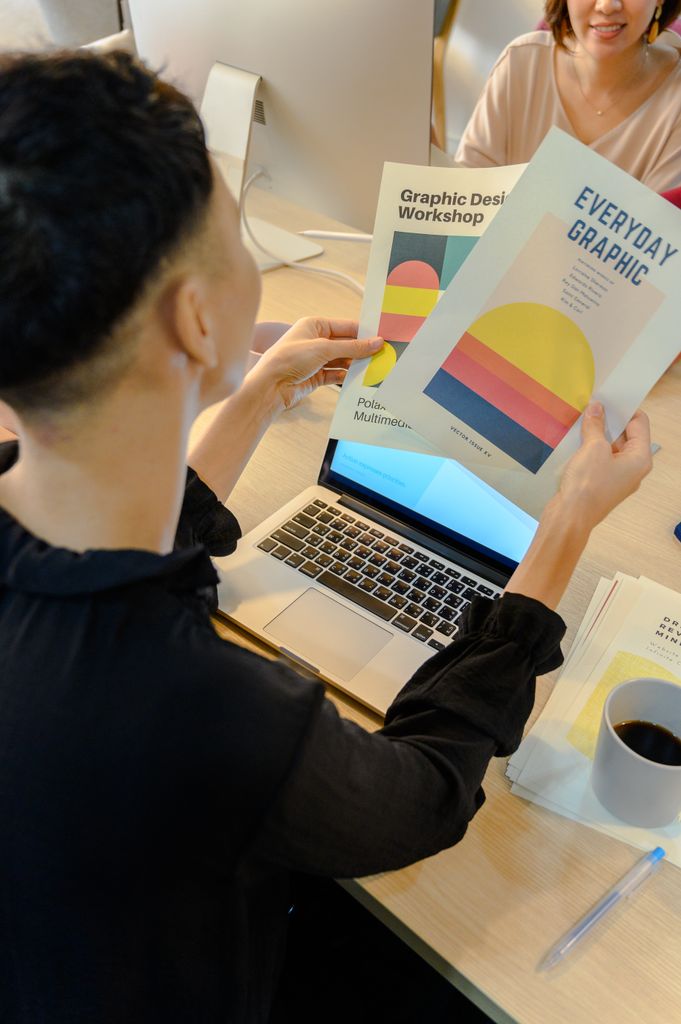
A good beginner graphic design course teaches the fundamentals: colour, typography, layout, and spacing — and then asks you to design real things: a poster, a social media post, a simple logo, a flyer. The tool matters less than the principles. Many beginners start with Canva, which is free and easy, and move to professional tools such as Adobe Illustrator or Figma later. A course that teaches only button-clicking in one tool, without explaining why a design works, will not make you a designer.
UX design — designing how apps and websites feel to use — is a growing field and a good option for beginners who like solving problems. A beginner UX course teaches user research, wireframing, and prototyping. It should include a project where you redesign a real app or website and explain your decisions. That project becomes the centrepiece of your portfolio.
Free design courses are plentiful and often very good, especially for the fundamentals. Paid courses are worth considering when they include detailed feedback on your work, because design is a skill where an experienced eye pointing out your mistakes accelerates your learning enormously. A certificate in design carries little weight on its own — your portfolio is the credential.
Business: Starting a Business and Project Management
Business courses suit beginners who want to work for themselves, manage a team, or move into a better-paid office role. The two most useful starting points are entrepreneurship basics and project management.
A good beginner business course teaches you how to test an idea before spending money on it: who your customers are, what problem you solve for them, how you will reach them, and whether the numbers add up. It should include practical exercises, such as writing a one-page business plan or interviewing potential customers. Courses that are only motivational talks with no numbers and no planning exercises will not help you start a real business.
Project management is the other strong pick. A beginner course teaches how to plan a project, break it into tasks, set deadlines, and manage a small team. The Google Project Management certificate and similar programmes are popular with career changers because project management skills transfer across industries — healthcare, construction, technology, events — and employers recognise the credential.
Free business courses from universities and business schools are widely available and often excellent. Paid courses make sense when you want a recognised certificate, such as a project management credential, or when the course includes mentoring and a community of other learners. For starting a business, the best investment is usually not a course at all — it is testing your idea with real customers.
Languages: Learning a Language Online
Language courses are different from the other skills in this guide, because the goal is not a job in one step — it is a skill that opens doors over time. The best beginner language course is the one you will actually stick with, and that usually means one that is enjoyable, not the one with the most lessons.
A good beginner language course teaches speaking and listening from the first lesson, not just vocabulary lists. You should be saying simple sentences within the first week. Courses that are only flashcards and multiple-choice questions teach you to recognise words, not to use them. Look for courses that include audio from native speakers, speaking practice, and short conversations.
Free language apps are a good place to start, and they are genuinely useful for building a daily habit and learning basic vocabulary. But they rarely take you beyond the basics on their own. When you are ready to improve, a paid course with a real teacher — even a few hours a month — makes a much bigger difference than another year of app exercises. Speaking with a real person is what turns memorised words into a language you can use.
Choose your language with a purpose. If you want better job prospects, pick a language that is in demand in your industry or your country. If you want to travel or connect with family, pick the language that serves that goal. A language you have a reason to use is a language you will keep learning.
Free vs Paid: When to Pay and When Not To
The free-versus-paid question confuses almost every beginner, because the answer changes with the skill and with your situation. Here is how to think about it.
When Free Is Enough
Free is enough when you are exploring a new skill and you are not sure you will like it. Start free, spend two or three weeks on it, and only pay once you know you want to continue. Free is also enough when the skill is well covered by free material — and for coding, spreadsheets, SEO basics, and beginner language learning, it usually is.
Free courses from universities, platform owners, and large tech companies are often as good as paid ones. The difference is usually not the quality of the lessons, but the support around them. If you are self-motivated and comfortable learning on your own, free will take you a long way.
For a deeper look at what is genuinely available without paying, see our guide to free online courses with certificates (https://careerschooled.com/free-online-courses-with-certificates/), which lists free courses that include a certificate you can show employers.
When Paying Is Worth It
Pay when you need structure, deadlines, or feedback. Many people know the free material exists but never finish it, because nobody is checking their work and there is no deadline. A paid course with a schedule, graded assignments, and a community of learners fixes exactly that problem.
Pay when the certificate matters for the job you want. Some employers and some industries treat a recognised certificate as a filter, especially in data analysis, project management, and digital marketing. In those cases, the certificate is part of what you are buying.
Pay when the course includes something free courses cannot give you: a mentor who reviews your work, a real client project, a job placement service, or access to a professional community. Those extras are where paid courses earn their price.
How to Avoid Wasting Money
Never pay for a course before reading recent student reviews that describe specific outcomes. Never pay for a course that promises a job, a salary, or a guaranteed income — no honest course can promise that. Never buy a course on impulse because of a countdown timer or a “90% off today only” banner; these discounts return constantly.
Check the refund policy before you pay. Reputable platforms offer a refund window, usually 14 to 30 days. If a course has no refund policy, do not buy it. And check the total cost, not just the headline price — some courses charge extra for the certificate, the graded assignments, or the exam.
Do Certificates Actually Help You Get Hired?
Certificates are one of the most misunderstood parts of online learning. Beginners often assume a certificate is the point of the course. In most fields, it is not.
When Certificates Help
Certificates help when they come from a source the employer recognises — a university, a large tech company, or a professional body. A Google data analytics certificate, a Meta marketing certificate, or a project management certificate from a recognised provider tells an employer that you completed a structured programme and passed its assessments. That carries weight, especially for career changers with no work experience in the new field.
Certificates also help as a filter. Some large employers use them to shortlist applicants, and some government and corporate training programmes require them. If the job adverts in your field mention a specific certificate by name, that certificate is worth getting.
When Certificates Do Not Help
Certificates do not help much in creative fields. A design certificate will not get you hired; a portfolio of good design work will. The same is true for writing, coding, and video work. In these fields, employers look at what you have made, and a certificate from an unknown provider adds almost nothing.
Certificates from unknown course marketplaces also carry little weight. If the employer has never heard of the provider, the certificate proves only that you finished a course — which is worth something, but not much. And a certificate never compensates for a lack of skill. An employer who tests you in an interview will find out within minutes whether you can actually do the work.
What Matters More Than a Certificate
In almost every field, three things matter more than a certificate: a portfolio of finished work, the ability to demonstrate the skill in an interview or a test, and real experience — even unpaid experience, such as a project for a local business or a volunteer organisation. Build those alongside your certificate, and the certificate becomes a bonus rather than your only proof.
A sensible rule: if a course offers a certificate, take it — it costs nothing extra to add it to your CV. But never choose a course because of its certificate alone, and never pay a large fee just to get one.
A Step-by-Step Plan to Learn Your First Skill Online
Here is the whole path to learning with the best online courses for beginners, from choosing a skill to having something to show for it.
Step 1: Pick One Skill and One Goal
Choose one skill from this guide and write down a specific goal: “Build a three-page website,” “Run a small ad campaign for a local shop,” “Create a dashboard from a sales dataset.” One skill, one goal, one course. Do not start three courses at once.
Step 2: Take a Free Course for Two Weeks
Start with a free course in your chosen skill and commit to two weeks of regular study — even if it is only thirty minutes a day. This is your test. If you enjoy it, you have found your skill. If you hate it, you have learned that for free, and you can try another skill.
Step 3: Decide Whether to Pay
After two weeks, decide. If you are motivated and the free course is teaching you well, keep going for free. If you need structure, feedback, or a recognised certificate, switch to a paid course — but only after you have read reviews and checked the refund policy.
Step 4: Practise Every Week
Set a fixed time each week for practice, separate from watching lessons. Build something real: a website, a campaign, a dashboard, a design, a short video in a new language. Practice is where the learning actually happens, and the things you build become your portfolio.
Step 5: Build Three Portfolio Pieces
Before you apply for any job or client, build three finished pieces of work you can show. Three good pieces beat ten half-finished ones. A portfolio with three strong examples proves you can do the work far better than a certificate alone.
Step 6: Get Real Feedback
Show your work to someone who does the skill professionally — a friend, a mentor, a community group, or a freelancer you hire for an hour. Ask what is weak and what to fix. Feedback from a real person is worth more than another ten hours of video lessons.
Step 7: Apply, Pitch, or Launch
Use your portfolio to apply for junior roles, pitch small freelance jobs, or launch your own project. Start small: a short freelance task, a junior role, a volunteer project. Your first paid work does not need to be impressive — it needs to be real. Real experience is what leads to the next, better opportunity.
Common Mistakes Beginners Make
Collecting Courses Instead of Learning
The most common beginner mistake is enrolling in course after course without finishing any of them. A dozen half-finished courses teach you less than one finished course. Pick one, finish it, build something with it, and only then start the next one.
Watching Without Practising
Watching a lesson feels like learning, but it is not. If you watch ten hours of coding videos without writing a single line of code, you have learned almost nothing. After every lesson, do the exercise. After every module, build something. The uncomfortable part — where you get stuck and have to figure it out — is where the learning happens.
Choosing the Most Popular Course Instead of the Right One
A course with a million students is not necessarily the best course for you. It may be too fast, too slow, too advanced, or focused on a different goal than yours. Read the syllabus and the reviews, and choose the course that matches your level and your goal, even if it is less famous.
Expecting to Be Job-Ready in a Month
Most skills take three to six months of steady learning before you can do paid work, and longer before you are genuinely good at them. Courses that promise a job in four weeks are selling a dream. Set a realistic timeline, and judge your progress by what you can build, not by how many lessons you have watched.
Ignoring the Basics
Beginners often rush past the fundamentals to reach the exciting parts — advanced coding, complex design, machine learning. But the fundamentals are what employers test and what real work is built on. A designer who understands layout and typography beats one who knows advanced software tricks. A data analyst who can clean a spreadsheet beats one who can name machine learning algorithms. Master the basics first.
Paying for a Certificate Instead of a Skill
A certificate is a piece of paper. A skill is something you can do. If you pay for a course, pay for the teaching, the practice, and the feedback — not for the certificate at the end. Employers test skills, not certificates.
Beginner Course Checklist
- Choose one skill and write down a specific, measurable goal for three months from now
- Check the course syllabus for concrete skills and practical projects, not just topics
- Verify the instructor’s real-world experience and read reviews that mention outcomes
- Check the last update date, especially for fast-moving skills such as marketing
- Start with a free course for two weeks before spending any money
- Read the refund policy before paying for any course
- Set a fixed weekly study time you can realistically keep
- Practise after every lesson — build something, do not just watch
- Build three finished portfolio pieces before applying for work
- Get feedback on your work from someone who does the skill professionally
- Check whether employers in your field value the certificate before paying for one
- Keep a record of what you learn and what you build, so your CV writes itself
Conclusion
The best online courses for beginners are not the most expensive ones, and they are not the ones with the most students. They are the courses that match your goal, teach you by making you practise, and leave you with finished work you can show. Python and web development are the strongest coding starting points. SEO and social media are the fastest marketing routes into paid work. Spreadsheets and data analysis open doors in almost every industry. Design rewards a portfolio more than a certificate. Business and project management skills transfer across industries. And a language is worth learning when you have a real reason to use it.
Start free, test your interest for two weeks, and only pay when you need structure, feedback, or a recognised credential. Finish one course properly instead of starting five. Build three portfolio pieces, get real feedback, and then use that work to apply for your first job or client. That is the whole path — and it works for anyone willing to practise a little every week.
FAQ
What is the best online course for a complete beginner?
It depends on the skill you want. For coding, start with a beginner Python or web development course. For a fast route to paid work, start with digital marketing or data analysis. The best course for you is the one that matches your goal, includes practical exercises, and has been updated recently — not necessarily the most popular or most expensive one.
Are free online courses worth it for beginners?
Yes, free courses are genuinely worth it, especially when you are testing a new skill. Free courses from universities, platform owners such as Google and Meta, and large tech companies are often as good as paid ones for beginners. Start free for two weeks, and only pay later if you need structure, feedback, or a recognised certificate.
How long does it take to learn a new skill online?
Most beginners can learn the basics of a skill in four to eight weeks at three to five hours a week. Becoming ready for paid work usually takes three to six months of steady learning and practice, and building a portfolio of finished projects. Timelines vary by skill, but anyone promising a job in four weeks is not being honest.
Do online course certificates help you get a job?
Certificates help when they come from a recognised source, such as a university, Google, Meta, IBM, or Microsoft, and when employers in your field ask for them. They help far less in creative fields such as design and writing, where your portfolio matters more. A certificate never replaces the ability to demonstrate the skill, so always build finished work alongside it.
How do I choose between two similar beginner courses?
When you compare the best online courses for beginners, compare their syllabuses, not their prices or student counts. Choose the course that teaches concrete skills, includes practical projects, has been updated recently, and has reviews that mention specific outcomes. If both look equal, pick the shorter one — you are more likely to finish it — and check the refund policy before you pay.