Application Letter Without Experience: Format, Full Sample and Tips
Writing an application letter without experience feels like being asked to prove something you have not had the chance to become yet. In reality, employers who hire beginners do not expect a work history in your letter. They expect evidence of the things experience usually proves: that you can communicate clearly, that you understand what the job involves, that you have relevant skills from school, projects, volunteering or family responsibilities, and that you are reliable enough to train. An application letter without experience succeeds by presenting that evidence well — not by apologising for what is missing.
This guide explains what an application letter is and how it differs from a cover letter, gives you the formal format used in most countries, walks through what belongs in every paragraph, and provides a complete sample letter for a first-time applicant that you can adapt. You will also find how to match the letter to your resume, the mistakes that make beginner letters fail, and answers to the questions first-time applicants ask most. By the end, you will have a complete application letter without experience ready to send.
Table of Contents
Application Letter vs Cover Letter: What Is the Difference?
The two documents do the same basic job — introducing you and asking to be considered — but they grew up in different traditions, and knowing which one an employer wants matters. A cover letter, standard in the US, UK, Canada and Australia, is usually a page of flowing paragraphs sent with a resume, written in a professional but fairly direct style. A job application letter, standard across much of Europe, Africa and Asia and still common in formal sectors everywhere, follows a stricter formal-letter format: sender’s address, date, recipient’s address, a subject line naming the post, a formal salutation, and a signed close.
Practical rule: use the format the employer’s own culture uses. If the vacancy notice says “send an application letter,” or the organisation is a school, government office, hospital, bank or established company in a country where formal letters are the norm, use the formal format in this guide. If you are applying through a modern online portal in an English-speaking market, a cover letter is usually expected — and the paragraph content taught here transfers directly, because the evidence you present is identical in both.
The Formal Format, Section by Section
A formal application letter is built from fixed parts, in this order. Leave a blank line between sections, use a clean font at a readable size, and keep the whole letter to one page.
- Your address and contact details — top of the page (right-aligned in the classic format): your name, address, email and phone number.
- Date — the full date you send the letter.
- The recipient’s address — the hiring manager’s name and title if you know them, the organisation’s name and address, left-aligned.
- Subject line — one line stating the purpose exactly: “Subject: Application for the Post of Sales Assistant” or “Application for the Position of Junior Data Entry Clerk.” Recruiters file and search by this line; make it precise.
- Salutation — “Dear Mr. Sharma,” or “Dear Ms. Okafor,” if you have a name; “Dear Hiring Manager,” if you do not. Avoid “To Whom It May Concern” when any alternative exists.
- Body — three to four paragraphs, covered in detail in the next section.
- Formal close — “Yours faithfully,” (traditional when you do not know the recipient’s name) or “Yours sincerely,” (when you do), followed by your signature if printing, and your typed full name.
- Enclosures line — “Enclosed: Resume” or “Attachments: Resume, Certificates” so the reader knows what accompanies the letter.
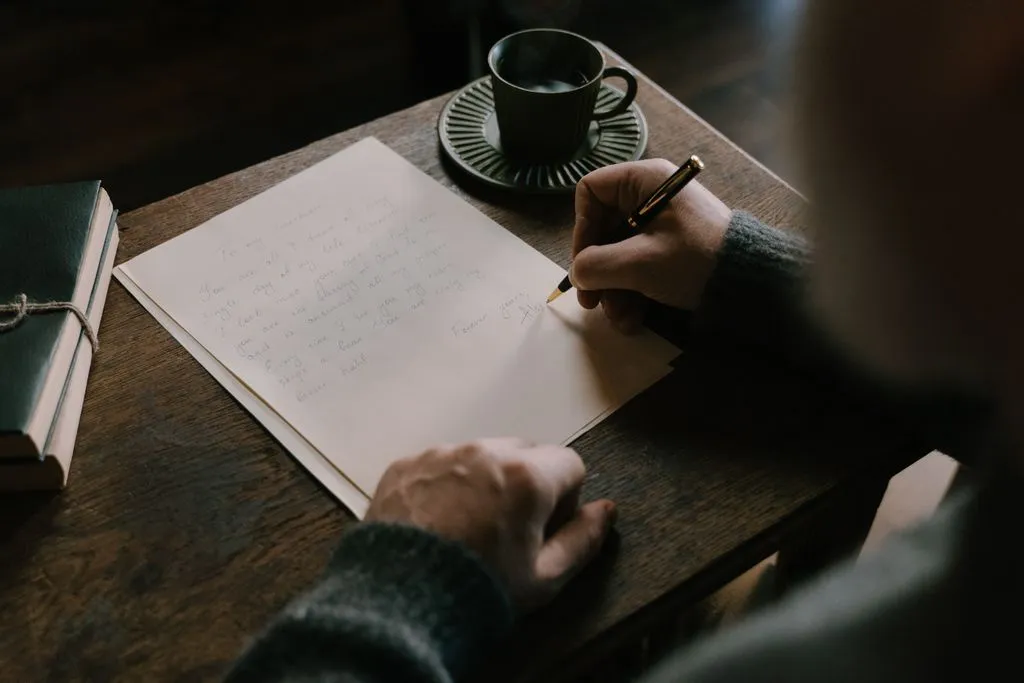
What Goes in Each Paragraph
Paragraph 1: The post, the source, and your one-line claim
State the exact job title, where you saw the vacancy, and the single strongest reason you fit it. Three sentences are enough. Example: “I am writing to apply for the post of Junior Office Assistant, advertised on your company’s careers page on 12 October. As a recent school leaver with strong computer skills and a distinction in business studies, I believe I match the requirements of the role closely.” Notice: no experience is claimed, and none is needed — the claim is built from qualifications and skills the employer listed.
Paragraph 2: Your evidence — skills and experience of every kind
This is where a beginner wins or loses the letter. Translate your life so far into the job’s language. School subjects that match the role; computer skills named specifically (the actual programs, your typing accuracy, languages); responsibilities such as prefect, team captain, society treasurer or event organiser; volunteering; helping in a family shop or business; internships, however short; and projects, including substantial coursework. For each item, name the skill the job needs and the proof: not “I am good with computers,” but “I prepared spreadsheets and presentations for my school’s business club, and type at 45 words per minute with high accuracy.”
Before writing this paragraph, read the vacancy notice and list its requirements one by one; then check the typical duties of the occupation in a reference such as the Occupational Outlook Handbook. Your paragraph should visibly answer the employer’s list, in their order where you can, because the reader is scanning for exactly that match.
Paragraph 3: Why this organisation, and what you will bring
Show you chose them deliberately: something specific about the organisation — its size, its customers, its reputation, a program it runs — connected to what you offer: reliability, quick learning, languages the customers speak, local knowledge, availability for the shifts or hours the role needs. Then state your attitude to being trained plainly; for a first hire, an employer is buying trainability, and saying clearly that you learn quickly — with one small example — is worth more than any adjective.
Paragraph 4: The close and the request
Thank the reader, restate your availability for an interview, name your enclosed resume, and give your contact details once more. Example: “I would welcome the opportunity to discuss my application at an interview, and I am available at your convenience. My resume is enclosed for your consideration. I may be contacted at [phone] or [email]. Thank you for your time and consideration.”
A Complete Sample Application Letter Without Experience
The sample below is for a fictional applicant and a fictional company. Copy its structure and phrasing patterns, never its details — your letter must be true, because interviewers ask about what letters claim. Treat it as the pattern for your own application letter without experience.
Amina Yusuf, 14 Rose Lane, Springfield, amina.yusuf@example.com | +1 555 014 2288. 28 October 2026. Mr. Daniel Osei, Human Resources Manager, Brightline Retail Group, 200 Market Street, Springfield. Subject: Application for the Post of Sales Assistant. Dear Mr. Osei, I am writing to apply for the post of Sales Assistant advertised in the Springfield Gazette on 25 October 2026. I completed my secondary education this year with strong grades in English and mathematics, and I am seeking my first position in retail, where my communication skills and experience of serving customers in a family business can be put to full use.
For the past two years I have helped in my family’s grocery shop on weekends. There I served customers at the counter, handled cash and card payments, restocked shelves and kept the display areas tidy. This work taught me to deal politely with many kinds of customers, including handling complaints calmly and finding alternatives when an item was out of stock. At school I served as treasurer of the Business Club, where I kept simple accounts in a spreadsheet and presented our term report to staff. I am confident using spreadsheets, word processing and email, and I speak both English and Somali, which I understand is useful for many of your customers in this area.
I have chosen to apply to Brightline because of its reputation for training school leavers, and because your store’s emphasis on local service matches the way I was taught to work in our family shop. I am a quick learner, I am punctual, and I am available for weekend and evening shifts as the post requires.
I would be grateful for the opportunity of an interview to discuss my application further. My resume is enclosed for your kind consideration. I may be reached at the phone number and email address above at any time. Yours sincerely, Amina Yusuf. Enclosed: Resume.
Study how the sample works: the first paragraph claims fit through qualifications, the second converts family-shop work into retail evidence with specifics, the third gives a real reason for choosing this employer plus availability, and the close asks for the interview and names the enclosure. Nothing is invented, nothing is apologised for, and every requirement a sales-assistant vacancy usually lists — customers, cash, tidiness, communication, shifts — is answered somewhere in the letter.
Match the Letter to Your Resume
Your letter and your resume must tell one consistent story. The letter selects and explains; it should not copy the resume line by line, and it must never contradict it — dates, titles of roles, skills and grades must agree exactly. If your resume is built for beginners, our guide on how to write a resume with no experience shows how to present school, volunteering and family-business experience in the same honest, skills-first way, so the two documents reinforce each other.
Send the letter in the format the employer asked for, name the file clearly with your name and the job title, and if you adapt interview answers later, keep them consistent too — the questions in our guide on how to answer tell me about yourself for freshers are where letter claims are usually tested aloud. Your application letter without experience and your resume should agree on every fact.
Mistakes That Make Beginner Letters Fail
- Apologising for having no experience. “I know I have no experience, but…” frames the whole letter as a deficiency. Present your evidence positively; the employer already knows a school leaver’s history from your resume.
- Copying a sample or template word for word. Recruiters recognise circulated templates on sight, and a copied letter proves the opposite of the communication skills it claims. Use samples for structure only.
- Writing to nobody in particular. No subject line, no organisation name, no job title — a letter that could be sent to anyone convinces no one. Research the recipient and the role for ten minutes per application.
- Listing qualities with no proof. “Hardworking, honest and a team player” appears in every weak letter. Replace each quality with the fact that demonstrates it.
- Errors in a letter about communication. Spelling the company name wrong, or sending a letter full of typos, ends the application. Read it aloud, then have someone else read it.
- Making it too long. One page, four paragraphs of substance. A second page from a beginner signals that you cannot judge what matters.
Final Checklist
- Correct format for the employer’s culture: formal application letter or cover letter
- Your details, date and recipient’s address complete and accurate
- Subject line names the exact post
- Paragraph 1: the post, where advertised, and your strongest one-line claim
- Paragraph 2: evidence answering the vacancy’s requirements, one by one, with specifics
- Paragraph 3: a real reason for choosing this organisation, plus availability
- Paragraph 4: thanks, interview request, enclosure named, contact details repeated
- Letter matches the resume exactly — dates, skills, grades, roles
- Proofread aloud and checked by a second reader; company name spelled correctly
- One page; file named with your name and the job title

Frequently Asked Questions
How do I write an application letter with no experience?
Use the formal format, then build the body from evidence rather than employment: relevant school subjects and grades, specific computer and language skills, responsibilities in clubs or teams, volunteering, and work in a family business, each matched to a requirement in the vacancy notice. State your availability and your readiness to be trained plainly, and close by requesting an interview. The sample in this guide shows the complete pattern.
What should I write in the subject line of an application letter?
Name the exact post, worded as the employer worded it: “Application for the Post of Sales Assistant” or “Application for the Position of Junior Accounts Clerk,” adding a reference number if the vacancy notice gives one. Recruiters file and search applications by this line, so precision here genuinely helps you be found and considered for the right role.
Is an application letter the same as a cover letter?
They serve the same purpose but follow different traditions. An application letter uses the strict formal-letter format — addresses, date, subject line, formal salutation and close — and is standard across much of Europe, Africa and Asia and in formal sectors. A cover letter is the looser one-page format common in the US, UK, Canada and Australia. Follow the convention of the employer and country you are applying in; the paragraph content is the same in both.
How long should an application letter without experience be?
One page: the formal heading sections, then three to four short body paragraphs. A beginner has focused evidence, not a long history, and recruiters reward letters that respect their time. If your draft runs long, cut repeated adjectives and any sentence that does not answer a requirement, prove a skill or move the application forward.
Should I mention that this is my first job?
You do not need to announce it, and you should never apologise for it — your resume and education dates already make your level clear. What employers want to hear instead is the positive version: that you are seeking to start your career in this field, that you have prepared through study and practical responsibilities, and that you are available and ready to be trained.
Conclusion
An application letter without experience is not a lesser document; it is a different argument, built from qualifications, transferable evidence and reliability instead of a job history. Use the correct formal format, answer the vacancy’s requirements one by one with specific, true examples, give a real reason for choosing that employer, and keep the whole letter to one clean page. Do that, and your letter does the only job it has: it makes a busy reader decide that this beginner is worth meeting.