How to Become a Firefighter: Requirements, Tests and Training
How to become a firefighter has no single national application form — and understanding that fact is the real first step. Firefighters are hired by individual fire departments (city, county, district, airport, industrial and wildland agencies), and each department sets its own eligibility rules, tests and hiring rounds within its state or national framework. Competition is strong almost everywhere: a single recruitment round can draw hundreds of applicants for a handful of academy places.
The candidates who succeed treat the process like a campaign — they prepare for the written test, the fitness test and the interview months in advance, apply to several departments, and stay eligible and ready while lists are worked through.
This guide explains the standard stages, what each one actually tests, how training works, and how to build your strongest application. Every specific — age limits, certificates, dates — must be verified with the departments you apply to, because those details genuinely differ from one department to the next.
Table of Contents
What Firefighters Actually Do
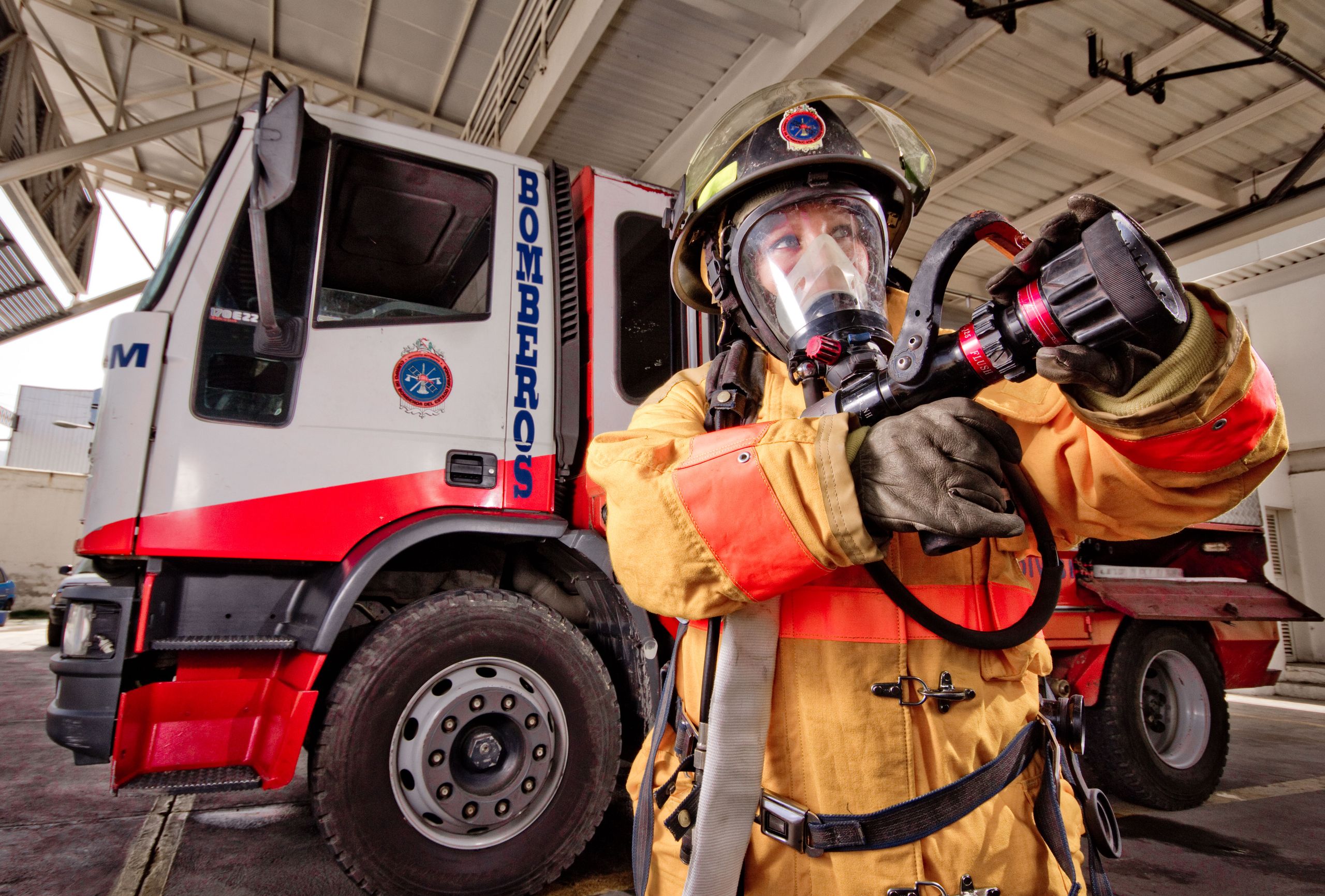
Modern firefighting is only partly about fires. Depending on the department, the work typically includes: responding to structure and vehicle fires; emergency medical calls (in many US departments the majority of call volume, which is why medical certification matters so much); vehicle collisions and rescues; hazardous materials incidents; fire prevention inspections and public education; and maintaining equipment, apparatus and the station.
Shifts are long — commonly 24 hours on duty followed by days off in US career departments, with national variations — and the job combines long quiet stretches with sudden, physically extreme, high-stakes work. Pay, duties and employment outlook for the US role are published in the Occupational Outlook Handbook; read your target departments’ own pages for the local version of all three.
Stage 1: Meet the Baseline Eligibility
While details vary, most career departments require some combination of:
- Age: commonly at least 18 at application or academy start; some departments set higher minimums or maximum entry ages — check each one.
- Education: a high school diploma or equivalent is the usual baseline; college credit or degrees earn extra points in some systems and are required by a few.
- Driving licence: a valid licence is standard, sometimes with a clean record requirement.
- Work eligibility and background: legal right to work, a background check, and usually a medical examination and drug screening. Past offences are assessed by department policy — honesty on the application is essential, because discovered omissions end candidacies.
- Residency: some departments require living within a set distance or moving within a period after hiring.
Make a simple eligibility table for your target departments before anything else. It takes an evening and prevents the classic heartbreak of training for a year toward a department you were never eligible to join. Anyone researching how to become a firefighter should build this table first, because it turns a long list of departments into a short list of realistic targets.
Stage 2: Gain the Certifications That Strengthen Applications
Two credentials recur across US hiring: emergency medical certification (EMT-Basic is the common floor; paramedic certification is a major advantage and a requirement in some departments) and fire science or fire academy pre-training (state Firefighter I/II certifications, available through many community colleges and academies, required before hiring in some states and earned during the department’s own academy in others). A commercial or specialist driving endorsement, hazardous materials awareness training, and volunteer or reserve firefighting experience also strengthen files in many systems. In the UK, wholetime firefighters are recruited directly by individual fire and rescue services through their own rounds, typically without requiring prior fire qualifications — fitness, aptitude tests and values-based assessment dominate instead.
Wherever you are, the rule is identical: read your departments’ current recruitment pages and gain exactly what they reward, in the order they reward it. Do not pay for certificates a department neither requires nor values until you have checked.
Stage 3: Pass the Written and Aptitude Tests
Most departments test early, and the tests eliminate the most candidates. Typical components include reading comprehension, basic mathematics, mechanical and spatial reasoning, situational judgement, and memory or observation exercises based on a passage, map or video. These are trainable skills: use the practice materials your department or testing body publishes, work timed practice papers, and drill your weakest area rather than your favourite. Our guide to the most in-demand skills explains how employers generally screen for these underlying abilities; for firefighter tests, the official practice route is always the first choice because formats differ between testing providers. Candidates who treat how to become a firefighter as a test-preparation project, not a single application, tend to score higher on their first attempt.
Stage 4: Pass the Physical Ability Test
Firefighting fitness tests simulate the job: in the US, the Candidate Physical Ability Test (CPAT) — a standardised course of eight job-task events including stair climbing with weight, hose drag, ladder raise, forcible entry and victim drag, completed against the clock in protective gear — is used by many departments, and others run equivalent courses. The honest preparation is specific: build strength and work capacity with loaded carries, stairs, dragging and pulling movements, plus the aerobic base to sustain ten hard minutes without stopping. Start months ahead; fitness is the stage most within your control and the one candidates most often fatally underestimate. Train progressively and safely, and practise the exact events if your department publishes them. That fitness base is a core part of how to become a firefighter.
Stage 5: Interview, Background and Medical
Panels interview for judgement, teamwork, communication and alignment with the service’s values — expect scenario questions (a crew conflict, a frightened resident, an order you think is unsafe) answered with calm structure: safety first, communicate, follow procedure, escalate through the chain of command. Then come the deep background investigation, medical examination (vision, hearing, cardiovascular and musculoskeletal standards are common), and psychological screening in many departments. The through-line of every stage after the tests is integrity: consistent, truthful answers everywhere.
Stage 6: The Academy, Then Probation
Hired recruits complete the department’s academy — typically several months of full-time, physically and academically demanding training covering fire behaviour, hose and ladder work, search and rescue, medical response, hazardous materials and department procedures — followed by a probationary period (often a year) working shifts in a station under close supervision, with continuing assessments. Graduation is not the finish line; firefighters train throughout their careers, and specialisations (technical rescue, hazmat, fire investigation, inspection, officer promotion) open with experience and further examinations. If you are still weighing the field itself against other options, our step-by-step guide on how to choose a career path will help you test the fit before you invest in preparation.
How Hiring Really Works — And How to Stay in the Game
Departments hire in rounds that may open only every year or two, create ranked eligibility lists from test scores, and work down those lists as vacancies arise — a list can stay live for a year or more. Practical consequences: apply to every department you would genuinely serve in, not just your home town; keep certifications current while you wait; keep your contact details and fitness maintained, because offers can come with short notice; and treat a near-miss score as data — many serving firefighters were hired on their second or third round, better prepared each time. Volunteering, reserve/on-call roles, EMT work and fire-service support jobs keep you close to the field and demonstrably committed while you compete.
A Preparation Timeline That Works
Months 1–2: Research and baselines. Build the eligibility table, read every target department’s recruitment pages end to end, and take honest baselines: a timed practice written test and a first attempt at your department’s published fitness events. Baselines feel uncomfortable and are indispensable — they convert vague worry into a training list.
Months 3–6: Build the file. Start the medical or fire certification your targets reward most, run a progressive fitness programme built around the test events (loaded stairs, drags, carries, pulls) three to four days a week, and study the written-test syllabus in short daily sessions. If a volunteer, reserve or on-call route exists locally, apply for it now; service experience strengthens every later stage and tells you the truth about the work.
Months 6–12: Compete and refine. Enter every recruitment round you are eligible for. After each stage, write down exactly what was tested while it is fresh — departments repeat formats, and your notes are next round’s advantage whether the next round is with the same service or a neighbouring one. Keep certificates, fitness and paperwork current between rounds, and keep your address and phone number updated with every department holding your application; candidates genuinely lose offers to a dead phone number.
Throughout: protect the long game. Fire service hiring rewards the prepared persistent. A year spent this way is not a delay — serving firefighters routinely describe exactly this arc, and the fitness, medical skills and discipline you build remain yours whatever the outcome of any single round.
Common Mistakes
- Preparing only for the stage you like. Strong lifters fail written tests; strong writers fail fitness courses. The process is a chain — train every link.
- Applying to one department only. Rounds are rare and lists are long; breadth of application is the single biggest controllable advantage.
- Buying unneeded certificates. Verify what each department requires or rewards before spending; the order of credentials matters as much as the set.
- Letting fitness slide while on a list. You can be called for a medical and physical re-test with little warning.
- Any dishonesty in background stages. Omissions discovered later end candidacies that the underlying fact, disclosed, might not have.
- Ignoring the medical side of the job. In many departments most calls are medical. Candidates who present as fire-only often interview weaker than those who embrace the full role.
Final Checklist
- Eligibility table built for each target department (age, education, licence, residency, background rules)
- Current recruitment pages read; required and rewarded certificates listed in order
- EMT/medical certification plan set where departments reward or require it
- Written-test practice started with official materials, weakest area drilled
- Job-specific fitness training running for months, not weeks, before testing
- Applications planned across several departments and rounds, with a list-waiting plan
- Interview scenarios rehearsed: safety first, communicate, procedure, escalate
Frequently Asked Questions
How long does it take to become a firefighter?
The application campaign itself typically runs one to three years across departments and rounds, because hiring is periodic and lists are competitive. Once hired, academy training usually lasts several months, followed by about a year of probation. Candidates who gain medical certification and test fitness first often shorten the overall timeline by succeeding earlier in rounds.
Do I need a degree to become a firefighter?
Usually not — a high school diploma or equivalent is the common baseline. College study in fire science, emergency medicine or related fields can add points, meet specific departments’ extra requirements, and help later promotion, but it is rarely the entry ticket itself. Check each department’s published requirements.
How fit do I need to be?
Fit enough to perform sustained, heavy, job-simulated tasks in protective gear against a standard — dragging, carrying, climbing, pulling — not merely gym-fit. Departments publish their test events; train specifically for those movements and build the aerobic capacity to work hard for ten or more minutes without stopping.
Can I become a firefighter with no experience?
Yes — career departments hire recruits with no fire experience every round and train them in the academy. What successful inexperienced candidates show instead is preparation: baseline certifications where rewarded, strong test performance, demonstrable fitness, and relevant responsibility or service experience of any kind.
Is firefighting a good long-term career?
For people who suit shift work, teamwork and public service, it offers structured progression, specialisation routes (rescue, hazmat, investigation, inspection, officer ranks), and strong job meaning. It also carries real physical risk and long shifts — the Occupational Outlook Handbook’s current US data on pay, outlook and working conditions is worth reading alongside any department’s own material before you commit.
Conclusion
How to become a firefighter is a campaign, not a form: confirm your eligibility department by department, gain the certifications your targets actually reward, prepare every test stage — written, physical, interview, background — and stay ready on eligibility lists until your round comes. Verify every specific with the departments themselves, apply widely, and let persistence do what it demonstrably does in this profession: most serving firefighters simply refused to stop preparing between rounds.