
Jobs for People With Disabilities: Strengths-First Career Ideas and How to Find Them
Searching for jobs for people with disabilities works best when it starts from the right end: not “what work is left for someone with my condition,” but “what work fits my strengths, my energy and my access needs.” Disability is a wide word covering mobility, sensory, chronic health, mental health, neurodivergent and many other experiences, and no honest list can match all of them at once. What a good guide can do is show you the main routes — remote work, office and administrative roles, creative and technical work, customer service, public-sector employment and supported routes into work — and help you match them against your own situation.
This guide is written for jobseekers in the United States, the United Kingdom and Europe, and it keeps the legal parts in general terms, because rights and program names differ by country. You will find the kinds of roles that commonly suit different access needs, how reasonable accommodations (called reasonable adjustments in the UK) actually work in practice, where to find disability-confident employers and specialist support, and how to handle applications and interviews, including the question of when — and whether — to disclose. The guiding principle throughout is simple: you are selecting an employer as much as they are selecting you.
Table of Contents
Start With Your Strengths and Your Access Needs
Before looking at job titles, write two short lists. The first is what you are good at and enjoy: organising, writing, numbers, technology, helping people, practical tasks, design, analysis, languages — the same inventory any jobseeker makes. The second is what a job must provide for you to do it well: step-free access or remote working, flexible or predictable hours, screen-reader-compatible systems, a quiet workspace, the option to sit or stand, regular breaks, written rather than verbal instructions, or treatment time built into your schedule.
Good job hunting matches the second list to the job’s real conditions and the first list to its real content. That order matters. A role that fits your access needs but bores you will not last; a role you love that ignores your access needs will not last either. The roles below are grouped by the conditions they commonly offer, so you can cross-match them against both lists. That matching process is the surest way to find jobs for people with disabilities that actually last.
Remote and Home-Based Jobs
Remote work has widened the field more than any policy change of the last generation, because it lets you control your own environment — equipment, lighting, noise, breaks, medication, rest — instead of negotiating every element with a building. Roles commonly done fully remotely include customer support by chat and email, data entry and administration, bookkeeping, writing and editing, software and web work, design, online tutoring, translation, and virtual assistance.
Two cautions keep remote hunting honest. First, “remote” in an advert sometimes means “remote within one country” or hybrid with office days, so read the location terms before investing in an application; our guide to remote jobs explains how to read those adverts and avoid the scams that target home workers. Second, remote roles attract large applicant numbers, so your application needs the same tailoring as any competitive job — a point in your favour is that your home setup is already an access solution you can describe with confidence if you choose to.
Office, Administrative and Data Roles
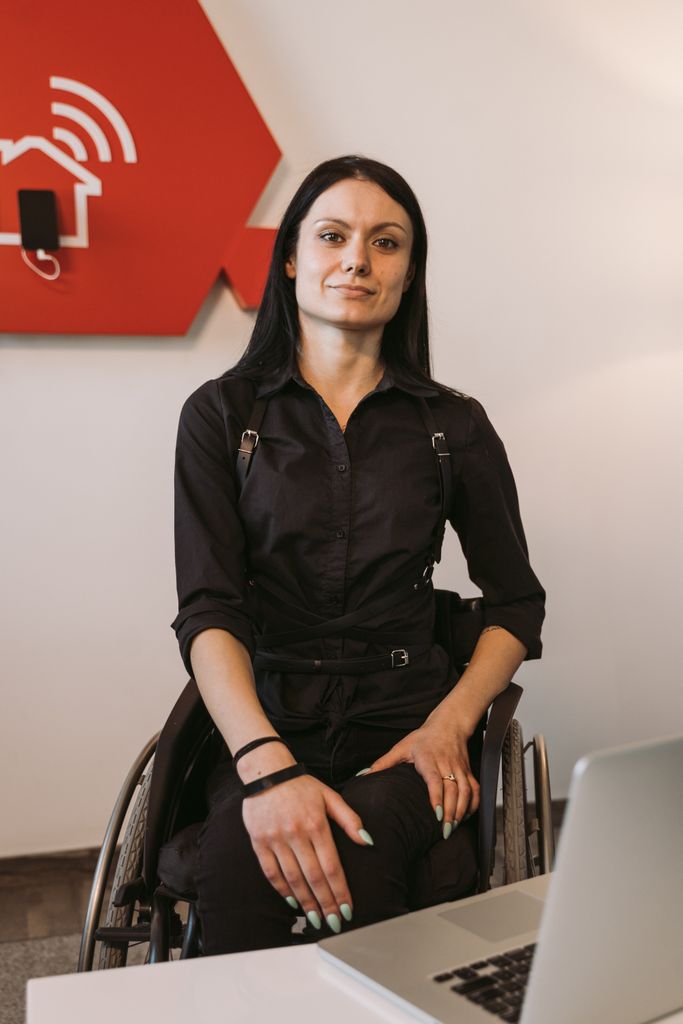
For people who work better in a structured setting outside home, office work offers predictable hours, seated work where needed, and clear tasks: administration, data entry, scheduling, records, finance support and reception. These roles exist in every sector, including the public sector and charities, which often have the most developed adjustment processes. Entry routes are well trodden — our guide to entry level jobs shows how these roles are usually advertised and filled — and progression into specialist areas such as payroll, HR support or compliance is realistic without a degree.
Ask early, in practical terms, about the physical and sensory environment: lifts and step-free routes, desk setup, lighting, noise levels, and whether systems work with your assistive technology. Employers who answer these questions straightforwardly are telling you something good about themselves.
Creative, Technical and Digital Work
Portfolio-based fields judge the work in front of them, which can level the field considerably: writing, graphic and web design, video editing, photography retouching, social media, software development, testing and quality assurance, data analysis and IT support. Many of these can be freelance, contract or employed, part-time or full-time, remote or on site — a flexibility that lets you shape work around fluctuating health in a way a fixed rota never could.
If you are entering one of these fields, build proof before you apply: a small portfolio, a certification, volunteer or community projects. A hiring manager who can see ten strong pieces of work has very little left to wonder about, and that applies to every candidate, disabled or not.

Customer Service and People-Facing Roles
Headset-and-screen customer service — by phone, chat or email — is one of the largest employers of disabled people in many economies, because the work is communication skill plus systems, delivered from a desk that can be adjusted or from home. Retail and hospitality also employ many disabled people, with the honest caveat that the physical environment varies store by store, so the visit-the-workplace step below matters doubly there.
Do not rule out people-facing work on an assumption about your condition, and do not let an employer rule you out on one either: the question is always the specific tasks of the specific job, with the specific adjustments available — not the diagnosis. That task-by-task test applies across all jobs for people with disabilities, not only customer service.
Public Sector and Disability-Confident Employers
Governments are usually required to model inclusive hiring, and public-sector recruitment tends to use structured processes, published criteria and, in some schemes, guaranteed-interview arrangements for disabled applicants who meet the minimum criteria — the UK’s Disability Confident scheme is one example, and in the US, federal hiring includes a specific appointment route (Schedule A) for people with certain disabilities, alongside the general USAJobs process. State and local vocational rehabilitation services in the US, and Access to Work in the UK — which can fund support workers, equipment and travel — are practical resources worth using early rather than as a last resort; the US Department of Labor’s Office of Disability Employment Policy is a good official starting point for the American system.
Large private employers increasingly publish their adjustment process and disability networks. Read those pages before you apply: an employer who explains clearly how to request an adjustment at interview has already passed a test many fail.
Your Rights, in General Terms
Details differ by country, but the pattern across the US, UK and EU is similar. Employers may not refuse you a job because of a disability when you can do the essential parts of the role with reasonable accommodations or adjustments, and they are expected to provide those adjustments unless doing so would be genuinely unreasonable for the business. You are generally not obliged to disclose a disability that does not affect the work, and interview questions are usually limited to what you can do, not what your diagnosis is.
Because specifics — definitions, deadlines for claims, which employers are covered — vary and change, treat this as orientation only. For your own situation, use your government’s official guidance, a disability employment charity, or an employment adviser; in the US, the Job Accommodation Network offers free, practical examples of accommodations by task and condition that both employees and employers use. Keep those official examples in mind when you shortlist jobs for people with disabilities in your own country.
Disclosure: Your Decision, Made Deliberately
Whether and when to mention a disability is your choice, and good advice is to make it a decision rather than a reflex. Practical reasons to disclose at some point include needing an adjustment for the interview itself, needing one in the job, or an employment gap you prefer to explain simply. Reasons some people wait include wanting to be judged on a portfolio or test first. Many jobseekers disclose after an offer, when requesting adjustments, which is a normal and protected point to do it.
When you do disclose, the formula that works is brief and forward-looking: name the relevant practical fact, state the adjustment that solves it, and return to the work. “I use a screen reader; if the assessment is on your own platform, I can confirm compatibility in advance, or complete it on my system” tells an employer everything useful in one sentence.
How to Apply: A Working Sequence
- Match roles against your strengths list and access list together, never separately.
- Shortlist employers with visible adjustment processes or disability-confident commitments.
- Use official support early: vocational rehabilitation, Access to Work-type schemes, disability employment services and relevant charities in your country.
- Build visible proof for your field — portfolio, certification, volunteering, or the structured applications large employers use — as set out in our guide on how to get a job with no experience, which applies at any experience level when you are changing direction.
- Before accepting, verify the workplace in practice: the route in, the desk or station, the systems with your technology, the rota against your treatment and energy pattern.
- Agree adjustments in writing at the start, with a review point; good employers expect this conversation and respect its clarity.
Mistakes to Avoid
- Applying only through one channel. Specialist disability employment services, supported internships and employer schemes exist alongside mainstream adverts; using both doubles your surface area.
- Hiding an access need until you are struggling. Adjustments arranged calmly at the start are routine; the same request made in a crisis feels harder for everyone. Early and factual wins.
- Assuming a job is impossible without checking the actual tasks. Job adverts describe an ideal; the essential functions are usually a shorter list, and adjustments cover more of the rest than people expect.
- Accepting the first offer that “will have you.” You are allowed standards: pay, hours, environment and respect. An employer grateful rhetoric aside, a bad fit costs you health and confidence.
- Paying for job placement or equipment a program would fund. Employment support for disabled jobseekers is a public and charitable service in most systems; treat anyone charging you for access to it with suspicion.
Final Checklist
- Strengths list and access-needs list written and used together
- Target roles checked for real conditions: location terms, hours, environment
- Employers with clear adjustment processes shortlisted
- Official support contacted: rehabilitation or access-to-work scheme, disability employment service
- Proof of skill prepared: portfolio, certificate or structured application materials
- Disclosure decision made deliberately, with a one-sentence practical script if needed
- Workplace verified in person or in detail before accepting
- Adjustments agreed in writing with a review point
Frequently Asked Questions
What are the best jobs for people with disabilities?
There is no single best list, because disabilities and strengths differ. The strongest matches usually come from roles whose conditions fit your access needs and whose content fits your abilities: remote customer support, administration and data work, creative and technical portfolio fields, bookkeeping, tutoring, and structured public-sector roles are common successful routes. Start from your own two lists rather than from any ranking.
Do I have to tell an employer about my disability?
Generally, no — disclosure is your choice, and employers are usually limited to asking whether you can do the job’s essential tasks and what adjustments you need. You will need to share enough information to arrange any adjustment you want, and many people find disclosing after an offer, in practical terms, the most comfortable point.
What is a reasonable accommodation or adjustment?
It is a change that removes a work barrier without imposing a genuinely unreasonable burden on the employer: examples include adapted equipment or software, a modified schedule, a step-free workstation location, written instructions, an interpreter for meetings, or a support worker for specific tasks. Official services such as the Job Accommodation Network publish real examples by task, which helps you ask for something concrete.
Where can I get help finding a job as a disabled person?
Start with your country’s official services: in the US, state vocational rehabilitation agencies and the Department of Labor’s disability employment resources; in the UK, Jobcentre disability employment advisers and Access to Work; across the EU, public employment services run disability support. Disability charities and disabled people’s organisations also run respected employment programs, and large employers publish their own schemes.
Can I work part-time or flexibly because of my health?
Very often, yes. Part-time, job-share, compressed and remote arrangements are normal across service, office and digital work, and flexible scheduling is itself one of the most commonly granted adjustments. State the pattern you need as a fact of your application rather than an apology, and target employers whose adverts already mention flexibility.
Conclusion
Jobs for people with disabilities are not a separate, smaller labour market; they are the same labour market, entered with a clearer method. Know your strengths, name your access needs, target employers whose processes respect both, use the public support that exists for exactly this, and make disclosure a calm, practical decision. The right job is not one that overlooks your disability — it is one where the work fits the person you actually are, and those jobs are found by matching deliberately, not by settling quickly.