What Is a Cover Letter? Definition, Purpose and How It Works
If you are applying for jobs, you will quickly meet a basic question: what is a cover letter, and why do employers keep asking for one when your resume already lists your experience? A cover letter is a one-page letter that accompanies your resume in a job application. It introduces you as a person, explains in your own words why you want this specific job, and highlights the two or three parts of your experience that match it best.
Your resume is a structured list of facts: titles, dates, skills, results. Your cover letter is the short, human explanation that connects those facts to this employer. It answers the questions a resume cannot: Why this company? Why this role? Why should we believe you will stay, learn, and do the work well? This guide explains what a cover letter is, what it is for, what goes inside it, how it differs from a resume, when it is required, and how to judge whether yours is doing its job.
Table of Contents
A Simple Definition
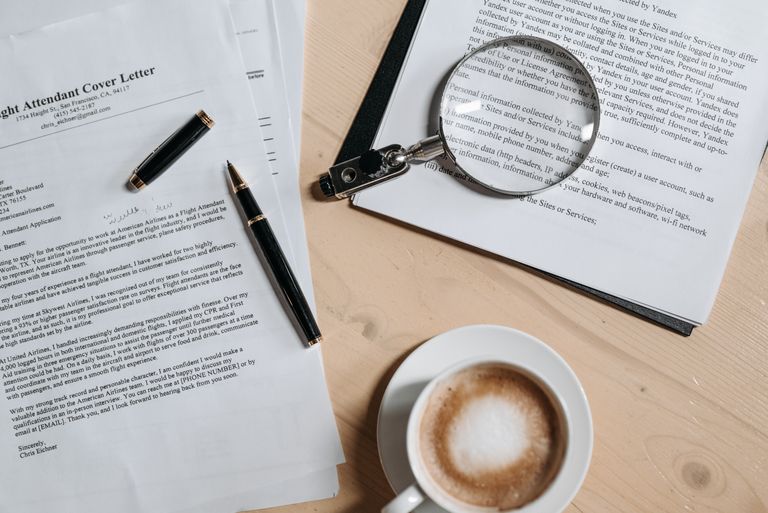
A cover letter is a formal, one-page document (usually three to five short paragraphs) sent with a resume when applying for a job. It is addressed to the employer — ideally to a named hiring manager — and written in the first person. It introduces the applicant, states the exact position being applied for, summarizes the strongest matching experience, expresses genuine interest in the organization, and closes by inviting the employer to an interview and thanking them for their time.
The name comes from its original function: it was literally the covering page placed on top of a printed resume when applications were mailed or handed in. The paper page is gone, but the function remains. In online applications, the cover letter appears as an uploaded document or as text pasted into an application form field — and it still does the same job of introducing and framing the resume that follows it.

Why Employers Ask for a Cover Letter
Not every employer reads every cover letter, but employers ask for them for consistent reasons:
- To see your motivation. A resume shows what you have done; a letter shows whether you actually want this job, or simply applied to fifty postings in one evening. Specific interest in the company is hard to fake and easy to spot.
- To judge your communication. Many jobs involve writing emails, reports, or messages to customers. A clear, well-organized letter is direct evidence of that skill; a careless one is evidence too.
- To understand what the resume cannot explain. Career changes, employment gaps, relocations, and unusual paths make sense when explained in two honest sentences. Without a letter, a recruiter guesses — and guesses are rarely generous.
- To hear your strongest match in your own words. Recruiters scan quickly. A letter that says “your posting asks for X; in my last role I did X, with this result” does the matching work for them.
- To filter for effort and fit. Requiring a letter raises the cost of applying slightly, which discourages mass, untargeted applications and surfaces candidates who read the posting carefully.
Understanding these purposes tells you how to write one: specific, matched to the posting, honest about anything unusual, and easy to read.
What a Cover Letter Includes
Although styles vary, a standard cover letter contains the same building blocks, in this order:
1. Your Contact Details and the Date
Your name, phone number, professional email, and city/region at the top, followed by the date. In an uploaded document this mirrors business-letter format; in an online form, the system usually supplies it.
2. The Employer’s Details and a Greeting
The company name and, where you can find it, the hiring manager’s name. “Dear Ms. Ahmed” is stronger than “Dear Sir or Madam,” and both are better than “To whom it may concern.” If no name is available after a genuine search of the posting and company site, “Dear Hiring Team” is an acceptable modern default.
3. An Opening Paragraph That Names the Job
State the exact position and where you saw it, then give your single strongest reason for being a match — your current or most recent role, a key skill, or a measurable result. One or two sentences of genuine, specific interest in this company belong here too: a product, a project, a reputation, or a value you can name without inventing facts.
4. One or Two Body Paragraphs That Prove the Match
This is the evidence section. Choose the two or three requirements from the job posting that you meet best, and for each one give a concrete example with a result: what you did, how, and what changed. Do not repeat your resume line by line — select the highlights and add the small amount of context or story that a bullet point cannot hold. If you need a clear summary of a role’s typical duties, the U.S. Bureau of Labor Statistics Occupational Outlook Handbook can help you describe the match accurately.
5. A Short Paragraph for Anything That Needs Explaining (When Relevant)
A career change, a gap, a relocation, or a return to work can be addressed here in one or two calm, factual sentences. Keep it brief and forward-looking: what happened, what you did during the period if relevant, and why you are ready and committed now.
6. A Closing Paragraph With a Call to Action
Restate your enthusiasm in one line, say you would welcome the chance to discuss your application in an interview, and thank the reader for their time and consideration. End with a professional sign-off (“Sincerely” or “Kind regards”) and your full name.
Cover Letter vs Resume: The Difference
Candidates often confuse the two documents or try to make one do the other’s job. They are partners, not substitutes:
- Purpose: the resume proves your history and qualifications; the cover letter argues why that history fits this particular role.
- Format: the resume is structured in sections and bullet points; the cover letter is written prose in paragraphs.
- Voice: the resume is written in terse third-person style without pronouns; the cover letter is written in natural first person (“I led,” “I am applying”).
- Tailoring: the resume is tailored by reordering and rewording bullets; the cover letter is rewritten more deeply for each employer, because its subject is the match with that employer.
- Length: the resume runs one to two pages; the cover letter should stay on one page, typically 250 to 400 words.
If you are still building the resume itself, work through our step-by-step guide on how to write a resume first — a strong letter cannot rescue a weak resume, because most employers read the resume first.

How Long Should a Cover Letter Be?
One page, and usually well under it: three to five short paragraphs, roughly 250 to 400 words in total. Recruiters read letters quickly, often in under a minute. A letter that fills every margin signals that you cannot prioritize, which is the opposite of the message you want to send. If your draft is too long, cut background that the resume already covers and keep only the match evidence, the motivation, and anything that genuinely needs explaining. In short, the question “what is a cover letter?” is partly a question about length: one focused page, not a second copy of your resume.
When Do You Need a Cover Letter?
- When the posting asks for one: always. Not sending a requested letter reads as not following instructions, whatever its quality might have been.
- When the application system offers an optional letter field: usually yes, for professional, office, and customer-facing roles. An optional letter is a free chance to explain your match that many applicants skip — which is exactly why it can set you apart.
- When you were referred by someone: yes. Name the referral in the opening line; a letter is the natural place for it.
- When your path needs one sentence of context: yes. Gaps, career changes, and relocations are far better explained by you than guessed by a recruiter.
- When the posting explicitly says not to send one: no. Follow the instruction exactly; some employers use structured screening instead, and extra documents are simply discarded.
What a Good Cover Letter Sounds Like
Tone matters as much as content. A good cover letter is professional but human: confident without arrogance, enthusiastic without exaggeration, and specific without rambling. It sounds like a capable person explaining, briefly, why they and this job fit each other. Compare the difference:
Generic: “I am writing to apply for the position advertised on your website. I believe I have all the skills required and would be a great asset to your team. Please find my resume attached.”
Specific: “I am applying for the Customer Service Representative role advertised on your careers page. In my current role at a busy retail store, I resolve 30 or more customer queries per shift and was rated in the top group for customer feedback last quarter — experience that matches your posting’s focus on high-volume, patient service.”
The second version works because every claim is checkable against the resume and relevant to the posting. Studying real cover letter examples side by side is the fastest way to internalize this difference before writing your own. If you have ever wondered “what is a cover letter, really?”, examples like these are the clearest answer.
Common Cover Letter Mistakes
- Repeating the resume word for word. The letter should select and explain, not duplicate.
- Writing one generic letter for every employer. Untailored letters are easy to recognize and easy to ignore.
- Talking only about what you want. Employers hire for their needs; lead with what you bring, and let your interest in the company support it.
- Apologizing for your background. Phrases like “although I have no experience” weaken strong applications. State what you have done and how it transfers.
- Making it too long. A full page of dense text will not be read. Prioritize.
- Typos in the company or job name. Few errors damage credibility faster than addressing your letter to the wrong employer — a common copy-paste accident. Check these details last, every time.
- Inventing facts about the company. Praise must be based on things you can genuinely point to, or it reads as flattery.
A Quick Structural Template
For clarity, here is the whole document reduced to its skeleton:
Your name — phone — email — city/region — date
Dear [Name or Hiring Team],
Paragraph 1: The exact job, where you saw it, your strongest matching credential in one line, and one specific reason you want this employer.
Paragraph 2: Your best evidence — two requirements from the posting, each backed by a concrete example and result.
Paragraph 3 (optional): One or two factual sentences covering a gap, change, relocation, or referral, framed toward the future.
Paragraph 4: Enthusiasm restated, a welcome for an interview conversation, and thanks.
Kind regards, [Your full name]
Frequently Asked Questions
What is a cover letter in simple words?
It is a one-page letter sent with your resume when you apply for a job. It introduces you, says which job you want, explains briefly why your experience fits that job, and asks the employer to consider you for an interview.
Is a cover letter the same as a resume?
No. A resume is a structured list of your experience, skills, and education. A cover letter is a short piece of writing that connects that experience to one specific job and employer, and explains anything the resume cannot, such as your motivation or a career change.
Do employers actually read cover letters?
Some read them closely, some skim, and some skip them — and you rarely know which employer is which. Where a letter is requested or offered as an option, sending a specific, well-matched one can only help you, and it is sometimes the deciding factor between two similar candidates.
What if I have no experience to write about?
Use internships, projects, coursework, volunteering, part-time and family work, and explain the skills they built with concrete examples. Employers hiring for entry-level roles expect limited paid experience; what they look for is evidence of ability, reliability, and genuine interest in the role.
Should a cover letter be a PDF or pasted text?
Follow the application system’s instructions. If you upload a document, PDF preserves your formatting best. If the system gives you a text box, paste the letter as plain text and check the line breaks before submitting.
Conclusion
A cover letter is your one page of explanation: it tells an employer who you are, why you want their specific job, and which parts of your experience prove you can do it. Keep it to one page, build it from the posting’s own requirements, support every claim with evidence from your resume, and rewrite it for each application. Done that way, this short document does a job no resume can do alone — it makes a stranger want to meet you. Keep that question — “what is a cover letter?” — in mind each time you apply, and your letter will stay focused on the reader.