How to Become a Chiropractor
Learning how to become a chiropractor is a serious decision, and it helps to understand the full road before you take the first step. Chiropractors are licensed healthcare professionals who diagnose and treat problems of the musculoskeletal system — mainly the spine, muscles, and joints — using hands-on spinal adjustments, manual therapy, exercise, and advice on posture and lifestyle. They do not prescribe medicine and they do not perform surgery. Instead, they help patients manage back pain, neck pain, headaches, sports injuries, and other conditions that affect how the body moves.
The path to this career is long and science-heavy. It typically takes seven to eight years from finishing high school to holding a license: three to four years of undergraduate study, followed by a three-to-four-year Doctor of Chiropractic (DC) degree, then national board exams and state licensure. That is a big commitment of time and money, so it is worth going in with your eyes open. This guide walks through every step in order — undergraduate prerequisites, choosing an accredited chiropractic college, what the DC degree actually involves, the NBCE Parts I–IV exams, state licensure, and how to start working — plus the mistakes that slow new chiropractors down. Before you spend money on any course or application, spend time on choosing a career path and ask yourself honestly whether you enjoy science, hands-on patient care, and years of study.
Table of Contents
Quick Answer
To become a chiropractor, first complete at least 90 semester credits of undergraduate coursework, including biology, chemistry, physics, and psychology — most students finish a full bachelor’s degree first. Next, earn a Doctor of Chiropractic (DC) degree from a program accredited by the Council on Chiropractic Education (CCE), which usually takes three to four years and includes classroom science, technique training, and supervised clinical work with real patients. During and after the program, pass the National Board of Chiropractic Examiners (NBCE) exams — Parts I, II, III, and IV, plus the Physiotherapy exam if your state requires it. Then apply for a license from the chiropractic board in the state where you plan to practice, meeting its background check, jurisprudence exam, and fee requirements. Once licensed, you can work in a clinic, join an established practice, or eventually open your own. Always verify current entry requirements, exam fees, and licensing rules on the official websites of the schools, the NBCE, and your state board before you apply or pay anything.
What Does a Chiropractor Do?
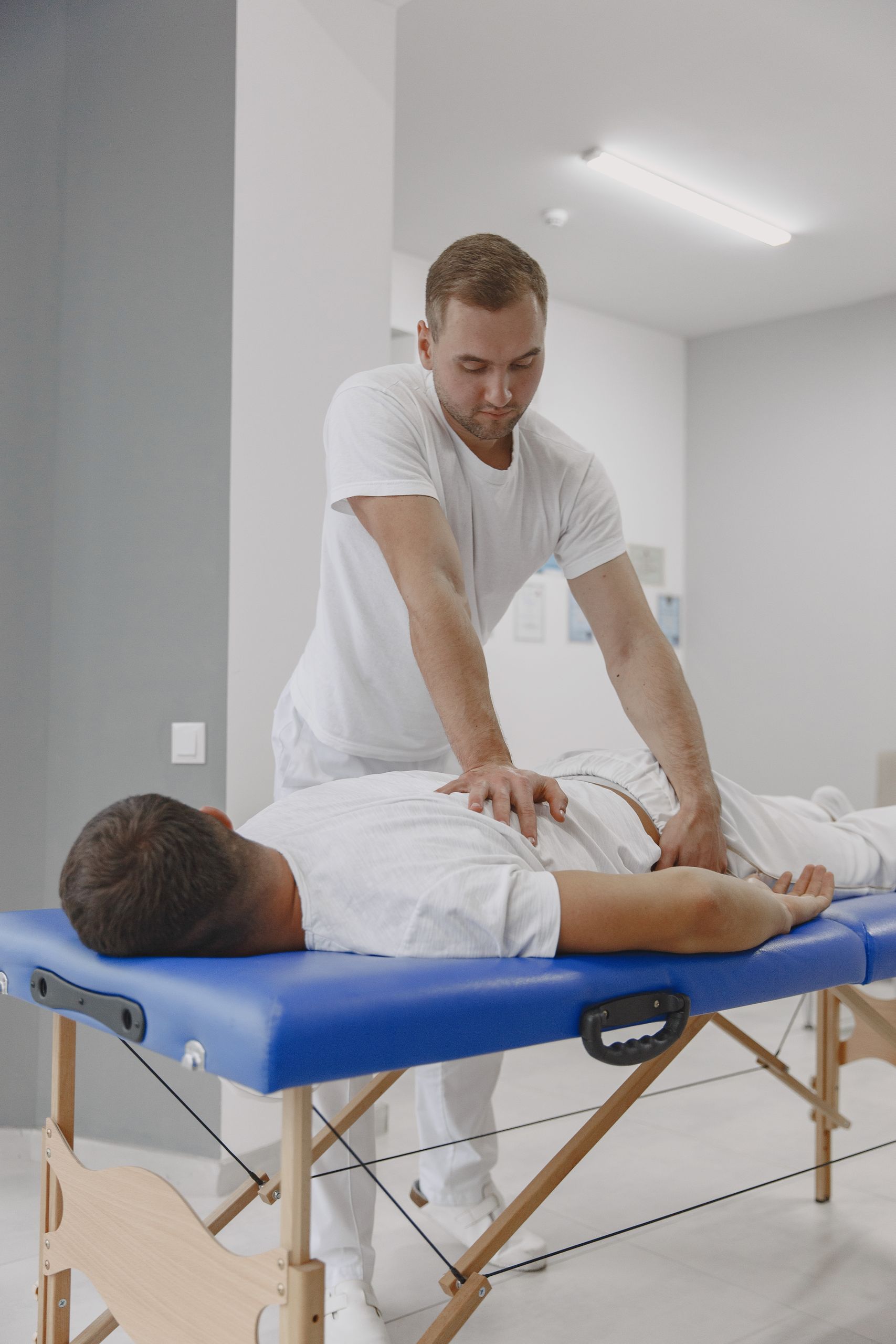
A chiropractor’s day is built around patients with pain or movement problems. A typical patient visit starts with a consultation and examination: the chiropractor takes a health history, asks about the pain or injury, checks posture and range of motion, tests muscles and reflexes, and reviews X-rays or other imaging when needed. Based on that assessment, the chiropractor makes a diagnosis and a treatment plan. Treatment often includes spinal manipulation — a controlled, hands-on adjustment of a joint — along with soft-tissue therapy, stretching, rehabilitative exercises, and advice on posture, ergonomics, and daily habits.
Chiropractors see a wide range of patients. Some treat office workers with neck and back pain from sitting all day. Others work with athletes recovering from sports injuries, older adults with joint stiffness, pregnant patients with back pain, or children with posture concerns. Many chiropractors also work alongside other healthcare professionals, referring patients to a medical doctor, physiotherapist, or orthopedic specialist when a problem needs care beyond chiropractic treatment. Knowing when to refer is one of the most important skills in the job: a good chiropractor recognizes red flags, such as unexplained weight loss, numbness, or signs of a fracture, and sends the patient for further medical investigation instead of treating them.
Most chiropractors work in private clinics, either their own or someone else’s. Some work in multidisciplinary health centers, sports clinics, hospitals, rehabilitation centers, or corporate wellness programs. A smaller number work in research, teaching, or occupational health. The work is physical and hands-on, and it involves standing for long periods and using your hands and body to perform adjustments all day. It also involves a lot of talking: explaining a diagnosis in plain language, teaching exercises, and building trust with patients who may be in pain and anxious.
Is Chiropractic a Good Career?
Chiropractic has real strengths. It is a respected healthcare profession with a clear, structured route to qualification. The work is hands-on and personal: you see patients improve, often over a short period, and you build long-term relationships with people in your community. There is genuine independence in the profession — many chiropractors run their own clinics and set their own schedules — and there are many directions to grow into, from sports chiropractic to pediatrics, rehabilitation, or teaching.
It also has honest downsides, and you should weigh them before committing. The education is long and expensive, and students usually graduate with significant debt. Income varies a great deal, especially in the first years, and self-employed chiropractors must find their own patients and manage a business on top of clinical work. The work is physically demanding, and some chiropractors develop strain injuries of their own if they do not look after their technique and their body. Demand for chiropractors also depends on the local market: in some areas there are many clinics competing for the same patients. Talk to working chiropractors, visit clinics, and ask about their daily reality before you apply. A few hours of honest conversation can save you years of regret.
Step 1: Complete the Undergraduate Prerequisites
Chiropractic school does not accept students straight from high school. Before you can apply, you must complete at least 90 semester credits of undergraduate coursework — roughly three years of full-time study — and most CCE-accredited programs require or strongly prefer a completed bachelor’s degree. Many students choose a Bachelor of Science in a subject such as exercise science, human biology, kinesiology, or health sciences, because the coursework overlaps with the prerequisites, but the degree subject matters less than completing the required science courses with good grades. Learning how to become a chiropractor starts with these science courses.
The required courses are science-heavy and overlap a great deal with pre-med preparation. Programs commonly require general biology with lab, general chemistry with lab, organic chemistry with lab, and physics, along with psychology and sometimes biochemistry, anatomy, or statistics. Exact requirements differ between schools, so check the admissions page of every school you are considering and plan your undergraduate courses around those lists. A course you skip in your second year can delay your application by a semester, so map your prerequisites early, ideally in your first year of undergraduate study.
Grades matter. Chiropractic programs are competitive, and a strong grade point average in your science courses is one of the main things admissions committees look at. If your grades in a key subject are weak, retaking the course or taking extra science electives can strengthen your application. Some schools also ask for letters of recommendation, a personal statement, and an interview, so build relationships with your professors and, if possible, spend time shadowing a practicing chiropractor. Shadowing shows the admissions committee that you understand the job, and it shows you whether the daily reality of the work suits you.
If you are changing careers and already hold a degree, check whether your existing coursework covers the prerequisites. Many career changers need only a few science courses rather than a whole new degree, but those courses must be taken at an accredited college, and some programs have a time limit on how old your science credits can be. Ask the admissions office of your chosen schools directly, in writing, before you enroll in any course.
Step 2: Earn a Doctor of Chiropractic (DC) Degree
The Doctor of Chiropractic (DC) degree is the central qualification, and it is awarded by chiropractic colleges accredited by the Council on Chiropractic Education (CCE), the body recognized by the U.S. Department of Education for chiropractic accreditation. Only graduate from a CCE-accredited program: graduation from an unaccredited program will not qualify you for the NBCE exams or for a state license in most states. Check a school’s accreditation status on the CCE website and on the school’s own site before you apply.
The DC program typically takes four years of full-time study, although some schools offer accelerated programs that run closer to three years by using year-round trimesters. The total coursework usually runs to around 4,500 contact hours. The first half of the program is heavily classroom-based and covers the basic sciences: anatomy, often including cadaver dissection, physiology, biochemistry, microbiology, pathology, neurology, and radiology. Alongside the sciences, you study the foundational chiropractic subjects — the principles of chiropractic care, spinal anatomy, and the theory behind spinal manipulation.
The second half of the program shifts toward clinical work. You learn chiropractic technique in practical classes, study diagnosis and case management, learn to read diagnostic imaging such as X-rays, and study nutrition, rehabilitation, and patient communication. In the final year, most of your time is spent in the college’s teaching clinic or in community clinics, treating real patients under the supervision of licensed chiropractors. This supervised clinical training is where classroom knowledge turns into professional skill, and it is the part of the program employers and licensing boards care most about.
Choosing a school is a major decision, so compare more than the brochure. Look at the school’s NBCE first-time pass rates, its clinic facilities and patient numbers, the experience of its faculty, and its tuition and financial aid. Visit the campus if you can, sit in on a class, and talk to current students and recent graduates about the workload, the quality of the teaching, and the support they received. Ask about the school’s approach to technique training and its clinical placements, because those shape how confident you feel when you graduate. And check the total cost carefully, including tuition, fees, books, equipment, and living costs — the DC degree is a large financial commitment, and you should go in knowing the full figure, not just the first year’s tuition.
Step 3: Complete Your Supervised Clinical Training
Clinical training is not an optional extra in chiropractic education — it is built into the DC degree, and it is where you learn to be a safe, competent practitioner. In the later years of the program, you work in the college clinic or an affiliated community clinic, seeing real patients under the supervision of licensed chiropractors. You take patient histories, perform examinations, make diagnoses, plan treatments, perform adjustments, and follow up on results, with your supervisor reviewing your work and guiding your decisions.
Take this stage seriously, because it is the closest thing to real practice you will get before you are licensed. See as many different kinds of patients as you can: different ages, different conditions, different levels of complexity. Volunteer for extra clinic hours if your school allows it, and ask your supervisors for honest feedback on your technique, your examination skills, and your communication with patients. The students who graduate most ready to practice are usually the ones who treated the clinic as their first job, not as a box to tick.
Clinical training is also where you discover which direction interests you. Some students find they love sports injuries and rehabilitation, others prefer working with older adults or with families, and some develop an interest in a specialty such as pediatric chiropractic. You do not need to decide your specialty before you graduate, but noticing what energizes you during your clinical year helps you choose your first job and your continuing education later. If your school offers elective placements — in a sports clinic, a hospital, or a community health center — take them, because they show future employers the range of your experience.
Step 4: Pass the NBCE Exams — Parts I, II, III, and IV
The National Board of Chiropractic Examiners (NBCE) administers the licensing exams that nearly every U.S. state requires. You take them in stages across your chiropractic program, and you must pass them to be licensed. The exam sequence is the same for most students, but the exact timing depends on your school’s schedule, so confirm the dates with your program. Knowing how to become a chiropractor also means knowing when each exam is taken.
Part I covers the basic sciences: anatomy, physiology, chemistry, pathology, microbiology, and spinal anatomy. It is a computer-based exam, usually taken during the second year of the program. Part II covers the clinical sciences: general diagnosis, neuromusculoskeletal diagnosis, diagnostic imaging, principles of chiropractic, chiropractic practice, and associated clinical sciences. It is also computer-based and is usually taken in the third year.
Part III is a written clinical competency exam, usually taken within a few months of graduation, covering case management, diagnostic imaging interpretation, chiropractic technique, and associated clinical sciences. Part IV is the practical exam: an Objective Structured Clinical Examination (OSCE) in which you work through patient-encounter stations, demonstrating case management, chiropractic technique, and imaging interpretation, and writing a patient note for each case. Part IV is usually taken within six months of graduation.
There is also a separate Physiotherapy exam, which is required by some states and not by others. It covers physiotherapy modalities and can be taken after completing the required hours of physiotherapy instruction in your program. Check whether your target state requires it before you graduate, so you can sit it at the right time rather than delaying your license.
The NBCE passing score for Parts I, II, and III is 375 on a scaled score range, and the NBCE recommends 375 for Part IV and Physiotherapy, although individual states can set their own standard for those exams. Exam fees change from year to year, so do not rely on figures in older articles: check the current fee schedule on the NBCE website at nbce.org before you register, and budget for all four parts plus Physiotherapy if you need it, along with any travel and accommodation for the Part IV exam, which is held at the NBCE Assessment Center in Greeley, Colorado.
Prepare for each part the way you would for any major professional exam. Study the official content outline for that part, work through practice questions, and focus extra time on your weakest subjects. Many students form study groups, use board-review courses, and take timed practice exams to build stamina. If you fail a part, find out which domains were weakest, study those specifically, and retake the exam in the next available window. A failed part is a delay, not the end of your career — many successful chiropractors retook at least one part — but it is worth preparing properly the first time, because retakes cost money and time.
Step 5: Apply for State Licensure
Passing the NBCE exams does not make you a chiropractor — a state license does. Chiropractic licensure is granted by individual states, not nationally, and every U.S. state requires a license to practice. The requirements differ from state to state, so the rules of the state where you plan to practice are the ones that matter, and you should read them on that state’s chiropractic board website early in your final year, not after you graduate.
Most state boards require a combination of the following: graduation from a CCE-accredited DC program, passing scores on the NBCE exams your state requires, a completed application and fee, a criminal background check and fingerprinting, and a jurisprudence exam — a test on that state’s chiropractic laws and rules. Some states require the Physiotherapy exam, some require proof of malpractice insurance, and some ask for personal references or an interview. A few states allow final-year students to begin the application process before graduation, while others require graduation first, so check the timing rules for your state and plan your application around them.
Apply carefully and keep copies of everything you submit. Send your NBCE score transcript through the official channel, and allow enough time for processing — boards can take weeks or months to review an application, and starting work before your license is issued is not permitted. If you plan to practice in more than one state, you will need a license in each one, and each state has its own application, fee, and jurisprudence exam. Some states have reciprocity or endorsement arrangements that make a second license simpler, but do not assume this: check each state’s rules separately.
Once licensed, you must maintain your license. Every state requires continuing education — a set number of approved hours over each renewal period — and the hours and rules vary by state. You must also renew your license on schedule and follow your state board’s rules on advertising, record-keeping, and professional conduct. Keep a file of your certificates, continuing education records, and renewal dates from the start of your career, because a lapsed license or a missed renewal can interrupt your ability to practice.
Step 6: Start Working — Join a Practice or Open Your Own
Most new chiropractors do not open a clinic on the day they are licensed. The common first step is to join an established practice as an associate chiropractor, where you treat patients, learn how a clinic runs, and build your clinical confidence with the support of experienced colleagues. An associate role gives you a steady income, mentoring, and a chance to see how scheduling, billing, insurance, and patient management actually work, without the financial risk of running your own business. Look for a practice whose approach and patient population match your interests, and ask about the mentoring you will receive, how your pay is structured, and what happens to your patients if you later leave.
Some new graduates work in multidisciplinary clinics, sports medicine centers, or rehabilitation facilities, which offer a different kind of experience and a broader team to learn from. Others take a salaried role in a corporate wellness program or a hospital setting. These roles can be a good fit if you prefer a regular schedule and a team environment over the independence of private practice.
Opening your own clinic is the most independent route, and the one many chiropractors aim for eventually, but it is also the most demanding. You need premises, equipment, insurance, a business plan, and a way to attract patients — and you must handle the business side, from bookkeeping to marketing, on top of treating patients. Most experienced chiropractors advise working as an associate for at least a year or two first, so that you build clinical speed, a patient base, and an understanding of clinic finances before you take on the costs of your own practice. When you are ready, get professional advice on business structure, insurance, and local regulations, and make a realistic budget that covers your first months of rent and expenses before the patient numbers build up. Whatever route you take, keep building your most in-demand skills — patient communication, diagnosis, and continuing education are what keep a chiropractor’s practice growing over a career.
Common Mistakes New Chiropractors Make
Choosing an Unaccredited Program
The most expensive mistake is enrolling in a chiropractic program that is not accredited by the CCE. Without CCE accreditation, your degree may not qualify you for the NBCE exams or for a state license, and years of study and tuition can be wasted. Verify accreditation on the CCE website before you apply, and be wary of any program that cannot show its accreditation clearly.
Ignoring the Prerequisites
Applying to chiropractic school without checking the prerequisite courses is a common delay. Students who discover in their final undergraduate year that they are missing organic chemistry or physics can lose a whole application cycle. Map the prerequisites of your target schools early, and confirm in writing that your courses count.
Underestimating the Cost
The DC degree, the NBCE exams, and the licensing process are expensive, and students who do not budget for the full cost can run into trouble in their final year. Add up tuition, fees, books, equipment, exam fees, travel for Part IV, licensing fees, and living costs for the whole program, and check what financial aid, scholarships, and loan options your schools offer. Do not rely on salary figures from job websites to justify the cost — check official sources and talk to recent graduates about what they actually earn in their first years.
Cramming for the NBCE Exams
The NBCE exams cover years of material, and students who leave revision until the last weeks often struggle. The smarter approach is to study steadily through the program, use the official content outlines, and take timed practice exams well before the real one. A failed part costs money and delays your license, so preparation is worth the effort.
Rushing Into Private Practice
Some new graduates open a clinic immediately, before they have the clinical speed, patient base, or business knowledge to support it. The result can be months of low income and high rent. Working as an associate first is usually the safer path: you earn while you learn, and you start your own practice from a position of strength.
Neglecting Communication Skills
Chiropractic is a people profession. Patients need to understand their diagnosis, their treatment plan, and what they can do at home, and they need to trust you enough to follow that plan. New chiropractors who focus only on technique and neglect communication often struggle to keep patients. Practice explaining things in plain language, listen carefully, and be honest when a patient’s problem needs referral elsewhere.
Getting Started Checklist
- Research what chiropractors actually do, and shadow a practicing chiropractor for a day if you can
- Check the undergraduate prerequisites of your target chiropractic schools and map your courses
- Complete at least 90 semester credits, including biology, chemistry, physics, and psychology — most students finish a bachelor’s degree
- Build a strong science grade point average and gather letters of recommendation
- Choose a CCE-accredited DC program and verify its accreditation, NBCE pass rates, and total cost
- Apply to chiropractic school and complete any interview or admissions requirements
- Work through the DC degree: basic sciences, technique, diagnosis, and imaging
- Make the most of your supervised clinical training and see a wide range of patients
- Pass NBCE Part I in your second year and Part II in your third year
- Sit Part III and Part IV around graduation, plus Physiotherapy if your state requires it
- Check your target state’s licensing rules early in your final year
- Apply for your state license, including the jurisprudence exam, background check, and fees
- Decide whether to start as an associate chiropractor or in a salaried role
- Plan your continuing education and keep your license renewal dates in a file
Conclusion
Becoming a chiropractor is a long road, but it is a clear one: complete your undergraduate prerequisites, earn a DC degree from a CCE-accredited program, pass the NBCE Parts I–IV exams, and meet your state’s licensing requirements. The journey typically takes seven to eight years, and it demands serious study, hands-on skill, and a genuine interest in helping people move and feel better. None of the steps is mysterious — the challenge is doing them in the right order, preparing properly for each exam, and not cutting corners on accreditation or state rules. That order is the core of how to become a chiropractor in the United States.
If you enjoy science, hands-on work, and direct patient care, chiropractic can give you a rewarding healthcare career with real independence. Start by checking the prerequisites and accreditation rules on the official sources linked in this guide, talk to working chiropractors about their daily reality, and plan your undergraduate courses around the schools you want to attend. Verify every fee, deadline, and requirement on the official websites before you spend money, and take the steps one at a time. The patients you will one day help are worth the preparation.
FAQ
How long does it take to become a chiropractor?
It typically takes seven to eight years from finishing high school: three to four years of undergraduate study, followed by a three-to-four-year Doctor of Chiropractic (DC) degree. After graduation, you still need to pass the NBCE exams and complete your state licensing process, which can add several months. The exact time depends on whether you complete a full bachelor’s degree first, whether your DC program is accelerated, and how quickly you pass each exam.
Do I need a bachelor’s degree to become a chiropractor?
Most CCE-accredited programs require at least 90 semester credits of undergraduate coursework, including biology, chemistry, physics, and psychology. Many programs require or strongly prefer a completed bachelor’s degree, and most students finish one before applying. Check the admissions requirements of each school you are considering, because the exact rules differ between programs.
What are the NBCE Parts I–IV exams?
The National Board of Chiropractic Examiners (NBCE) exams are the national licensing exams for chiropractors in the United States. Part I covers the basic sciences and is usually taken in the second year of chiropractic school. Part II covers the clinical sciences and is usually taken in the third year. Part III is a written clinical competency exam taken near graduation. Part IV is a practical exam, an Objective Structured Clinical Examination (OSCE) with patient-encounter stations, taken within six months of graduation. Some states also require the separate NBCE Physiotherapy exam. Check the current exam details, dates, and fees on the NBCE website at nbce.org.
How much does it cost to become a chiropractor?
The total cost varies a great deal between schools and states, and it changes from year to year, so this guide does not quote specific figures. Expect to pay for undergraduate study, DC program tuition and fees, books and equipment, NBCE exam fees for Parts I–IV and Physiotherapy if needed, travel for the Part IV exam, and state licensing application fees. Check the current tuition on each school’s official website and the current exam fees on the NBCE website before you commit, and ask about scholarships and financial aid.
Can chiropractors work in other countries?
Yes, but chiropractic regulation differs by country, and a U.S. license does not automatically allow you to practice elsewhere. Some countries have their own licensing exams and registration requirements, and some require additional study or assessment. If you plan to practice outside the United States, check the requirements of that country’s chiropractic regulator early, before you choose your program and your electives.