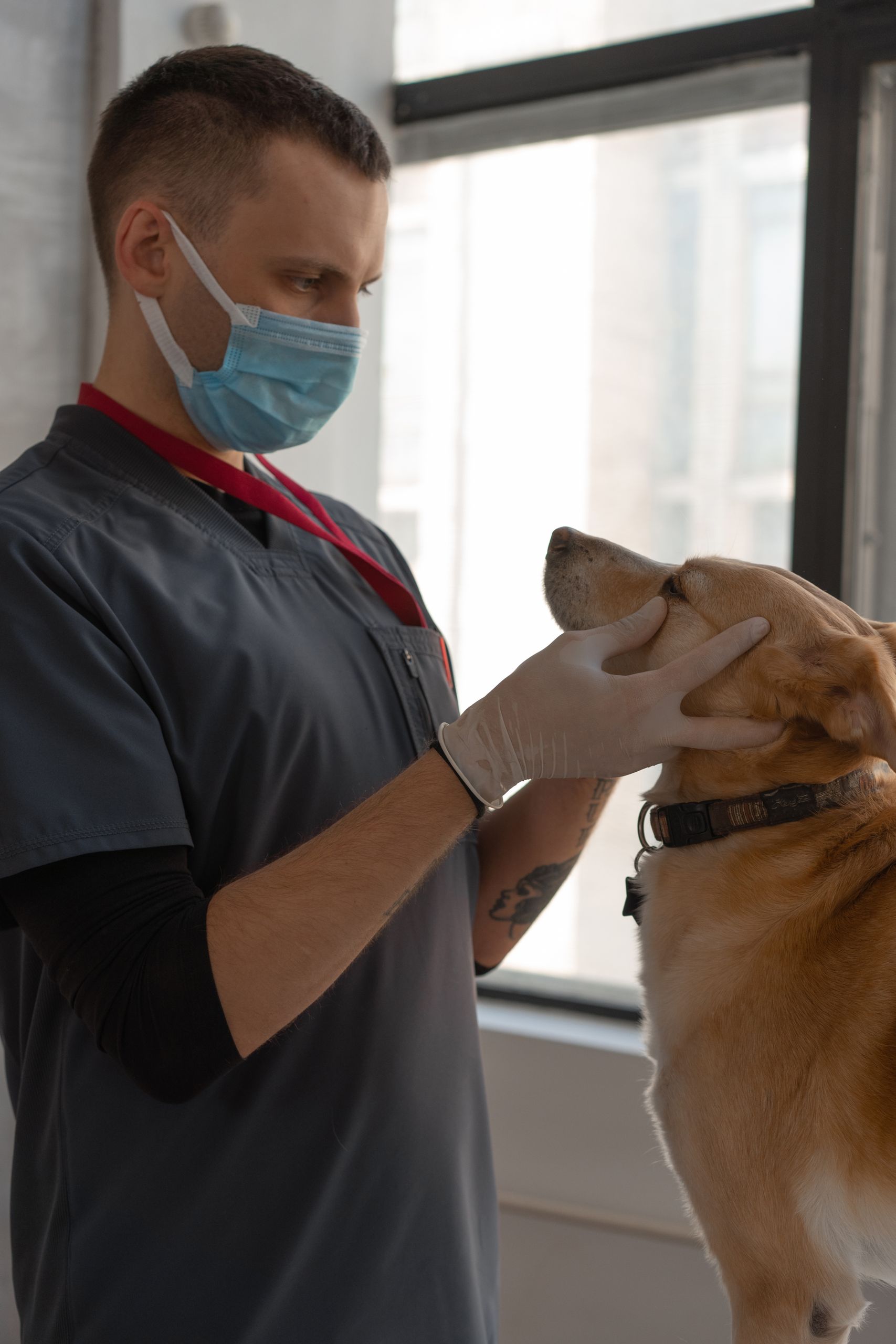
How to Become a Veterinary Technician: Programs and the VTNE
If you love animals and want a hands-on healthcare career without spending eight years in university, learning how to become a veterinary technician could be the right move for you. Veterinary technicians, often called vet techs, are the nurses of the animal world. They take blood samples, run laboratory tests, monitor anaesthesia, take X-rays, assist in surgery, and comfort worried pet owners — all in the same working day.
It is a skilled, respected profession with a clear qualification path: an accredited college program, a national exam, and a state credential. This guide walks you through every step, from choosing a program to passing the Veterinary Technician National Examination (VTNE), getting licensed in your state, finding your first job, and building a long-term career.
A veterinary technician is not the same as a veterinary assistant, and understanding the difference matters before you spend money on training. A veterinary assistant usually learns on the job and handles basic support tasks such as feeding animals, cleaning kennels, and restraining animals for examinations. A veterinary technician is a credentialed professional who performs clinical procedures, administers medication, and works under the supervision of a licensed veterinarian. The extra training is what makes the difference — in the work you are allowed to do, in the pay you earn, and in the doors that open later, including specialisation and teaching.
Table of Contents
Quick Answer
To become a veterinary technician, complete an American Veterinary Medical Association (AVMA) accredited veterinary technology program — usually a two-year associate degree — then pass the Veterinary Technician National Examination (VTNE) and meet your state’s credentialing requirements to become a Credentialed Veterinary Technician (CVT), Licensed Veterinary Technician (LVT), or Registered Veterinary Technician (RVT), depending on where you live. Most students finish in about two years of full-time study, including supervised clinical hours in a real veterinary practice. After that, you can work in small-animal clinics, emergency hospitals, zoos, research facilities, and more. Check your state’s rules early, because requirements vary by state, and always confirm current exam and licensing details on the official pages of the American Association of Veterinary State Boards (AAVSB) and your state veterinary board.
What Does a Veterinary Technician Do?
A veterinary technician’s day is varied, physical, and never boring. Your patients cannot tell you what hurts, so your job is part science, part observation, and part detective work. On a typical day in a small-animal clinic, a vet tech might start by checking on hospitalised animals, taking temperatures, and recording vital signs. Then they may draw blood from a nervous dog, run the sample through the in-house laboratory, and report the results to the veterinarian. Later they might prepare a cat for surgery, place an intravenous catheter, monitor anaesthesia during the procedure, and watch the animal wake up safely. Between patients, they take X-rays, clean and dress wounds, give vaccinations, fill prescriptions, and explain home-care instructions to pet owners.
The work goes far beyond holding animals still. Credentialed veterinary technicians perform diagnostic imaging, collect and analyse laboratory samples, administer anaesthesia, place catheters, perform dental cleanings, and assist in surgery. They also handle the human side of veterinary medicine: calming an owner whose dog has just been diagnosed with diabetes, explaining how to give insulin injections at home, and supporting families through difficult decisions at the end of a pet’s life. That emotional side of the job is real, and it is one of the reasons many vet techs describe the work as deeply rewarding — and sometimes emotionally hard.
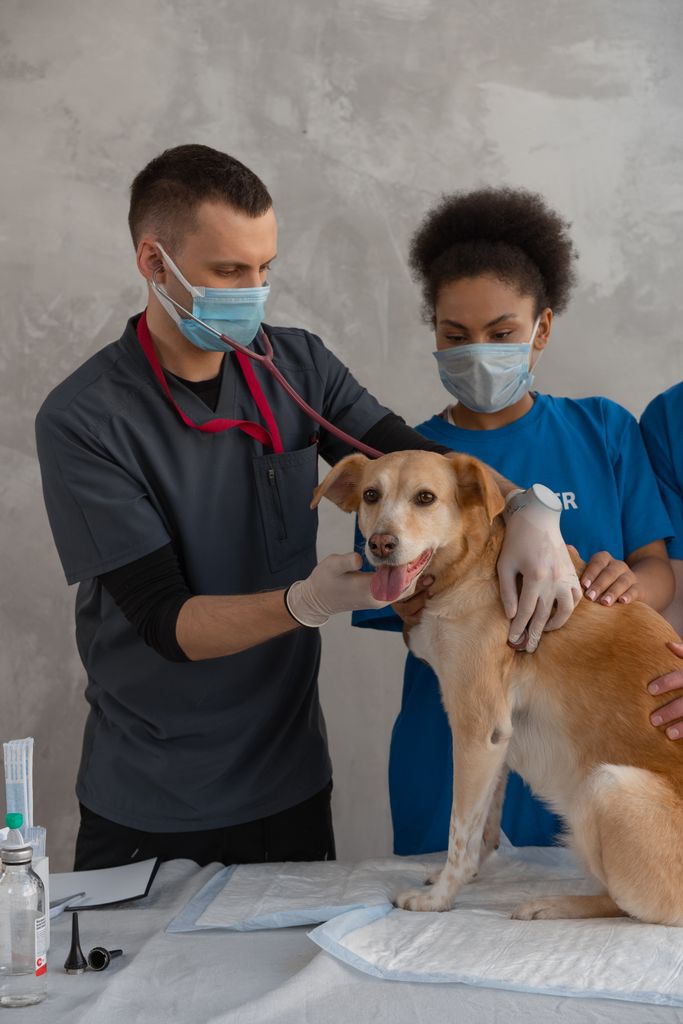
A Day in the Life
A typical day for a vet tech in a general practice might look like this. The morning begins with hospital rounds: checking every animal that stayed overnight, recording temperatures, heart rates, and appetite, and reporting anything unusual to the veterinarian. Then the appointment schedule begins. For each patient, the vet tech takes a history from the owner, weighs the animal, takes its temperature, and prepares it for the examination. Some appointments are routine vaccinations and wellness checks. Others are sick animals that need bloodwork, urine tests, or X-rays. In the afternoon, there may be scheduled surgeries — spays, neuters, dental cleanings, or lump removals — where the vet tech monitors anaesthesia and assists the surgeon. The day often ends with discharge instructions, phone calls to owners with test results, and updating medical records.
In an emergency hospital, the pace is different. Vet techs triage incoming patients, stabilise animals in shock, place IV lines, run emergency bloodwork, and assist with resuscitation. The work is intense, but many vet techs love the variety and the feeling of saving lives. In a specialty practice — cardiology, oncology, or orthopaedics, for example — vet techs develop deep expertise in one area and work with complex cases. In a zoo or wildlife centre, they work with exotic species. In research, they care for laboratory animals and support scientific studies. The qualification is the same; the setting changes the daily work completely.
Vet Tech vs. Veterinary Assistant vs. Veterinarian
These three roles are often confused, so here is the clear difference. A veterinary assistant supports the clinic team with basic tasks and usually needs no formal qualification — many assistants are trained on the job, and some complete a short certificate program. A veterinary technician has completed an accredited program, passed the VTNE, and holds a state credential, which allows them to perform clinical procedures that assistants cannot legally do. A veterinarian has completed a Doctor of Veterinary Medicine (DVM) degree — typically four years of veterinary school after a bachelor’s degree — and is the only one of the three who can diagnose disease, prescribe medication, and perform surgery.
Think of it like human medicine: the veterinary assistant is like a healthcare assistant, the veterinary technician is like a registered nurse, and the veterinarian is like a doctor. Each role matters, and they work as a team. For many people, the vet tech path is the sweet spot: real clinical responsibility and a respected professional credential, without the cost and length of veterinary school.
Is a Veterinary Technician Career Right for You?
Before you commit to a two-year program, it is worth being honest with yourself about what the job demands. The best vet techs share a few qualities. First, they genuinely love working with animals — not just playing with puppies, but handling sick, scared, and sometimes aggressive animals with patience and calm. Second, they are comfortable with science: biology, anatomy, chemistry, and maths are part of the training, and you will use them every day. Third, they can stay calm under pressure, because emergencies happen and animals in pain do not always cooperate. Fourth, they have emotional resilience: you will see animals suffer, and sometimes you will lose patients despite your best efforts. And fifth, they are good with people, because a large part of the job is talking to owners, explaining treatments, and giving bad news kindly.
Ask yourself a few honest questions. Can you handle blood, needles, and the sight of surgery? Are you comfortable working on your feet all day, lifting animals that can weigh more than you do? Can you cope with the emotional weight of euthanasia and loss? Are you willing to work evenings, weekends, and holidays, because animals get sick on Sundays too? If the answers are yes, this career can be deeply satisfying. If you are unsure, spend time in a clinic before you enrol — most practices welcome volunteers or work-experience students, and a few weeks of real exposure will tell you more than any article can.
What the Job Feels Like
Talk to working vet techs and you will hear the same themes. The work is physical and sometimes messy. You will be bitten, scratched, and covered in fur. You will have days when everything goes wrong and days when you help save an animal that would otherwise have died. The pay is modest compared with some healthcare careers, but the job satisfaction is high for people who love the work itself. Many vet techs say the hardest part is not the animals but the emotional toll and the feeling of being undervalued. The best clinics recognise their technicians, pay fairly, and use their skills fully — so choosing where you work matters as much as choosing the career.
Education: AVMA-Accredited Programs
If you are researching how to become a veterinary technician, the foundation of the career is an AVMA-accredited veterinary technology program. Accreditation matters enormously: in most states, you cannot sit the VTNE or become credentialed unless your program is accredited by the American Veterinary Medical Association’s Committee on Veterinary Technician Education and Activities (CVTEA). Before you apply anywhere, check that the program appears on the AVMA’s official list of accredited programs. If it does not, walk away, no matter how cheap or convenient it is.
The Associate Degree: The Standard Route
For most students, the standard route is a two-year Associate of Applied Science (AAS) degree in veterinary technology, offered by community colleges and some private colleges. The program combines classroom teaching with hands-on laboratory work and supervised clinical experience. You will study animal anatomy and physiology, pharmacology, anaesthesia, surgical nursing, diagnostic imaging, clinical pathology, animal behaviour, and veterinary office procedures. You will also complete clinical placements — often called practicums or externships — in real veterinary practices, where you practise your skills on real patients under supervision.
Full-time students typically finish in about two years. Part-time study takes longer, often three to four years, and suits people who are working or caring for family. Some colleges offer evening or weekend classes, and a growing number offer online programs with in-person clinical placements arranged locally. Online programs can work well, but check carefully how clinical hours are arranged and whether the program is fully accredited — an online program that is not accredited is worthless for licensing.
The Bachelor’s Degree Option
Some students choose a four-year bachelor’s degree in veterinary technology instead. A bachelor’s degree covers the same core clinical training as the associate degree, plus more advanced science, management, and research courses. It can open doors to teaching, management, industry roles, and specialist positions, and it may help if you later want to apply to veterinary school. But it is not required to become a vet tech, and it costs more and takes twice as long. For most people who want to start working as soon as possible, the associate degree is the smarter choice. You can always add a bachelor’s degree later, often online while you work.
What You Will Study
The curriculum is broad because the job is broad. In your first year you will usually study the foundations: animal anatomy and physiology, medical terminology, animal nutrition, and the basics of animal handling and restraint. You will learn how to take a patient history, perform a physical examination, and record your findings accurately. In the second year the work becomes more clinical: anaesthesia and surgical nursing, diagnostic imaging, laboratory procedures, pharmacology, dentistry, and emergency and critical care. You will learn to place catheters, draw blood, run blood counts, read urine samples, take and process X-rays, monitor anaesthesia, and assist in surgery. Many programs also include courses on animal behaviour, exotic animals, large animals, and veterinary practice management. By graduation you should be able to perform the full range of tasks listed in the AVMA’s essential skills list — the checklist of competencies every accredited program must teach.
Admission Requirements
Most associate degree programs require a high school diploma or equivalent, and some require specific high school courses in biology, chemistry, and maths. Competitive programs may ask for a minimum GPA, an entrance exam, or a short interview. Some programs give preference to applicants with animal experience — volunteering at a shelter, working in a clinic, or even keeping animals at home. If your grades in science are weak, consider taking a preparatory course or a college biology class first. It is better to arrive prepared than to struggle through the first semester. Check each program’s admission page for its exact requirements, because they vary.
How to Choose a Program
Choosing the right program is one of the most important decisions in this whole process. Start with accreditation: the program must be AVMA-accredited, full stop. Then look at the VTNE pass rate — accredited programs publish their graduates’ first-time pass rates, and a strong program will have a high one. Ask about clinical placements: does the college arrange them, or must you find your own? How many hours of hands-on experience will you get? Visit the campus if you can, and look at the teaching facilities: a program with its own kennels, laboratory, and X-ray equipment will give you far better practical training than one that teaches everything from a textbook. Talk to current students and recent graduates if possible. Ask about the total cost, including textbooks, uniforms, and exam fees, and ask what financial aid is available. Finally, check whether the program offers job placement help or has relationships with local clinics — a program that employers trust will make your first job search much easier.
The VTNE Exam: What to Expect
After you graduate from an accredited program, the next step is the Veterinary Technician National Examination, known as the VTNE. This is the national exam that tests whether you are ready to practise as a veterinary technician. It is administered by the American Association of Veterinary State Boards (AAVSB), and most states require you to pass it before you can become credentialed.
What the VTNE Covers
The VTNE is a computer-based exam with 200 multiple-choice questions, of which 170 count toward your score and 30 are trial questions being tested for future exams. You have three hours to complete it. The exam covers nine areas: pharmacy and pharmacology, surgical nursing, dentistry, laboratory procedures, animal nursing, diagnostic imaging, anaesthesia and analgesia, emergency medicine and critical care, and practice management. The largest sections are pharmacy and pharmacology, and surgical nursing. The questions test applied knowledge, not memorisation — you will be asked what you would do in a clinical situation, which drug is appropriate, or what a laboratory result means. Confirm the current format and fees on the AAVSB website, because details change.
How to Prepare
The best preparation is a good program — students from strong programs with solid clinical training pass at high rates. Beyond that, most graduates spend several weeks revising before the exam. Useful strategies include working through a VTNE review book, taking practice exams under timed conditions, and revising the areas where you are weakest rather than re-reading what you already know. Study groups help, because explaining a concept to someone else is one of the best ways to learn it. Many graduates also use online question banks. Give yourself at least six to eight weeks of structured revision, and treat it like a part-time job: a few focused hours a day, with rest days built in. Cramming the night before rarely works for an exam this broad.
When and How to Take It
The VTNE is offered in three testing windows each year — typically in spring, summer, and winter — at testing centres across the United States and Canada. You apply through the AAVSB, pay the exam fee, and book your test centre and date. Your state board may also need to approve your application before you can sit the exam, so check your state’s process early. If you do not pass on the first attempt, you can retake the exam in a later window — many good vet techs pass on their second attempt, and a failed attempt is a setback, not a dead end. Review your score report, focus on your weak areas, and try again.
State Licensing and Credentialing: Check Your State
Passing the VTNE is not quite the end of the process. Each state has its own rules for credentialing veterinary technicians, and the title differs by state: Credentialed Veterinary Technician (CVT) in some states, Licensed Veterinary Technician (LVT) in others, and Registered Veterinary Technician (RVT) in others still. Some states require a state exam or a jurisprudence exam in addition to the VTNE. Some require a background check. A few states do not formally credential vet techs at all, though the VTNE is still valued by employers there. The rule is simple: check your state veterinary board’s website early in your training, so there are no surprises after graduation. Requirements vary by state, and only your state board can give you the definitive answer for where you plan to work.
Once credentialed, you must maintain it. Most states require continuing education — a set number of hours of approved learning each renewal period — and a renewal fee. Continuing education keeps your knowledge current and is also how you build toward specialisation. Keep records of every course you complete, because your state board may ask for proof.
Getting Experience Before and During School
Experience before you enrol makes you a stronger applicant and a better student. Volunteer at an animal shelter, a rescue organisation, or a wildlife centre. Ask your local veterinary clinic whether you can shadow a vet tech for a day, or volunteer for a few hours a week. Even working in a pet store or as a dog walker teaches you about animal behaviour and handling. If you are already working, look for a part-time or weekend role in a clinic — many vet techs start as receptionists or kennel assistants and move into the technician program from inside the practice.
During your program, make the most of your clinical placements. Treat every placement like a long job interview, because it often is — clinics hire the students who are reliable, keen, and easy to work with. Ask questions, volunteer for tasks, and keep a log of the procedures you perform. That log becomes evidence of your competence and useful material for your CV. For guidance on presenting your experience to employers, see our guide on how to write a resume.
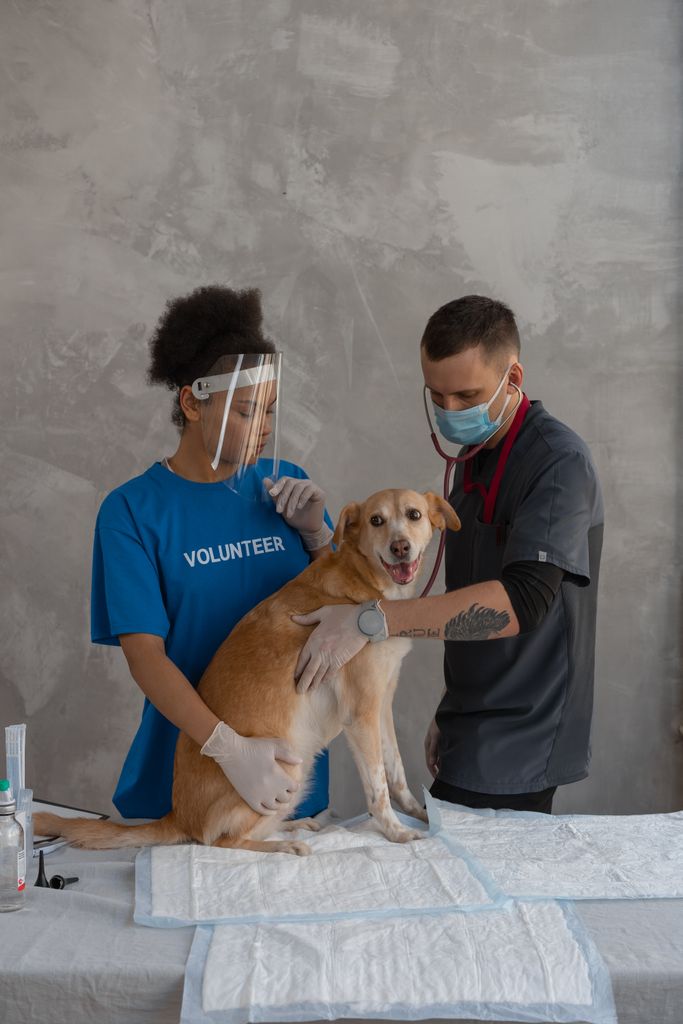
Pay, Job Outlook, and Where Vet Techs Work
Pay for veterinary technicians varies by location, setting, and experience, so treat any single figure with caution and check current data before you plan your finances. According to the U.S. Bureau of Labor Statistics, veterinary technologists and technicians earn a modest but liveable wage, with emergency and specialty hospitals and research facilities generally paying more than small general practices. Large cities and high-cost areas usually pay more, but the cost of living is higher there too. New graduates earn the least, and pay rises with experience, additional skills, and specialisation. Some clinics offer benefits that matter as much as salary: health insurance, paid time off, uniform allowances, continuing education funding, and discounts on veterinary care for your own pets. When you compare job offers, compare the whole package, not just the hourly rate — and read our guide on how to negotiate salary for your first job before you accept your first offer.
The job outlook is strong. Demand for veterinary technicians is growing faster than average, driven by more pet ownership, more advanced veterinary medicine, and more owners willing to pay for quality care. Clinics across the United States and Europe report shortages of credentialed technicians, which means qualified graduates usually find work quickly. That shortage also gives experienced technicians bargaining power: clinics that want to keep good staff are increasingly offering better pay, flexible schedules, and career development. The profession is also becoming more visible and more respected, with growing recognition that credentialed technicians are essential to modern veterinary care, not optional extras.
Where You Can Work
Most vet techs work in small-animal clinics, but the career is much broader than that. Emergency and critical care hospitals offer fast-paced work and higher pay. Specialty referral practices — cardiology, oncology, neurology, surgery — offer deep expertise in one field. Large-animal and equine practices work with horses, cattle, and farm animals, often outdoors and on the road. Zoos, aquariums, and wildlife rehabilitation centres employ vet techs to care for exotic species. Research institutions and universities employ vet techs in laboratory animal care. Pharmaceutical and pet food companies hire vet techs for sales, technical support, and product development. Government agencies employ vet techs in animal control, public health, and food safety. And some experienced vet techs move into teaching, practice management, or running their own training courses. Your first job does not have to be your last job — the qualification travels with you.
Specialisations
After a few years of experience, you can specialise. The National Association of Veterinary Technicians in America (NAVTA) recognises veterinary technician specialists in areas including anaesthesia and analgesia, dentistry, emergency and critical care, internal medicine, behaviour, nutrition, oncology, surgery, and more. Specialisation usually requires several years of experience in the specialty, a case log, and a specialist examination. It takes effort, but it brings higher pay, more interesting work, and greater professional standing. Even without formal specialisation, you can build expertise in an area you love — feline medicine, exotic animals, or rehabilitation, for example — and become the person your clinic turns to for those cases.
Your Step-by-Step Plan
Here is the whole path for how to become a veterinary technician, in order, from today to your first job.
Step 1: Get Real Exposure
Volunteer at a shelter or shadow a vet tech for a few days. Make sure you actually enjoy the work before you pay for training. Keep a note of what you see and learn — it will help your program application too.
Step 2: Check Your State’s Rules
Look up your state veterinary board and note what credential it requires, whether it needs a state exam, and what the renewal rules are. This takes an hour and prevents expensive surprises later.
Step 3: Choose an AVMA-Accredited Program
Compare accredited programs on accreditation, VTNE pass rates, clinical hours, facilities, cost, and location. Apply to more than one. Ask about financial aid, scholarships, and part-time options.
Step 4: Complete the Program
Take the science seriously from day one. Attend every laboratory session, because practical skills cannot be learned from a textbook. Use your clinical placements to build competence and contacts.
Step 5: Pass the VTNE
Give yourself six to eight weeks of structured revision after graduation. Use practice exams, study with classmates, and focus on your weak areas.
Step 6: Get Credentialed in Your State
Apply to your state board, complete any additional state requirements, and get your CVT, LVT, or RVT credential. Do not start work that requires a credential until you hold it.
Step 7: Find Your First Job
Apply to clinics that use their technicians well — ask in interviews what procedures technicians are allowed to perform, because a clinic that lets you use your full skills is worth more than a slightly higher wage at a clinic that does not. Tailor your CV to each role, and prepare for practical interviews where you may be asked to demonstrate handling or laboratory skills.
Step 8: Keep Learning
Complete your continuing education every year, consider specialisation after a few years, and keep building your skills. The best vet techs never stop learning, because veterinary medicine never stops changing.
Common Mistakes to Avoid
Choosing a Non-Accredited Program
The most expensive mistake is enrolling in a program that is not AVMA-accredited. You may complete the course and discover you cannot sit the VTNE or become credentialed. Always verify accreditation on the AVMA’s official list before you pay anything.
Underestimating the Science
Some students enrol because they love animals and are surprised by how much anatomy, pharmacology, and maths the program contains. The science is the job. If you struggle with it, get help early — tutoring, study groups, and extra practice — rather than falling behind.
Skipping Clinical Experience
Classroom knowledge is not enough. Students who avoid hands-on work or treat placements as a formality graduate less confident and less employable. Volunteer for every procedure, ask to practise, and build your skills deliberately.
Ignoring State Rules Until Graduation
Students sometimes discover after graduation that their state needs an extra exam, a background check, or additional paperwork. Check your state’s requirements in your first semester, not your last.
Choosing a Clinic That Does Not Use Your Skills
Some clinics hire credentialed technicians but only let them do assistant-level work. In your job interviews, ask directly what clinical tasks technicians perform, how the team is structured, and whether technicians are encouraged to specialise. A clinic that values its technicians will answer proudly.
Burning Out Early
Vet techs are known for compassion fatigue — the emotional exhaustion that comes from caring deeply in a job with suffering and loss. Protect yourself from the start: keep boundaries, talk to colleagues, take your days off, and use the support your workplace offers. A long career needs a sustainable pace.
How to Become a Veterinary Technician Checklist
- Confirm that you enjoy real clinical work by volunteering or shadowing in a veterinary practice
- Check your state veterinary board’s credentialing requirements and note the title used in your state
- Choose an AVMA-accredited veterinary technology program and compare VTNE pass rates, clinical hours, and total cost
- Complete the associate degree, or a bachelor’s degree if that fits your goals, including all supervised clinical hours
- Revise for six to eight weeks and pass the VTNE
- Complete any state exam or paperwork and receive your CVT, LVT, or RVT credential
- Apply for first jobs at clinics that use technicians’ full clinical skills, with a tailored CV
- Negotiate your first offer with the full benefits package in mind, not just the hourly rate
- Complete continuing education every year and keep records for renewal
- Consider specialisation after a few years of experience in an area you love
- Look after your emotional wellbeing and build a sustainable pace for a long career
Conclusion
Learning how to become a veterinary technician is a clear, achievable path into a skilled healthcare profession: an accredited two-year program, the VTNE, and a state credential, followed by a career with real clinical responsibility and strong demand.
It is not the easiest route — the science is demanding, the work is physical, and the emotional weight is real — but for people who love animals and want to make a practical difference, it is one of the most rewarding careers available without a long university degree. Start with real exposure in a clinic, choose an accredited program, check your state’s rules early, and take the VTNE seriously. Do that, and you will join a profession that needs you, values you, and offers a lifetime of learning and variety.
FAQ
How long does it take to become a veterinary technician?
Most students finish an AVMA-accredited associate degree in about two years of full-time study, then take the VTNE and complete their state credentialing, so the full path from starting college to working as a credentialed vet tech is usually around two to two and a half years. Part-time study takes longer, often three to four years. A bachelor’s degree route takes about four years.
Do I need a degree to become a veterinary technician?
In most states, yes — you need to graduate from an AVMA-accredited veterinary technology program, usually a two-year associate degree, to sit the VTNE and become credentialed. A small number of states allow alternative routes, but the accredited program is the standard and safest path everywhere, and employers strongly prefer it.
How hard is the VTNE exam?
The VTNE is a challenging exam that covers nine areas of veterinary technology, from pharmacology to anaesthesia to emergency care, in 200 multiple-choice questions over three hours. Graduates of strong accredited programs with solid clinical training pass at good rates, especially when they revise for several weeks with practice exams. It tests applied clinical judgement, not memorisation, so hands-on experience during your program matters as much as revision.
What is the difference between a CVT, LVT, and RVT?
They are the same professional role with different titles in different states. CVT stands for Credentialed Veterinary Technician, LVT for Licensed Veterinary Technician, and RVT for Registered Veterinary Technician. Which title you hold depends on the state where you are credentialed, and the requirements — the VTNE plus any state-specific steps — vary by state. Always check your own state board.
How much do veterinary technicians earn?
Pay varies by location, setting, and experience, so check current figures before planning your finances. Emergency and specialty hospitals and research facilities generally pay more than small general practices, and pay rises with experience and specialisation. The U.S. Bureau of Labor Statistics publishes current wage and employment data for veterinary technologists and technicians, and you should use it as your source for up-to-date numbers.