How to Become an HVAC Technician: Training, EPA 608 and Salary
If you like fixing things, working with your hands, and solving a different problem every day, learning how to become a HVAC technician is one of the most practical career moves you can make. HVAC stands for heating, ventilation, and air conditioning, and HVAC technicians install, maintain, and repair the systems that keep homes, offices, schools, and hospitals warm in winter and cool in summer. Every building has these systems, every system breaks down eventually, and nobody can do this work from a desk — which means the demand is steady, the work is varied, and the pay is solid for a career that does not require a university degree.
This guide explains the full path: the training, the apprenticeship route, the EPA 608 certification you must have, the state licensing rules, and what the salary picture really looks like.
HVAC is also one of the best trades for a career changer. Many technicians start in their thirties or forties, coming from retail, warehousing, construction, or the military, and the industry welcomes them — because what matters is the training and the willingness to learn on the job. If you are thinking about a change, our guide to the best career change at 40 puts HVAC alongside other realistic options for mid-life changers, and it is worth reading before you decide.
Quick Answer
To become a HVAC technician, complete a training program at a trade school or community college, or start an apprenticeship with an HVAC employer, then earn your EPA 608 certification, which is legally required to handle refrigerants. Training programs usually take six months to two years, while apprenticeships take three to five years but pay you while you learn. Many states also require a separate HVAC license or registration, and the rules vary widely, so check your own state’s requirements before you choose a route. Once qualified, you can work for an HVAC company, a building maintenance team, or for yourself. Salaries vary by state, experience, and specialisation, so check the latest figures on the U.S. Bureau of Labor Statistics page for heating, air conditioning, and refrigeration mechanics (https://www.bls.gov/ooh/installation-maintenance-and-repair/heating-air-conditioning-and-refrigeration-mechanics-and-installers.htm) before you plan around a number.
Table of Contents
What Does a HVAC Technician Do?
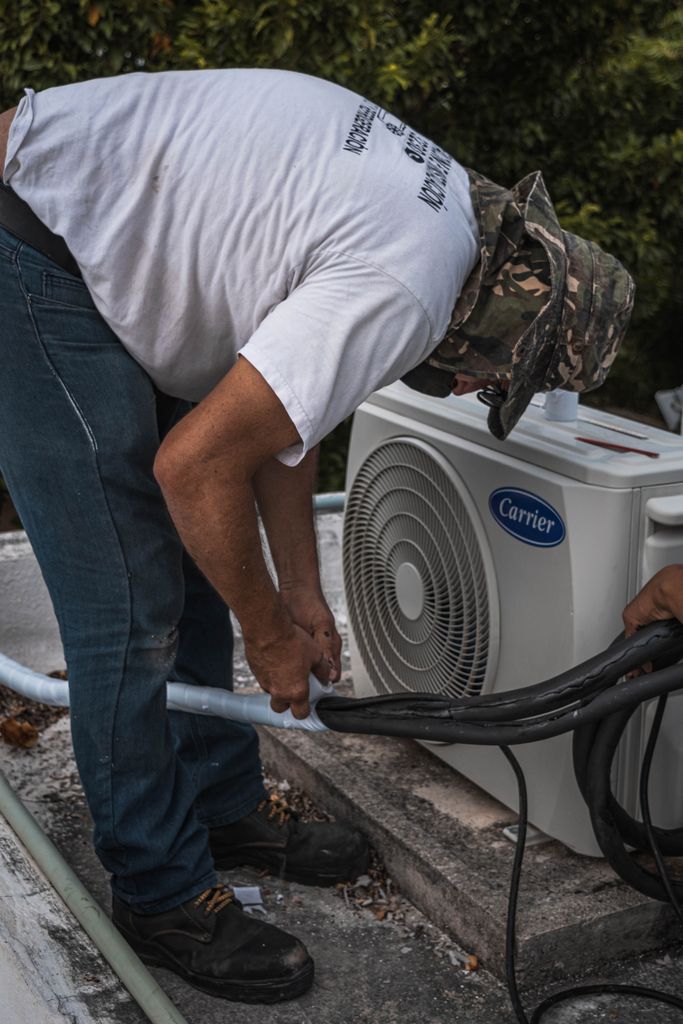
A HVAC technician installs, services, and repairs heating, ventilation, air conditioning, and refrigeration systems. That covers a wide range of equipment: furnaces, boilers, heat pumps, central air conditioners, ductwork, thermostats, ventilation systems, and commercial refrigeration units. On a typical day, a technician might install a new air conditioning unit in a home, service a furnace before winter, diagnose a fault in a commercial refrigeration system, or replace a thermostat in an office block.
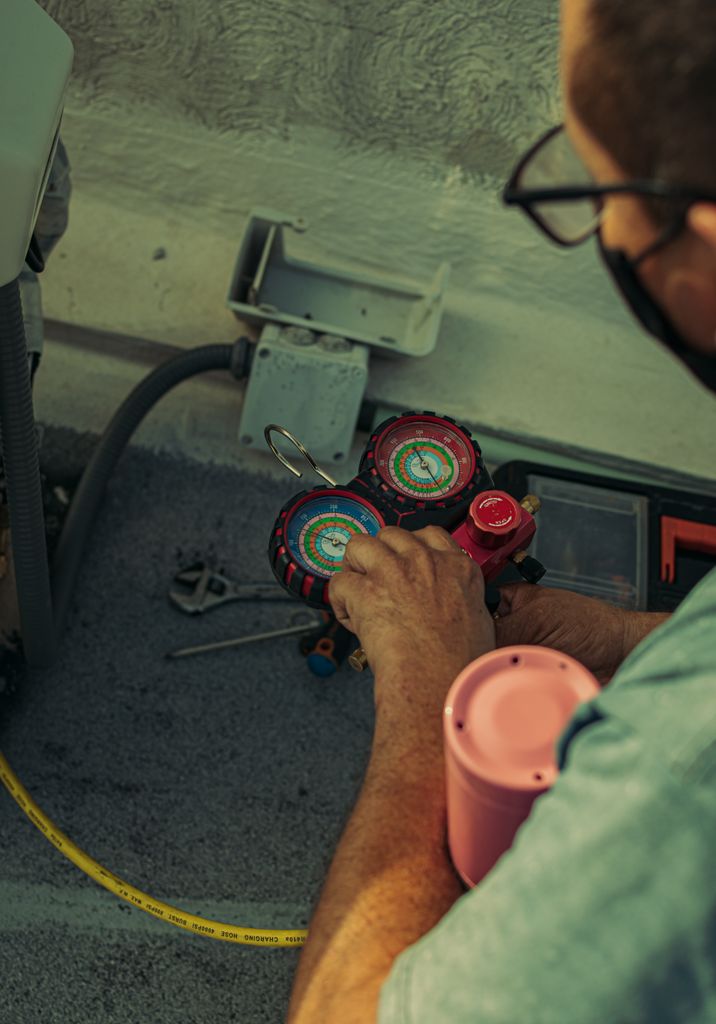
The work has three main parts. Installation means fitting new systems, running pipework and ductwork, wiring controls, and testing that everything works safely. Maintenance means regular servicing — cleaning coils, changing filters, checking refrigerant levels, and testing safety controls — so that systems run efficiently and do not break down. Repair means diagnosing faults, often under pressure when a customer’s heating has failed in winter or their cooling has failed in summer, and fixing them quickly and correctly.
Technicians spend most of their time on site, not in an office. They drive between jobs, carry tools and parts, work in attics, basements, rooftops, and plant rooms, and deal directly with customers. The work is physical: lifting heavy equipment, working in hot or cold spaces, and spending long periods on your feet or on a ladder. It is also technical: modern HVAC systems are controlled by electronics and software, and a good technician needs to understand wiring diagrams, read gauges, use diagnostic tools, and keep up with new technology such as smart thermostats and heat pumps.
Residential vs. Commercial vs. Industrial
Most technicians start in residential work — homes, flats, and small buildings — where the systems are smaller and the jobs are shorter. Commercial work covers offices, shops, schools, and hospitals, where the systems are larger, the controls are more complex, and the jobs take longer. Industrial work covers factories, warehouses, and large refrigeration systems, where the equipment is biggest and the technical demands are highest. Pay tends to rise as you move from residential to commercial to industrial, and many technicians specialise over time. You do not need to choose a specialism on day one — but it is worth knowing the ladder exists.
Is HVAC the Right Career for You?
HVAC suits people who enjoy practical problem-solving, who are comfortable with tools, and who do not mind physical work in all weathers. You need to be good with your hands, able to follow technical diagrams, and willing to keep learning, because the equipment changes every year. You need customer skills too: you will be in people’s homes and businesses, explaining what is wrong and what it will cost, and customers remember the technician who was honest and tidy as much as the one who fixed the problem.
It suits career changers particularly well, because employers value maturity, reliability, and life experience, and because the training is short enough to fit around a working life. If you are weighing a move into a trade, read our guide on career change alongside this one — it covers how to plan the switch, including the money and the timing, which matter as much as the training itself.
Before you commit, try to spend a day with a working technician. Many HVAC companies will welcome a serious enquiry from someone considering the trade, and a day on the tools will tell you more than any guide can: the pace, the physical demands, the variety, and the satisfaction of fixing something that was broken. If you enjoy the day, you have a good answer — and a real sense of what learning how to become a HVAC technician involves.
How to Become a HVAC Technician: Step by Step
There are two main routes into the trade — trade school and apprenticeship — and the steps below cover both. The order can vary: some people train first and then find work, others start as a helper and train while they earn. Either way, the EPA 608 certification and the state licensing rules apply to everyone.
Step 1: Finish High School and Build the Basics
You need a high school diploma or equivalent to enter most training programs and apprenticeships. While you are still at school, focus on maths, physics, and any shop or technical classes your school offers. Maths matters more than most people expect: you will calculate loads, read pressure and temperature, work out airflow, and size equipment. A basic understanding of electricity helps too, and if your school offers an electronics or shop class, take it.
If you left school long ago, do not worry. Most programs will accept you with a GED or equivalent, and some will help you brush up on the maths you need. What matters is that you can handle the technical content of the course, not how recently you sat in a classroom. A driving license is also important, because most HVAC work involves driving to customers — if you do not have one, getting it should be part of your plan.
Step 2: Choose Your Route — Trade School or Apprenticeship
This is the biggest decision you will make, and both routes lead to the same career. Here is how they compare.
Trade school or community college. A formal training program, usually lasting six months to two years. You study in a classroom and a workshop, learn the theory and the practical skills, and graduate with a certificate or an associate degree. The advantage is speed and structure: you learn the full range of skills in a short time, and many programs include EPA 608 exam preparation. The disadvantage is cost: you pay tuition, and you are not earning while you study. Community colleges are usually the most affordable option, and financial aid may be available. Check that the program is accredited or well regarded locally, ask about its job placement record, and talk to graduates before you enrol.
Apprenticeship. You are hired by an HVAC employer or a union program, and you learn on the job while attending classes, usually one or two evenings a week. Apprenticeships typically last three to five years, and you are paid from day one, with your pay rising as your skills grow. The advantage is clear: you earn while you learn, you build real experience, and you usually have a job at the end. The disadvantage is time: it takes longer to become fully qualified, and good apprenticeship places are competitive. Union apprenticeship programs, run through trade unions, are particularly well regarded, and they are worth applying for early because places are limited.
Which should you choose? If you need an income now and you can get an apprenticeship place, take it. If you want to qualify faster and you can afford the tuition, trade school is the quicker route. Many technicians combine the two: a short trade school course to get the basics and the EPA 608, followed by a job as a junior technician or installer, learning the rest on the job. There is no wrong choice here — only the choice that fits your money, your time, and your situation.
Step 3: Complete Your Training
Whether you are in trade school or an apprenticeship, the training covers the same core subjects. Expect to study refrigeration theory, heating systems, air conditioning systems, electrical controls, ductwork and airflow, heat pumps, and safety — including working with refrigerants, electricity, and gas. You will learn to read wiring diagrams and technical manuals, use diagnostic instruments such as multimeters and pressure gauges, and follow the safety rules that govern the trade.
The practical work is the heart of the training. You will install, service, and repair real equipment in a workshop, and in an apprenticeship you will do it on real customer sites under a qualified technician. Take the practical work seriously: the exam and the job both test what you can do, not what you can recite. Ask questions, volunteer for the difficult jobs, and practise the skills you find hardest until they are comfortable.
Most programs also include preparation for the EPA 608 exam, which is covered in detail below. If yours does not, ask your instructor or your employer how to prepare for it — you will need it before you can legally handle refrigerants, which is part of almost every HVAC job.
Step 4: Earn Your EPA 608 Certification
The EPA 608 certification is the single most important qualification for a HVAC technician in the United States, and it is not optional. Under federal law, anyone who handles refrigerants — which is almost every HVAC technician — must hold an EPA 608 certification. There is no legal way to work in the trade without it.
The certification has four types, and the type you need depends on the equipment you work on:
- Type I — Small Appliances. Covers small, self-contained appliances such as domestic refrigerators and window air conditioners. This is the most basic level.
- Type II — High-Pressure Appliances. Covers high-pressure systems, including most residential and commercial air conditioning and heat pumps. This is the level most technicians need.
- Type III — Low-Pressure Appliances. Covers low-pressure systems, including large chillers used in commercial and industrial buildings.
- Universal. Covers all three types. This is the best choice for most new technicians, because it qualifies you for the widest range of work and employers prefer it.
The exam is a multiple-choice test, and you can sit it through an approved certifying organisation or through your training program. The core section covers general refrigerant knowledge, and each type adds its own questions. Most training programs include the exam or prepare you for it, and there are study guides and practice tests available. Many technicians pass the Universal exam on their first attempt after proper preparation — but study for it properly, because the questions are specific and the details matter.
Your EPA 608 certification does not expire, which is one less thing to track — but keep your certificate safe, because employers will ask to see it, and you will need to show it when you apply for jobs.
Step 5: Get Any Other Certifications That Help
EPA 608 is the legal minimum, but other certifications make you more employable and better paid. The most useful are:
- NATE certification. Offered by North American Technician Excellence, NATE is the industry’s best-known voluntary certification. It tests your knowledge of installation and service, and many employers prefer or require it. It is worth earning once you have some experience.
- HVAC Excellence or RSES certification. Other respected industry certifications that show an employer you have tested skills beyond the minimum.
- Manufacturer certifications. Equipment manufacturers run their own training and certification for their products. These are valuable if you work for a company that installs a particular brand.
- Specialist certifications. If you work with boilers, oil burners, or commercial refrigeration, there are specialist qualifications for each. These take time, but they open higher-paid work.
You do not need all of these to start. Get your EPA 608, get a job, and add certifications as your career develops. Each one is a step up in pay and in the range of work you can do.
Step 6: Meet Your State’s Licensing Requirements
Here is the part that catches many new technicians by surprise: on top of the federal EPA 608, many states require their own HVAC license or registration, and the rules vary enormously from state to state. This is the area where you must check your own state’s rules rather than relying on general advice.
Some states require a full HVAC contractor’s license, with an exam and a minimum number of years of experience, before you can work independently. Some require a journeyman license after a set period of supervised work. Some require only registration, with no exam. A few states have no state-level license at all, and leave licensing to cities or counties — which means the rules can change from one town to the next. Some states also require separate licenses for gas work or electrical work, which overlap with HVAC.
The practical advice is straightforward. Find out what your state — and your city or county — requires before you start training, and plan your route around it. If your state requires a set number of years of supervised experience before you can sit the license exam, an apprenticeship is usually the best way to earn those years. If your state requires a trade exam, ask your training provider whether its course prepares you for it. And if you plan to move states, check the new state’s rules first: your EPA 608 travels with you, because it is federal, but your state license usually does not.
Step 7: Find Your First Job and Keep Learning
Most new technicians start as installers or junior service technicians, working under an experienced technician. Your first job is where the real learning happens: every system is different, every house has its quirks, and no classroom can teach you the judgement that comes from seeing hundreds of real faults. Expect the first year to be hard work and constant learning — and expect to be judged on reliability, tidiness, and customer manner as much as on technical skill.
When you compare job offers, look at the whole package. Ask about the pay structure — hourly rate, overtime, on-call pay — and about the van, tools, and uniform the employer provides. Ask about the training the employer offers, and whether it will pay for your NATE or other certifications. Ask about the on-call rota, because many HVAC companies require evening and weekend call-outs, and the extra pay for those matters. A good first employer invests in new technicians and pairs them with an experienced mentor. That is worth more than a slightly higher starting rate from an employer who leaves you on your own.
The learning does not stop when you are qualified. Refrigerants change, heat pump technology advances, smart controls become standard, and building regulations are updated. The technicians who keep learning — through manufacturer training, industry courses, and new certifications — are the ones whose pay keeps rising and whose work stays interesting.
How Much Does HVAC Training Cost?
Training costs vary by route. Trade school programs cost more than community college programs, and apprenticeships cost you nothing in tuition because you are paid while you learn. On top of tuition, budget for tools — a basic tool set is a significant expense for a new technician — plus the EPA 608 exam fee, work boots, and any license exam fees your state charges.
If you are working out how to become a HVAC technician on a budget, there are ways to reduce the cost. Community colleges are the most affordable training route, and financial aid, grants, and workforce funding may be available — ask the college’s financial aid office what you qualify for. Some states run workforce programs that support training in skilled trades, including HVAC, and your local employment service can tell you what exists in your area. Some employers will pay for your training, or reimburse your tuition, if you agree to work for them afterwards — ask local HVAC companies whether they offer this. And if you are a veteran, check what education benefits you qualify for, because they can cover trade school costs.
Do not choose a training program on price alone. A cheap program with poor equipment, little hands-on time, and no job placement help is a worse investment than a slightly more expensive one that prepares you properly for the EPA 608 and puts you in front of employers. Ask each program for its pass rate, its job placement rate, and a list of employers that hire its graduates — and check the answers before you enrol.
HVAC Technician Salary and Job Outlook
HVAC pay is the first thing most people researching how to become a HVAC technician ask about — and it is solid for a trade that does not require a degree, rising steadily with experience and specialisation. New technicians earn the least, as you would expect, and pay rises as you gain experience, earn certifications such as NATE, and move from residential work into commercial or industrial work. Technicians who run their own business can earn more again, but they also carry the costs and the risks of running a company. Overtime and on-call work add to earnings, particularly in summer and winter, when breakdowns peak.
For current, reliable figures, check the U.S. Bureau of Labor Statistics page for heating, air conditioning, and refrigeration mechanics (https://www.bls.gov/ooh/installation-maintenance-and-repair/heating-air-conditioning-and-refrigeration-mechanics-and-installers.htm), which publishes the latest national and state-level pay data and the job outlook. Do not plan your budget around a single figure from a job advert or a social media post — those numbers are often outdated, or based on a different state, a different level of experience, or a different kind of work. The BLS page also explains the outlook, which is strong: new buildings need new systems, old systems need replacing, and the shift towards heat pumps and energy-efficient equipment is creating more work, not less.
Pay also varies by state, because licensing rules, the cost of living, and the demand for technicians all differ. States with hot summers and cold winters tend to have the steadiest demand. When you compare opportunities, compare the whole picture — pay, cost of living, licensing requirements, and the amount of work available — not just one number.
Career Growth: Where HVAC Can Take You
HVAC is a trade with a genuine ladder, and the steps are clear.
From installer to service technician. Most technicians start in installation, which is the best place to learn how systems are put together, and move into service work, where the diagnostic skills and the customer contact are greater, and the pay is usually higher.
From technician to specialist. With experience and extra certification, you can specialise in commercial systems, industrial refrigeration, building automation and controls, or heat pumps and renewable energy. Specialists earn more, and their skills are in shorter supply.
From technician to supervisor or manager. Experienced technicians move into lead technician, supervisor, and service manager roles, running teams, scheduling work, and dealing with customers. These roles suit technicians who are organised and good with people, and they pay more than hands-on work.
From technician to business owner. Many experienced technicians start their own HVAC company. This is the highest-earning route, and also the riskiest. It requires a contractor’s license in most states, business skills, and capital for a van, tools, and insurance. It is a realistic goal after five to ten years in the trade, and it is the reason many technicians stay in HVAC for their whole career.
Into teaching and training. Experienced technicians can teach in trade schools and community colleges, or train apprentices for an employer or a union. This suits technicians who enjoy passing on what they know, and it offers regular hours after years of call-outs.
Each step up requires more knowledge, more certification, or more responsibility — but none of them requires a university degree, and each one is open to any technician who is willing to keep learning.
Common Mistakes to Avoid
Skipping the EPA 608. Working with refrigerants without the certification is illegal, and no reputable employer will hire you without it. Get it early, and get the Universal level if you can.
Choosing a training program without checking its results. A program that will not tell you its EPA 608 pass rate or its job placement rate is a program to avoid. Ask, and check the answers.
Ignoring state licensing rules. Your EPA 608 is federal and travels with you. Your state license does not. Check your state’s requirements before you train, and before you move.
Buying cheap tools. Good tools are expensive, but they last, they are accurate, and they make the work faster and safer. Buy the best you can afford, look after them, and replace them when they wear out.
Rushing diagnoses. The most common mistake new technicians make is replacing parts before they have properly diagnosed the fault. Slow down, test systematically, and check the simple causes first — a tripped breaker, a dirty filter, a failed capacitor — before you assume the expensive part has failed.
Neglecting customer skills. Customers remember how you treated them. Be honest about costs, explain what you are doing, tidy up after yourself, and follow up on your work. Word of mouth is the best advertising in this trade, and it starts with your first customer.
Not keeping records. Keep your EPA 608 certificate, your state license, your continuing education records, and your employment history in one folder. You will need them for every job application and every license renewal.
Stopping learning after qualification. The trade changes every year. Technicians who stop learning fall behind, earn less, and find their skills out of date. Plan one new certification or course each year.
How to Become a HVAC Technician Checklist
Before you start:
- Check your state’s HVAC licensing rules — and your city or county rules — on the official government pages
- Decide between trade school and apprenticeship, based on your money, your time, and what is available near you
- Compare training programs on EPA 608 pass rates, job placement, and total cost, not just tuition
- Get your driving license if you do not already have one
- Shadow a working HVAC technician for a day to confirm the work suits you
During training:
- Study for the EPA 608 Universal exam, and sit it as soon as you are ready
- Practise diagnostics systematically — check the simple causes first, every time
- Volunteer for the practical jobs you find hardest, not just the ones you enjoy
- Build your tool set gradually, buying quality tools that will last
- Keep every certificate, exam result, and record of your training hours in one folder
After qualification:
- Apply for your state license or registration as soon as you are eligible
- Compare job offers on total pay, overtime, on-call pay, tools, van, and training support
- Ask for a mentor in your first job, and learn from the experienced technicians around you
- Plan your next certification — NATE is the usual first step after EPA 608
- Review your career once a year: specialise, move into commercial work, or plan towards running your own business
Conclusion
Learning how to become a HVAC technician is a practical route into a skilled, well-paid trade that does not require a university degree. The path is training through a trade school or an apprenticeship, the EPA 608 certification — Universal if you can manage it — and your state’s license or registration, with the state rules checked at every step because they vary so widely. Choose your training route for the pass rates and the job placement, not just the price, get the EPA 608 early, and pick your first job for the mentoring and the training it offers. The work is physical, varied, and in demand in every town, and the ladder from installer to specialist to business owner is open to anyone who keeps learning.
Start by reading your state licensing board’s requirements today, and by asking a local HVAC company whether you can spend a day on the tools — those two steps will tell you whether this trade is the right one for you.
FAQ
How long does it take to become a HVAC technician?
A trade school or community college program usually takes six months to two years, while an apprenticeship takes three to five years but pays you while you learn. After training, you need your EPA 608 certification and, in many states, a state license, which may require a period of supervised work experience. Most people are working as technicians within one to two years of starting training.
What is EPA 608 certification?
EPA 608 is a federal certification that is legally required for anyone who handles refrigerants in the United States. It has four types: Type I for small appliances, Type II for high-pressure systems, Type III for low-pressure systems, and Universal, which covers all three. Most new technicians aim for the Universal certification, because it qualifies them for the widest range of work. The certification does not expire.
Do I need a license to work as a HVAC technician?
It depends on your state, and sometimes your city or county. Many states require a HVAC license or registration, often with an exam and a minimum number of years of supervised experience. Some states have no state-level license and leave it to local authorities, while a few require only registration. Your EPA 608 certification is federal and is recognised everywhere, but your state license usually is not transferable. Check your state licensing board’s official pages before you train.
How much does HVAC training cost?
Costs vary by route. Apprenticeships cost nothing in tuition because you are paid while you learn. Community college programs are usually the most affordable training route, and financial aid may be available. Private trade schools cost more. On top of tuition, budget for tools, the EPA 608 exam fee, and any state license exam fees. Always compare programs on pass rates and job placement, not just on price.
Can I become a HVAC technician at 40?
Yes. HVAC is one of the most welcoming trades for career changers, and many technicians start in their thirties and forties. Employers value maturity and reliability, and the training is short enough to fit around a working life. An apprenticeship is a good route if you need an income while you train, and a short trade school course followed by a junior technician job is another realistic path.