How to Become a Dental Hygienist: Education, Certification and Salary
If you want a healthcare career that does not require medical school, pays well, and lets you work directly with patients every day, learning how to become a dental hygienist is a smart place to start. Dental hygienists are the professionals who clean teeth, check gums for disease, take dental X-rays, and teach patients how to look after their mouths. They work in dental offices, clinics, schools, and public health programs, and most of them work regular daytime hours.
The path into the profession is clear and shorter than many other healthcare careers: an accredited dental hygiene program, a national board exam, a clinical exam, and a state license. This guide walks you through every step, explains how the rules change from state to state, and shows you what the work, the costs, and the salary picture really look like — so you can decide whether dental hygiene is right for you, and start with confidence.
Dental hygiene is one of the most stable healthcare careers in the United States and in many other countries. People will always need their teeth cleaned and their gums checked, and dentists rely on hygienists to handle the preventive care that keeps patients coming back. That demand makes it a strong choice for school leavers, for career changers, and for anyone who wants a respected healthcare role with a clear qualification route. Before you commit, though, you need the full picture: the education, the exams, the licensing rules in your state, and the real costs. That is what this guide gives you.
Table of Contents
Quick Answer
To become a dental hygienist, complete an accredited dental hygiene program (usually an associate degree, though some students choose a bachelor’s degree), pass the National Board Dental Hygiene Examination (NBDHE), pass a clinical licensing exam, and apply for a license in the state where you want to work. Most programs take two to three years after prerequisites, and most graduates are working within months of passing their exams. Licensing rules vary by state — some states accept different clinical exams, some require extra exams on state law, and some allow hygienists to work more independently than others — so always check your own state dental board’s current requirements before you choose a program. Salaries vary by state, setting, and experience, so check the latest figures on the U.S. Bureau of Labor Statistics page for dental hygienists (https://www.bls.gov/ooh/healthcare/dental-hygienists.htm) before you plan around a number.
What Does a Dental Hygienist Do?
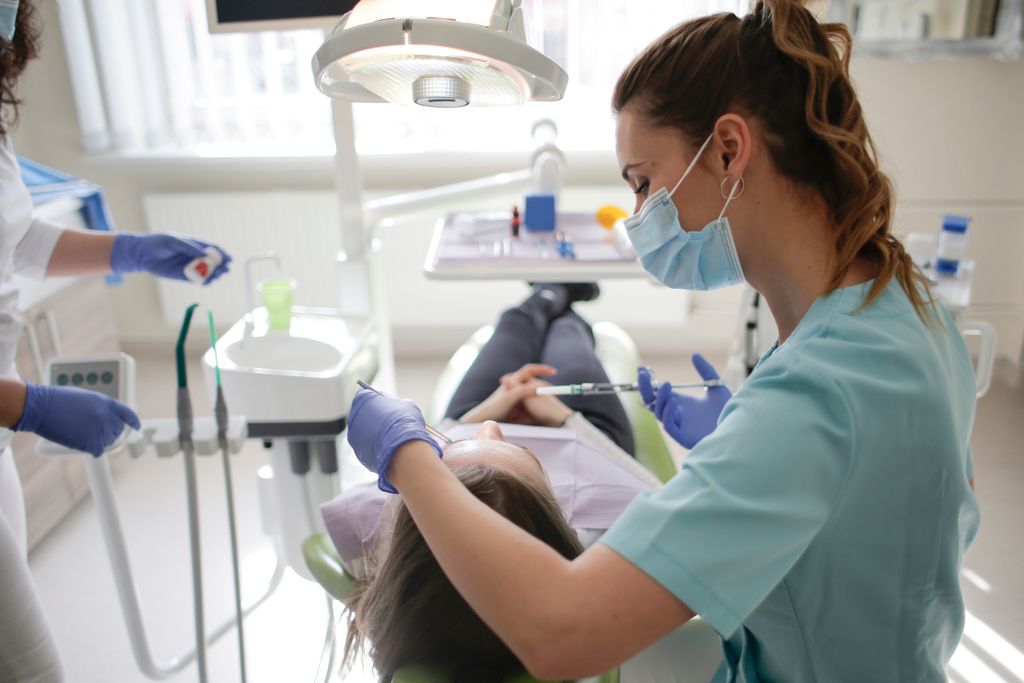
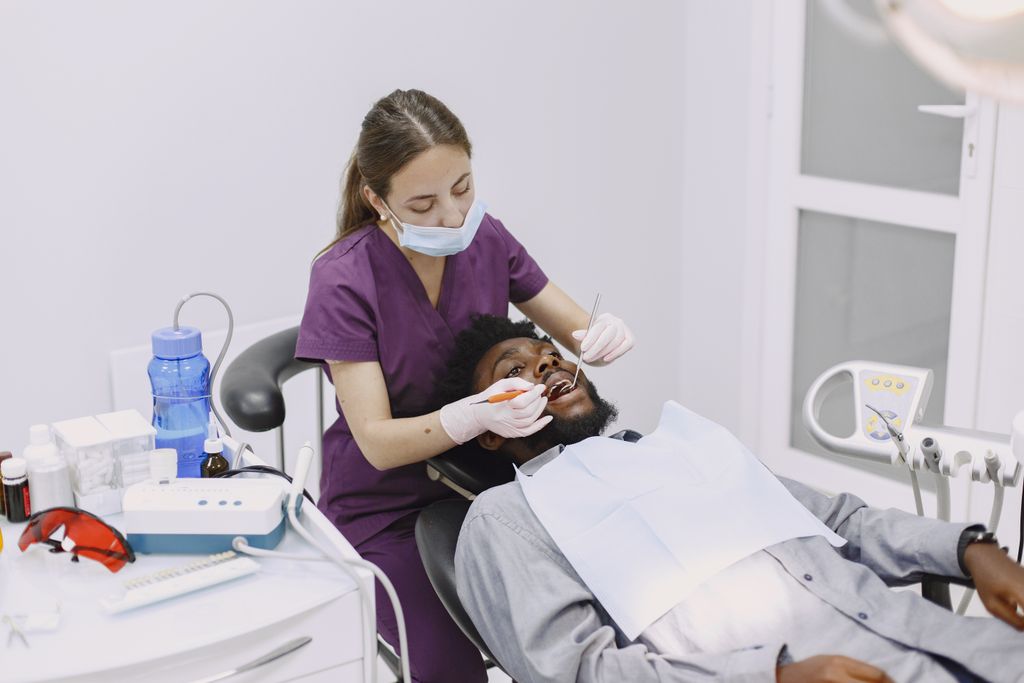
A dental hygienist is a licensed oral health professional who focuses on prevention. While the dentist diagnoses and treats disease and performs procedures such as fillings and extractions, the hygienist handles the regular care that keeps mouths healthy. On a typical day, a hygienist will welcome patients, review their medical history, clean their teeth by removing plaque and tartar, polish teeth, apply fluoride treatments and sealants, take and develop dental X-rays, screen for gum disease and oral cancer, and record what they find in the patient’s chart.
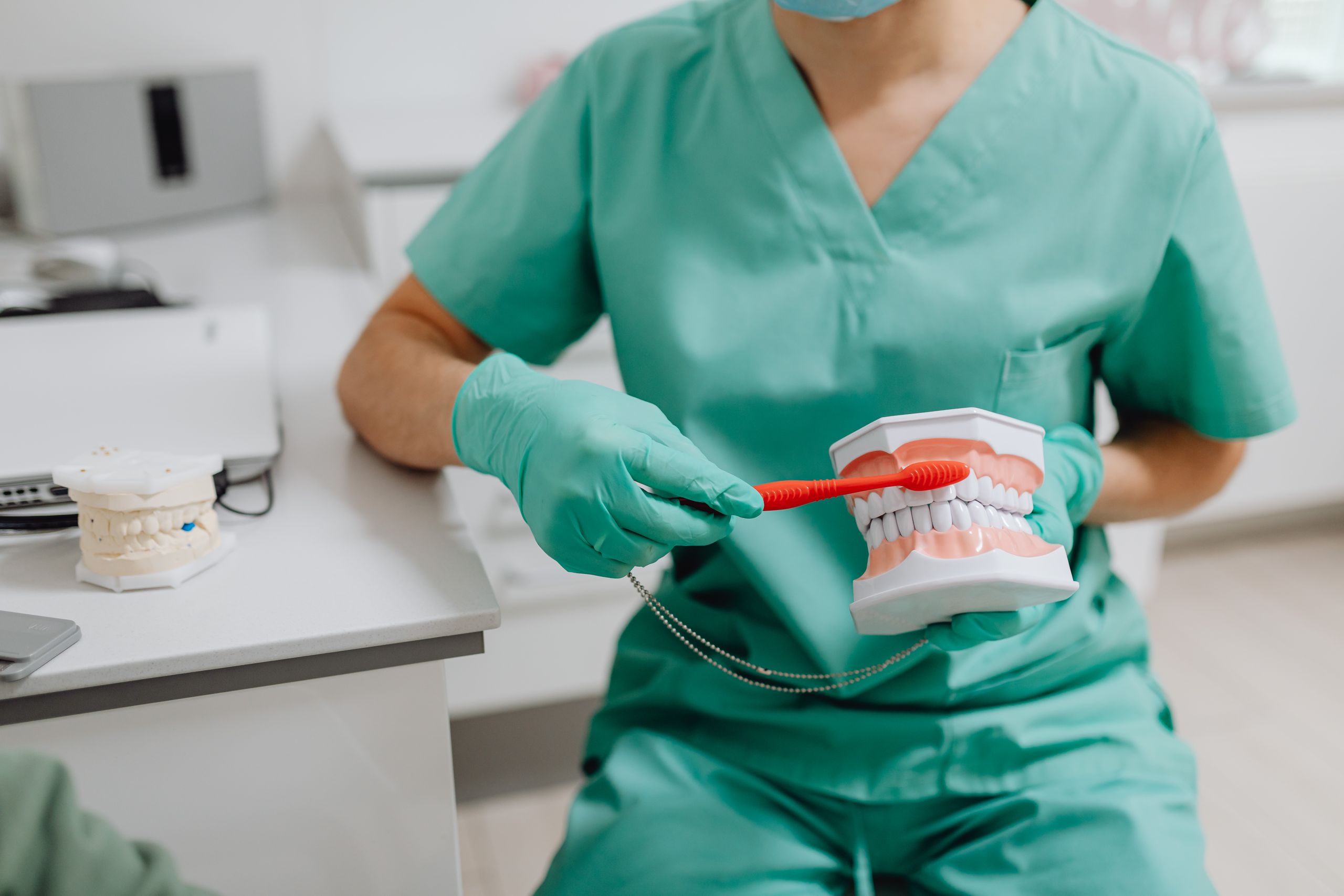
Teaching is a large part of the job. Hygienists show patients how to brush and floss properly, explain why gum disease matters, advise on diet and smoking, and help patients who are anxious about dental visits feel comfortable. A good hygienist does not just clean teeth — they build a relationship with each patient, notice changes over time, and flag problems early, when they are cheapest and easiest to treat.
Hygienists also work closely with the dentist. They report their findings, recommend follow-up care, and help plan the patient’s treatment. In some states, experienced hygienists can work with more independence, for example in schools or public health clinics, while in other states they must always work under a dentist’s supervision. The exact scope of what a hygienist may do is set by state law, and it varies — which is why this guide keeps coming back to the same advice: check your state’s rules.
A Typical Day in a Dental Office
Most hygienists work in a general dental practice, seeing one patient every 45 to 60 minutes. A typical appointment starts with a review of the patient’s health history and any changes since the last visit. Then comes the cleaning itself: scaling to remove hardened plaque, polishing, and checking the gums. The hygienist may take X-rays, apply fluoride, and talk the patient through anything they found. Between patients, they sterilize instruments, update records, and prepare the next room. Many hygienists work four days a week, and part-time work is common, which makes the career attractive to parents and to people who want a better work-life balance.
Where Else Hygienists Work
Dental offices are the most common workplace, but they are not the only one. Hygienists also work in orthodontic and periodontal specialty practices, in community health clinics, in schools and nursing homes, in public health departments, in hospitals, and in dental product companies as educators and sales representatives. Some teach in dental hygiene programs. A few move into research or administration. If you want variety, the profession offers it — but the dental office is where almost everyone starts, and where most hygienists spend their careers.
Is Dental Hygiene the Right Career for You?
Dental hygiene suits people who enjoy working with their hands, who like talking to people, and who want a healthcare role with visible results. You will spend your day in close contact with patients, so you need to be comfortable with that — comfortable being near people’s faces, comfortable with the sights and smells of a dental office, and comfortable putting nervous patients at ease. You need good manual dexterity, because you will be working with small instruments in a small space. You need attention to detail, because spotting the early signs of gum disease is a core part of the job. And you need patience, because you will repeat the same explanations many times a day, to patients who do not always follow your advice.
It is also a career for people who want stability. Dental hygienists are in demand in most parts of the country, the work cannot be done remotely or automated away, and the hours are usually predictable. If you are comparing healthcare careers, it is worth reading our guide on how to become a medical coder, which covers a healthcare role that is mostly desk-based — a useful contrast if you are deciding between hands-on patient care and office-based work.
Before you commit, try to spend a day shadowing a hygienist. Most dental offices will welcome a serious enquiry, and a few hours in a real clinic will tell you more about the work than any article can. Watch how the hygienist talks to patients, how the day is paced, and how much time is spent on your feet. If you enjoy what you see, you have a good answer — and a real sense of what learning how to become a dental hygienist involves.
How to Become a Dental Hygienist: Step by Step
The route into dental hygiene has six main steps. They are the same in broad outline everywhere in the United States, but the details — which exam your state accepts, what extra requirements it adds — change from state to state. Treat this as your map, and confirm each step against your state dental board’s official website.
Step 1: Finish High School and Complete Prerequisites
You need a high school diploma or equivalent to enter a dental hygiene program. While you are still at school, focus on biology, chemistry, and anatomy — these are the subjects that matter most, and most programs look at your science grades closely. Good grades in English and maths help too, because you will write patient notes and work with measurements and dosages.
Most accredited programs also require college-level prerequisite courses before you can start the hygiene program itself. These usually include general biology, general and organic chemistry, anatomy and physiology, microbiology, and nutrition, plus general education courses such as English composition and psychology. Some programs include the prerequisites in a longer course; others expect you to complete them at a community college first. Check the admissions page of each program you are considering, and make a list of exactly what it requires — requirements differ, and missing one course can delay your application by a semester.
Step 2: Choose an Accredited Dental Hygiene Program
This is the most important choice you will make. Only programs accredited by the Commission on Dental Accreditation (CODA) qualify you to sit the licensing exams, so accreditation is non-negotiable. You can check a program’s accreditation status on the CODA website or on the program’s own pages — and if you cannot find it, ask the program directly before you apply.
There are two main routes:
- Associate degree in dental hygiene. This is the most common route. It usually takes two to three years after prerequisites, and it is offered mainly by community colleges. It qualifies you for the same license and the same jobs as a bachelor’s degree, and it costs less. For most students, this is the best choice.
- Bachelor’s degree in dental hygiene. This takes longer — usually four years in total — and is offered by universities. It covers the same clinical training, plus extra study in areas such as public health, education, and research. A bachelor’s degree is useful if you want to teach, move into public health leadership, or go on to further study later. It is not required to work as a hygienist, and it does not raise your starting salary in most offices.
When you compare programs, look at more than the degree. Check the program’s pass rate on the national board exam — a strong program will publish it or tell you when you ask. Check how much hands-on clinic time students get, and how many patients they treat. Ask about the total cost, including instruments, uniforms, and exam fees, not just tuition. And ask graduates where they are working now. A program with strong clinical training and strong exam results is worth more than a famous name.
Step 3: Complete Your Dental Hygiene Program
The program itself is demanding. You will study head and neck anatomy, dental materials, radiography, periodontology (gum disease), pharmacology, and dental ethics, alongside general subjects. You will also spend a large part of your time in the program’s clinic, treating real patients under supervision. This is where you learn the core skills: scaling and polishing, taking X-rays, charting, and talking to patients.
Expect the program to be full-time and intensive. Many students find the clinical requirements the hardest part — you must complete a set number of patient treatments, including patients with different levels of gum disease, and finding those patients takes effort. Start building your patient list early, and treat every clinic session as exam preparation, because it is. The program will also include a community health component, where you may work in schools or clinics, which is good experience and looks strong on a resume.
Your grades matter, but your clinical competence matters more. The licensing exams test what you can do with your hands, not just what you know. Take every opportunity to practise, ask your instructors for feedback, and do not leave difficult skills until the end of the course.
Step 4: Pass the National Board Dental Hygiene Examination (NBDHE)
The NBDHE is the national written exam that almost every state requires. It tests your knowledge of the basic sciences, clinical dental hygiene, and community health. It is a computer-based exam, offered at testing centres across the country, and most students take it in their final semester or shortly after graduation.
Prepare for it properly. Use the review materials your program recommends, work through practice questions, and study in a group if that helps you. The exam is broad, and it rewards steady preparation over cramming. Your program will usually give you a recommended study plan — follow it, and start earlier than you think you need to. Most graduates pass on their first attempt, but a failed attempt costs time and money, so treat the first sitting as the one that counts.
Step 5: Pass a Clinical Licensing Exam
After the written exam, you must pass a clinical exam, in which you demonstrate your skills on a real patient. This is the part that worries students most, and for good reason: you must find your own exam patient, who meets the exam’s requirements for gum disease, and you must perform the cleaning to a high standard under exam conditions.
Which clinical exam you take depends on your state. Different states accept different exams — the main ones are administered by regional testing agencies — and some states accept more than one. A few states now accept a portfolio or a school-based assessment instead of a separate clinical exam, and this is changing, so check your state board’s current rules rather than relying on what someone else did last year. If you plan to move states later, keep in mind that not every state accepts every exam, which can mean retaking a clinical exam after a move.
Practical tips: confirm your exam patient’s suitability well in advance, have a backup patient if you can, practise the exact exam procedure with your instructors, and arrive with all your instruments checked and ready. The clinical exam is a test of calm, careful work under pressure — exactly what the job requires every day.
Step 6: Apply for Your State License and Find Your First Job
Once you have passed both exams, you apply to your state dental board for a license. The application usually involves a background check, proof of your education and exam results, and a fee. Some states also require a separate exam on state dental law. Processing times vary, so apply as soon as you are eligible rather than waiting until you have a job offer.
While your license is being processed, start your job search. Most new hygienists find work through their program’s contacts, through local dental offices, and through job boards for dental professionals. Temporary or locum work is a good way to start: it lets you try different offices, build speed, and earn while you look for a permanent position. When you interview, ask about the office’s patient load, the time allowed per appointment, whether the office provides instruments or expects you to bring your own, and what support you will get in your first months. A good first job gives you a reasonable schedule and a dentist who mentors new graduates — that matters more than the highest hourly rate.
Once you are licensed, remember that the license is not forever. You must renew it regularly — usually every one or two years, depending on the state — and you must complete continuing education hours to keep it. Keep records of every course you take, and note your renewal date in your calendar the day you receive your license.
State-by-State Differences: What Actually Varies
The single most misunderstood part of this career is that there is no single national rule for dental hygienists. Licensing is handled state by state, and the differences are real. Here are the areas where states differ most, and what to check before you commit to a program or a move.
Which clinical exam is accepted. States accept different regional clinical exams, and a few accept alternatives such as a portfolio assessment. If you take the wrong exam for your state, you may have to retake it. Confirm this before you book any exam.
Scope of practice. In some states, hygienists may only work under the direct supervision of a dentist who is present in the building. In others, they may work under general supervision, or in some settings without a dentist on site — for example, in schools, nursing homes, or public health programs. A small number of states allow direct access practice, where a hygienist can see patients without a prior dentist referral. If you want to work in public health or in an underserved area, scope of practice matters a lot to you.
Additional duties. Some states allow hygienists to administer local anaesthesia or nitrous oxide; others do not, or require extra certification. Some allow hygienists to place sealants or take impressions; others restrict these tasks. These permissions are usually earned through extra courses after licensure.
License renewal and continuing education. Renewal periods and continuing education requirements differ by state, usually falling in the range of a set number of hours over one or two years. Check what your state requires, and keep your records in order.
Moving between states. If you move, you will usually need to apply for a license in the new state, and you may need to pass an additional exam or meet extra requirements. A few states have agreements that make transfers easier, but there is no universal license. Before you relocate, contact the new state’s board and ask exactly what it needs from an out-of-state hygienist — and do it before you sign a lease or accept a job.
The practical advice is simple: decide where you want to live and work, read that state board’s website carefully, and choose your exams accordingly. If you are still deciding between two states, check both, and pick the exam that the most states you might live in will accept.
How Much Does It Cost to Become a Dental Hygienist?
Costs vary widely, so treat the figures below as general guidance and check the current fees on each program’s official pages.
The biggest cost is the program itself. Community college associate programs are usually the most affordable route, while university bachelor’s programs cost more. On top of tuition, budget for instruments, textbooks, uniforms, a laptop, and the licensing exams. Instruments alone are a significant expense, because students usually buy their own set. Exam fees apply to the national board exam, the clinical exam, and the state license application, and each is charged separately.
If you are working out how to become a dental hygienist on a budget, there are ways to reduce the cost. Community colleges are the obvious first choice. Federal student aid, state grants, and scholarships for healthcare students can all help — our guide to grants explains the main sources, and the same principles apply here: file your financial aid forms early, ask your college’s aid office what you qualify for, and apply for scholarships aimed at dental and healthcare students. Some employers, particularly in public health and in areas with shortages, offer tuition help or loan repayment in exchange for a period of service. And some states run workforce programs that support training in shortage occupations, including dental hygiene — ask your local employment service what exists in your area.
Do not choose a program on price alone. An unaccredited or poorly run program is not a bargain if it does not qualify you for licensure. But do compare total costs, including the hidden extras, and do ask each program for a full breakdown before you enrol.
Dental Hygienist Salary and Job Outlook
Salary is the question everyone researching how to become a dental hygienist asks first, and the honest answer is that it varies a lot. Pay depends on your state, your city, your experience, whether you work full time or part time, and whether you work in a private practice, a specialty clinic, or public health. Hygienists in large cities and in high-cost states generally earn more, but their living costs are higher too. Part-time work is paid by the hour or by the day, and experienced hygienists can negotiate better rates.
For current, reliable salary figures, check the U.S. Bureau of Labor Statistics page for dental hygienists (https://www.bls.gov/ooh/healthcare/dental-hygienists.htm), which publishes the latest national and state-level data. Do not plan your finances around a single number from a job board or a social media post — those figures are often outdated, cherry-picked, or based on a different state. The BLS page also gives the job outlook, which has been strong, because demand for preventive dental care keeps growing as the population ages and as more people keep their natural teeth longer.
If you are weighing this career against other options that need a shorter qualification, our guide to the best certifications for beginners is a useful comparison — it covers quicker routes into skilled work, and it will help you judge whether the longer dental hygiene route is worth it for you.
One point about pay that new graduates sometimes miss: most hygienists are paid hourly, and most do not receive the same benefits as salaried staff unless they work full time. When you compare job offers, look at the whole package — hourly rate, guaranteed hours, paid time off, health insurance, retirement contributions, and continuing education support — not just the headline rate. A slightly lower hourly rate with guaranteed hours and benefits is often worth more over a year than a higher rate with an unpredictable schedule.
Career Growth: Where Dental Hygiene Can Take You
The career does not end at the cleaning chair. After a few years of clinical work, hygienists move in several directions.
Some become specialists in periodontal care, working in gum disease practices where the work is more complex and the pay is often higher. Some move into public health, running school screening programs or working in community clinics. Some become educators, teaching in dental hygiene programs — this usually requires a bachelor’s degree or higher, and it is a good reason to consider the bachelor’s route if teaching appeals to you. Some move into sales or education roles with dental product companies, training dentists and hygienists to use new equipment. A few go into research, or into practice management, or open their own businesses in states where the law allows independent hygiene practice.
Continuing education is the engine of all of this. Every state requires it for license renewal, but the smartest hygienists treat it as career development, not a chore. Courses in local anaesthesia, laser therapy, paediatric care, and geriatric care all add to your value and your options. Keep a record of what you learn and what interests you, and review it once a year — it will show you where your career is heading.
Common Mistakes to Avoid
Choosing an unaccredited program. This is the most expensive mistake you can make. An unaccredited program will not qualify you for the licensing exams, which means your qualification is worthless for practice. Check CODA accreditation before you apply, and check it again before you enrol.
Ignoring state rules until after graduation. Students who pick their clinical exam without checking their state board’s list sometimes discover they took the wrong one. Check the rules in your first year, not your last.
Underestimating the clinical workload. The program is not just lectures. The clinic hours are long, the patient requirements are strict, and finding suitable patients takes effort. Students who fall behind on clinic requirements are the ones who delay graduation.
Not budgeting for the extras. Tuition is only part of the cost. Instruments, exam fees, license fees, and textbooks add up. Build a full budget before you start, and have a plan for covering it.
Taking the first job without asking questions. A practice that gives you 30 minutes per patient, no support, and no mentoring will burn you out fast. Ask about the schedule, the patient load, and the support for new graduates before you accept.
Letting your license lapse. Continuing education hours and renewal dates are easy to forget and expensive to fix. Set reminders, keep your course records in one folder, and renew early.
Stopping learning after licensure. Dental hygiene changes — new techniques, new materials, new guidance on gum disease. Hygienists who keep learning earn more, enjoy the work more, and have more career options.
How to Become a Dental Hygienist Checklist
Before you apply:
- Check the accreditation status of every program you are considering, and confirm it is CODA-accredited
- Complete the prerequisite courses your chosen programs require, with strong grades in biology and chemistry
- Shadow a working dental hygienist for at least a day to confirm the work suits you
- Read your state dental board’s licensing requirements, including which clinical exams it accepts
- Build a full budget for tuition, instruments, textbooks, exam fees, and license fees
During your program:
- Keep up with clinic requirements from the start — do not let patient treatments pile up
- Practise the skills that will be tested in the clinical exam, not just the ones you find easy
- Start preparing for the NBDHE early, using your program’s recommended review materials
- Confirm your clinical exam patient well in advance, and arrange a backup if you can
- Track your costs and your continuing education from day one
After graduation:
- Pass the NBDHE and your clinical exam, then apply for your state license promptly
- Ask about the schedule, patient load, mentoring, and benefits before accepting your first job
- Consider temporary work to build speed and experience while you look for a permanent role
- Set calendar reminders for your license renewal date and your continuing education requirements
- Plan one new skill or certification each year to keep your career growing
Conclusion
Learning how to become a dental hygienist is a straightforward path with a clear reward at the end: a respected healthcare career, regular hours, good pay, and work that genuinely improves people’s health. The route is an accredited program, the national board exam, a clinical exam, and a state license — and the details that matter most are the ones that vary by state, so check your state board’s current rules at every step. Choose an accredited program, take the clinical work seriously, prepare properly for both exams, and pick your first job for the mentoring and the schedule, not just the pay. Do that, and you will enter a profession that is stable, rewarding, and in demand for years to come. Start by reading your state board’s requirements today, and by asking a local dental office whether you can shadow a hygienist for a day — those two steps will tell you whether this is the career for you.
FAQ
How long does it take to become a dental hygienist?
Most students complete an accredited associate degree program in two to three years after prerequisites, followed by the national board exam, a clinical exam, and state licensure. A bachelor’s degree route takes longer — usually four years in total — and is mainly useful if you want to teach or move into public health leadership. The exact time depends on how long your prerequisites take and how quickly you pass your exams.
Do I need a bachelor’s degree to become a dental hygienist?
No. An accredited associate degree qualifies you for the same license and the same clinical jobs as a bachelor’s degree in most states. A bachelor’s degree is worth considering if you want to teach in a dental hygiene program, work in public health leadership, or go on to further study, but it is not required to practise as a hygienist.
What is the RDH exam?
RDH stands for Registered Dental Hygienist, which is the title you earn when you are licensed. The main written exam is the National Board Dental Hygiene Examination (NBDHE). You must also pass a clinical licensing exam, which tests your hands-on skills on a real patient, and meet your state’s other licensing requirements. The exact clinical exam accepted varies by state.
How much does dental hygiene school cost?
It varies widely by program type and location. Community college associate programs are usually the most affordable route, while university bachelor’s programs cost more. On top of tuition, budget for instruments, textbooks, uniforms, and the fees for the national board exam, the clinical exam, and your state license. Always ask each program for a full cost breakdown, including the extras, and check what financial aid and scholarships you qualify for.
Can a dental hygienist work without a dentist present?
It depends on the state. Some states require a dentist to be present in the building; others allow general supervision or direct access practice, where a hygienist can see patients in settings such as schools, nursing homes, or public health clinics without a dentist on site. Check your state dental board’s rules on scope of practice before you plan this kind of work.