
Interview Questions for Nurses: Common Questions and Sample Answers
Interview Questions for Nurses: Common Questions and Sample Answers
Interview questions for nurses are different from the questions asked in most other job interviews. A hiring manager in a hospital, clinic, or care home is not only checking whether you can do the job. They are checking whether patients will be safe in your hands, whether you stay calm when a ward is busy, whether you notice a small change in a patient before it becomes a serious problem, and whether the rest of the team can rely on you at three in the morning. Your clinical knowledge matters, but so do your judgement, your communication, and your character. This guide covers the interview questions for nurses that come up again and again, with strong sample answers you can adapt to your own experience, whether you are a newly qualified nurse, a registered nurse changing jobs, or an experienced nurse applying for a senior or specialist role.
Nursing interviews usually mix several kinds of questions. Some are general, such as “Tell me about yourself” and “Why do you want to work here?” Some are behavioural, asking you to describe a real situation from your past work, such as a difficult patient or a disagreement with a colleague. Some are clinical scenarios: a patient whose condition is deteriorating, a medication error, or two patients who need you at the same time. And some test your values: how you handle stress, how you deal with a mistake, and what you do when you disagree with a doctor’s order. This guide works through all of them, explains what the interviewer is really looking for in each answer, and shows you how to prepare so that your answers sound confident, specific, and honest rather than rehearsed.
Table of Contents
Quick Answer
Interview questions for nurses usually fall into four groups: general questions about your background and motivation, behavioural questions about real situations you have handled, clinical scenario questions that test your judgement and patient safety, and values questions about teamwork, ethics, and coping under pressure. The strongest answers are specific, not general: use the STAR method (Situation, Task, Action, Result) for behavioural questions, name the clinical steps you would take in a scenario, and finish with what the patient outcome was or what you learned. Prepare two or three real stories from your placements or jobs that show patient safety, teamwork, and calm under pressure, and you can adapt them to many different questions. For general interview technique, see our guide on common interview questions and answers.
Why Nursing Interviews Are Different
In most jobs, an interviewer mainly wants to know whether you have the skills and whether you will fit the team. In nursing, the stakes are higher, because a wrong answer in real life can harm a patient. Interviewers know this, and they design their questions to test how you think, not just what you know. A textbook answer is not enough. They want to hear how you would act when the ward is short-staffed, when a patient is frightened, when a family member is angry, or when you realise you have made an error.
There are three things every nursing interviewer is listening for. First, patient safety: do you assess before you act, do you escalate when something is wrong, and do you follow protocol? Second, communication: can you explain things clearly to patients, families, and colleagues, and can you listen? Third, self-awareness: do you know your limits, do you ask for help, and do you learn from mistakes? Keep those three themes in mind for every answer, and your interview will feel consistent and convincing, even when the questions surprise you. Keeping those three themes in mind will help you answer interview questions for nurses with confidence.
Nursing interviews also vary by setting. A hospital interview may focus on acute care, rapid assessment, and working in a large team. A community or primary care interview may focus on managing your own caseload, visiting patients at home, and working independently. A care home interview may focus on long-term relationships with residents, dementia care, and end-of-life care. A paediatric interview will test how you communicate with children and their parents. Research the setting before you go, and shape your examples to match it. An example from an intensive care placement will impress a hospital panel; an example from a community placement will impress a community team more.
Finally, remember that interviewers expect honesty about experience. A newly qualified nurse is not expected to have the same stories as a nurse with ten years of experience. What matters is that you show good judgement, a willingness to learn, and safe practice. Saying “I would ask a senior nurse” is a strong answer when you genuinely do not know something, because it shows you put the patient first. Pretending to know is a weak answer, and experienced interviewers can tell the difference immediately.
How to Prepare for a Nursing Interview
Good preparation makes the difference between an interview that feels like a test and one that feels like a conversation. Start at least a week before the interview if you can, and work through the steps below. This preparation will help you answer interview questions for nurses calmly and confidently.
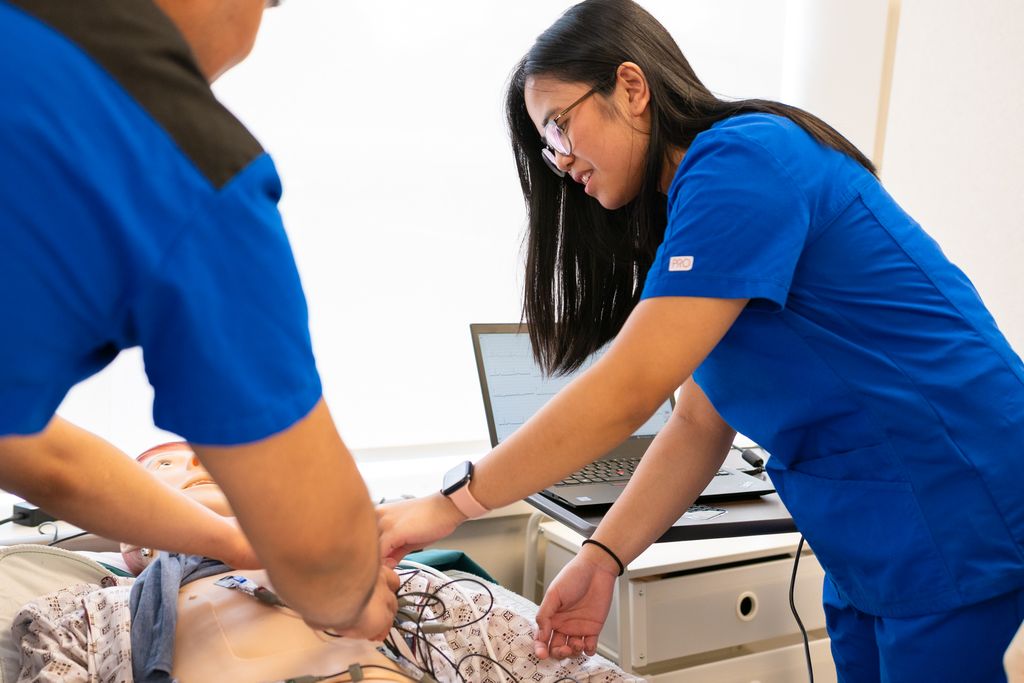
Step 1: Research the Employer and the Role
Read the job description carefully and highlight the skills and qualities it asks for. Then read the employer’s website, its values, and any recent news about the service. If it is a hospital, find out which ward or department you would join, what kind of patients it cares for, and what its priorities are. If you can, talk to someone who works there. In the interview, mention something specific about the service: a new unit, a quality improvement project, or a value that matches your own practice. This shows genuine interest, and it separates you from candidates who give the same generic answer everywhere.
Step 2: Review Your Clinical Knowledge
You do not need to revise an entire textbook, but you should refresh the basics for the setting you are applying to. Review the common conditions on that ward, the standard observations and early warning scores, medication safety, infection control, and safeguarding. Be ready to talk through a basic assessment: airway, breathing, circulation, disability, exposure. If the role involves a speciality, such as emergency care, oncology, or mental health, revise its most common presentations and the first steps you would take. Interviewers rarely ask for obscure facts. They ask for safe, systematic thinking.
Step 3: Prepare Three Strong Stories
Choose three real situations from your placements, jobs, or training that show different strengths. One should show patient safety or clinical judgement, one should show teamwork or communication, and one should show calm under pressure or learning from a difficult experience. For each story, write out the STAR structure: what the situation was, what your task was, what action you took, and what the result was. Practise telling each story in about ninety seconds. Short, specific stories with a clear result are far more convincing than long, vague ones.
Step 4: Prepare Your Own Questions
An interview is a two-way process, and the questions you ask matter. Prepare three questions about the role, the team, the induction, or the support for new staff. Good questions show that you are serious about the job and thinking about how you will work there. Avoid asking about salary or holidays first. For ideas, see our guide on questions to ask in an interview.
Step 5: Practise Out Loud
Say your answers out loud, not just in your head. Answers that look good on paper often sound long or vague when spoken. Practise with a friend, a colleague, or a mentor, and ask them to time you. Aim for answers of one to two minutes for most questions, and no more than three minutes for a detailed clinical scenario. Practise the opening question, “Tell me about yourself,” until it feels natural, because a confident start sets the tone for the whole interview.
Step 6: Plan the Practical Details
Check the time, the place, and the route the day before. Arrive ten to fifteen minutes early. Bring your identification, your nursing registration details, and a copy of your CV or application. Dress smartly and comfortably. Bring a pen and a small notebook. If the interview is online, test your camera, microphone, and internet connection the day before, choose a quiet room with good light, and keep your notes just out of shot. These details seem small, but they remove stress on the day and let you focus on your answers.
“Tell Me About Yourself”
This is almost always the first question, and it sets the tone for the whole interview. Interviewers are not asking for your life story. They want a short, clear summary of who you are as a nurse, what experience you bring, and why you are here.
What the Interviewer Wants to Hear
They want to hear a logical path: how you came to nursing, what you have done since, and what you want to do next. They are listening for enthusiasm, for relevant experience, and for a link to this specific role. Keep it under two minutes. Start with the present, give a little background, and finish with the future and this job.
Sample Answer
“I am a registered nurse with three years of experience on a busy medical ward, and I am applying for this role because I want to develop my skills in acute care. I came into nursing after caring for my grandmother during a long illness, and that experience taught me how much good nursing care matters to patients and families. Since qualifying, I have cared for patients with a wide range of conditions, including respiratory and cardiac problems, and I have completed additional training in venepuncture and the management of deteriorating patients. I enjoy working as part of a team, I stay calm under pressure, and I am looking for a role where I can keep learning while giving patients the kind of careful, respectful care I would want for my own family.”
Tips for Newly Qualified Nurses
If you are newly qualified, use your placements instead of jobs. Mention the areas you worked in, what you learned, and one moment that confirmed you had chosen the right career. For example: “During my final placement on a surgical ward, I managed a small group of patients with support from my mentor, and I learned how to prioritise, how to communicate with the team, and how to keep patients informed. That placement showed me I am ready for this role, and I am looking for a supportive team where I can build on that experience.”
Common Mistakes
Do not recite your whole CV, do not start with your childhood unless it is directly relevant, and do not say you have always wanted to be a nurse without explaining why. Do not apologise for a lack of experience. Present what you do have, clearly and confidently, and the panel will judge you on that.
“Why Do You Want to Work Here?”
This question tests whether you have done your research and whether you genuinely want this job, rather than any job. A generic answer, such as “because it is a good hospital,” tells the panel nothing. A specific answer shows you have thought about it.
What the Interviewer Wants to Hear
They want to hear that you know something about the service, that you like what it does, and that the role fits your skills and your career plans. Link the employer’s values or reputation to your own experience. Mention the patient group, the team, or a particular service that interests you.
Sample Answer
“I want to work here because of the reputation of your stroke unit and the way your team works. I cared for stroke patients during my last placement, and I saw how early rehabilitation and clear communication with families make a real difference to recovery. I have read about your multidisciplinary approach and your focus on early mobilisation, and that is the kind of nursing I want to practise. I also want to develop my skills in neurological assessment, and this role offers the training and the team support to do that well.”
If You Are Changing Specialities
If you are moving from one area to another, explain the link. For example, a nurse moving from a medical ward to an emergency department might say: “I have spent four years on a medical ward, and I have become confident in assessing deteriorating patients and managing a busy caseload. I now want to use those skills in emergency care, where rapid assessment and teamwork matter even more. I know the pace will be different, and I am ready for that challenge.” This kind of answer turns a change of direction into a strength.
“Why Did You Choose Nursing?”
This is a values question. Interviewers ask it because nursing is hard work, and they want to know what will keep you going when the shifts are long and the ward is busy. They are listening for a genuine, personal reason, not a rehearsed speech.
Sample Answer
“I chose nursing because I wanted work that made a direct difference to people. Before I trained, I worked as a care assistant in a nursing home, and I saw how much it mattered to residents when someone took the time to listen, to explain what was happening, and to treat them with dignity. One resident told me that the nurses who cared for her were the reason she felt safe. That stayed with me. I wanted to be the person who gives that kind of care, with the clinical knowledge to back it up. What keeps me in nursing is seeing patients recover, and knowing that the small things I do, like explaining a procedure properly or noticing a change early, genuinely help.”
Tips
Be honest and specific. A short real story is far better than a list of qualities such as “I am caring and compassionate.” Everyone says that. A story shows it. Avoid saying you chose nursing because you like science or because the job is secure, unless you link it to patient care. And avoid saying you want to become a doctor later. Even if that is true, this interview is about a nursing role, and the panel wants to know you are committed to nursing.
“What Are Your Strengths and Weaknesses?”
This classic question is really two questions. The strengths part is easy. The weaknesses part tests your self-awareness and your honesty.
Strengths
Choose two or three strengths that match the job, and give a brief example for each. Good choices for nurses include staying calm under pressure, communicating clearly with patients and families, being organised, noticing detail, and working well in a team. Do not just list adjectives. Show each strength in action. For example: “One of my strengths is staying organised when the ward is busy. On a recent shift, I was caring for six patients, and I made a clear plan at the start of the shift, prioritised the most urgent tasks, and communicated with the team so that nothing was missed.”
Weaknesses
Choose a real weakness, but one that is not a core requirement of the job, and show what you are doing about it. Never say “I have no weaknesses” or “I am a perfectionist” without explaining it, because interviewers hear both answers constantly and neither sounds honest. A good example: “I used to find it hard to delegate, because I wanted to make sure everything was done properly. I have learned that delegating is part of safe care, so I now make a clear plan, explain what I need, and check back. It has made me a better team member.” Another honest example is public speaking or presenting at meetings, with a clear plan to improve. The key is to show self-awareness and a genuine effort to improve.
Sample Answer
“My main strengths are communication and calm under pressure. Patients often tell me they feel better after I have explained what is happening in plain language, and my colleagues know they can rely on me when a shift becomes difficult. A weakness I am working on is that I can be slow to ask for help when I am busy, because I do not want to add to someone else’s workload. I have learned that asking for help early is safer for patients, so I now speak up sooner, and I offer help in return when I have a quieter moment.”
“How Do You Handle Stress?”
Nursing is stressful, and interviewers need to know that you can cope without burning out or making mistakes. They are not looking for someone who never feels stressed. They are looking for someone who recognises stress, manages it, and asks for help when needed.
What the Interviewer Wants to Hear
They want a practical answer: how you prioritise, how you stay calm, how you use the team, and how you look after yourself outside work. Avoid saying you thrive on stress or that you never get stressed. Both sound unrealistic. Instead, describe a real situation and the steps you took.
Sample Answer
“I handle stress by staying organised and focusing on one thing at a time. On a busy shift, I start by checking which patients need me most urgently, I make a plan, and I tell the team what I am doing so we can share the work. If I feel overwhelmed, I pause for a moment, take a breath, and ask for help rather than struggling alone. After a difficult shift, I talk it through with colleagues, and I make time for rest and exercise outside work. I have learned that looking after myself is part of looking after patients, because a tired nurse is more likely to make mistakes.”
Tips
Give a specific example if you can: a short-staffed shift, a deteriorating patient, or a difficult family situation. Explain what you did, how it helped, and what you learned. Mention patient safety explicitly, because the panel wants to know that stress never stops you from following safe practice.
Clinical Scenario Questions
Clinical scenarios are the heart of most nursing interviews. The interviewer describes a patient situation and asks what you would do. They are testing your assessment, your priorities, and your knowledge of safe practice. There is a simple structure that works for almost every scenario: assess, act, escalate, document, and communicate.

“A Patient’s Condition Is Deteriorating — What Do You Do?”
This is one of the most common scenario questions, and it may be phrased in different ways: a patient with dropping oxygen levels, rising heart rate, or sudden confusion. The interviewer wants to hear a systematic, safe response.
Sample Answer
“First, I would stay with the patient and do a full assessment using the ABCDE approach: airway, breathing, circulation, disability, and exposure. I would check their observations, including oxygen saturation, heart rate, blood pressure, respiratory rate, and temperature, and calculate their early warning score. I would make sure their airway is clear, sit them up if they are breathless, and give oxygen if it is prescribed and their saturation is low. I would call for help from a senior nurse and the doctor, using a clear, structured handover such as SBAR: the situation, the background, my assessment, and what I need.
While I wait for help, I would stay with the patient, reassure them, and keep monitoring their observations. Afterwards, I would document everything I observed and did, including the time, the observations, and who I escalated to.”
Why This Answer Works
It shows a systematic approach, not panic. It names the tools the panel expects to hear: ABCDE, early warning scores, and SBAR. It shows that you know when to escalate, and that you stay with the patient rather than leaving them alone to find help. If the scenario gives specific numbers, use them in your answer. For example, if the patient’s oxygen saturation is 88 percent, say that you would give oxygen and escalate urgently. Specific answers score far better than general ones.
“A Patient Has Fallen — What Do You Do?”
Falls are common in hospitals and care homes, and this question tests your immediate response and your follow-up care.
Sample Answer
“First, I would stay calm and assess the patient where they are, without moving them unless they are in immediate danger. I would check whether they are conscious, whether they are in pain, and whether there is any visible injury, bleeding, or deformity. I would check their observations and ask them what happened and how they feel. If there is a head injury or a suspected fracture, I would not move them, and I would call for help immediately. I would inform the doctor and the nurse in charge, and I would stay with the patient, reassure them, and monitor them closely. Afterwards, I would complete a full assessment, including neurological observations if there was a head injury, document the incident fully, and complete an incident report. I would also think about prevention: checking the environment, reviewing their medication, and making sure their call bell and belongings are within reach.”
“You Notice a Medication Error — What Do You Do?”
Medication safety is a core part of nursing, and this question tests your honesty, your patient safety instincts, and your knowledge of reporting.
Sample Answer
“If I noticed a medication error, whether I made it or someone else did, my first priority would be the patient. I would check the patient’s condition, take their observations, and assess whether they need urgent help. I would inform the nurse in charge and the doctor, and I would follow the local policy for managing the error, including monitoring the patient and recording what happened. I would be honest about what happened, and I would complete an incident report so that the team can learn from it. I would also reflect on why the error happened: was it a distraction, a similar drug name, or a busy moment? Understanding the cause helps prevent it from happening again. Patient safety comes first, and that means being open about mistakes, not hiding them.”
“Two Patients Need You at the Same Time — How Do You Prioritise?”
This question tests your ability to prioritise under pressure. The interviewer wants to hear that you assess risk first, not simply who shouted loudest.
Sample Answer
“I would quickly assess which patient is at greater risk. A patient who is breathless, in severe pain, or deteriorating comes before a patient who needs routine care or information. I would go to the more urgent patient first, and I would ask a colleague to help with the other patient, or I would explain briefly to the second patient that I will be with them shortly. I would communicate clearly so that neither patient feels ignored. After dealing with the urgent situation, I would return to the other patient, apologise for the wait, and give them my full attention. Prioritising is about risk, and it is also about communication: patients accept a short wait when they understand why.”
“A Patient Refuses Treatment — What Do You Do?”
This question tests your understanding of consent, autonomy, and communication. A patient with capacity has the right to refuse treatment, and your job is to make sure they understand the decision, not to force them.
Sample Answer
“First, I would listen to the patient and try to understand why they are refusing. They may be frightened, in pain, or confused about what the treatment involves. I would explain the treatment in plain language, including the benefits and the risks of refusing, and I would answer their questions honestly. I would check that they have the capacity to make the decision, and if I had any doubt, I would ask a senior nurse or doctor to assess that with me. If the patient still refuses, I would respect their decision, document the conversation carefully, including what I explained and what the patient said, and inform the doctor and the team. I would also let the patient know they can change their mind at any time, and I would continue to offer care and support.”
Behavioural Questions and the STAR Method
Behavioural questions ask about real things you have done. They usually start with “Tell me about a time when…” or “Give me an example of…” The best way to answer them is the STAR method: Situation, Task, Action, Result. Keep each part short, and spend most of your time on the action you took and the result.
“Tell Me About a Time You Dealt with a Difficult Patient”
Difficult patients are part of nursing. The interviewer wants to see empathy, patience, and good communication, not frustration.
Sample Answer
“During a placement on a medical ward, I cared for an elderly patient who was very anxious and became angry with the staff because he did not understand why he needed to stay in hospital. The situation was tense, and other patients were becoming upset. My task was to help him feel safe and to explain his care in a way he could understand. I sat with him, listened to his worries, and explained in simple language why he needed to stay, what tests were planned, and when his family could visit. I also asked his daughter to come in so she could be part of the conversation. He calmed down, agreed to stay, and over the next few days he became much more settled. I learned that anger is often fear, and that taking time to listen can change the whole situation.”
“Tell Me About a Time You Worked as Part of a Team”
Nursing is team work, and this question comes up in almost every interview. Choose a story that shows your contribution, not just the team’s success.
Sample Answer
“On a busy night shift, we were short-staffed, and the ward had several new admissions at once. I worked with two other nurses and a healthcare assistant to manage the workload. We held a short huddle at the start of the shift, divided the patients fairly, and agreed who would do what. I took responsibility for the new admissions, completing their assessments and documentation, while my colleagues cared for the existing patients. We checked in with each other regularly, and when one of us was struggling, someone stepped in. By the end of the shift, all the patients were settled, and nothing had been missed. That shift taught me how much a good team can achieve, even when the staffing is difficult.”
“Tell Me About a Time You Made a Mistake”
This is a hard question, and interviewers ask it because they want to know whether you are honest and whether you learn. Choose a real mistake, but one that you handled well and learned from. Never blame someone else, and never say you have never made a mistake.
Sample Answer
“Early in my career, I was preparing medication for a patient and I was interrupted by a phone call. When I returned, I realised I had almost given the wrong dose because I had lost my place. I stopped, checked the prescription again from the start, and realised my error before the medication was given. The patient was not harmed. I told the nurse in charge what had happened, and I changed my practice: I now finish a medication round before answering non-urgent calls, and I always double-check the prescription, the dose, and the patient. That experience taught me how important it is to minimise interruptions during medication administration, and I have never rushed that task since.”
“Tell Me About a Time You Had a Conflict with a Colleague”
Conflict happens in every workplace. The interviewer wants to see that you can handle it professionally, without gossip or escalation.
Sample Answer
“During a placement, I disagreed with a colleague about how a patient’s care should be prioritised. She wanted to complete routine tasks first, and I felt that a patient who was in pain needed attention sooner. Rather than arguing on the ward, I spoke to her quietly, explained my concern, and listened to her point of view. We agreed to deal with the patient in pain first and then share the routine tasks. The patient was comfortable sooner, and we finished the rest of the work together. I learned that most conflicts come from different priorities, not bad intentions, and that a calm, private conversation usually solves the problem.”
“Tell Me About a Time You Went the Extra Mile for a Patient”
This question lets you show compassion and initiative. Choose a story that is genuine and specific, not something dramatic or exaggerated.
Sample Answer
“I cared for a patient who was in hospital for several weeks and was missing her family, who lived far away. She was lonely, and her mood was affecting her recovery. I arranged for her to have a video call with her daughter in the evening, and I spent a few extra minutes each shift talking with her about her life and her hobbies. I also spoke to the ward team, and we made sure she had her favourite music and some photographs by her bed. Her mood improved, she began eating better, and her recovery went more smoothly. It was a small thing, but it reminded me that nursing is about the whole person, not just their illness.”
Questions About Experience and Qualifications
“What Experience Do You Have in This Speciality?”
Be honest about your level of experience, and link what you have done to the role. If you have direct experience, give a specific example. If you do not, explain what you have done that is transferable, and show that you are willing to learn. For example, a nurse applying for a paediatric role without paediatric experience might say: “I have not worked in paediatrics, but I have cared for young adults, I have completed safeguarding training, and I am confident communicating with families. I am keen to develop paediatric skills, and I have already started reading about common paediatric conditions so that I can learn quickly.”
“How Do You Keep Your Knowledge Up to Date?”
Interviewers want nurses who keep learning. Mention specific things: reading professional journals, attending training, completing online courses, learning from colleagues, and reflecting on your practice. If you have completed recent training, name it. For example: “I read the nursing journals each month, I completed a course on wound care last year, and I attend the ward’s teaching sessions. I also keep a reflective journal, and I discuss difficult cases with senior colleagues so that I keep learning from real practice.”
“What Would You Do in Your First Month in This Role?”
This question tests your attitude to a new job. Show that you would listen and learn before trying to change anything. A good answer is: “In my first month, I would focus on learning the ward, the team, and the patients. I would complete the induction, get to know the protocols, and build relationships with colleagues. I would ask questions, observe how the team works, and take on a caseload gradually. By the end of the month, I would expect to be working independently with support, and I would be looking for training opportunities to develop my skills further.”
Questions About Values, Ethics, and Safeguarding
“How Would You Deal with a Doctor’s Order You Disagreed With?”
This question tests your professionalism and your courage. Nurses must speak up when something seems wrong, but they must do so respectfully and through the right channels.
Sample Answer
“If I disagreed with a doctor’s order, I would first check the facts: the patient’s history, the prescription, and the relevant guidelines. If I still had a concern, I would speak to the doctor directly and politely, explain my concern, and ask for clarification. Most of the time, a short conversation resolves the issue. If I still felt the order was unsafe, I would escalate to the nurse in charge or the senior doctor, and I would document my concern. I would never give a medication I believed was unsafe without raising the concern first. Patient safety comes before hierarchy, and good doctors welcome a nurse who speaks up.”
“What Would You Do If You Suspected a Colleague Was Not Practising Safely?”
This is a safeguarding and professional standards question. The answer is always to raise the concern through the proper channels, not to ignore it or to gossip about it.
Sample Answer
“If I suspected a colleague was not practising safely, I would first make sure the patient was safe. Then I would speak to the colleague if it felt appropriate, because sometimes there is a simple explanation. If the concern remained, I would raise it with the nurse in charge or my manager, following the organisation’s policy. I would document what I had observed factually. Raising a concern is not about getting someone into trouble. It is about protecting patients, and it is part of our professional duty. I would expect the same from a colleague if they were worried about my practice.”
“How Do You Maintain Patient Confidentiality?”
Confidentiality is a basic professional duty, and interviewers may ask about it directly or through a scenario. A good answer covers the practical steps: never discussing patients in public areas, never sharing information with people who do not need to know, keeping records secure, and being careful with conversations on the phone or in corridors. Mention that you would not discuss patients on social media, and that you would follow the organisation’s data protection policy. Give a brief example if you can, such as lowering your voice during a handover in a shared bay or closing a computer screen when visitors are present.
“How Do You Care for Patients from Different Cultures?”
Nursing is for everyone, and interviewers want to know that you respect different cultures, beliefs, and languages. A good answer shows curiosity and respect: ask the patient about their preferences, learn about dietary needs, religious practices, and communication preferences, and use an interpreter when needed rather than relying on a family member. Mention that you would never make assumptions based on a patient’s background, and that you would treat each patient as an individual. If you have experience of caring for patients from different cultures, give a brief example.
Questions for Newly Qualified Nurses
If you are newly qualified, interviewers will expect questions that reflect your stage. Here are the ones that come up most often, and how to handle them.
“Why Should We Hire You Over a More Experienced Nurse?”
This is a fair question, and it is not a trick. The answer is to focus on what you bring: up-to-date knowledge, enthusiasm, a willingness to learn, and fresh energy. Say something like: “I may not have years of experience, but I bring recent training, a strong knowledge of current guidelines, and a genuine enthusiasm for learning. I am used to asking questions and seeking feedback, and I am ready to work hard to become a strong member of your team. I would rather be honest about what I do not know and learn quickly than pretend I know everything.”
“How Would You Cope with Your First Job?”
Show that you have a realistic plan: use the induction, find a mentor, ask questions, build your confidence gradually, and look after yourself. Mention that you know your limits and that you would escalate when unsure. Interviewers are reassured by new nurses who know they need support, not by those who claim they can do everything alone.
“What Did You Learn from Your Placements?”
Choose one or two specific lessons, not a list of every placement. For example: “My placement in a care home taught me the importance of knowing the person, not just the diagnosis. My placement in an emergency department taught me how to stay calm and prioritise when several patients need help at once. Those experiences have shaped how I practise now.” Specific lessons are far more convincing than a general claim that all your placements were valuable.
Questions to Ask the Interviewer
Always have questions ready. Asking good questions shows interest and confidence, and it helps you decide whether the job is right for you. Here are strong options for nursing interviews: Good questions also show that you have thought carefully about interview questions for nurses and about the role itself.
- What does the induction look like, and how long is it?
- What support is available for new starters, and is there a mentor or preceptor?
- What is the typical patient load on this ward, and how is the team structured?
- What training and development opportunities are there in the first year?
- How does the team handle handovers and communication between shifts?
- What are the biggest challenges facing this ward or service at the moment?
- What would success look like in this role after six months?
Choose three of these and adapt them to the role. Avoid asking about salary, holidays, or shift patterns in the first interview unless the interviewer raises them. Those details matter, but they should come after you have shown your interest in the work itself.
Common Mistakes in Nursing Interviews
Giving Vague, General Answers
The most common mistake is answering in general terms: “I am a good team player” or “I care about patients.” Every candidate says that. What makes an answer strong is a specific example. Whenever you make a claim about yourself, follow it with a short story that proves it.
Speaking Negatively About a Previous Employer
Even if your previous workplace was difficult, do not criticise it in the interview. Interviewers worry that a candidate who complains about a former employer will do the same about them. If you left because of a problem, frame it positively: “I learned a lot there, and I am now looking for a role where I can develop my skills in a different speciality.”
Not Mentioning Patient Safety
Some candidates talk about teamwork and communication but forget to mention patient safety. Patient safety should appear in your answers to clinical scenarios, to questions about mistakes, and to questions about stress. It is the thread that ties the whole interview together, and interviewers notice when it is missing.
Overclaiming Experience
Do not claim skills or experience you do not have. Interviewers can ask follow-up questions, and they will quickly discover a gap. Honesty is far better. Say what you have done, say what you are learning, and say what you would do if you were unsure. That is what a safe nurse does.
Failing to Prepare Questions
When the interviewer asks, “Do you have any questions?” and you say no, it suggests you are not very interested. Always have questions ready, even if some of them were answered during the interview. You can say, “You have answered most of my questions, but I would like to ask about…” and then ask one more.
Arriving Late or Looking Unprepared
Punctuality and preparation matter. Arrive early, bring your documents, and know the name of the ward or department. If the interview is online, test your technology in advance. These are basic professional standards, and interviewers judge them.
Nursing Interview Checklist
A week before:
- Read the job description and highlight the key skills
- Research the employer, the ward, and the patient group
- Refresh your clinical knowledge for this speciality
- Prepare three STAR stories: patient safety, teamwork, and calm under pressure
- Prepare three questions to ask the interviewer
The day before:
- Practise “Tell me about yourself” out loud
- Prepare your documents: identification, registration details, CV
- Check the route, the time, and the interview format
- Lay out smart, comfortable clothes
- If online, test your camera, microphone, and connection
On the day:
- Arrive ten to fifteen minutes early
- Bring a pen, a notebook, and your documents
- Listen carefully to each question before answering
- Use specific examples, not general claims
- Mention patient safety in clinical answers
- Ask your prepared questions at the end
- Thank the panel and confirm your interest in the role
After the interview:
- Write down the questions you were asked while you remember them
- Note anything you would answer differently next time
- Send a short thank-you message if the employer invites it
- Reflect on what you learned, whatever the outcome
Conclusion
Interview questions for nurses test more than your knowledge. They test your judgement, your communication, your values, and your ability to keep patients safe when the ward is busy and the pressure is high. The nurses who do best in interviews are not the ones with the longest list of qualifications. They are the ones who prepare well, who answer with specific examples from real practice, who show that they know their limits and ask for help, and who keep patient safety at the centre of every answer.
Prepare three strong stories, refresh the clinical basics for the setting you are applying to, research the employer, and practise your answers out loud. Use the STAR method for behavioural questions, use a systematic approach such as ABCDE and SBAR for clinical scenarios, and always explain what you did and what happened as a result. Ask thoughtful questions at the end, and show the panel that you genuinely want this role, in this team, caring for these patients.
Whether you are newly qualified or experienced, the interview is your chance to show who you are as a nurse. Be honest, be specific, and be yourself. The panel is not looking for a perfect nurse. They are looking for a safe, kind, and reliable colleague who will learn, who will speak up, and who will put patients first. Show them that nurse, and you will give yourself the best possible chance. For general interview preparation, see our guides on common interview questions and answers and questions to ask in an interview. The U.S. Bureau of Labor Statistics provides detailed information about registered nursing, including typical duties, education, and job outlook, at https://www.bls.gov/ooh/healthcare/registered-nurses.htm.
FAQ
What questions are asked in a nursing interview?
Nursing interviews usually mix general questions (“Tell me about yourself”, “Why do you want to work here?”), behavioural questions (“Tell me about a time you dealt with a difficult patient”), clinical scenarios (a deteriorating patient, a medication error, a fall), and values questions (how you handle stress, how you deal with a mistake, how you raise a concern about a colleague). Panels also ask about your experience, your training, and how you keep your knowledge up to date. Prepare a specific example for each type, and you will be ready for most interviews.
How do I answer nursing interview questions with no experience?
Use your placements, your training, and your life experience. Newly qualified nurses are not expected to have years of job experience, but they are expected to show good judgement, safe practice, and a willingness to learn. Describe what you did on placement, what you learned, and how you would handle a situation safely, including asking a senior nurse for help. Honesty about your limits is a strength, not a weakness, because it shows you put patients first.
What is the STAR method in nursing interviews?
STAR stands for Situation, Task, Action, Result. It is a structure for answering behavioural questions. You describe the situation briefly, explain what your task was, describe the action you took in detail, and finish with the result: what happened for the patient, the team, or your own learning. Keep the story to about ninety seconds, spend most of your time on the action and the result, and choose stories that show patient safety, teamwork, or calm under pressure.
How should I answer “Why do you want to be a nurse?” in an interview?
Give a genuine, specific reason, ideally with a short real story. Explain what drew you to nursing, such as caring for a family member, working as a care assistant, or a placement that confirmed your choice, and link it to patient care. Avoid generic claims such as “I am caring” without an example, and avoid saying you chose nursing for job security alone. A short, honest story is far more convincing than a rehearsed speech.
What questions should a nurse ask at the end of an interview?
Ask about the induction, the support for new starters, the typical patient load, training opportunities, and how the team works together. Good examples include: “What does the induction look like?”, “Is there a mentor for new starters?”, “What training is available in the first year?”, and “What are the biggest challenges facing this ward at the moment?” These questions show that you are serious about the role and thinking about how you will work there. Avoid asking about salary or holidays first.