
How to Study With Flashcards: The Method That Actually Works
Many students make flashcards, flick through them once, recognise most of the answers, and then wonder why they still cannot remember much in the exam. Learning how to study with flashcards properly fixes that problem, because flashcards only work when you use them in a specific way: you must try to recall the answer from memory before you look at it, and you must review each card at spaced intervals, more often for the cards you find hard and less often for the ones you know well. Used that way, flashcards are one of the most practical study tools you can make yourself, for almost any subject. Used as a pile of notes you simply re-read, they waste your time.
This guide explains the two ideas behind the method — active recall and spaced repetition — in plain language, then shows you how to write cards that actually test you, how to run a review session step by step, how to space your reviews with a simple box system you can use on paper or in an app, and how to avoid the mistakes that make flashcards fail. There are examples for different subjects, a checklist, and answers to common questions at the end.
Table of Contents
Why Flashcards Work: Active Recall and Spaced Repetition
Flashcards are built on two well-established learning ideas. Understanding them will help you use flashcards correctly, because almost every rule in this guide follows from one of these two ideas.
Active recall: remembering is the exercise
Active recall means bringing information out of your memory, rather than putting it in again. Reading a page, highlighting it, or copying notes all put information in front of your eyes. A flashcard, used properly, does the opposite: it shows you a question or a cue, hides the answer, and forces your brain to search for that answer before you check it.
That effort is the point. Trying to remember something — even when you get it partly wrong and then check the correct answer — strengthens your ability to remember it later far more than simply seeing it again. This is sometimes called the testing effect: being tested on material, including testing yourself, improves later remembering. It also explains why flashcards can feel harder than re-reading your notes. Re-reading feels smooth and familiar, but familiarity is not the same as being able to produce the answer when the page is closed, which is what an exam, an interview, or a real task will ask of you.
A useful warning follows from this: if you flip a card over quickly, glance at the answer, and think “yes, I knew that,” you have not done active recall. You have done recognition. The honest test is to say or write the answer, in your own words and out loud or on paper, before you turn the card over. Only then do you check, and only then do you judge whether you knew it.
Spaced repetition: review just before you would forget
The second idea is spaced repetition. People tend to forget newly learned material gradually over time, and reviewing it at the right moments slows that forgetting down. A review is most useful when it happens after some time has passed — when remembering takes a little effort — rather than immediately, when the answer is still fresh from a minute ago.
Spaced repetition puts this into a system: new or difficult cards are reviewed often, at short intervals, and cards you recall correctly and easily are reviewed less and less often, at longer and longer intervals. Each successful recall earns the card a longer gap before its next review. Each forgotten card goes back to being reviewed soon. Over weeks, this concentrates your limited study time on exactly the material your memory is weakest on, instead of spreading equal time over everything, including things you already know well.
Together, the two ideas explain the whole method for how to study with flashcards: every review is a small self-test (active recall), and your results decide when you see each card again (spaced repetition). Apps can automate the scheduling, and a simple box system described below does the same job on paper. The tool matters far less than following both principles.
Flashcards fit alongside, not instead of, your other study methods. For a broader system — planning sessions, taking notes, and testing yourself in different ways — see our guide on how to study effectively.
How to Study With Flashcards Step by Step
Step 1: Make your own cards, from material you understand first
Flashcards are a review tool, not a first learning tool. Before making cards on a topic, learn it once from your textbook, lesson, lecture, or course, well enough that you could explain the main idea in simple words. Cards made from material you have never understood become a pile of disconnected facts you try to memorise by force, which rarely lasts.
Making your own cards is itself part of the learning, because you must decide what is important and how to phrase it as a question. That said, using a shared deck made by someone else is not wrong — just check it against your course material, delete cards that are irrelevant to your exam or goal, and edit cards that are unclear. Do not download a huge deck and assume its contents match what you need to learn.
Step 2: Write one clear question per card
The most important card-writing rule is: one card, one idea, one answer. A card that asks about three things at once cannot be marked honestly — if you knew two parts and missed one, was the card right or wrong? Split it into three cards.
Write the front of the card as a clear question or cue, and the back as a short, exact answer. Good fronts include:
- A direct question: “What does a plant use sunlight, water, and carbon dioxide to produce?”
- A term to define: “Define: opportunity cost.”
- A cloze (fill-in-the-blank) sentence: “The treaty was signed in the year ____.”
- A process step: “After a bill passes both houses, what happens next?”
- An image or diagram with a labelled part hidden, for subjects such as anatomy, geography, or machinery
Keep answers short. If your answer is a long paragraph, the card is asking too much; break it into several smaller cards. Short answers are faster to review, easier to judge honestly, and easier to remember as a single unit.
Avoid vague fronts such as “Explain chapter 4” or cards where the wording gives the answer away, such as “True or false: the mitochondria is known as the powerhouse of the cell” when the phrase itself is the clue. Also avoid copying textbook sentences word for word with one word blanked out if you could not answer the same idea asked differently. Where you can, phrase some cards in your own words and include a few cards that ask the idea in reverse — for example, both “What is the capital of this country?” and a card that gives the capital and asks for the country, if both directions matter for your exam.
Step 3: Add examples, images, and memory hooks where they help
A short example on the back of a card can make an abstract idea stick. For a language card, add an example sentence using the word, not only a translation. For a science card, add one everyday example of the concept. For a formula card, add a tiny worked example showing the formula being used, not only the formula itself.
Images help for anything visual: maps, diagrams, charts, shapes, and parts of the body or of a machine. You can draw simple diagrams yourself; a rough sketch you made is often more memorable than a perfect printed image, because making it forced you to look carefully.
Memory hooks — a vivid mental image, a silly association, or a connection to something you already know — can help with stubborn facts such as names, dates, and vocabulary. Keep hooks personal and simple, and write the hook on the back of the card, not the front, so you still have to attempt recall first.
Step 4: Run each review session the right way
A proper review session follows the same routine for every card:
- Read the front of the card carefully.
- Say or write your answer before looking at the back. For difficult material, writing a short answer is better than only thinking it, because thinking lets you cheat yourself.
- Turn the card over and compare your answer honestly. Close enough in meaning counts for most subjects; exact wording matters for definitions, formulas, quotes, and technical terms if your exam requires them.
- Sort the card according to the result, using the spacing system in the next step. A card you missed or only remembered with great difficulty comes back soon. A card you answered correctly and easily waits longer.
- For any card you missed, take ten seconds to understand why. Did you never learn it properly, confuse it with something similar, or simply forget? If you never understood it, go back to the textbook or lesson for that point — more card reviews will not fix missing understanding.
Keep sessions focused and reasonably short, and work through the cards that are due rather than the whole deck every time. It is better to do a proper session most days than a marathon once a week. When two cards keep getting confused with each other — two similar terms, two similar dates, two similar formulas — make a special card that asks you to state the difference between them.
Step 5: Space your reviews with a simple box system
You do not need an app to use spaced repetition. The classic paper method uses boxes, often called the Leitner system:
- Box 1 — review every session. All new cards start here. Any card you get wrong, from any box, moves back to Box 1.
- Box 2 — review every few sessions. When you answer a Box 1 card correctly, it moves up to Box 2.
- Box 3 — review occasionally. When you answer a Box 2 card correctly, it moves up to Box 3, and is reviewed much less often.
- You can add a Box 4 for cards you know very well, reviewed only rarely as a final check before an exam.
The exact number of boxes and the exact gaps between reviews are less important than the principle: correct answers earn longer gaps, wrong answers return soon. If you use a flashcard app instead, it will schedule reviews for you based on how you rate each card — typically buttons such as Again, Hard, Good, and Easy. Rate honestly. Pressing “Easy” on a card you half-remembered corrupts the schedule and hides a gap until the exam finds it.
Start new cards in small batches rather than adding hundreds at once. Adding a manageable number of new cards per session keeps tomorrow’s review load manageable too, because every new card creates future reviews. If your due reviews pile up after a break, do not panic and do not delete the deck: work through the backlog a bit at a time, prioritise the most important topics, and pause adding new cards until the pile shrinks.
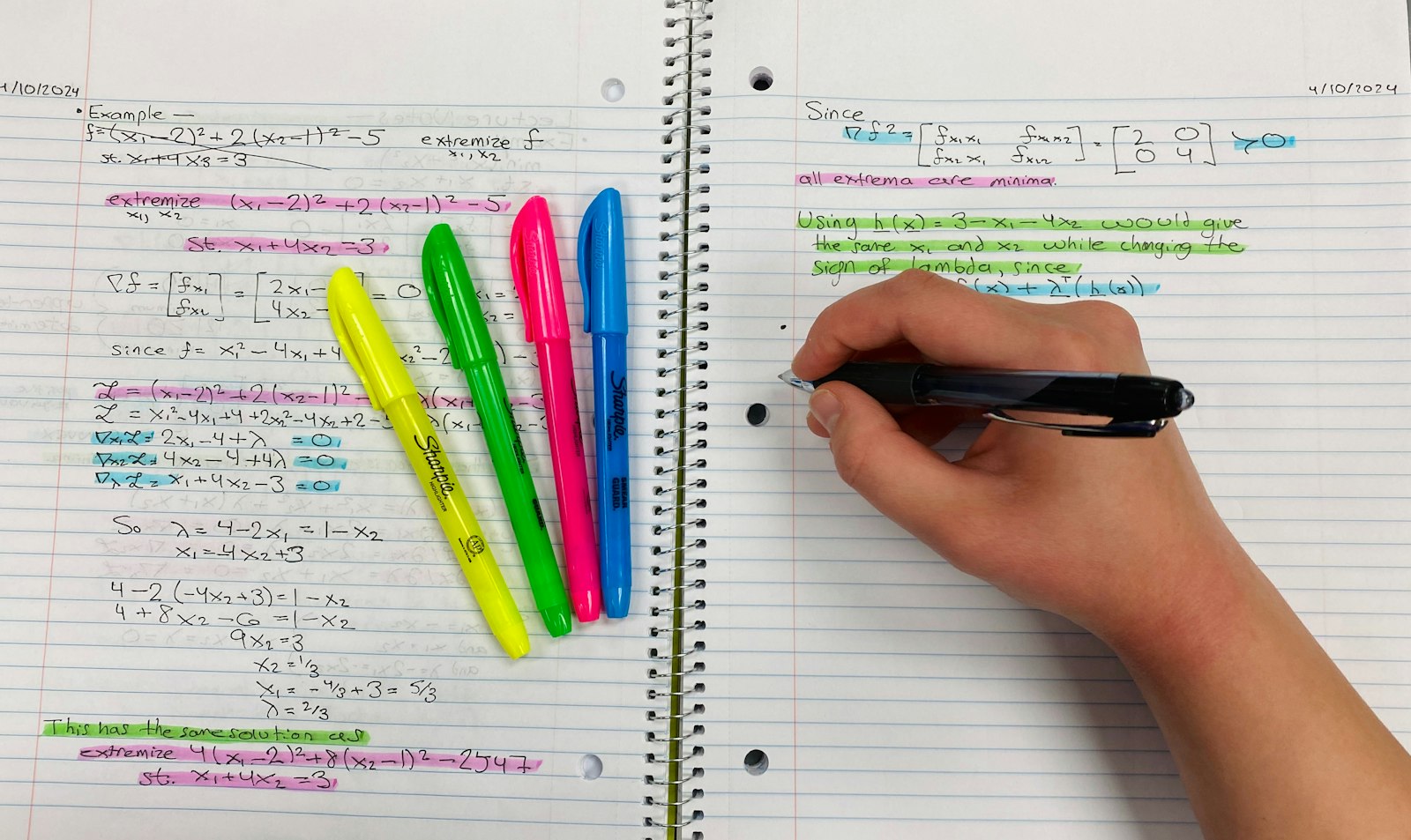
Examples of Good and Bad Cards
Examples make the rules concrete. Here is the same material written badly and then well.
Bad card: Front: “Photosynthesis and respiration.” Back: a full paragraph covering both processes, several equations, and three examples. This card tests too much at once, cannot be marked honestly, and will be dreaded every time it appears.
Good cards instead: One card asks, “What are the products of photosynthesis?” with a short answer. Another asks, “Which process releases energy from glucose in cells?” Another shows a simple leaf diagram and asks what gas enters through the small openings. Each card is quick, clear, and markable.
Bad vocabulary card: Front: a word. Back: five different meanings, two exceptions, and a long note. Good approach: one card per main meaning you actually need, each with a short example sentence on the back.
Bad history card: Front: “Causes of the war?” Back: a list of eight causes. Good approach: a card for the overall explanation in your own words, plus separate cards for the causes that are hardest to remember, plus one card that asks you to connect two causes. Lists are not forbidden, but a list card should be short, and the items you always forget deserve their own cards.
Notice the pattern: good cards are small, specific, and honest to judge. If you look at a card and feel a sinking feeling because it is huge, that is useful information — split it.
Common Mistakes When Studying With Flashcards
Making cards but never testing yourself properly. Flipping cards over and nodding is recognition, not recall. Always produce the answer first.
Creating thousands of cards and reviewing none of them. A small deck you review on schedule beats a giant deck you avoid. Add cards gradually, tied to what you are currently learning.
Cramming all reviews into the night before. Spaced repetition needs time to space over. Flashcards started early and reviewed in short sessions over days and weeks will outperform the same cards crammed in one night. If you have left it late, still use active recall — test yourself rather than re-reading — but understand that late cramming is damage control, not the method working at its best.
Writing cards on material you do not understand. Cards lock in whatever you put on them, including confusion. Learn first, then make cards, and return to your textbook whenever a card exposes a gap in understanding.
Making every card a copy of a textbook sentence. You end up recognising sentences instead of knowing ideas. Use your own words, vary how you ask, and add examples.
Rating yourself generously in an app. The schedule is only as good as your honesty. If you had to guess, the card was not known.
Using flashcards for everything. Some learning does not fit on a card: solving new types of problems, writing essays, doing practical skills, and understanding long arguments all need practice in their full form. Use flashcards for the factual and conceptual building blocks — terms, facts, formulas, steps, vocabulary — and use problem practice, past papers, and writing practice for the rest. Flashcards support that work by making sure the building blocks are available in memory when you need them.
Studying only on paper or only in an app, whichever is fashionable. Both work. Paper gives you physical sorting and no distractions; apps give you automatic scheduling, images and audio, and your deck in your pocket for spare moments. Choose the one you will actually use daily. Many students use both: an app for vocabulary and quick facts, paper for diagrams and topics they want to handle physically.
Fitting Flashcards Into Your Wider Study Plan
Flashcards work best as one part of a routine. A simple pattern is: learn a topic from your course; make cards for its key facts, terms, and steps the same day; then let your box system or app bring those cards back for short reviews in later sessions, while you spend your main study time learning the next topic and practising problems. Short review sessions also fit into gaps in a day — a commute, a queue, a break — which is one reason flashcards suit busy students and adults learning alongside work or free online courses.
Near an exam, add timed past-paper practice alongside your reviews. Papers show you whether you can use what your flashcards helped you remember, under time pressure and in mixed order. If a paper reveals a weak topic, make a few targeted cards for the facts you were missing, and return to the textbook for anything you did not understand. That loop — learn, test with cards, test with papers, repair gaps — is a complete revision system, and each part does a job the others cannot.
The University of North Carolina Learning Center’s guide to using flashcards is a helpful short reference for students who want a university learning centre’s summary of these same techniques.
Flashcard Study Checklist
- I learn a topic first, before making cards on it
- Each card tests one idea, with a clear question on the front and a short answer on the back
- I phrase cards in my own words and add examples or simple diagrams where they help
- I always say or write my answer before turning the card over
- I mark myself honestly — a guess or a half-answer is not a correct answer
- Cards I miss return soon; cards I know well are reviewed less often
- I add new cards in small batches, so reviews do not pile up unmanageably
- I make extra cards for ideas I keep confusing with each other
- I do short review sessions most days, rather than one long session rarely
- I also practise problems, past papers, or essays — not only flashcards
- When a card shows I never understood something, I go back to the textbook or lesson
Conclusion
The secret of how to study with flashcards is that there is no secret deck, app, or design that does the work for you. The method is the work: test yourself honestly before you look at the answer, and let spaced reviews bring each card back just as you are starting to forget it. Write small, clear cards from material you understand, split anything that feels huge, rate yourself truthfully, and add new cards gradually. Combine flashcards with real practice — problems, papers, and writing — and they will quietly take care of the remembering, so your main study time can go on understanding.
Start small this week: pick one topic you are currently learning, make a modest set of good cards for it, and review them properly for several days. Once you feel the difference between recognising an answer and truly recalling it, you will understand the method better than any summary can teach you — and you will have a study habit you can use for any subject, at any level.
Frequently Asked Questions
How many flashcards should I study each day?
There is no single correct number, because it depends on your subjects, your exam date, and how many new cards you are adding. A more useful rule is to keep daily reviews small enough that you will actually do them every day, and to add new cards in modest batches so the review load stays manageable. If reviews are piling up, pause new cards and clear the backlog gradually rather than abandoning the deck.
Are flashcard apps better than paper flashcards?
Neither is automatically better. Apps schedule spaced repetition for you, handle large decks, and are easy to carry, while paper cards are simple, distraction-free, and easy to draw diagrams on. Both work if you use active recall and honest spacing. Choose the format you will use consistently, or use each for what it does best.
When should I start making flashcards before an exam?
As early as you can, ideally as you learn each topic, because spaced repetition needs days and weeks to do its work. Starting early lets intervals grow naturally and keeps daily sessions short. If your exam is close, still make cards for the most important facts and test yourself with them — active recall helps even in a short period — but do not expect crammed cards to be remembered as reliably as spaced ones.
What subjects do flashcards work best for?
Flashcards are strongest for material with clear questions and answers: vocabulary and languages, definitions, formulas, dates and facts, anatomy and diagrams, laws and rules, and the steps of a process. They are weaker, on their own, for skills that must be performed, such as solving unfamiliar problems, writing essays, or speaking fluently. In those subjects, use flashcards for the building blocks and practise the skill itself separately.
Why do I recognise answers but fail to recall them in exams?
Because recognition and recall are different. Seeing an answer and feeling it is familiar only shows that you recognise it; an exam asks you to produce it with nothing in front of you. Flashcards fix this only if you genuinely attempt the answer before flipping the card. Say or write the answer first, every time, and mark yourself honestly when you could not — that effort is what builds exam-ready recall.