Cover Letter vs Resume: What Is the Difference and When Do You Need Each?
If you are applying for a job, you will see the terms cover letter vs resume used again and again, and it is easy to get confused. Are they the same thing? Do you need both? Can you send one instead of the other? The short answer is no, they are not the same, and they do different jobs. Your resume lists your experience, skills, and education in a clear, structured format. Your cover letter is a short, personal letter that explains why you want this specific job and why you are a good fit for it.
In this guide, you will learn the exact difference between a cover letter and a resume, see clear examples of each, and know when to send one, the other, or both so your application is complete and professional.
Table of Contents
Quick Answer
The difference in the cover letter vs resume debate is simple. A resume is a factual summary of your work history, skills, and education, usually one to two pages long, written in bullet points. A cover letter is a one-page letter written in full sentences and paragraphs that introduces you, shows your interest in one specific job, and connects your experience to that employer’s needs.
You almost always need a resume. You need a cover letter when the job posting asks for one, and it is smart to include one even when it is listed as optional, unless the application system gives you no way to add it. Think of it this way: the resume proves what you have done. The cover letter explains why it matters for this job.
What Is a Resume?
A resume is the main document in almost every job application. It gives the employer a fast, organised overview of who you are as a professional. Hiring managers often spend only a few seconds on their first look at a resume, so it must be clear, honest, and easy to scan.
A standard resume includes your contact details at the top, a short professional summary, your work experience in reverse order with the most recent job first, your key skills, and your education. Many resumes also include certifications, languages, volunteer work, or projects when they are relevant to the job.
The style of a resume is very different from normal writing. You do not write full paragraphs about yourself. Instead, you use headings, short bullet points, and strong action verbs. Each bullet should show a result where possible, not just a duty. For example, “Handled customer questions” is weak. “Resolved 40+ customer questions per day with a 95% satisfaction score” is much stronger because it gives a real measure of your work.
If you are building your first document or updating an old one, our detailed guide on how to write a resume walks you through every section step by step, with examples you can adapt for your own experience, whether you are a student, a fresher, or an experienced professional changing careers.
The Main Purpose of a Resume
In the cover letter vs resume comparison, the purpose of a resume is to prove you have the experience and skills the job requires. It answers the employer’s question: “Has this person done work like this before, and can they do it here?” It is backward-looking. It focuses on your past jobs, your past results, and the training you have already completed.
Because of this, you should tailor your resume for each job, but the basic facts stay the same. You reorder your skills, highlight the most relevant experience, and use keywords from the job posting. You do not invent experience, and you do not write a new story each time. The structure stays stable while the emphasis changes.
What Is a Cover Letter?
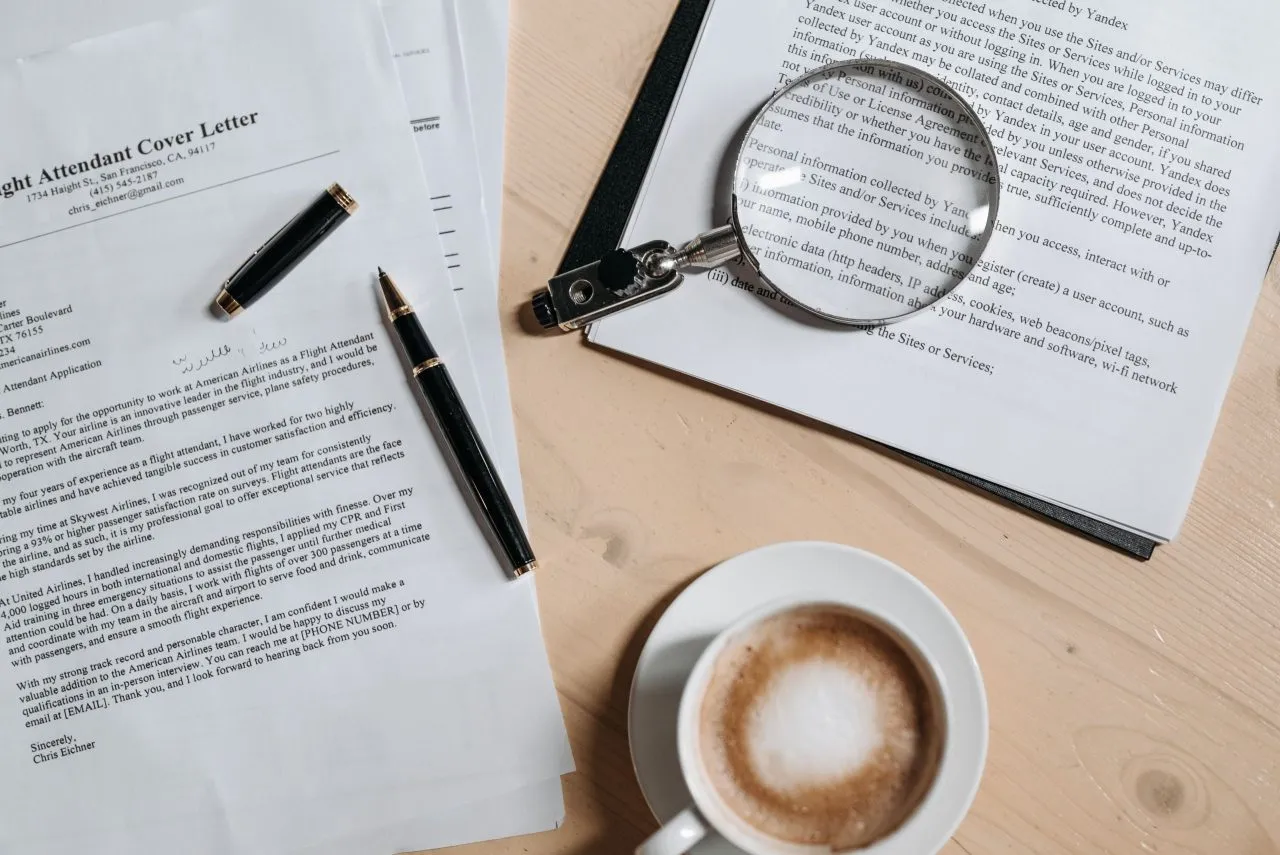
A cover letter is a formal letter that you send with your resume. It is addressed to a specific company, and often to a specific hiring manager by name if you can find it. Unlike a resume, it is written for one job only. A cover letter you send to one employer should not be copied word for word to another employer.
A standard cover letter has three to four paragraphs. The first paragraph says which job you are applying for and where you saw it. The middle paragraphs explain why you are interested in this company and how your experience matches what they need. The final paragraph thanks the reader, shows your enthusiasm, and politely asks for an interview.
The tone is professional but human. You write in the first person, using “I,” in complete sentences. This is your chance to show personality, motivation, and communication skills in a way a resume cannot. If you want a fuller breakdown of the format, tone, and structure, read our guide on what is a cover letter before you start drafting yours.
The Main Purpose of a Cover Letter
The purpose of a cover letter is to connect the dots. It answers a different question: “Why does this person want this job, at this company, right now?” It is present and future-looking. It explains your motivation, your fit with the team and mission, and what you hope to contribute next.
This is also the best place to explain things a resume cannot explain well, such as a career change, a gap in employment, a move to a new city, or why work from a different industry is still relevant. You keep it brief and positive, you do not apologise at length, and you always bring the focus back to the value you offer the employer.
Cover Letter vs Resume: Side-by-Side Comparison
When people search for cover letter vs resume, what they really need is a clear side-by-side view. The table below shows the key differences in purpose, length, content, format, and use. Keep it as a quick reference whenever you prepare an application.
| Feature | Resume | Cover Letter |
|---|---|---|
| Purpose | To summarise your experience, skills, and education | To introduce you and explain your fit for one specific job |
| Length | 1 to 2 pages | 1 page, usually 250 to 400 words |
| Format | Headings and bullet points, very structured | Letter format with paragraphs and full sentences |
| Tone | Factual, concise, and direct | Professional, personal, and persuasive |
| Customisation | Tailored for each job, but core facts stay the same | Written fresh for each company and role |
| Content Focus | What you have done in the past | Why you want this job and what you will bring |
| Voice | No “I” statements, starts with action verbs | Uses “I” and speaks directly to the reader |
| Always Required? | Yes, for almost every job application | Sometimes required, often optional but recommended |
| Answers the Question | Can this person do the job? | Why does this person want this job here? |
As you can see, the difference between cover letter and resume is not about which one is better. They are partners. One without the other tells only half the story. The resume gives the evidence. The cover letter gives the reason to care about that evidence.
Purpose: Proof vs Persuasion
The biggest difference in resume vs cover letter is purpose. Your resume is proof. It is a record. If you claim you managed a team, your resume shows where, when, and what you achieved. Your cover letter is persuasion. It selects two or three of the strongest points from your resume and explains them in the context of this employer’s problem. For example, if the job needs someone who can improve customer retention, your cover letter does not list every job you have held. It highlights the one role where you raised retention and explains how you would use that same approach here.
Length and Structure
A resume can be one page for students and early-career applicants, and two pages for people with more experience. It should never be longer than needed, and every line should earn its place. A cover letter should never go beyond one page. Three to four short paragraphs are enough. If your cover letter is longer than a page, employers are less likely to read it fully. Short, focused writing respects the reader’s time and shows you can communicate clearly, which is itself a job skill.
Content and Voice
Resume content is standardised so employers and applicant tracking systems can compare candidates fairly. Cover letter content is flexible. You choose what to emphasise, what story to tell briefly, and how to show you understand the company. That flexibility is powerful, but it also means a generic cover letter is easy to spot. Phrases like “I am a hard worker and a team player” without any example or company detail add nothing. Specific detail is what makes a cover letter work.
When Do You Need Each?
Understanding cover letter vs resume also means knowing when each document is expected. The rules are not the same for every job, industry, or country, so use the job posting as your first guide.
When a Resume Alone Is Enough
Some online application systems only have a field to upload a resume and no place for a cover letter. Some employers, especially for high-volume hourly, retail, warehouse, or gig roles, state clearly that no cover letter is needed. In freelance marketplaces and internal referrals, a strong resume or profile plus a short message may be all that is asked for. In these cases, do not try to force a cover letter into the wrong field. Follow the instructions exactly. Following instructions is itself part of the test.
Even when you send only a resume, make sure that resume is fully tailored. Without a cover letter to explain your fit, your professional summary and your top bullet points must do that work on their own.
When You Need Both a Resume and a Cover Letter
You need both when the posting says a cover letter is required. There is no exception here. If you skip a required cover letter, many employers will reject the application as incomplete, no matter how strong your resume is.
You should also send both when the posting says a cover letter is optional. Optional does not mean useless. When two candidates have similar resumes, the one who took the time to write a thoughtful, specific cover letter often gets the interview. This is especially true for office, professional, creative, education, healthcare, non-profit, and management roles, and for any job where writing and communication are part of the work.
Send both as well when you are changing careers, returning after a gap, applying for your first professional job with limited experience, or applying to a company you truly admire. In all of these cases, the resume alone leaves questions unanswered, and the cover letter is where you answer them calmly and briefly.
Special Cases to Know
For academic, research, and some government jobs, the main document may be a longer CV rather than a short resume, and it may be paired with a detailed cover letter or statement. That is a different comparison from cover letter vs resume, so always check the employer’s exact wording. For jobs in the United States and Europe, a photo is not included on a resume or cover letter in most cases. For creative roles, a portfolio link often matters as much as either document. When in doubt, mirror what the posting asks for, in the order it asks for it.
If you are researching careers and typical duties before you apply, the U.S. Bureau of Labor Statistics Occupational Outlook Handbook is a trusted, free source for what different jobs actually involve, what education they need, and how the field is expected to grow. Using that kind of reliable information helps you tailor both documents with real language from the profession, not guesswork.
How to Write a Resume: Step by Step
A strong resume follows a clear process. You do not need expensive software or a designer. You need honest content, clean formatting, and careful tailoring.
Step 1: Choose a Clean, Simple Format
Use a reverse-chronological format for most jobs, listing your most recent experience first. Use a simple font, clear headings, and plenty of white space. Avoid tables, graphics, and text boxes that applicant tracking systems may fail to read. Save and send the file as a PDF unless the employer asks for another format, and name the file professionally, such as FirstName-LastName-Resume.pdf.
Step 2: Add Contact Details and a Summary
At the top, include your full name, city and country or city and state, phone number, professional email address, and a LinkedIn profile link if you have one. Below that, write a summary of two to three lines that states who you are, your strongest relevant skills, and the type of role you are seeking. Keep it factual. Do not use vague claims without proof later in the document.
Step 3: Write Experience With Results
For each role, list your job title, the employer, the location, and the dates. Then add three to five bullet points per role, starting each with a strong action verb such as managed, created, improved, trained, or delivered. Wherever you can, add numbers: money saved, time reduced, customers served, team size, or percentage improved. Numbers help the reader trust your claims and compare you fairly with others.
Step 4: List Skills, Education, and Extras
Create a skills section that mirrors the skills named in the job posting, but only include skills you truly have and can discuss in an interview. Then list your education, with your most recent qualification first. Add certifications, languages, or relevant projects after that. Remove old or irrelevant details that distract from the job you want now.
Step 5: Tailor and Proofread
Read the job posting again and check that your resume uses the same key terms for tools, skills, and duties where they honestly apply. Check spelling, dates, and contact details twice. Ask a trusted person to read it once for clarity. A single typo in your email address or phone number can cost you an interview, so this step is not optional.
How to Write a Cover Letter: Step by Step
A strong cover letter is not a copy of your resume in paragraph form. It follows its own simple structure and must be written for one employer at a time.
Step 1: Use a Proper Letter Header
Include your name and contact details at the top, the date, and the employer’s name and address if you have them. Address the letter to a named person when possible, such as “Dear Ms. Patel” or “Dear Hiring Manager” if no name is available. Avoid old-fashioned phrases like “To Whom It May Concern” when a better option exists.
Step 2: Open With the Role and Your Strongest Fit
In the first paragraph, name the exact job title and the company, and say where you found the posting. Then add one sentence that gives your strongest reason for applying, such as your years of relevant experience or a result that directly matches their need. The opening should make the reader want to continue, not repeat your entire resume.
Step 3: Connect Your Experience to Their Needs
In the middle paragraphs, pick two or three requirements from the posting and show, with brief examples, how you meet them. Do not list everything. Go deeper on a few points instead. Show that you understand what the company does by mentioning a product, service, value, or recent project in a natural way, and explain why that matters to you. This research is what separates a real cover letter from a template.
Step 4: Address Any Special Context Briefly
If you are changing fields, relocating, or explaining a gap, use one or two calm sentences here. Focus on what you learned, what you did during that time such as study, freelance work, caregiving, or volunteering, and why you are ready and excited for this role now. Keep the tone confident and forward-looking.
Step 5: Close With Thanks and a Clear Next Step
In the final paragraph, thank the reader for their time, restate your enthusiasm in one line, and say you would welcome the chance to discuss your application in an interview. Sign off professionally with “Sincerely” or “Best regards,” followed by your full name. Proofread the whole letter aloud once. If a sentence sounds unnatural when spoken, simplify it.
Examples: How the Same Experience Sounds in Each Document
Examples make the cover letter vs resume difference much easier to understand than definitions alone. Imagine a candidate named Sara who worked as a customer support representative and is applying for a team leader role.
Example in a Resume
On her resume, Sara writes in bullet points:
- Resolved an average of 45 customer tickets per day via phone, email, and live chat
- Trained 6 new support representatives on ticketing software and call quality standards
- Reduced repeat complaints by 18% in six months by creating a new help guide for common issues
This is factual, measurable, and easy to scan. There is no story, no motivation, and no mention of the new company. That is correct for a resume.

Example in a Cover Letter
In her cover letter for the team leader role, Sara writes in paragraphs:
“Your focus on fast, friendly support is exactly why I want to join your team. In my current role, I resolve about 45 tickets a day, and I also train new representatives on your type of ticketing process. When I noticed the same questions coming up again and again, I created a short help guide that reduced repeat complaints by 18% in six months. I would love to bring that same habit of listening, teaching, and improving the process to your support team as a leader.”
Notice what changed. The facts are the same, but the cover letter selects them, explains why they matter to this employer, and shows motivation. It does not repeat every bullet. It interprets the most relevant ones. That interpretation is the whole value of the cover letter, and it is why employers who care about fit and communication still ask for one.
How the Two Documents Work Together
Think of your application as a complete package. In the cover letter vs resume partnership, the resume is the foundation. It must be strong on its own, because some readers will only read the resume, and some systems will only scan the resume for keywords. The cover letter is the introduction. It must also make sense on its own, because a hiring manager may read it first and then decide how carefully to read the resume.
Together, they should agree with each other completely. Dates, job titles, company names, and claims must match exactly. If your resume says you led a team of five and your cover letter says you led a team of ten, the reader will trust neither document. Consistency builds confidence. So does honest tailoring. Never copy skills or results from the job posting that you do not actually have, in either document. An interview will quickly reveal the truth, and employers remember dishonesty.
Finally, keep both documents updated together. When you finish a course, complete a project, or change roles, update the resume with the facts and note the story or motivation you might use in a future cover letter. Doing this while the details are fresh saves you hours later and makes your next application much stronger.
Common Mistakes to Avoid
Many good candidates lose interviews because of simple, avoidable mistakes in the resume vs cover letter process. Watch for these common errors.
The most common mistake is sending the same generic cover letter to every employer, changing only the company name, or sometimes forgetting to change it at all. Employers spot this instantly. A second mistake is repeating the resume word for word in the cover letter. The letter should add meaning, not duplicate the list. A third mistake is making the cover letter only about yourself — what you want, what you will gain, what your dream is — without ever saying what you will do for the employer. Balance matters. Show your enthusiasm, but centre it on their needs.
On the resume side, common mistakes include long paragraphs instead of bullets, an unprofessional email address, missing dates, exaggerated titles, and skills you cannot prove. On both documents, spelling and grammar errors hurt more than most candidates realise, because they suggest carelessness in roles that need accuracy. Another frequent error is sending the wrong file, an outdated version, or a file named “Document1.pdf” with no name. Always open the final PDFs once before sending to confirm they are the correct, final versions.
One more mistake deserves attention: skipping the cover letter entirely because writing feels hard, even when it is required or strongly recommended. A short, honest, specific letter of 250 words is far better than no letter at all. You do not need perfect literary style. You need clarity, relevance, and respect for the reader.
Final Checklist Before You Send
Use this checklist for every application, whether you are sending a resume alone or both documents together. It takes only a few minutes and prevents the most costly errors.
- The job title and company name are correct and spelled exactly as in the posting in both documents
- The resume is one to two pages, uses bullet points, and includes measurable results where possible
- The cover letter is one page, has three to four paragraphs, and was written for this specific employer
- Dates, titles, and claims match perfectly between the resume and the cover letter
- Keywords from the job posting appear naturally in the resume where they honestly apply
- Contact details are current, and the email address sounds professional
- The cover letter explains why this company and this role, not just any job
- Both files are saved as PDFs with clear names and were opened once to verify the final version
- Spelling, grammar, and punctuation were checked carefully, ideally read aloud once
- You followed the employer’s instructions exactly for what to send and how to send it
If you can tick every item, your application is ready. If one item fails, fix it before you send. Employers receive many applications, and small signs of care and accuracy help yours stand out for the right reasons.
FAQ
Is a cover letter the same as a resume?
No. A resume is a structured summary of your experience, skills, and education in bullet points. A cover letter is a one-page letter in paragraphs that explains why you want one specific job and how your experience fits that employer. They are two different documents with different purposes, and one cannot fully replace the other.
Do I always need a cover letter with my resume?
In the cover letter vs resume decision, you always need a resume, but you do not always need a cover letter. If the posting says a cover letter is required, you must include one. If it says optional, it is still wise to include one for most professional roles, because it can set you apart. If the application system has no place to add one and the posting does not ask for one, a resume alone is acceptable.
Can a cover letter replace a resume?
No. A cover letter cannot replace a resume. It does not contain the full, organised record of your jobs, dates, skills, and education that employers and application systems need to evaluate and compare you. Even the best cover letter will be rejected as incomplete if the employer asked for a resume and you did not provide one.
Which does the employer read first, the cover letter or the resume?
It depends on the employer and the system. Some hiring managers read the cover letter first as an introduction, then turn to the resume for proof. Others, and most applicant tracking systems, start with the resume. Because you cannot control the order, both documents must be strong on their own and must agree with each other in every fact.
How long should a cover letter and a resume be?
A cover letter should be one page, usually 250 to 400 words in three to four paragraphs. A resume should be one page if you are a student or early in your career, and up to two pages if you have substantial relevant experience. In both cases, shorter and more relevant is better than longer and unfocused. Every line should support your fit for this specific job.
Conclusion
The cover letter vs resume question has a clear answer once you see what each document is for. Your resume is the factual record that proves you can do the job, written in a structured, scannable format of headings and bullet points. Your cover letter is the personal introduction that explains why you want this job at this company, written as a short, specific letter that connects your proof to their needs.
For most professional applications, the winning approach is to send a carefully tailored resume every time, and to add a thoughtful, employer-specific cover letter whenever it is required, offered as an option, or useful to explain your fit, your change of direction, or your motivation. Do that consistently, keep both documents honest and consistent with each other, and use the checklist before every send. You will not just look more professional — you will make it genuinely easier for an employer to say yes to interviewing you.